|
|
|
|
|
|
|
|
|
|
|
|
|
|
|
|
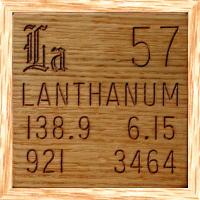
Lanthanum is the first of the "rare earths", which are really not all that rare at all. Many of them are more common than silver, bismuth, and other things thought of as only somewhat rare. Until not too long ago they were quite difficult to separate from each other, and hence very expensive. But there are now ion-exchange methods that allow their separation in industrial quantities at reasonable cost. They are still fairly expensive, on the order of a few hundred dollars per kilogram. This is somewhat more than silver, but far less than gold. (Some rare earths really are very rare and very expensive, but not lanthanum.)
There are not all that many good uses for the rare earths, and in many applications it actually doesn't much matter which one you're using, because they are chemically very similar (that's also why they are hard to separate). Reader Adam Lechowicz offers this exception:
I have a use for Lanthanum that you may or may not know about. There is a specific property of Lanthanum Hexaboride (LaB6) that has
some special applications. It has a very low work function (about 2.5 eV) that makes it good for micro or nano electronics. For example, it is used to tip electron microscopes.
|
|
| |
|
|
|
|
|
  Great hunk-o-metal. Great hunk-o-metal.
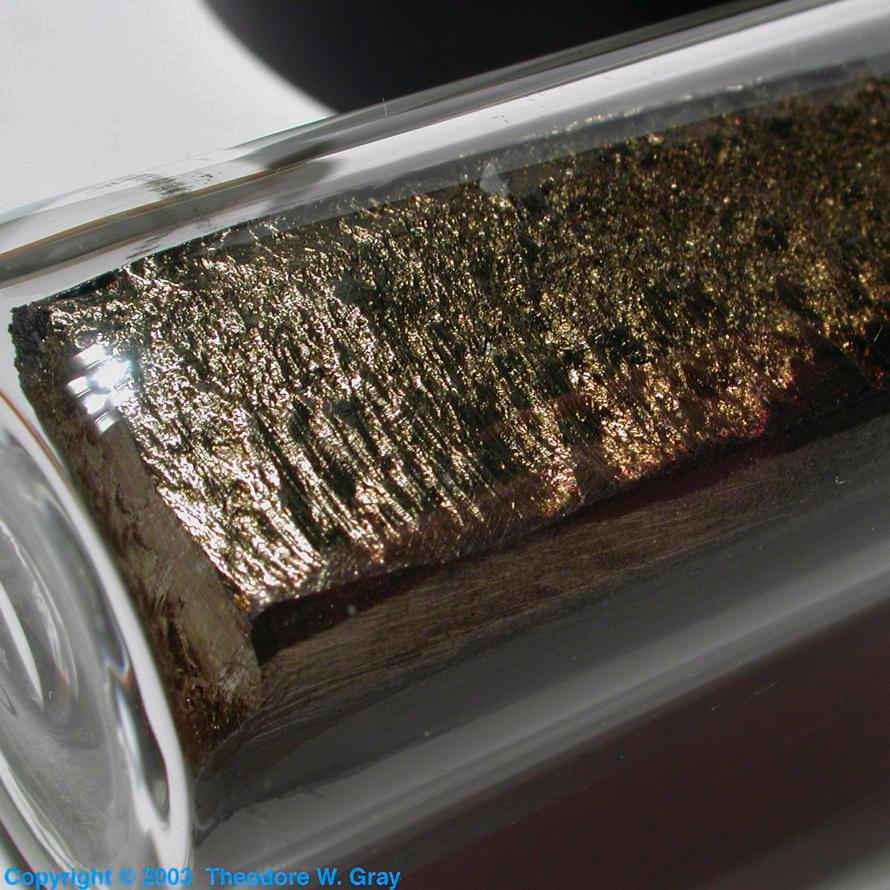
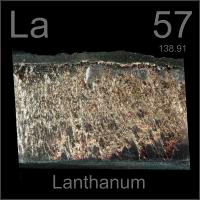
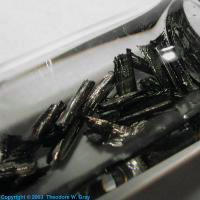
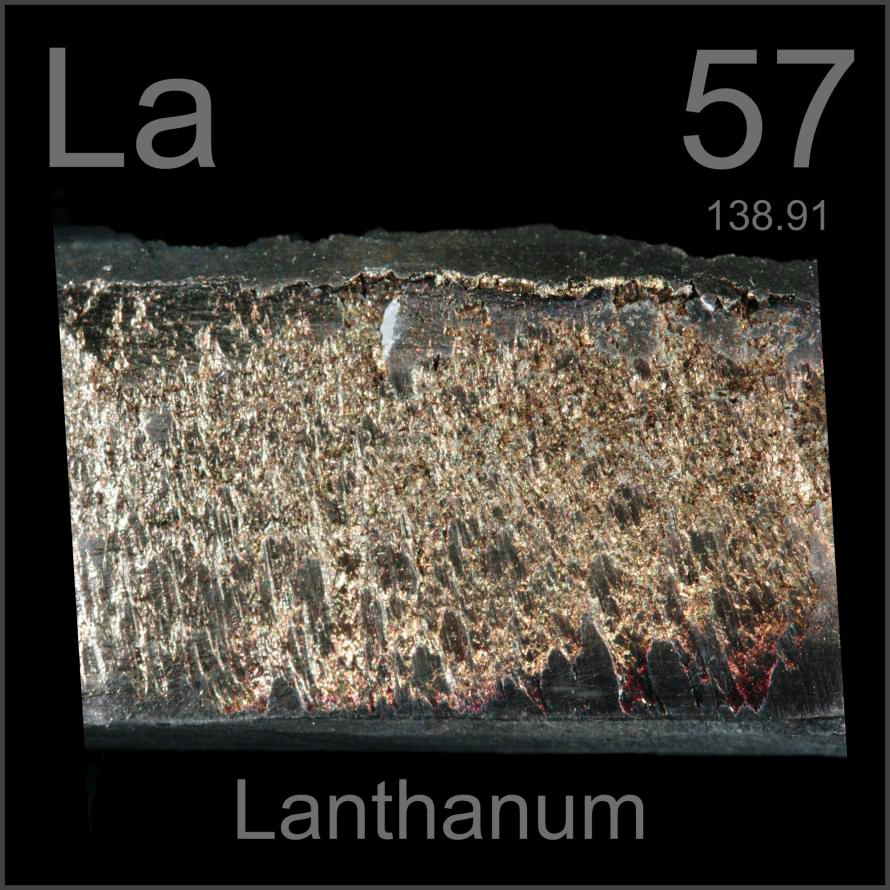
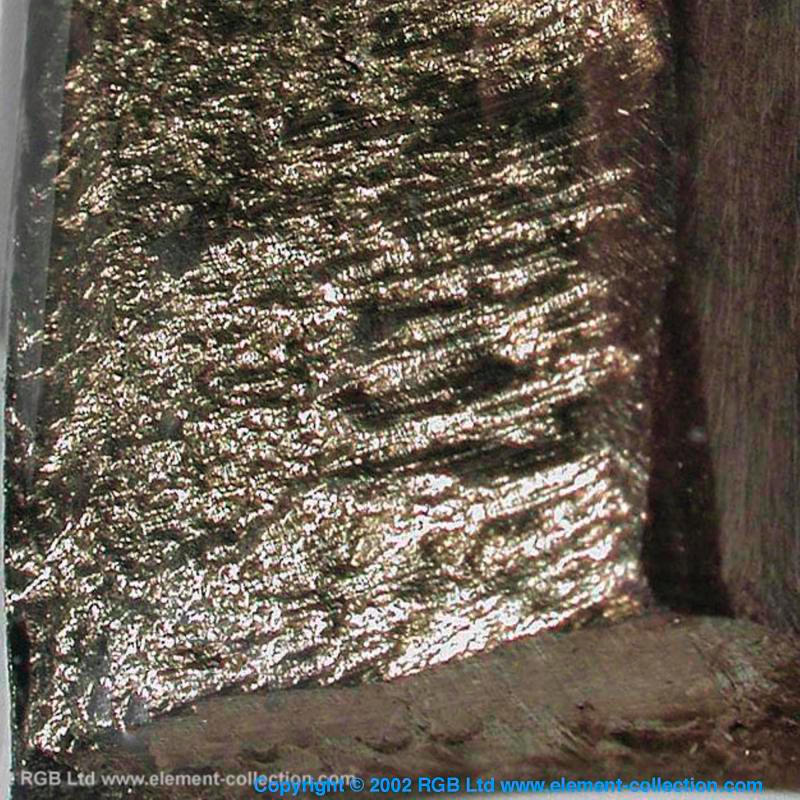
Lanthanum is one of the elements you don't expect to find in big chunks. At least I don't. This 25 gram lump is more than I have of any other rare earth in pure form. It's in a very cute glass ampule that warns of vigorous reaction with water. (The ampule is filled with argon gas to prevent any corrosion.)
Max Whitby of The Red Green & Blue Company in England donated this sample. The Red Green & Blue Company is selling a periodic table collection containing smaller amounts of the same stuff, and if you want a ready-made collection of elements, that's the first place I would look.
Note that this particular sample is much bigger than what you get with the set (it wouldn't fit in the box!). See the next sample for an example of what you get with the set.
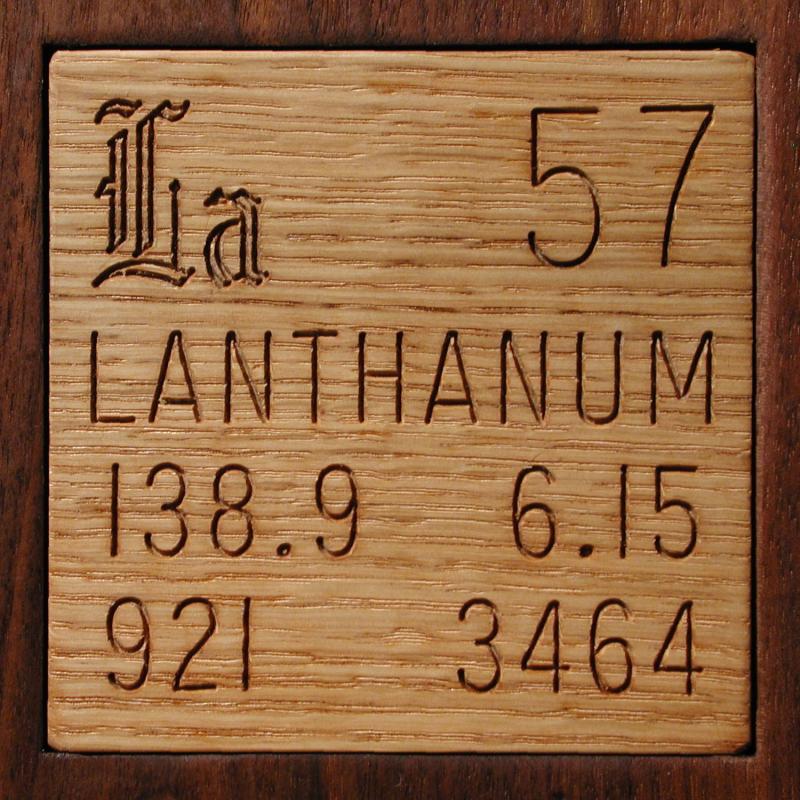
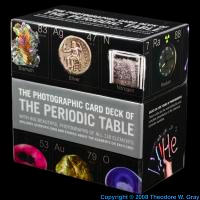
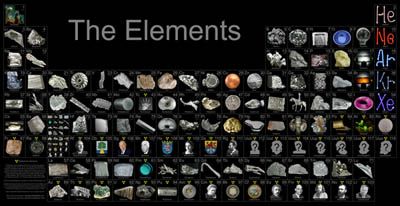
I chose this sample to represent its element in my Photographic Periodic Table Poster. The sample photograph includes text exactly as it appears in the poster, which you are encouraged to buy a copy of.
Source: Max Whitby of RGB
Contributor: Max Whitby of RGB
Acquired: 15 October, 2002
Text Updated: 11 August, 2007
Price: Donated
Size: 1.5"
Purity: 99.4%
|
|
|
|
|
|
|
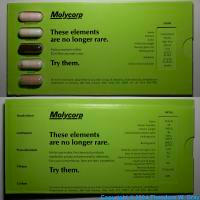
Sample from the RGB Set.
The Red Green and Blue company in England sells a very nice element collection in several versions. Max Whitby, the director of the company, very kindly donated a complete set to the periodic table table.
To learn more about the set you can visit my page about element collecting for a general description or the company's website which includes many photographs and pricing details. I have two photographs of each sample from the set: One taken by me and one from the company. You can see photographs of all the samples displayed in a periodic table format: my pictures or their pictures. Or you can see both side-by-side with bigger pictures in numerical order.
The picture on the left was taken by me. Here is the company's version (there is some variation between sets, so the pictures sometimes show different variations of the samples):
Source: Max Whitby of RGB
Contributor: Max Whitby of RGB
Acquired: 25 January, 2003
Text Updated: 11 August, 2007
Price: Donated
Size: 0.2"
Purity: 99.4%
|
|
|
|
|
|
|
Sample from the Everest Set.
Up until the early 1990's a company in Russia sold a periodic table collection with element samples. At some point their American distributor sold off the remaining stock to a man who is now selling them on eBay. The samples (except gases) weigh about 0.25 grams each, and the whole set comes in a very nice wooden box with a printed periodic table in the lid.
To learn more about the set you can visit my page about element collecting for a general description and information about how to buy one, or you can see photographs of all the samples from the set displayed on my website in a periodic table layout or with bigger pictures in numerical order.
Source: Rob Accurso
Contributor: Rob Accurso
Acquired: 7 February, 2003
Text Updated: 29 January, 2009
Price: Donated
Size: 0.2"
Purity: >99%
|
|
|
|
|
|
|
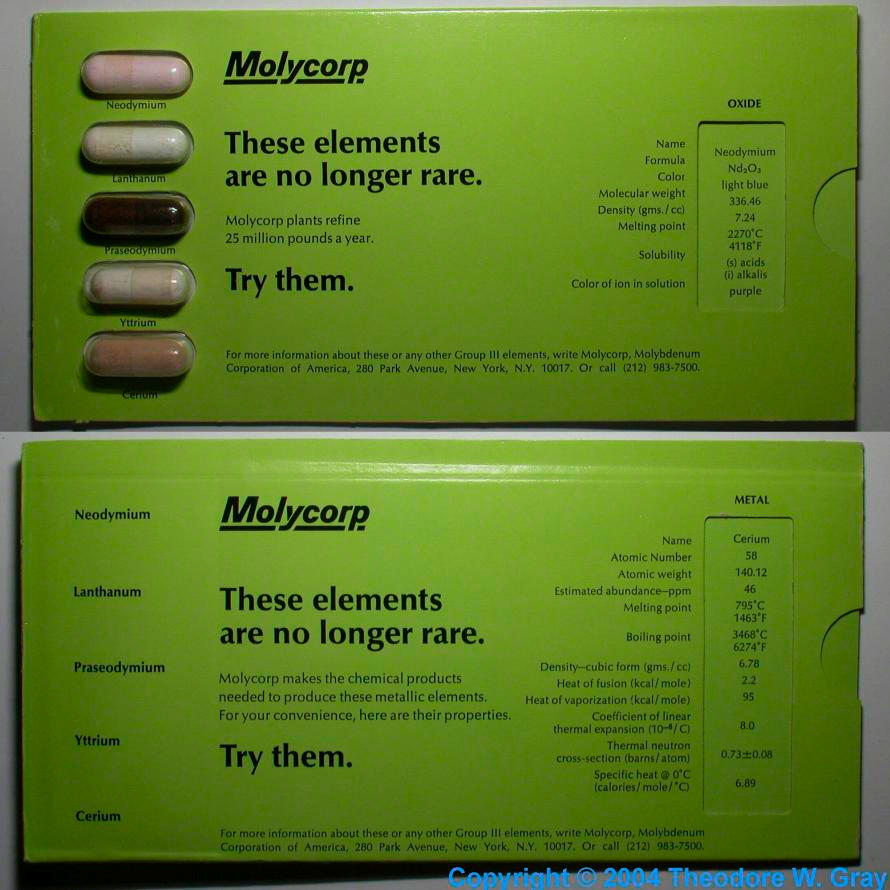
Advertising set.
This lovely little set of rare earth oxides was made to promote the fact that rare earths really aren't very rare. Once the technology was developed to separate and purify then economically, they became quite common in fact. There is no date on this piece which is a pity, but I would guess it was made in the 1960's.
Source: SoCal (Nevada), Inc
Contributor: Theodore Gray
Acquired: 23 July, 2004
Price: $20
Size: 8"
Purity: >20%
|
|
|
|
|
|
|
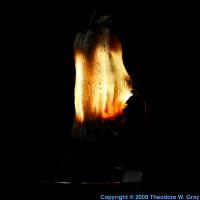
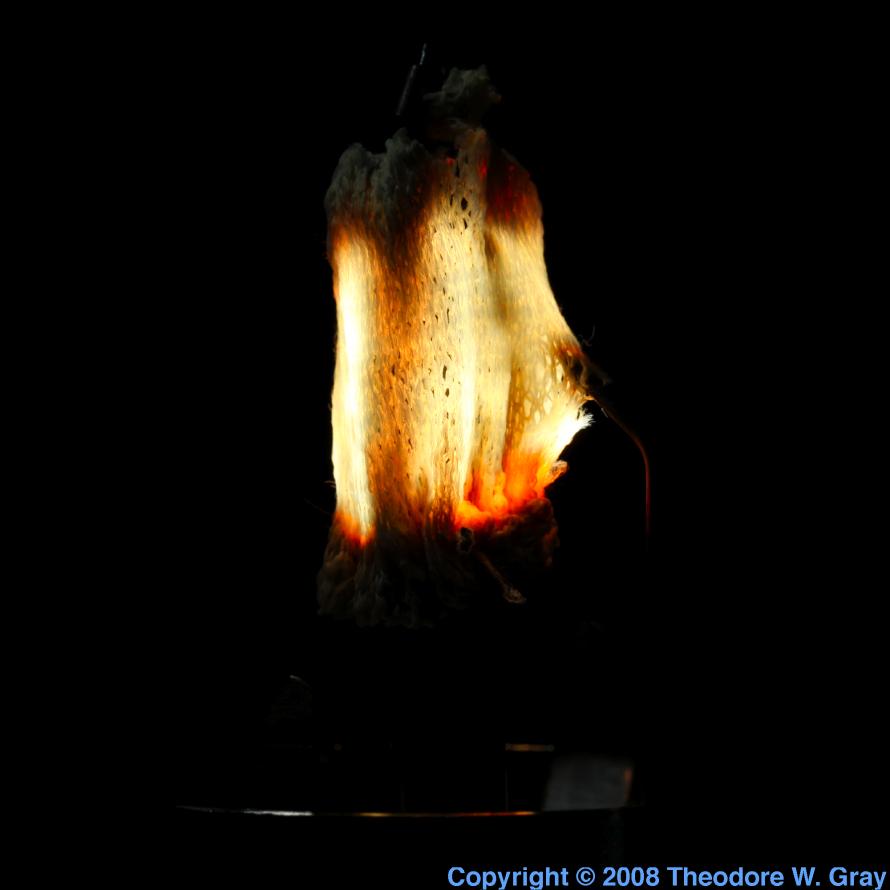
Modern lantern mantle (operating).
Old lantern mantles famously used thorium oxide as the incandescent material, and were thus radioactive. Modern versions instead use a mixture of rare earth salts including lanthanum oxide.
This photograph, and the 3D rotation video, were taken with the lantern lit, but the gas turned very low so you can see how the gas makes the mantle glow.
Source: Walmart
Contributor: Theodore Gray
Acquired: 8 February, 2009
Text Updated: 8 February, 2009
Price: $20
Size: 1.5"
Purity: <40%
|
|
|
|
|
|
|
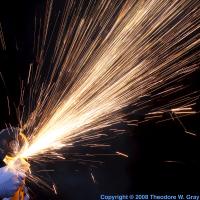
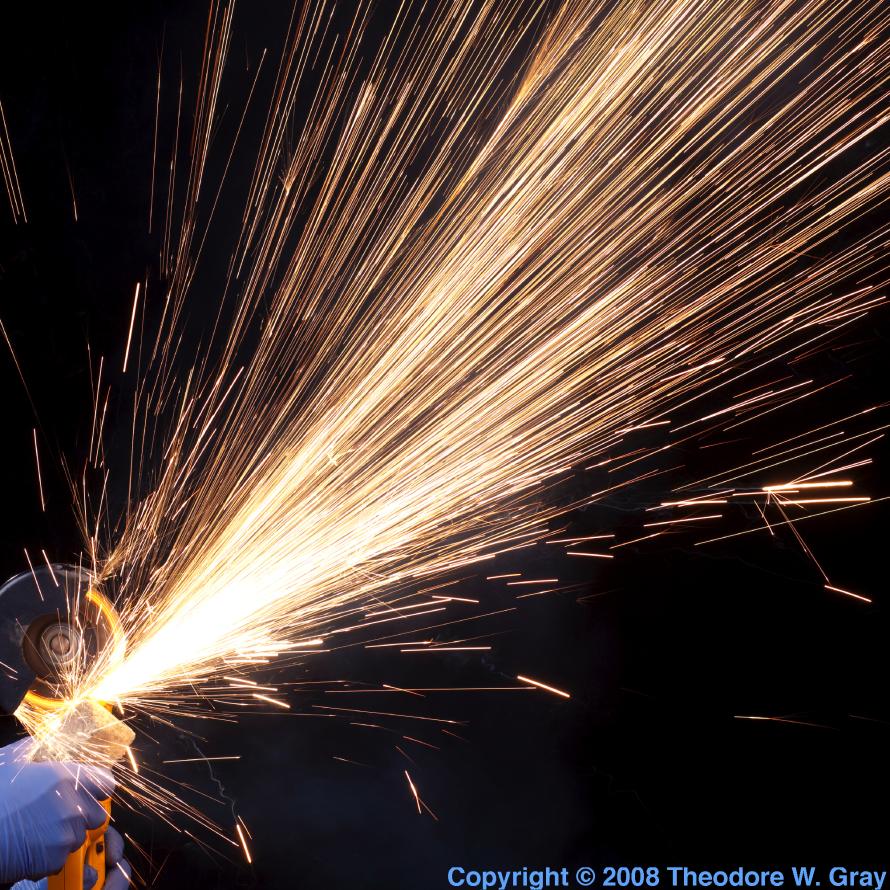
Mischmetal block.
A large block of "mischmetal", a mixture of lanthanum, cerium, and a few other random rare earths. Blocks like this are used for spark effects in movies. It is incredibly sparky stuff, here I'm holding it up to a small grinding wheel. The "Spin" and "Rotate" videos show this in action.
Source: eBay
Contributor: Theodore Gray
Acquired: 16 April, 2009
Text Updated: 16 April, 2009
Price: $30
Size: 3"
Purity: <20%
|
|
|
|
|
|
|
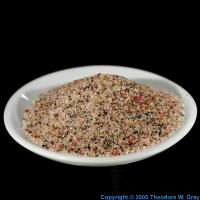
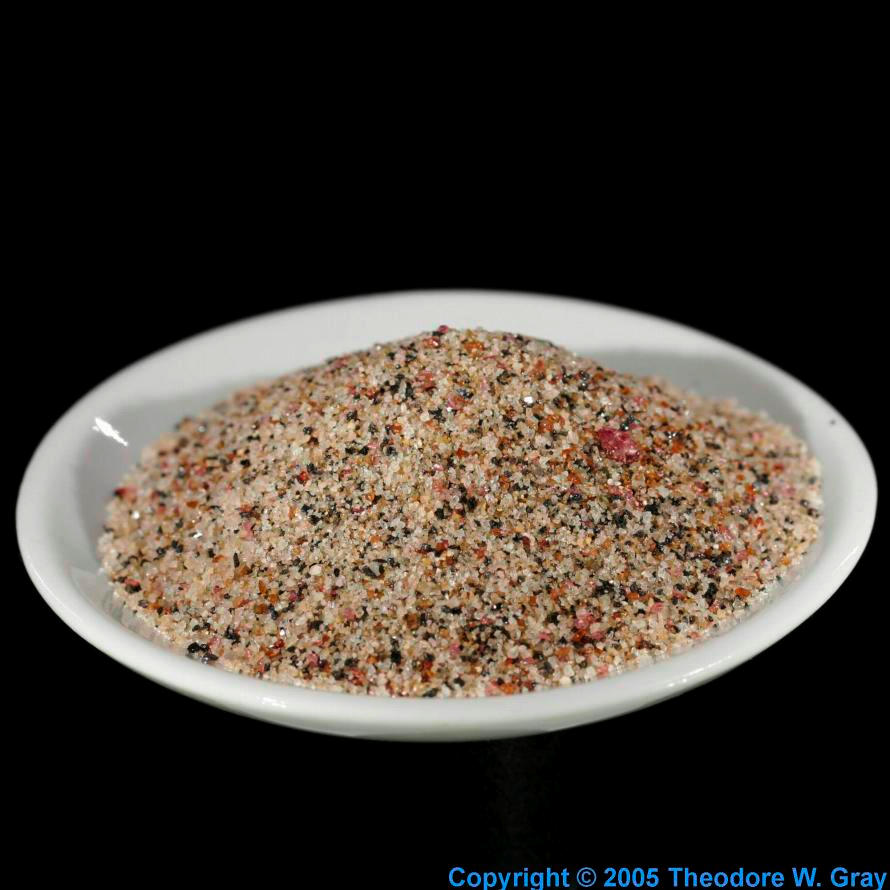
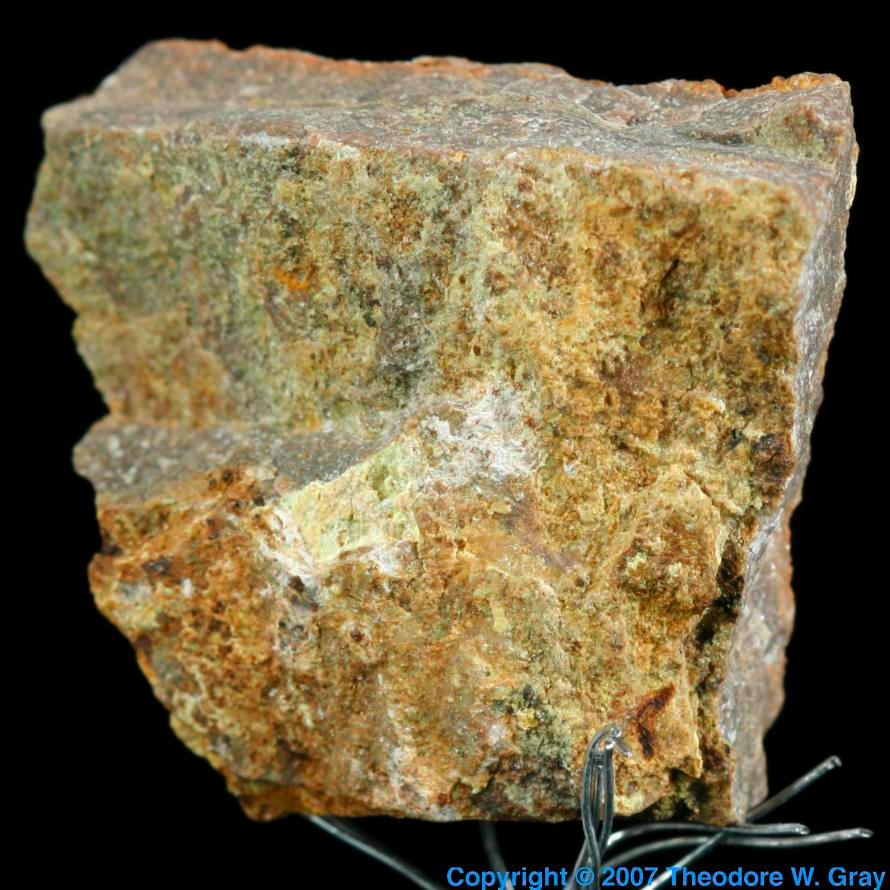
Monazite Sand.
Monazite is a thorium-bearing mineral that occurs in sand deposits in a number of places around the world. Only a small proportion of the sand in this sample is actually monazite: It is probably somewhat selected compared to normally occurring sand deposits, but not much. It's kind of remarkable, really, that you can collect thorium just by scooping it up with a shovel.
Source: Max Whitby of RGB
Contributor: Max Whitby of RGB
Acquired: 20 September, 2005
Price: Donated
Size: 1.5"
Composition: (Ce,La,Nd,Th)PO4
|
|
|
|
|
|
|
|
|
|
|
|
|
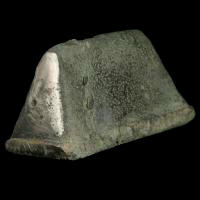
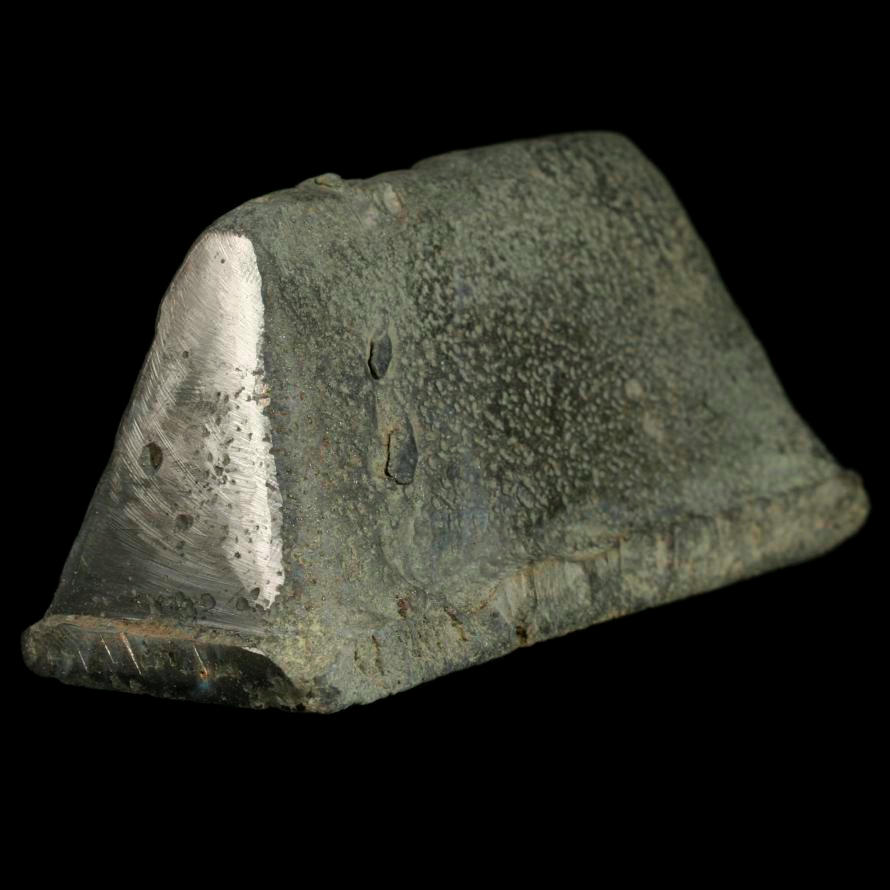
Mischmetal.
Rare earths are notoriously hard to separate from one another. In fact the hardest part about discovering some of them was proving that a substance thought to be a single pure element was in fact a mixture of several extremely similar ones.
Since they are chemically so similar, it's not surprising that they also occur together in nature: Ores that contain one inevitably contain several of the others as well. This, combined with the difficulty of separating them, made them quite rare and unusual in pure form, until the development of modern, efficient separation techniques.
But their very chemical similarity also means that in many cases it's really not necessary to separate them in the first place. If cerium will do, then so will lanthanum, or half a dozen others. A case in point is lighter "flints" which are actually made of a mixture of rare earths, primarily cerium and lanthanum, alloyed with iron. The exact ratio of rare earths in a given lighter flint isn't determined by some formula, it's determined by whatever came out of the mine that day. It would be entirely pointless to separate out and use just one in pure form: It would work, by why bother when the raw mixture works just as well?
This mischmetal has not been alloyed with iron, as it would be in a flint: It's a mixture of predominantly cerium (54% cerium is a common for mischmetal), with most of the remainder being lanthanum. Others in the lanthanide series most likely contribute a few percent of the total.
It's very sparky! Just shaving it with a knife produces sparks, a bit like you get when grinding iron on a grinding wheel, except you don't need the grinding wheel. (You can see that I've scraped the oxide coating off one face, a task for which I used a utility knife and file, producing great quantities of sparks in the process.) It's said that blocks like this are sometimes dragged underneath cars to produce a shower of sparks for special effects in movies or performances.
It's a bit like super-sensitive magnesium. Magnesium shavings will also burn, just not spontaneously like those off this block. Blocks of magnesium are commonly sold as camp fire starters, but this stuff would work way better! In fact, to start the shavings off a magnesium fire starter, you use a flint made with this stuff.
When it burns, it burns much the same way as magnesium. Metal fire is very different in appearance from wood, paper, oil, or other types of fire. One reason is that in most fires what's burning is primarily gas driven off from the solid or liquid material. Thus you get bright tongues of flame flickering above whatever is burning. But in a metal fire there is no vapor given off, so only the solid (or if it gets hot enough, liquid) metal is burning. This makes for a very compact point source of light, rather than a spread-out flame. Normal flames also tend to be yellow almost all the time, due in part to the strong yellow-orange emission line of sodium, which is present in some quantity in nearly all natural materials. Metal fires on the other hand tend to be whiter, magnesium being a particularly good example of a very, very white flame.
Another difference is that the metal oxides that build up from burning metal are extremely resistant to heat (magnesium oxide is a common ingredient in high temperature insulation), and totally non-volatile (unlike the carbon dioxide that results from burning organic matter, which is a gas). Thus as metal is burning, it tends to form a crust of oxide around itself which slowly chokes off the flow of oxygen, causing the remaining metal to burn more and more slowly. (I have a story about burning magnesium which includes photographs of this lovely phenomenon.)
I haven't yet set a whole block of this stuff on fire, but I've ordered a couple more and will update when I have pictures of what happens when you actually get a big chunk of it going. I'm betting that blocks of it burn a lot like blocks of magnesium, just faster. Of course I could be wrong: The added rate of reaction could blow off the oxide fast enough to avoid congestion, resulting in a much more dramatic and complete combustion. We shall see.
Source: United Nuclear
Contributor: Theodore Gray
Acquired: 3 July, 2006
Text Updated: 4 July, 2006
Price: $45
Size: 4"
Composition: CeLa
|
|
|
|
|
|
|
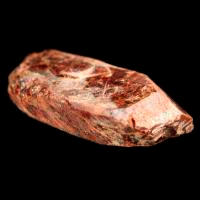
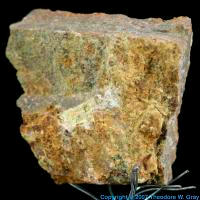
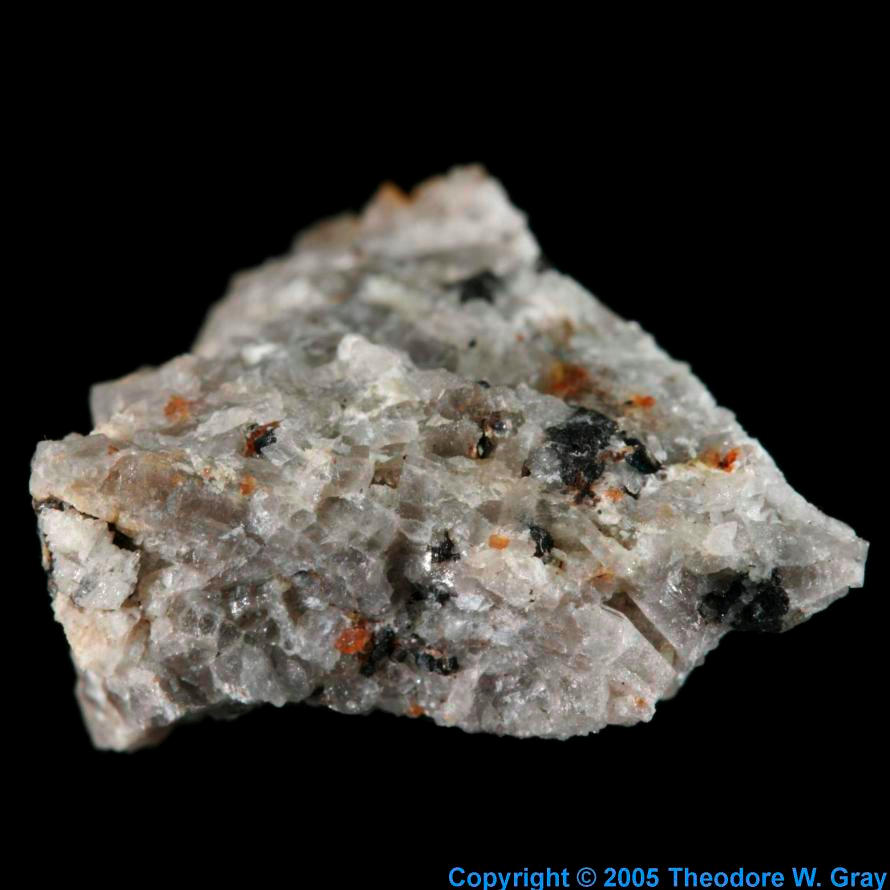
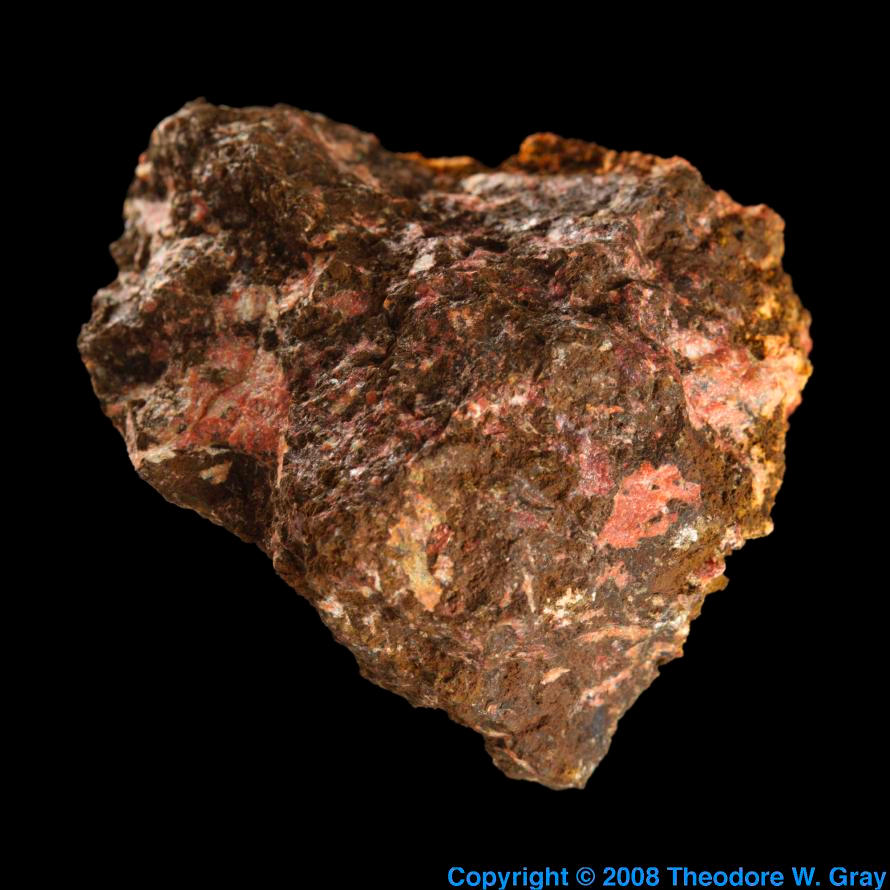
Confiscated Davidite.
This mildly radioactive Davidite ore was confiscated from a student who brought it to school, not realizing that schools tend to freak out about radioactive things, whether they are truly dangerous or not. The original source is United Nuclear and it's perfectly legal.
Source: Anonymous
Contributor: Anonymous
Acquired: 8 May, 2007
Text Updated: 9 May, 2007
Price: Donated
Size: 1"
Composition: (La,Ce,Ca)(Y,U)(Ti,Fe)20O38
|
|
|
|
|
|
|
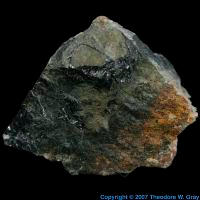
More confiscated Davidite.
This mildly radioactive Davidite ore was confiscated from a student who brought it to school, not realizing that schools tend to freak out about radioactive things, whether they are truly dangerous or not. The original source is United Nuclear and it's perfectly legal.
Source: Anonymous
Contributor: Anonymous
Acquired: 8 May, 2007
Text Updated: 9 May, 2007
Price: Donated
Size: 1"
Composition: (La,Ce,Ca)(Y,U)(Ti,Fe)20O38
|
|
|
|
|
|
|
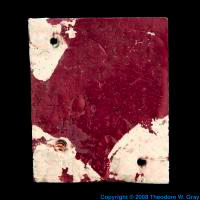
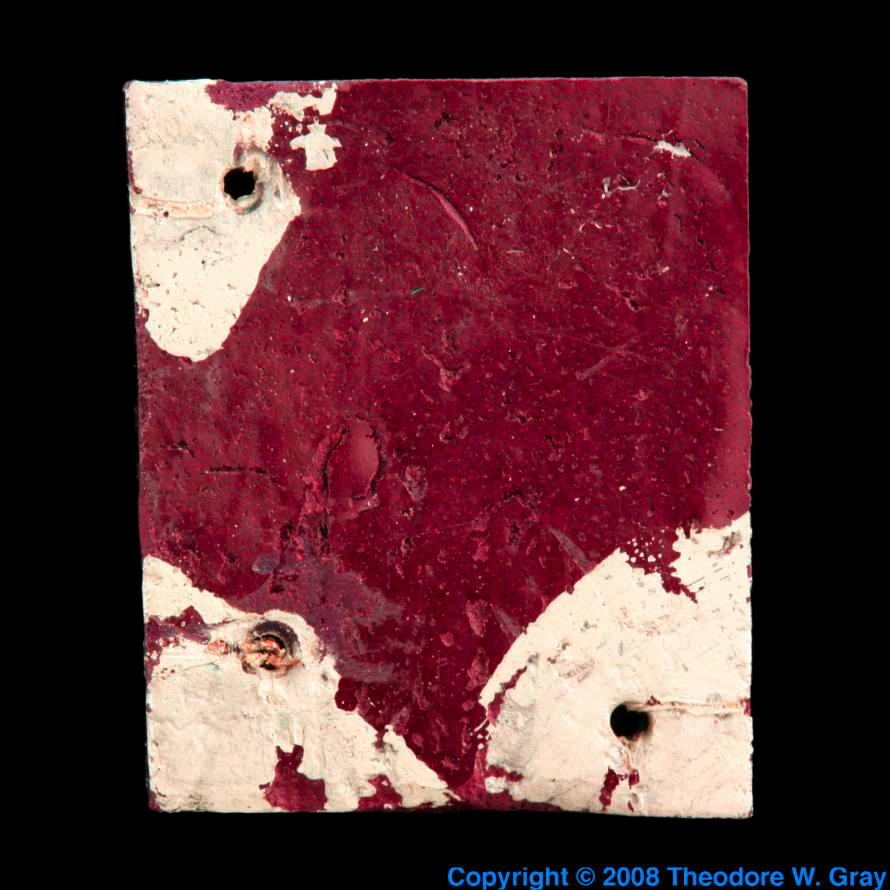
Lanthanum Boride.
From the source:This is a very old (relatively) research sample of lanthanum hexaboride. If that chemical name means anything to you, then you likely belong to the 0.01% of the living human population that has been privileged enough to have experience in the realm of electron microscopy, or possibly some other advanced technology involvingthe precise blasting of electrons.
The one and only industrial use for this compound (and the reason for this sample's existence) is as a cathode for emitting electrons into some sort of very expensive piece of equipment. Lanthanum hexaboride happens to have a very small "work function," which is basically a quantitative measure of how much energy it takes for the material to spontaneously spit out an electron. Low work function, more electrons per quanta of energy! It gets much more complicated and less fun (math math math) the more questions one asks, so we'll leave it at that.
So, nowadays, very small (around the size of a grain of sand) perfect single crystals of LaB6 are grown to be used as the most common filament in modern electron microscopes. When I say perfect, I mean that the surfaces of the crystal are not far off from being atomically flat. This is not actually accomplished through the growing process, but rather the post-growth treatment and "polishing." Other cathode materials can be used for various reasons (tungsten metal is still common), but lanthanum hexaboride is widely regarded as the best performing and most reliable. Which neatly segues to this sample: one glance tells us that this is not a single crystal, and it is actually a good-sized chunk. This piece dates from approximately 40 years ago, when lanthanum hexaboride was just discovered as an interesting material. I'm not quite sure which particular property was being investigated with this sample, but all of the compound's electronic properties were measured exhaustively--conductivity, Hall effect, and then that nifty work function. The large white patches and holes in the corners are an artifact of this battery of tests--wires were wrapped around the material through the holes, and an epoxy filled with tiny silver particles was applied to cement these measurement wires in place and guarantee a good electrical connection (so this is actually two element samples in one!). As for the wavy surface texture in the back, I'm not sure- certainly it ended up like that from whatever method was used to fabricate this small block of the material, but I'm not sure what might cause that particular appearance. Bathe in the purple glory of this beautiful and interesting compound that was completely unknown to science when your parents were in school (almost no matter who you are).
Source: Ethan Currens
Contributor: Ethan Currens
Acquired: 14 October, 2008
Text Updated: 1 March, 2009
Price: Donated
Size: 1"
Composition: LaB6
|
|
|
|
|
|
|
|
|
|
|
|
|
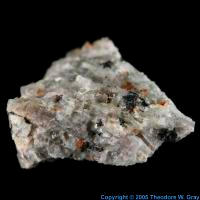
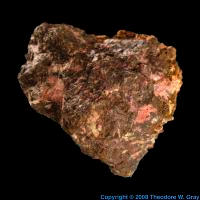
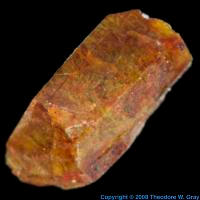
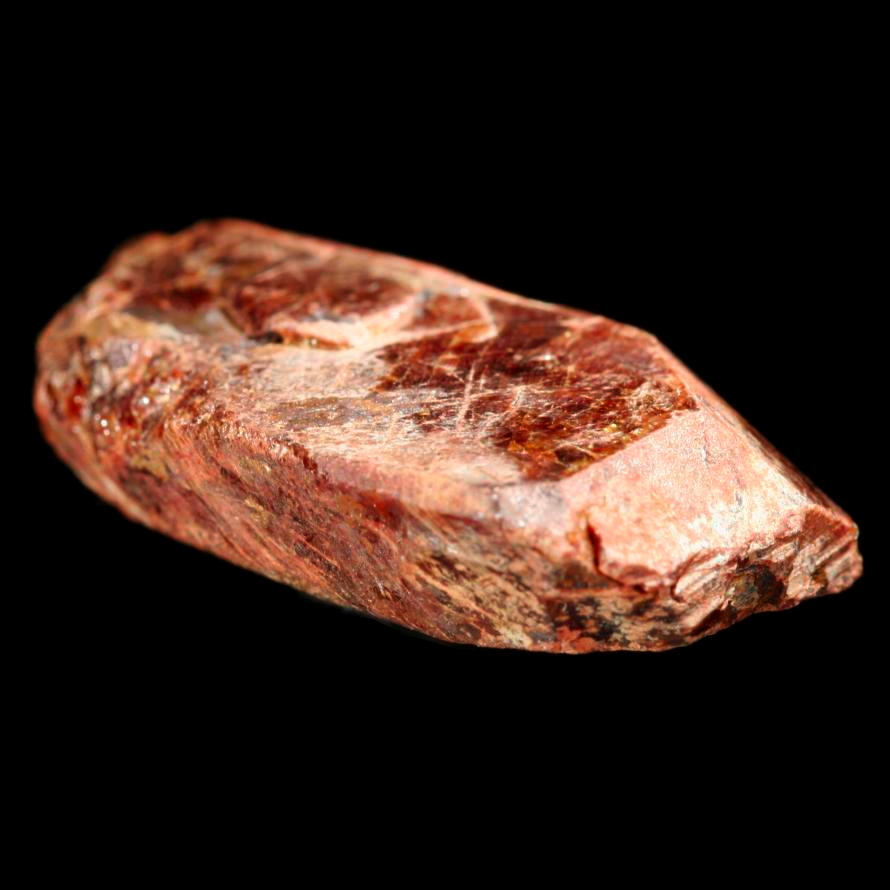
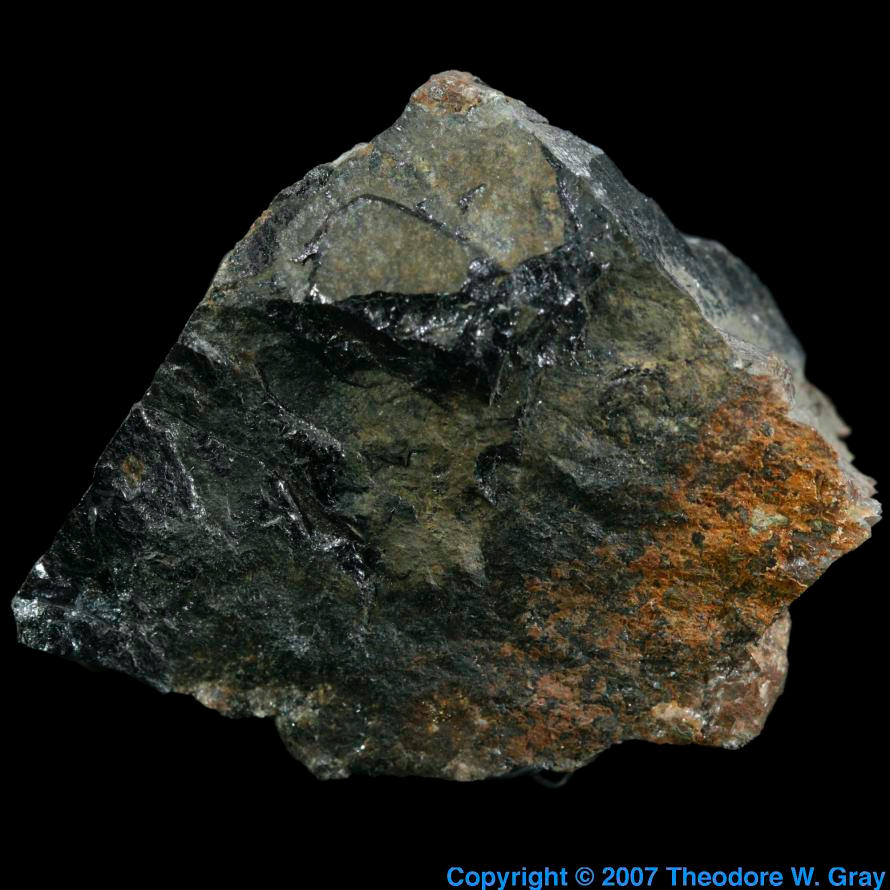
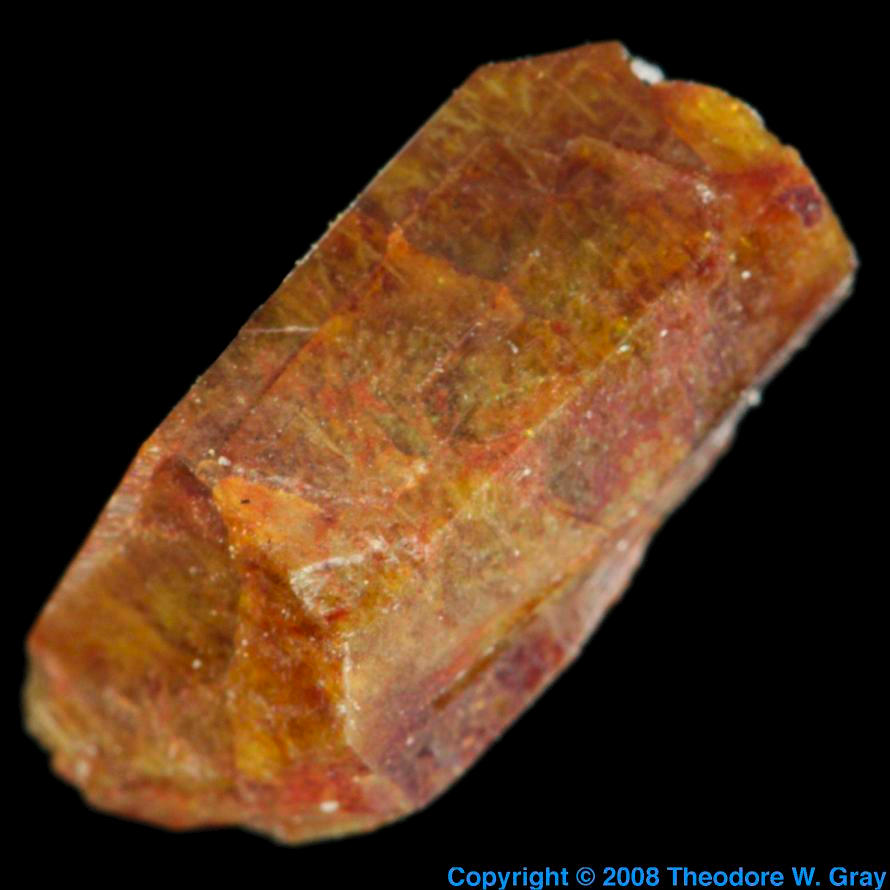
Monazite.
Description from the source:
Monazite ( (Ce La Nd Th) P O4 mon.), Steli near Tveit, Iveland, Nordge. Extremely well crystallized example. 0,8x0,4x0,4 cm; 5 g with box.
Source: Simone Citon
Contributor: John Gray
Acquired: 28 January, 2009
Text Updated: 29 January, 2009
Price: Trade
Size: 0.3"
Composition: (CeLaNdTh)PO4
|
|
|
|
|
|
|
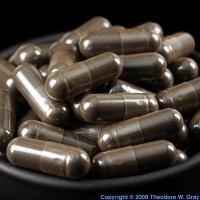
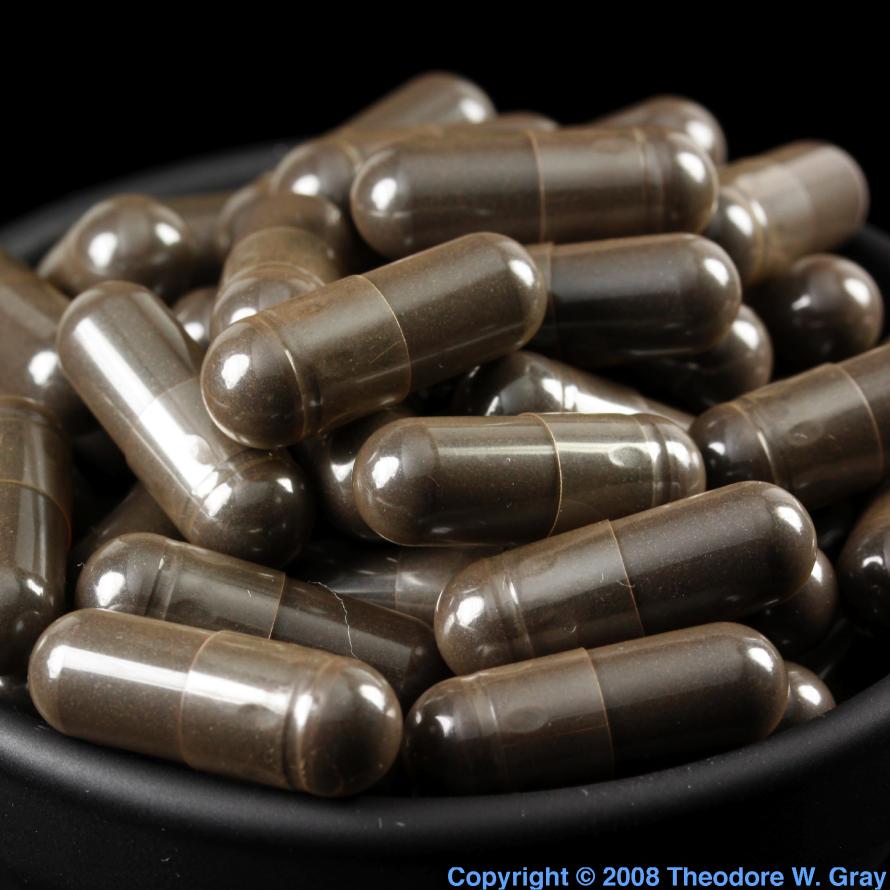
Insane mineral capsules.
These minerals capsules are called "Immune Boost 77", from Morningstar Minerals. They are either being incredibly honest, or they really don't understand what they're saying when they list what amounts to nearly the entire periodic table on the label, as the "trace minerals" they contain.
Here is the list in all its glory, typed in by my daughter in exchange for my paying for a membership in the Miley Cyrus fan club: Antimony, Barium, Beryllium, Bismuth, Boron, Bromine, Calcium, Carbon, Cerium, Cesium, Chloride, Chromium, Cobalt, Copper, Dysprosium, Erbium, Europium, Florine, Gadolinium, Gallium, Germanium, Gold, Hafnium, Holmium, Indium, Iodine, Iridium, Iron, Lanthanum, Lithium, Lutetium, Magnesium, Manganese, Molybdenum, Neodymium, Niacin, Nickel, Niobium, Osmium, Palladium, Phosphorus, Platinum, Potassium, Praseodymium, Rhenium, Rhodium, Rubidium, Ruthenium, Samarium, Scandium, Selenium, Silicon, Silver, Sodium, Strontium, Sulfur, Tantalum, Thallium, Thorium, Tellurium, Terbium, Thulium, Tin, Titanium, Tungsten, Vanadium, Ytterbium, Yttrium, Zinc, Zirconium.
Some of them are just silly, like thulium, which has absolutely no biological function. Others are a bit scarier, like thallium and thorium that are deadly poisons, and tellurium, which makes you smell of rotten onions for weeks.
Basically what they've done is list everything that occurs in even trace amounts in mixed monazite sand, which is kind of what the stuff inside looks like. The only reason they aren't seriously harmful (I assume) is that most of these are not actually present in any meaningful quantity.
My attention is drawn to these and other similar mineral supplements every time I decide to see if anything interesting has popped up on eBay for one or another of the obscure rare earths. Generally speaking if you search eBay for those guys you get very little of interest unless you turn on the option to search the text of the item description as well as the titles. Then you get lots of trace mineral supplements that one can only hope don't actually contain them.
Source: eBay seller grandma-adams
Contributor: Theodore Gray
Acquired: 24 March, 2009
Text Updated: 29 March, 2009
Price: $15
Size: 0.75"
Composition: SbCsDyErEuGdHfHoInLaLuNdPrSmScThTlTeTbTmYbY
|
|
|
|
|
|
|
|
|
|
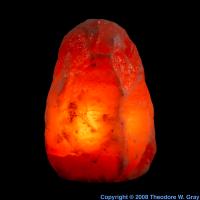
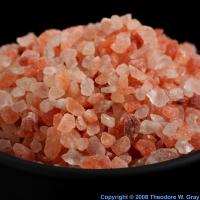
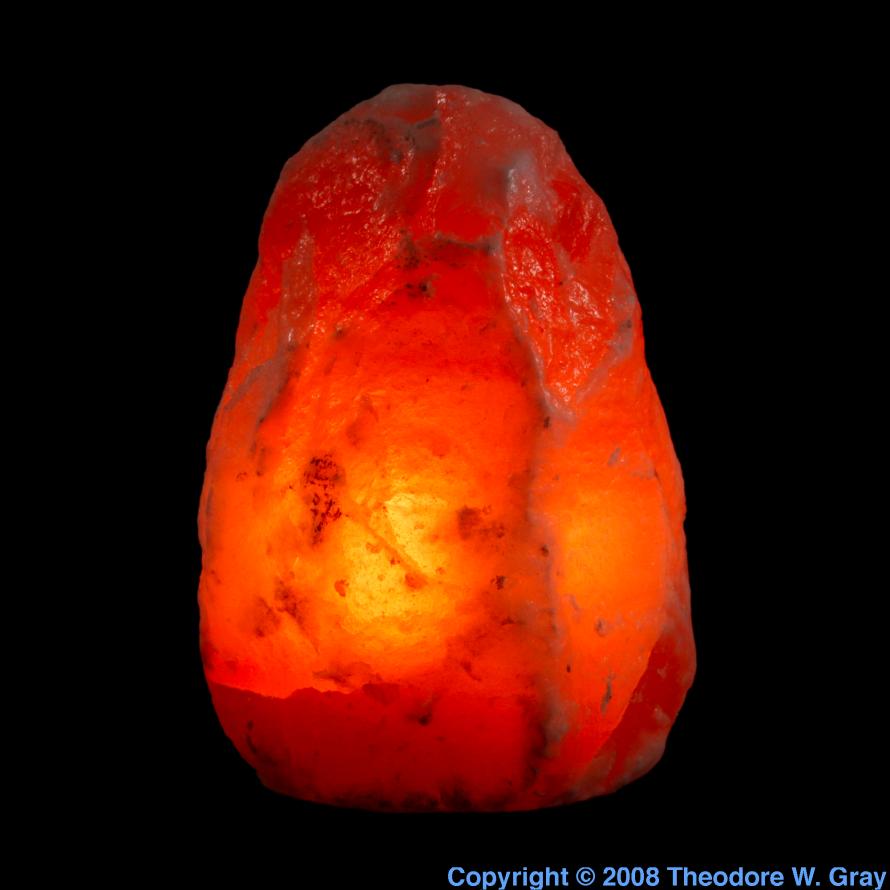
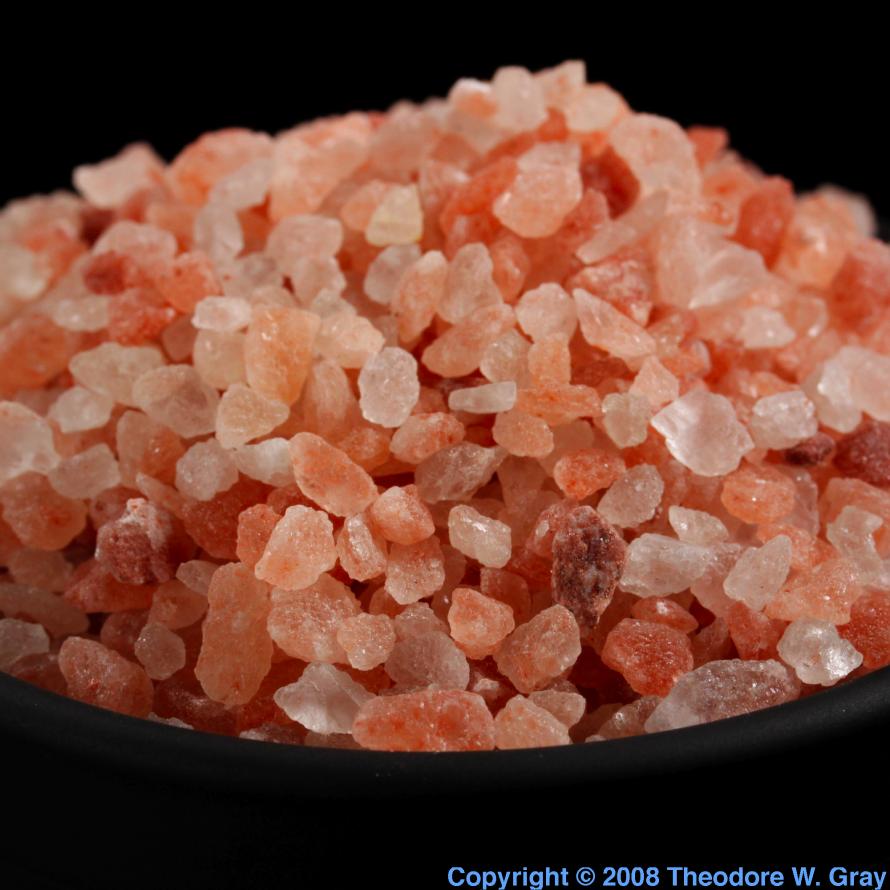
Himalayan sea salt.
There is a list of 84 elements that seems to pop up repeatedly in the ingredient lists of "natural" mineral products, supplements, pills, and the like. Even, it turns out, in salt. Here then is the list of minerals claimed to be found in all-natural organic Himalayan sea salt:hydrogen, lithium, beryllium, boron, carbon, nitrogen, oxygen, fluoride, sodium, magnesium, aluminum, silicon, phosphorus, sulfur, chloride, calcium, scandium, titanium, vanadium, chromium, manganese, iron, cobalt, nickel, copper, zinc, gallium, germanium, arsenic, selenium, bromine, rubidium, strontium, yttrium, zirconium, niobium, molybdenum, ruthenium, rhodium palladium, silver, cadmium, indium, tin, antimony, tellurium, iodine, cesium, barium, lanthanum, cerium, praseodymium, samarium, europium, gadolinium, terbium, dysprosium, holmium, erbium, thulium, ytterbium, lutetium, hafnium, tantalum, tungsten, rhenium, osmium, iridium, platinum, gold, mercury, thallium, lead, bismuth, polonium, astatine, francium, radium, actinium, thorium, protactinium, uranium, neptunium and plutonium. I wish someone would tell these people that, for example, neptunium and plutonium do not occur in nature at all, let alone in salt. Unless, I suppose, if you count nuclear fallout as a "natural" source of ingredients.
What bothers me most is what this says about the level of scientific literacy, both of the people selling the stuff, and the people buying it. Does no one actually read the list? Or do they read it an not realize how preposterous it is? It's enough to make you despair for the future of mankind.
Pretty salt, though.
Source: eBay seller saltwonders
Contributor: Theodore Gray
Acquired: 28 March, 2009
Text Updated: 4 April, 2009
Price: $15
Size: 0.25"
Composition: NaClSbCsDyErEuGdHfHoInLaLuNdPrSmScThTlTeTbTmYbY
|
|
|
|
|
|
|
|
|
|
|
|