|
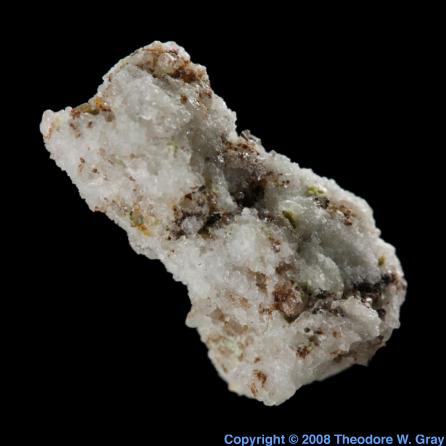
|
|
|
|
|
|
|
|
|
|
|
|
|
|
|
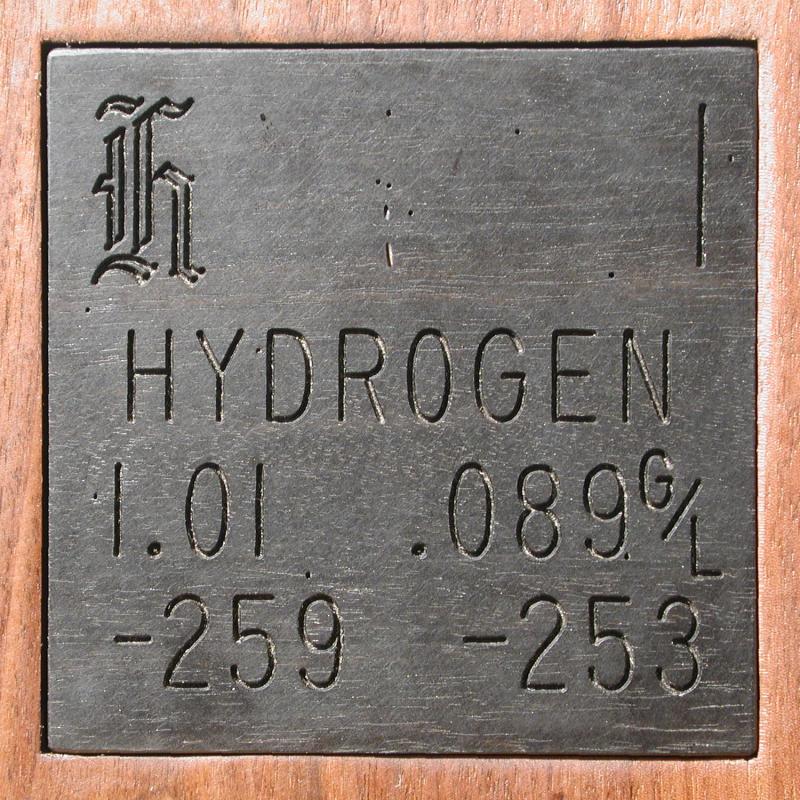
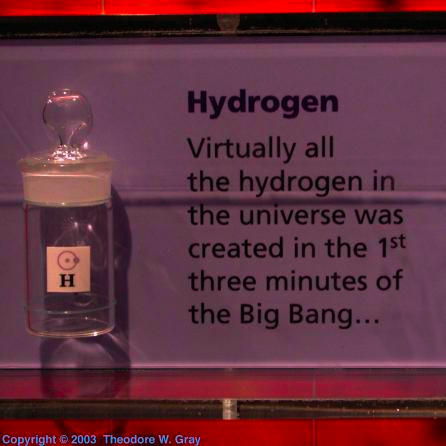
Hydrogen is the first, the simplest, the lightest, and the most common element by far. About 90% of all the matter in the universe is hydrogen. Along with carbon and oxygen, it is one of the fundamental building blocks out of which all living things are built.
In pure form, hydrogen is a gas, H2. Because the density of a gas (at a given temperature and pressure) depends mostly on the atomic weight of the atoms or molecules in it, hydrogen is the lightest gas of all. This tempted people to use it for balloons and blimps until the well known Hindenburg disaster, which illustrated that, as a gas, hydrogen is rather flammable. When you burn hydrogen in air, the combustion product is plain water:
2H2 + O2 -> 2H2O
This makes it very attractive as a clean-burning fuel: It's hard to imagine a more friendly energy economy than one based on using solar energy to split water into hydrogen and oxygen, storing the hydrogen, then burning it back into water in cars, fuel cells, etc. The net effect of the whole enterprise would be to transport an insignificant amount of water from the oceans to the cities. Compared to digging up carbon and burning it into carbon dioxide, the environmental impact would be just about nothing.
|
|
| |
|
|
|
|
|
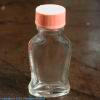
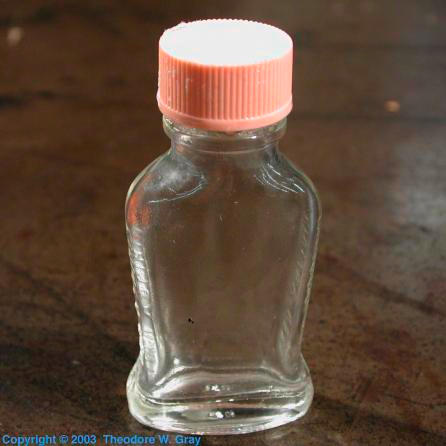
  Bottle of Homemade hydrogen. Bottle of Homemade hydrogen.
This is a very Martha Stewart sample: I made it from scratch with two batteries, two paper clips, and a cup of salt water. (Sorry Martha, I did not use flavored sea-salt.)
Making hydrogen gas is actually very easy, and you can read all about how to do it by clicking the story book icon for this sample.
Source: Theodore Gray
Contributor: Theodore Gray
Acquired: 20 August, 2002
Price: $0
Size: 2.5"
Purity: >90%
|
|
|
|
|
|
|
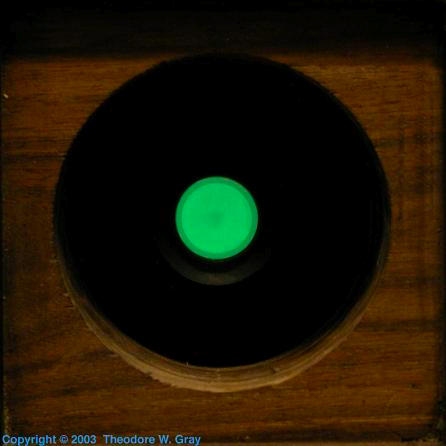
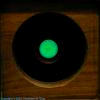
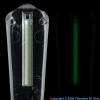
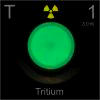
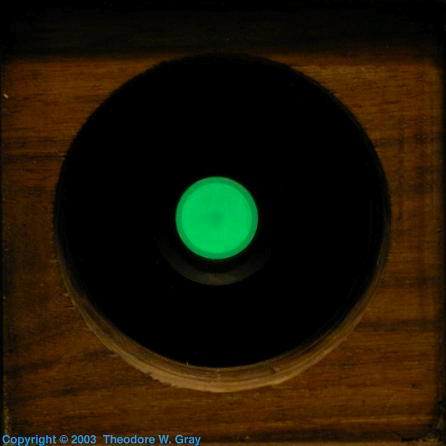
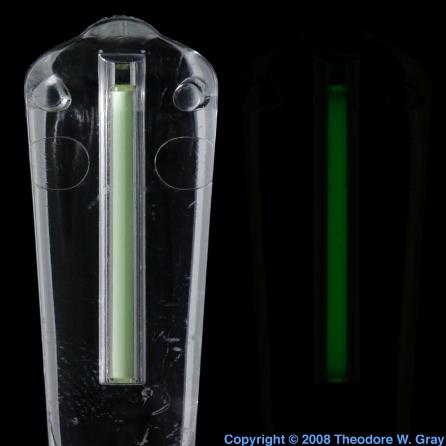
Tritium location marker.
Tritium is hydrogen with two extra neutrons. That is, the nucleus is one proton and two neutrons instead of just a plain proton like normal hydrogen. Deuterium (see below) is hydrogen with only one extra neutron. Tritium is radioactive, while deuterium and hydrogen are not.
Tritium has two main uses: Thermonuclear weapons and glow in the dark key chains, buttons and exit signs. This particular item is a "location marker" used typically in military situations on ships to make visible the location of obstacles, etc. Tritium is also used as a tracer in certain biochemical reactions, because it can stand in for hydrogen, which is in everything, and you can determine where even vanishingly small quantities of it are by measuring the radioactivity.
Tritium key chains are banned in the US as a "frivolous" use of tritium, but you can legally buy location markers and such like provided you certify that they will be permanently affixed in a stationary location, which is registered with the government. My Periodic Table is such a registered location now, and the marker you see here is screwed down with three spanner-head tamper-proof screws per manufacturers recommendation. (Those frivolous Europeans do not have such limitations, and you can freely buy tritium key chains, tritium fishing lures, probably tritium bellybutton rings if you look hard enough.)
This thing, amazingly, will glow like this for the next twenty years with no batteries, no recharging with room light, no nothing, it just glows. The tritium, with a half-life of 12.5 years, decays emitting an electron, which strikes a phosphor coating inside the glass tube, which in turn emits the green light you see.
It's plainly visible even during the day, if you're in a shadowed corner of the room or cup your hands over it. In the dark it is quite bright.
I was looking at it recently and it's an awe inspiring sight, when you think about how many billions of atoms are decaying every single second to make the billions of photons you see, and that this will keep up every second of every minute for years and decades to come, and it still won't be all out of tritium. And that's in a tiny tube no bigger than the end of your thumb. It really gives you an impression of just how big the number of atoms is, and how small they must be.
While makers of these things claim no radioactivity escapes through the glass, this is only mostly true. I measure about 500 counts per minute, slightly but distinctly above background. Of course, this is about the same level I measure from 4 tablespoons full of salt substitute which people actually buy at the grocery store and then eat (it contains a small percentage of naturally occurring radioactive potassium-40). And it is stopped by a few inches of air. In other words, if you're concerned about it, don't enter the grocery store, because you'll get more there than from this marker.
Source: Ameriglo
Contributor: Theodore Gray
Acquired: 30 August, 2002
Text Updated: 29 March, 2009
Price: $65
Size: 1"
Purity: >90%
|
|
|
|
|
|
|
Tritium key chains.
Tritium key chains are banned in the US, along with other "frivolous" uses. And portable devices, like map reading lights, that use tritium can be sold only to law enforcement, military, and emergency response personnel. In Europe and Asia tritium key chains and even fishing lures are popular, and legal for anyone. Go figure.
If you want a tritium key chain, you can buy one on eBay and get it shipped here from the UK, where it is being sold perfectly legally, in less than a week. Of course since it's not legal to possess them here, if I'd done this and had one, would I really be advertising that fact on the internet?
Source: eBay seller marky23uk
Contributor: Theodore Gray
Acquired: 5 September, 2002
Price: $7
Size: 1"
Purity: >90%
|
|
|
|
|
|
|
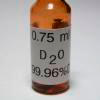
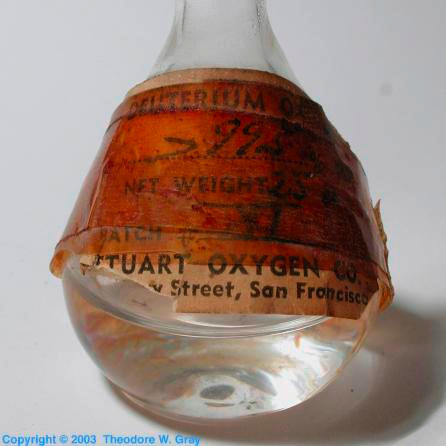
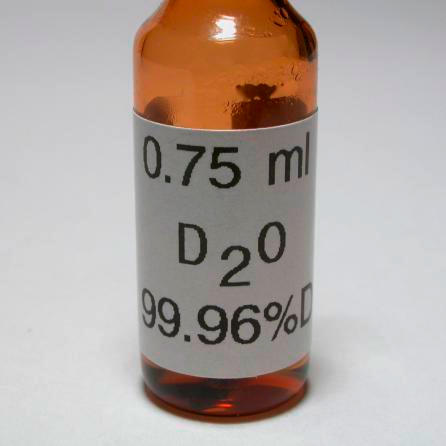
Heavy water.
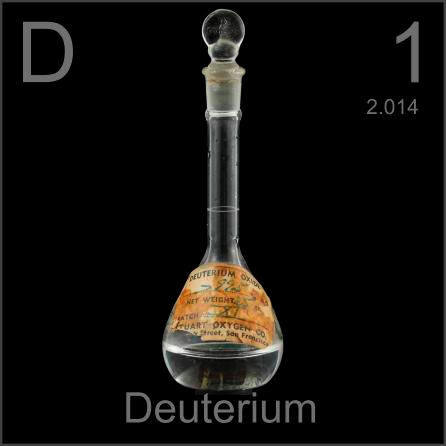
Deuterium is hydrogen where each nucleus has a neutron as well as the standard proton in it. This makes it basically twice as heavy as normal hydrogen. Heavy water is water (H2O) in which the two hydrogens are replaced by two deuterium atoms. The total molecular weight of heavy water is 20 instead of 18 for normal water, so it's really not all that much heavier.
Deuterium is not radioactive, and for most chemical purposes it is a virtually identical stand in for hydrogen, which means you could probably drink this water and suffer no ill effects. You first. (People differ on how toxic heavy water really is, but people have drunk glasses of heavy water without apparent serious ill effects. Animals have been grown on heavy water and when they are about 20-30% deuterated they do start to show serious problems.)
Click the source link for an interesting story about where this sample came from.
Source: Tryggvi Emilsson and Timothy Brumleve
Contributor: Tryggvi Emilsson and Timothy Brumleve
Acquired: 6 September, 2002
Price: Donated
Size: 1.5"
Purity: 20%
|
|
|
|
|
|
|
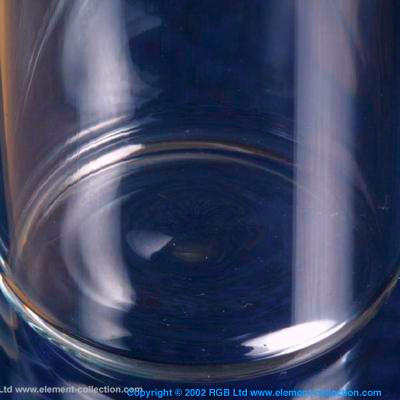
Sample from the RGB Set.
The Red Green and Blue company in England sells a very nice element collection in several versions. Max Whitby, the director of the company, very kindly donated a complete set to the periodic table table.
To learn more about the set you can visit my page about element collecting for a general description or the company's website which includes many photographs and pricing details. I have two photographs of each sample from the set: One taken by me and one from the company. You can see photographs of all the samples displayed in a periodic table format: my pictures or their pictures. Or you can see both side-by-side with bigger pictures in numerical order.
The picture on the left was taken by me. Here is the company's version (there is some variation between sets, so the pictures sometimes show different variations of the samples):
Source: Max Whitby of RGB
Contributor: Max Whitby of RGB
Acquired: 25 January, 2003
Text Updated: 11 August, 2007
Price: Donated
Size: 0.2"
Purity: 99.9%
|
|
|
|
|
|
|
Sample from the Everest Set.
Up until the early 1990's a company in Russia sold a periodic table collection with element samples. At some point their American distributor sold off the remaining stock to a man who is now selling them on eBay. The samples (except gases) weigh about 0.25 grams each, and the whole set comes in a very nice wooden box with a printed periodic table in the lid.
To learn more about the set you can visit my page about element collecting for a general description and information about how to buy one, or you can see photographs of all the samples from the set displayed on my website in a periodic table layout or with bigger pictures in numerical order.
Source: Rob Accurso
Contributor: Rob Accurso
Acquired: 7 February, 2003
Text Updated: 20 November, 2008
Price: Donated
Size: 0.2"
Purity: >99%
|
|
|
|
|
|
|
|
|
|
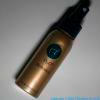
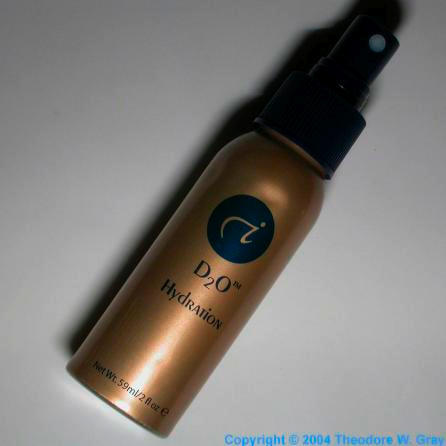
D2O refreshing spray.
Oh my, what a concept! This is sold by a company that, on its website, claims it contains heavy water, whose benefits include that it evaporates more slowly than ordinary water (protecting your skin from drying out, naturally), and that it absorbs UV rays. The bottle itself lists only "Water" not specifically heavy water, but then I'm not sure what the proper FDA-approved name for heavy water would be other than "water". I doubt the FDA has really thought about it very much since heavy water is toxic and surely not allowed in foods or cosmetics. (Heavy water becomes toxic only in pretty large amounts, so if it does contain heavy water, using it probably isn't really dangerous, just a bit creepy if you ask me. The benefits are of course entirely illusionary.)
It's a guess, but I'm going to go with the assumption that they would rather risk a charge of false advertising than a charge of distributing a toxic product, so I'm listing this as containing no actual deuterium.
Source: 1sh Chair Skin Care Salon
Contributor: Theodore Gray
Acquired: 12 July, 2004
Text Updated: 11 March, 2007
Price: $16.50
Size: 5"
Purity: 0%
Sample Group: Medical
|
|
|
|
|
|
|
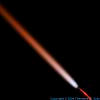
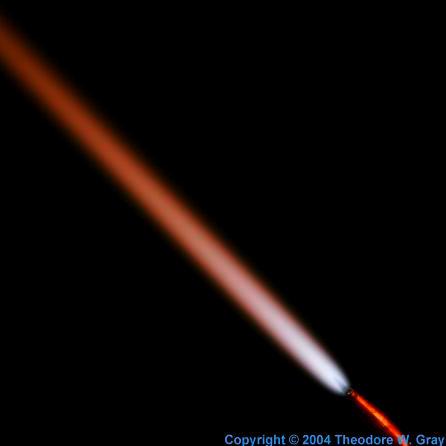
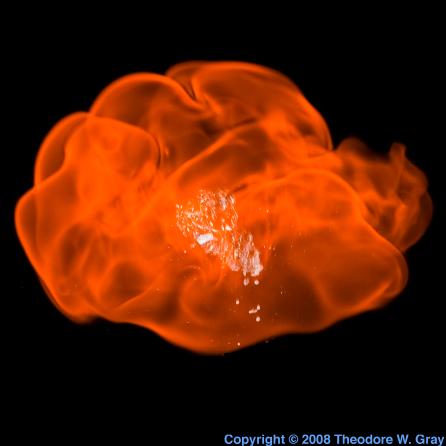
  Oxy-hydrogen flame. Oxy-hydrogen flame.
OK, I don't really have an eternal hydrogen flame burning as a sample in my collection. This particular flame burned for about half an hour in my shop, while I was photographing it rotating on a very slow turntable. Click the turntable icon to see the resulting rotating image. The flame is coming out of a very, very small torch, made for the jewelry industry. In half an hour of operation it uses only about 2 cubic feet of hydrogen, and that's with the biggest of the 5 tips it comes with. The holes in the smaller tips are so tiny they have to use laser-drilled sapphire inserts in the tips.
Source: Claudin Welding Supply
Contributor: Theodore Gray
Acquired: 8 May, 2005
Price: $2
Size: 4"
Purity: 99%
|
|
|
|
|
|
|
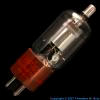
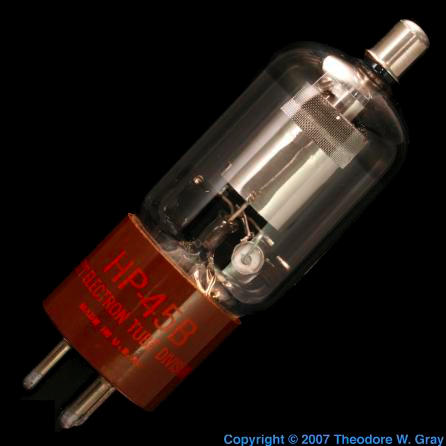
HP-45B hydrogen thyratron.
A thyratron is a vacuum tube used to switch on high voltages. They act like a switch that can be turned on by applying a small voltage to a control terminal. They can only switch on, not off: They turn back off only when the voltage being controlled drops to zero on its own. The modern equivalent is the SCR (silicon controlled rectifier) and triac.
This one contains a small (less than atmospheric pressure) amount of hydrogen gas instead of a pure vacuum. Various different gases are used in thyratrons, and apparently the hydrogen variety is used when particularly fast switching times are required.
Source: eBay seller tapent
Contributor: Theodore Gray
Acquired: 24 February, 2007
Text Updated: 29 April, 2007
Price: $5
Size: 5"
Purity: <1%
|
|
|
|
|
|
|
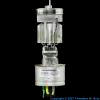
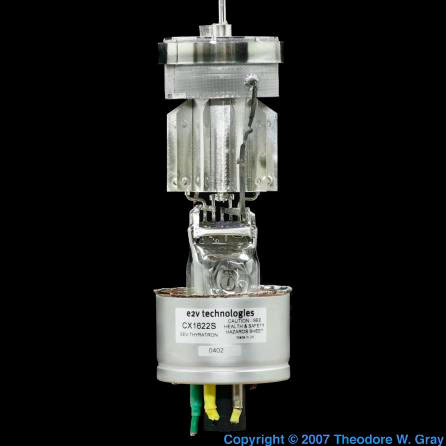
CX1622S hydrogen thyratron.
This is a fairly large hydrogen thyratron (see previous sample for more about what that means). I sawed the glass envelope off this one because it was coated on the inside with an opaque film of evaporated metal, not uncommon for a vacuum tube that has been operated for a while.
Before sawing off the glass around the base, I very, very carefully cracked the stem of glass coming off the top, with the tube completely wrapped in a thick fiberglass blanket. I was expected some kind of violent reaction involving glass flying everywhere as air rushed in, but nothing of the sort happened, in fact I didn't even hear a hiss. I wonder if this means that hydrogen thyratrons actually have a fairly high pressure of hydrogen, close to a full atmosphere, in them. I haven't found any references to how much is typically in them, but one thing I can say for sure is that this sample hydrogen sample no longer contains any hydrogen: That all escaped as soon as I cracked the glass.
Source: eBay seller gulfbeachbum
Contributor: Theodore Gray
Acquired: 10 March, 2007
Text Updated: 27 October, 2007
Price: $17
Size: 8"
Purity: 0%
|
|
|
|
|
|
|
|
|
|
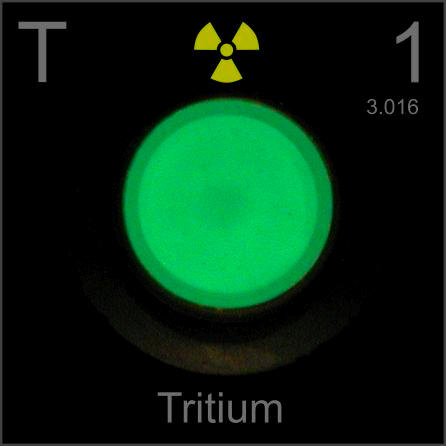
Tritium poster sample.
This sample exists for just one reason: To provide an excuse to use "T" as a pseudo-element name in my spell-with-elements game and Custom banner ordering page.
You'll find the same sample a few items back if you want to read about what this tritium location marker is all about.
Source: Ameriglo
Contributor: Theodore Gray
Acquired: 30 August, 2002
Text Updated: 2 April, 2008
Price: $65
Size: 1"
Purity: >90%
|
|
|
|
|
|
|
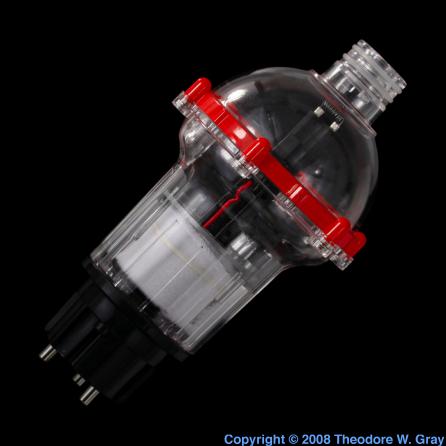
Toy hydrogen rocket launcher.
This plastic globe contains a pair of electrodes and an igniter coil. Normally there would be a lightweight rocket slipped over a tube coming out the top, and it would be mounted in a base filled with batteries. The batteries supply power to the electrodes to split water in the globe into hydrogen and oxygen, and after enough of that has built up, you push the launch button and the igniter coil heats up and lights the hydrogen-oxygen mixture. It goes bang, the rocket shoots up, and glee ensues.
Source: Radio Shack
Contributor: Theodore Gray
Acquired: 15 April, 2009
Text Updated: 15 April, 2009
Price: $10
Size: 6"
Purity: 0%
|
|
|
|
|
|
|
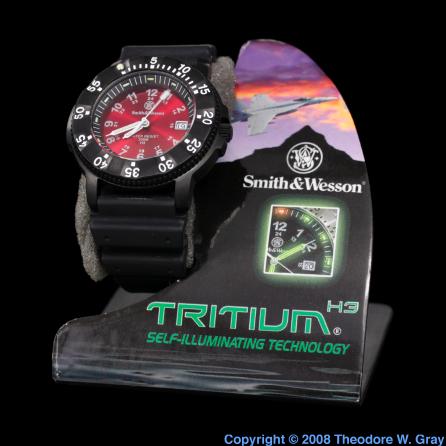
Tritium luminous watch.
A relatively cheap watch with tritium luminous tasers on the hands. By "cheap" I mean "cheap enough that the hour and minute hands have failed already". Only the second hand still glows.
Source: eBay
Contributor: Theodore Gray
Acquired: 16 April, 2009
Text Updated: 17 April, 2009
Price: $70
Size: 2"
Purity: <0.1%
|
|
|
|
|
|
|
|
|
|
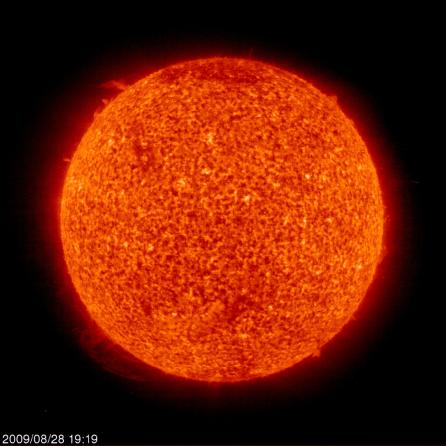
The Sun.
The sun is 75% hydrogen by weight, making it a fairly good sample of this element.
Source: Big Bang
Contributor: The Universe
Acquired: 31 October, 2009
Text Updated: 1 November, 2009
Price: Free
Size: 55000000000"
Purity: 75%
|
|
|
|
|
|
|
|
|
|
|
|
|
|
|
|
|
|
|
|
|
|
|
|
|
|
|
|
|
|
|
|
|
|
|
|
|
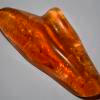
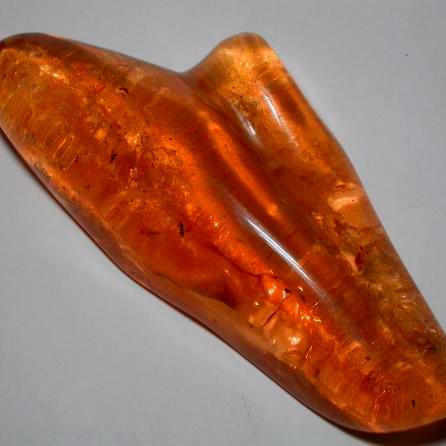
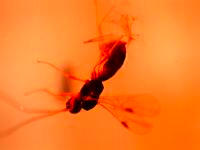
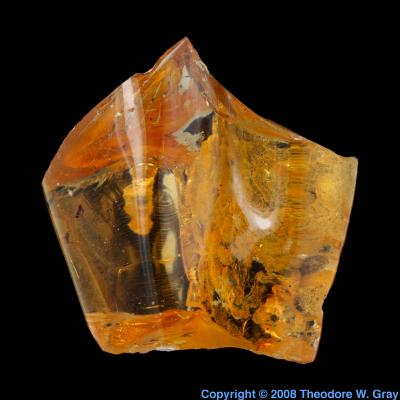
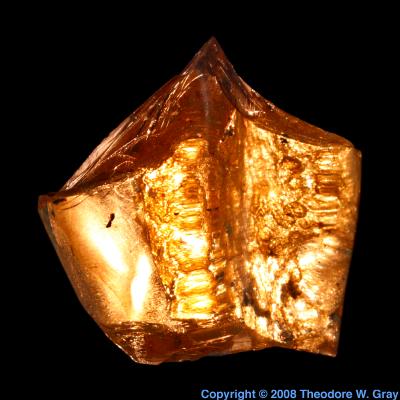
Amber with bugs.
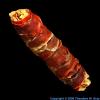
I picked this piece of amber out of literally thousands available at a big fossil show because it was really big, really cheap, and it had bugs in it. It's important to have bugs in your amber if you want to extract DNA and recreate dinosaurs, or impress the kids. I'm told that given the low cost this is probably "copal", not true amber, but hey, it's got bugs in it. Copal is much younger, only a few thousand years rather than potentially millions of years.
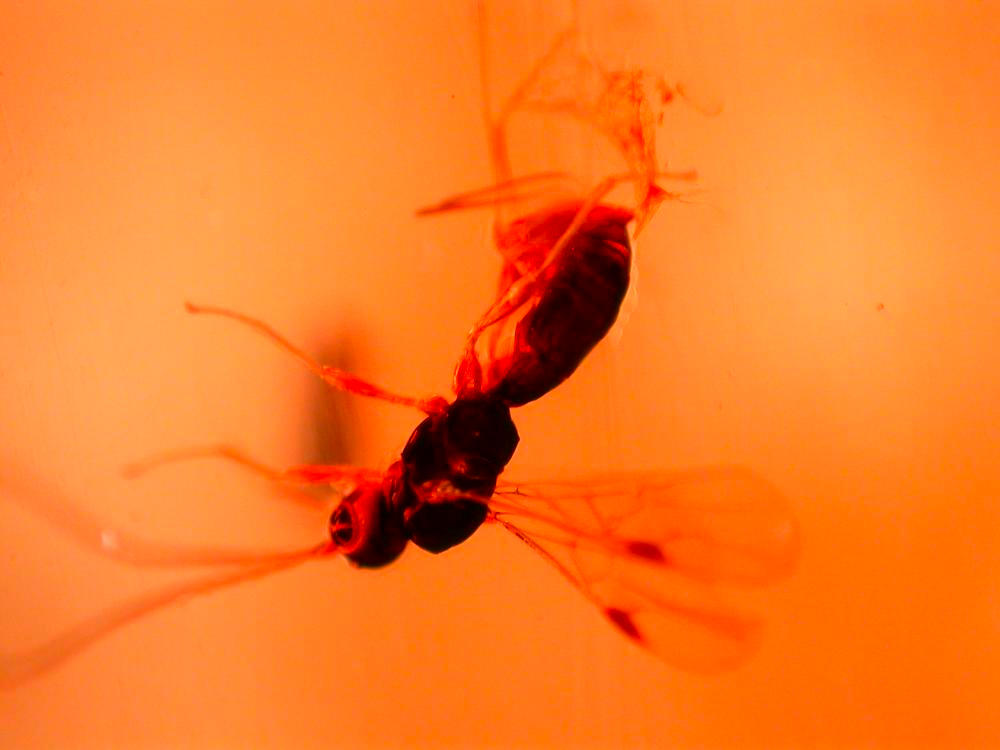
And it does have some really great bugs! Here's a close-up of one, which is about 1/4 inch in overall size:
I don't really know what the chemical composition of amber/copal is, but it's an organic resin which means it must contain carbon and hydrogen, and I figure it probably contains at least some oxygen, so I've listed it as being composed of those three elements, with carbon being the dominant one. Feel free to correct me if you know better.
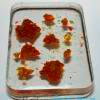
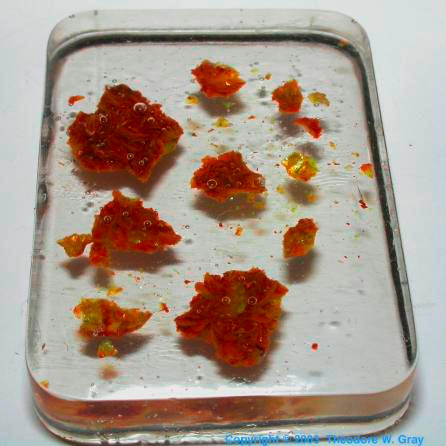
In preparation for my coffee table book The Elements, I had my assistant Nick re-photograph this sample to my new, higher standards. Naturally it fell of the stand and broke into several pieces, which you can see here:
 , , 
Source: Time Trips
Contributor: Theodore Gray
Acquired: 29 March, 2003
Text Updated: 9 April, 2009
Price: $45
Size: 5"
Composition: C10H16O
|
|
|
|
|
|
|
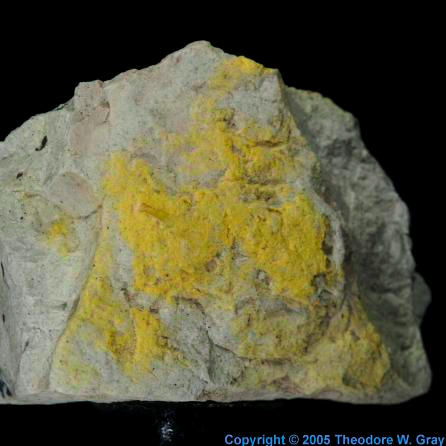
Autunite.
I bought some Fiestaware plates from Jim to use in museum displays I'm helping coordinate, and he threw in this little sample of Autunite, a uranium mineral. He probably has Fiestaware available if you need some.
Source: Jim Markitell
Contributor: Jim Markitell
Acquired: 30 May, 2003
Price: Donated
Size: 1.5"
Composition: Ca(UO2)2(PO4)2.10H2O
|
|
|
|
|
|
|
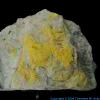
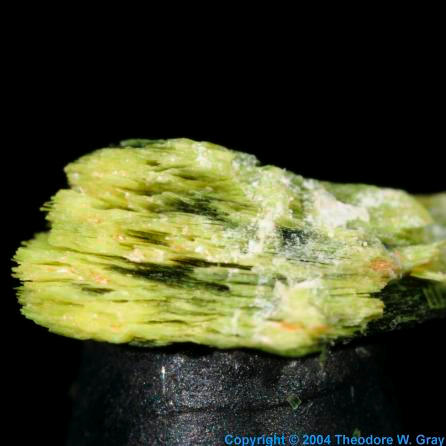
Autunite.
Autunite, if it is not kept in a humid environment, tends to degrade due to loss of water from the crystal matrix (see formula below, which indicates there are 10 molecules of water associated with each atom of uranium). This sample flaked apart as I was trying to mount it for photography, dropping little leaves of radioactivity everywhere. Still, quite pretty.
Source: eBay seller dr**zarkoff
Contributor: Theodore Gray
Acquired: 10 June, 2005
Price: $15
Size: 0.5"
Composition: Ca(UO2)2(PO4)2.10H2O
|
|
|
|
|
|
|
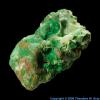
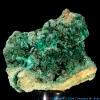
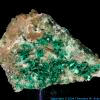
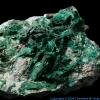
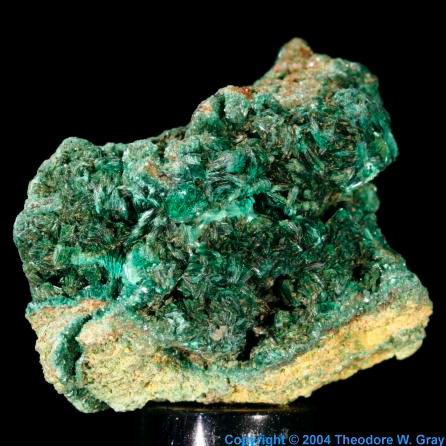
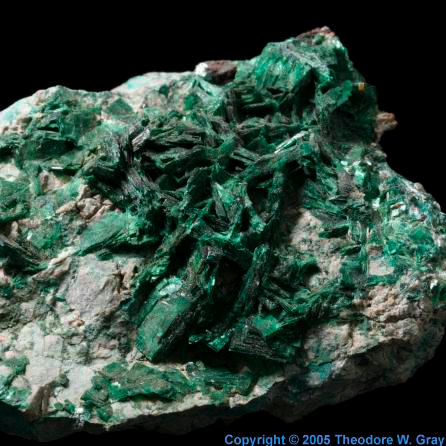
Torbernite.
Torbernite is a lovely, lovely green color (I would guess from the copper). It's also quite radioactive, from the uranium content, and even more so from the mixture of uranium decay products that have built up in it over millions of years.
Source: eBay seller migalf1
Contributor: Theodore Gray
Acquired: 3 June, 2005
Price: $27
Size: 1.5"
Composition: Cu(UO2)2(PO4)2.8-12H2O
|
|
|
|
|
|
|
|
|
|
|
|
|
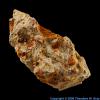
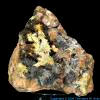
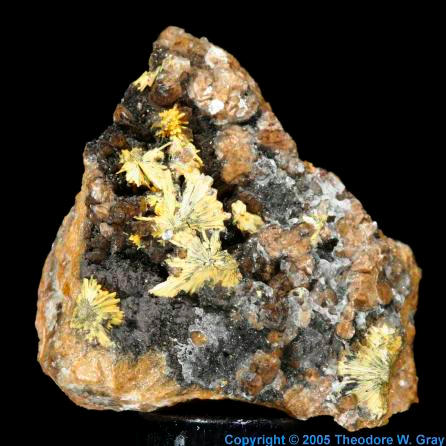
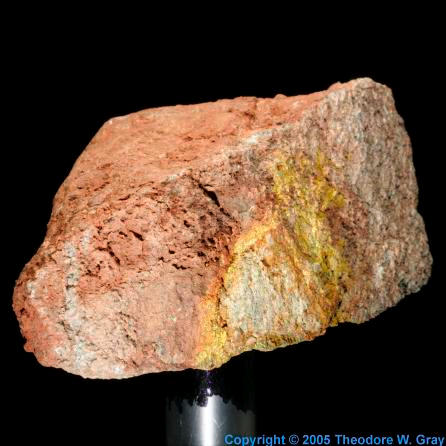
Carnotite.
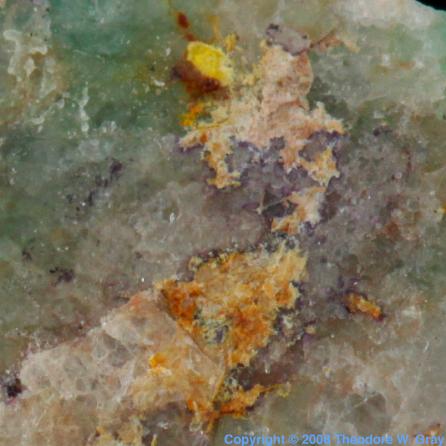
The yellow crust is the carnotite, an ore of uranium that also contains some traces of radium, which is used to justify the name "Radium Ore Revigator" used to describe the water jug you'll find listed under uranium (and which is lined with carnotite).
Source: eBay seller dr**zarkoff
Contributor: Theodore Gray
Acquired: 3 June, 2005
Price: $15
Size: 1.5"
Composition: K2(UO2)2(VO4)2.3H2O
|
|
|
|
|
|
|
|
|
|
|
|
|
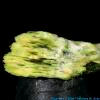
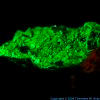
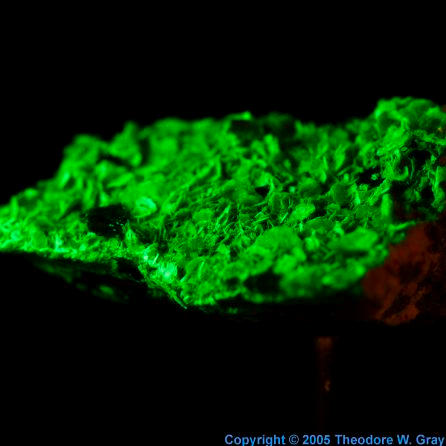
Autunite.
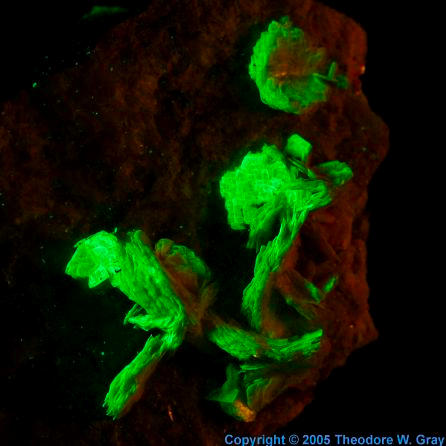
This autunite was donated by the mine owner who dug it up: It's a lovely specimen, photographed here under ultraviolet light. You can get samples of this an other radioactive minerals direct from the mine.
Source: eBay seller boomologist
Contributor: Theodore Gray
Acquired: 25 June, 2005
Price: Donated
Size: 1.5"
Composition: Ca(UO2)2(PO4)2.10H2O
|
|
|
|
|
|
|
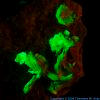
Autunite.
This autunite was donated by the mine owner who dug it up: It's a lovely specimen, photographed here under ultraviolet light. The main picture for this sample actually shows the back side of the sample, which has some very nice large crystals. The front side is completely covered with more autunite crystals: Click the turntable icon on the right to get an image you can rotate around and see from all sides.
You can get samples of this an other radioactive minerals direct from the mine.
Source: eBay seller boomologist
Contributor: Theodore Gray
Acquired: 25 June, 2005
Price: Donated
Size: 1.5"
Composition: Ca(UO2)2(PO4)2.10H2O
|
|
|
|
|
|
|
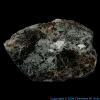
Aeschynite.
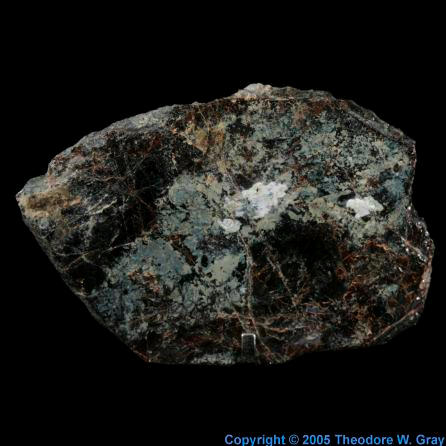
The card that came with this shale-like blackish mineral says the following about the name: "From Gk. aeschyne, shame, alluding to the inability of chemists at the time of its discovery to separate some of its constituents". Hm, I wonder if it was the chemists who came up with this name, or the geologists who gave it to them to analyze.
This specimen is from Molland in Iveland, Norway. I bought it for its thorium content: Not that many minerals contain thorium and I'm trying to collect them all.
Reader Magnus Alvestad sent this interesting information about Iveland:Hi. I noticed that your Aeschynite sample is from Iveland in Norway. The small community of Iveland is actually famous for their mines and minerals. Here's a folder with some information about a local exhibition. They also have at least 5 mines that are open to the public for a small price, where you can dig for minerals yourself.
Source: SoCal (Nevada), Inc
Contributor: Theodore Gray
Acquired: 20 September, 2005
Text Updated: 1 December, 2008
Price: $29
Size: 1.5"
Composition: (Y, Ca, Fe, Th)(Ti, Nb)2(O, OH)6
|
|
|
|
|
|
|
Tourmaline (Dravite variant).
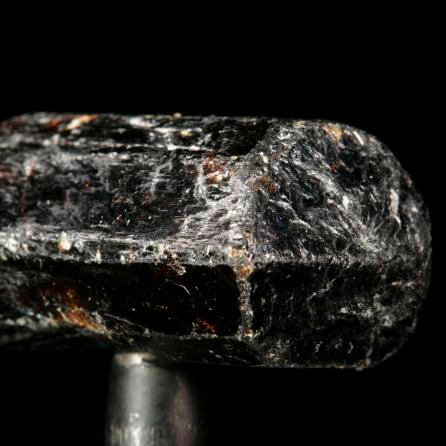
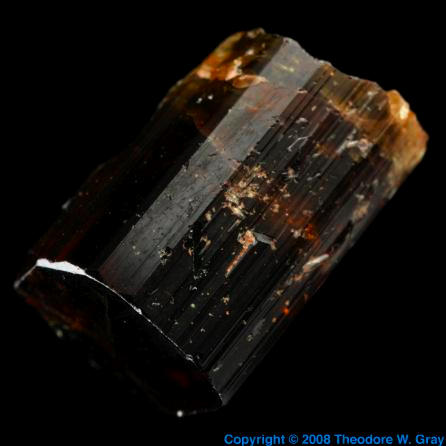
I'm not sure why I have this mineral: I think it may have been a free sample included with some other mineral purchase. Lovely, though of relatively undistinguished chemical composition.
Source: Theodore Gray
Contributor: Theodore Gray
Acquired: 20 September, 2005
Price: Donated
Size: 1"
Composition: NaMg3Al6(BO3)3[Si6O18](OH)3(OH)
|
|
|
|
|
|
|
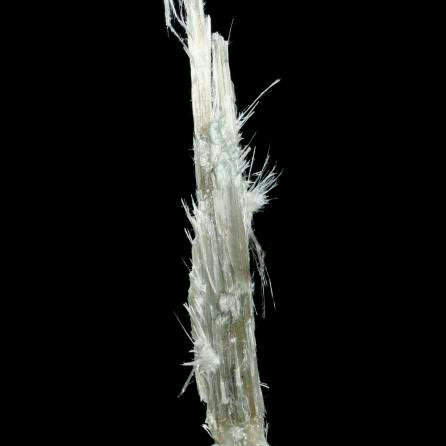
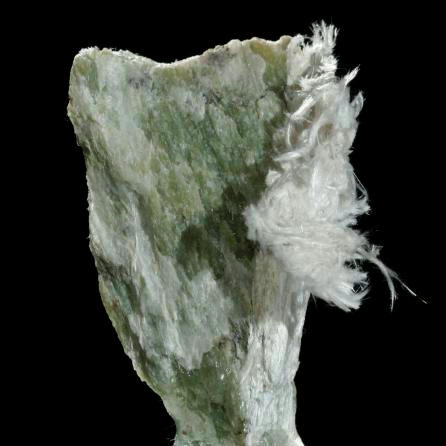
Actinolite asbestos.
The name "asbestos" used to mean a wonder-material, an insulator without equal and a strengthening fiber so cheap and strong it was used in building materials worldwide. Today the name means nothing but death and ruin.
Asbestos had been used so widely and for so long that it must have seemed beyond credibility when evidence first started appearing that it might be harmful. It is, after all, just a natural mineral, a rock dug from the ground. It contains no toxic elements or compounds. As a silicate mineral, asbestos is a member the group of minerals that make up as much as 90% of the earth's crust. How could such a common rock possibly be dangerous?
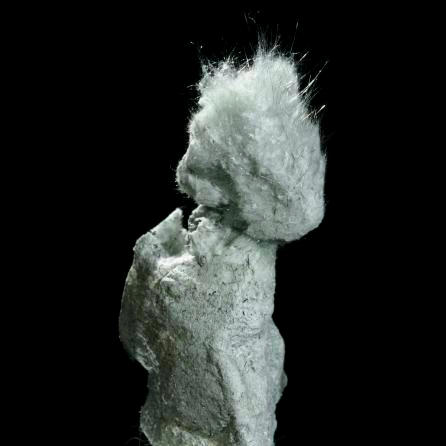
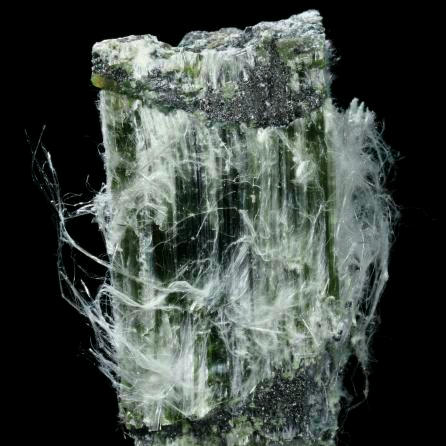
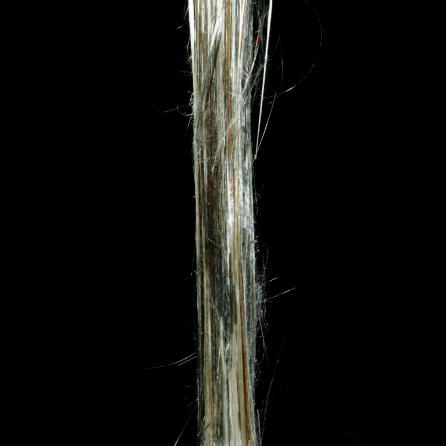
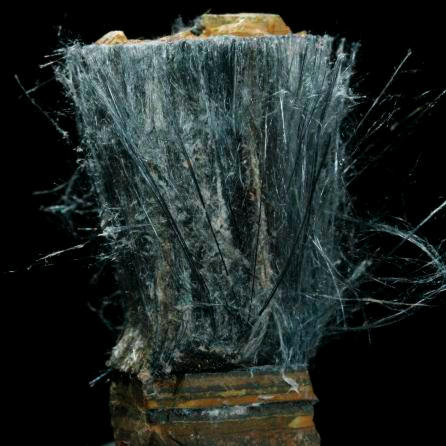
The answer lies in its shape. As you can see from this and the other asbestos samples below, the difference between asbestos and other silicate minerals is that asbestos appears in the form of very fine hair-like fibers. This fibrous nature is what makes it so useful as an insulator and building material: It can be woven, braided, pressed into mats, or mixed with plaster or concrete to make a strong, fiber-reinforced material. (It's also fireproof and impervious to most chemicals: What more could you ask for? To this day there are no really satisfactory substitutes for some applications from which asbestos has been banned.)
The fibers are not just fine, they are ultra-fine: The ends of the natural fibers taper down to molecular sharpness, with a tip that is literally no more than a few atoms across. Lodged in the body, most commonly in the lungs when stray fibers are inhaled, these tips can worm their way into individual living cells and tickle the DNA in a way that no blunt artificial fibers can.
The ability to touch, and damage, DNA makes asbestos fibers potent carcinogens: Remarkably, unlike virtually all other carcinogens, they cause cancer purely mechanically, not chemically or by radiation. They literally poke the strands of DNA in a living cell without killing the cell. Topping off their deadly potential, asbestos fibers, unlike for example modern fiberglass fibers, last pretty much forever in the environment of the lungs. Fiberglass is said to dissolve after a few months in the lungs, and in any case isn't sharp enough to cause molecular-level damage (at least, that's what people think now, we'll see how the evidence stacks up in another 50 years). But asbestos fibers will sit there for decades on end, firmly lodged in the deepest recesses of the lungs, just waiting for some unlucky DNA to happen by.
In principle asbestos could cause cancer anywhere in the body, but it's the lungs that are most vulnerable. As with many hazards, its layer of dead cells protects the skin from asbestos, as does the lining of the gut. But in the lungs the living cells are right on the surface, vulnerable to anything that finds its way past the nose and sinuses.
The most serious disease caused by asbestos is mesothelioma, a form of cancer. If you look up mesothelioma in google, you will find lawyers, lawyers, and more lawyers. Everywhere you look, it's lawyers as far as the eye can see. Even websites that seem to be purely informational or medical in nature will, on closer examination, turn out to be sponsored by a law firm. The reason of course is that there is big money in mesothelioma, specifically in suing any and every company that ever had its doorstep darkened by a product containing asbestos in any form.
There is probably some guilt in the asbestos industry. The real truth will most likely never be known, since to admit it would mean instant financial ruin for anyone who spoke, but my guess is that some people, including some senior people at large companies, knew pretty well that asbestos was harmful, and instead of immediately shutting their companies down and putting hundreds of people out of work, they tried to hide the evidence and thus condemned more workers and customers to death. (Business is complicated, much like life.)
But the current orgy of asbestos litigation is clearly targeting people far from any reasonable definition of guilt. Lawyer's websites list literally hundreds of companies and job sites, including small plumbing distributors, hospitals, schools, and even court houses. All places where asbestos was manufactured, sold, handled, or used. All places liable to being sued for millions of dollars by someone who wishes to hold them accountable for the disease that is slowly but surely killing them.
Saying that a small plumbing company that sold or installed asbestos insulation is liable for the illness of its workers or customers throws common notions of liability on their head. These small business people had no more reason to believe asbestos was dangerous than did their employees and customers: No one imagined it. No one considered it. No one would have believed it. And if some large companies had internal documents suggesting there was cause for concern, they certainly didn't share those with the local plumbing contractor!
A lot of good people have been ruined by asbestos litigation. But a lot of people have died because of asbestos, and juries tend to want to find a way to help sick people, even if it means extracting money from someone who did nothing wrong, someone whose only guilt is being in the wrong place at the wrong time. Which is to say, being the owner of a business that sold a legal product that they and everyone they knew thought was safe.
What would be a fair solution? Society benefitted from asbestos, society (which is to say the government) should pay to take care of those harmed by it. In most countries, that's just what happens (and not just for asbestos-related disease). But in America, we instead have a system in which we pick random companies and extort them for sometimes more money than they have, to enrich a few sick people beyond any reasonable need, while diverting a large percentage of the money to lawyers who, much as some people might wish it, don't even have mesothelioma. Those not lucky enough to find a target with deep pockets, or too honest to blame a blameless party for their misfortune, languish in poverty and pain until death takes them.
It makes about as much sense as throwing darts at a board to decide who pays for which disease: OK, Amtrack, you pay for lupus, General Motors gets colon cancer, Microsoft can take gastroenteritis, Chiquita gets mesothelioma, and for hives we will pick, oh, say, McDonald's. (Yes, Chiquita Bananas is on the list of companies targeted for asbestos litigation. The other company-disease associations I made up and have no basis in fact. So far as I know.)
One thing that is often missed in discussion of asbestos is that the minerals it comes from are beautiful! I bought a set of six absolutely stunning mineral samples representing the range of natural sources for this amazing product.
The photo associated with this text is of Actinolite, one of the most potently carcinogenic forms of asbestos. Its sharp, needle-like fibers make it especially dangerous. The samples below represent all the major natural sources of asbestos fibers.
Mineral details: Actinolite (variety "Byssolite"), amphibole group, double-chain silicate. From the Greek aktinos ("ray"). French Creek, Chester County, Pennsylvania, USA.
Source: eBay seller star-stuff
Contributor: Theodore Gray
Acquired: 10 April, 2006
Text Updated: 1 June, 2006
Price: $30
Size: 2"
Composition: Ca2(MgFe)5Si8O22(OH)2
|
|
|
|
|
|
|
Anthophyllite asbestos.
See above Actinolite sample for an extended discussion of asbestos, mesothelioma, lawyers, and litigation.
Anthophyllite asbestos is quite rare: This mineral was not used as commonly as the others listed here.
Mineral details: Anthophyllite, amphibole group, double-chain silicate. From the Latin Anthophyllum ("clove"). Carleton Talc Mine, Windsor County, Vermont, USA.
Source: eBay seller star-stuff
Contributor: Theodore Gray
Acquired: 10 April, 2006
Text Updated: 30 May, 2006
Price: $30
Size: 2"
Composition: Mg7Si8O22(OH)2
|
|
|
|
|
|
|
Chrysotile asbestos.
See above Actinolite sample for an extended discussion of asbestos, mesothelioma, lawyers, and litigation.
The mineral chrysotile is the basis of the most widely used form of asbestos, and the safest. In fact, this form of asbestos is still in current production in many parts of the world and is considered safe by many people and organizations (though not by all). It is chemically and physically different from all the other minerals used in asbestos (see samples above and below). The others are Amphibole silicates while chrysotile is a serpentine mineral. Whether it is completely safe or not depends on the form it's in (and on who you ask), but it is generally agreed that chrysotile is the least potent carcinogen among the asbestos minerals.
Mineral details: Chrysotile, serpentine group, sheet silicate. From the Greek chrysos ("gold") + tilos ("fiber"). Thetford Mines, Quebec, Canada.
Source: eBay seller star-stuff
Contributor: Theodore Gray
Acquired: 10 April, 2006
Text Updated: 30 May, 2006
Price: $30
Size: 2"
Composition: Mg3(Si2O5)(OH)4
|
|
|
|
|
|
|
Grunerite asbestos.
See above Actinolite sample for an extended discussion of asbestos, mesothelioma, lawyers, and litigation.
Mineral details: Grunerite (variety "Amosite"), amphibole group, double-chain silicate. Name is derived from an acronym of an original mining locality (AMOSA Mine, Asbestos Mines Of South Africa). Sample from Limpopo Province, South Africa.
Source: eBay seller star-stuff
Contributor: Theodore Gray
Acquired: 10 April, 2006
Text Updated: 30 May, 2006
Price: $30
Size: 2"
Composition: (FeMg)7Si8O22(OH)2
|
|
|
|
|
|
|
Riebeckite asbestos.
See above Actinolite sample for an extended discussion of asbestos, mesothelioma, lawyers, and litigation.
Mineral details: Riebeckite (variety Crocidolite), amphibole group, double-chain silicate. From the Greek krokid ("nap on woolen cloth"). Kuruman, Northern Cape Province, South Africa.
Source: eBay seller star-stuff
Contributor: Theodore Gray
Acquired: 10 April, 2006
Text Updated: 30 May, 2006
Price: $30
Size: 2"
Composition: Na2Fe2(FeMg)3Si8O22(OH)2
|
|
|
|
|
|
|
Tremolite asbestos.
See above Actinolite sample for an extended discussion of asbestos, mesothelioma, lawyers, and litigation.
Mineral details: Tremolite, amphibole group, double-chain silicate. Named after the type locality at Val Tremola (Gotthard Massif, Switzerland). Sample from Placer County, California, USA.
Source: eBay seller star-stuff
Contributor: Theodore Gray
Acquired: 10 April, 2006
Text Updated: 30 May, 2006
Price: $30
Size: 2"
Composition: Ca2(Mg)5Si8O22(OH)2
|
|
|
|
|
|
|
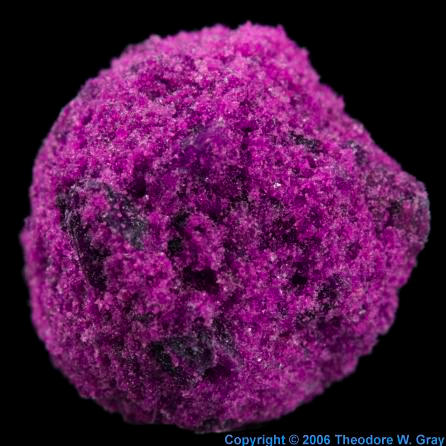
Nickel Chloride, 99.999%.
American Elements is a chemical supplier with a wonderfully refreshing attitude towards element collectors: They actually like small orders from people looking for exotic elements (within reason). They also sell quite a variety of compounds, particularly rare earth salts, many of which are highly colored.
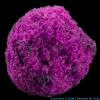
This ball of nickel chloride (hexa-amine) has a bright, vivid purple color. I originally listed this sample as the hexahydrate, and amazingly within just a few days not one but two people wrote in to say there must be something wrong, because nickel chloride hexahydrate is not purple. I have the most informed readers!
Not sure why it's clumped into a round ball, but it sure makes photography easier. (Photographing powders is generally unrewarding, so it's nice to see one that has formed itself into a more interesting shape.)
Source: American Elements
Contributor: American Elements
Acquired: 2 June, 2006
Text Updated: 28 June, 2006
Price: donated
Size: 0.5"
Composition: Ni[(NH3)6]Cl2
|
|
|
|
|
|
|
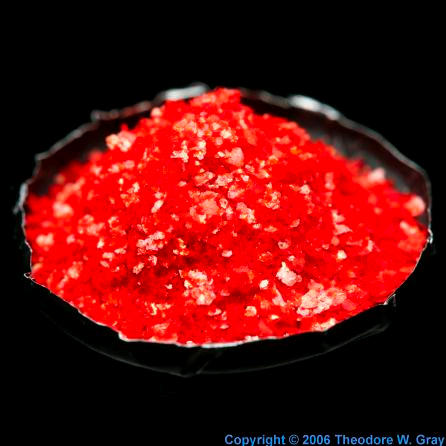
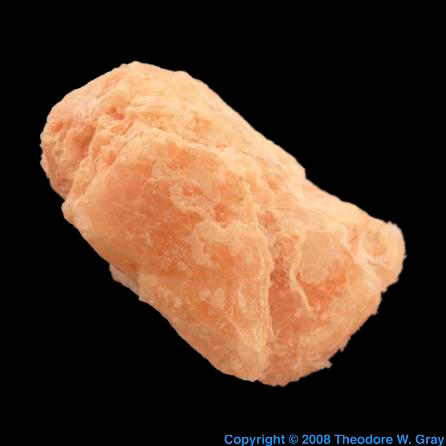
Ruthenium Chloride, 99.999%.
American Elements is a chemical supplier with a wonderfully refreshing attitude towards element collectors: They actually like small orders from people looking for exotic elements (within reason). They also sell quite a variety of compounds, particularly rare earth salts, many of which are highly colored.
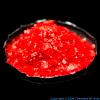
This ball of ruthenium chloride (hexahydrate) is bright orange, very attractive in a poisonous sort of way.
Source: American Elements
Contributor: American Elements
Acquired: 2 June, 2006
Text Updated: 1 July, 2006
Price: donated
Size: 0.5"
Composition: RuCl3.3H2O
|
|
|
|
|
|
|
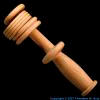
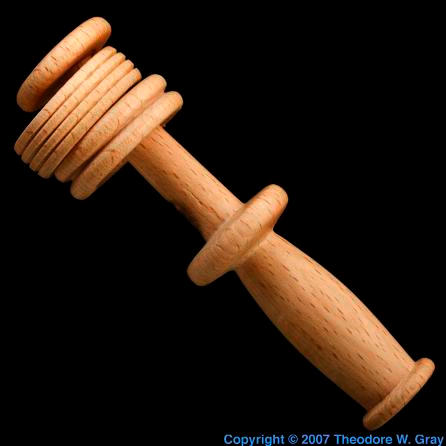
Baby rattle.
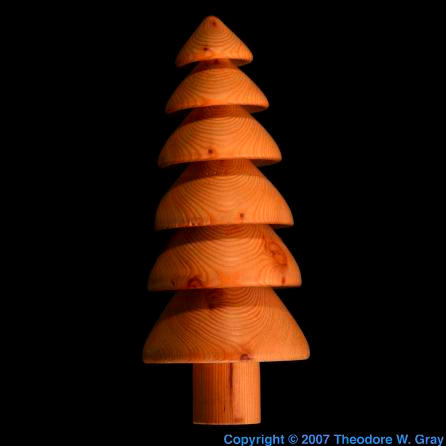
Some things you don't expect to see again. This is a baby rattle that I cut on an improvised lathe in my grandfather's workshop in his cabin in the Swiss alps over 20 years ago. I've though about it regularly ever since, and it never occurred to me, not once, not in the vaguest sense, that I would ever lay eyes on it again.
Source: Theodore Gray
Contributor: Theodore Gray
Acquired: 20 January, 2007
Text Updated: 10 February, 2007
Price: Priceless
Size: 6"
Composition: C(H2O)
|
|
|
|
|
|
|
|
|
|
Rubber penguin from Oliver Sacks.
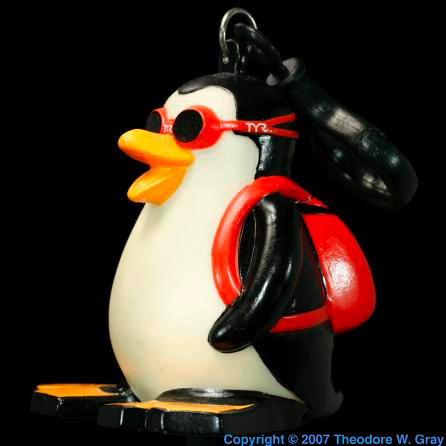
This little rubber penguin was given to my daughter by Oliver Sacks to keep her entertained during a visit in 2003. Here's a picture of them from his 70th birthday bash:

It's not really an element sample, I just wanted a place to post that picture.
Shockingly, I had this sample cataloged as a duck for years until reader Robert Anderson's eleven year old son pointed out the error. Just goes to show you should never believe anything you read on the internet.
Source: Oliver Sacks
Contributor: Oliver Sacks
Acquired: 8 July, 2003
Text Updated: 21 November, 2007
Price: Donated
Size: 4"
Composition: CHO
|
|
|
|
|
|
|
Fly.
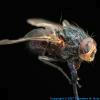
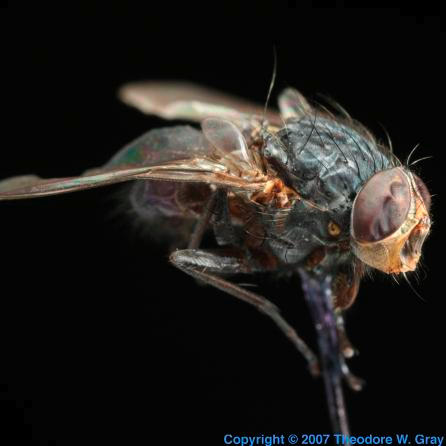
This sample exists basically because my assistant Nick was borrowing a new camera, a Canon 40D, and needed something to do a test rotation of. Apparently a dead fly was to hand, so rather than work on our backlog of samples waiting to be photographed, he decided to spend half an hour photographing it.
The 360 spin video of this is really quite nice: You can see a lot of macro photographs of insects, but how many macro-rotations have you seen lately? Other than on this website, they are few and far between. The detail is pretty amazing: This shot was taking with a 10 megapixel Canon 40D using a Canon 65mm 1X-5X super macro lens, one of the finest available for objects down to about 1/4" across. And we've got 359 more of them, each as sharp and detailed as this one, just from different angles.
Source: Nick Mann
Contributor: Nick Mann
Acquired: 27 October, 2007
Text Updated: 28 October, 2007
Price: Donated
Size: 0.25"
Composition: C(H2O)
|
|
|
|
|
|
|
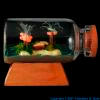
Island In A Bottle.
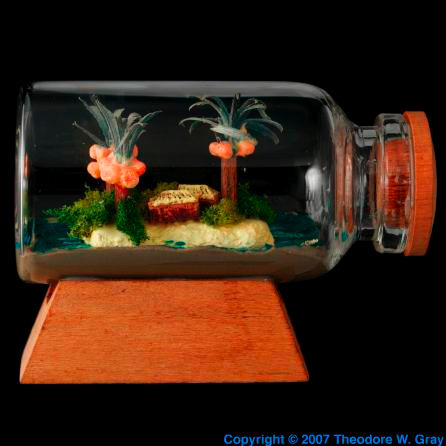
This lovely, tiny little island scene came from a little shop in New Harmony, Indiana, a former utopian community that turned to tourism after failing at the utopia business. Being made of glass, wood, and various other organic materials, it contains silicon, carbon, oxygen, and hydrogen, plus some minor elements in the pigments.
Source: New Harmony
Contributor: Theodore Gray
Acquired: 2 December, 2007
Text Updated: 3 December, 2007
Price: $15
Size: 2"
Composition: SiO2+C(H2O)
|
|
|
|
|
|
|
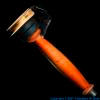
Electromagnetic Sensor.
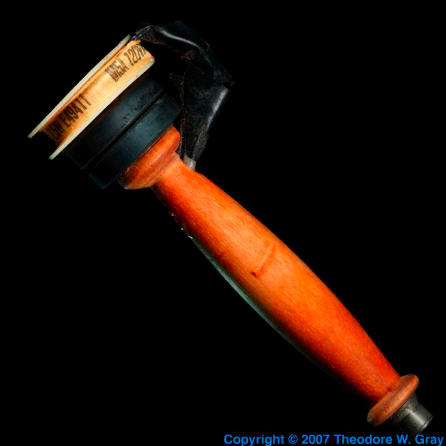
Ah, this brings back memories. I made this thing some time in high school: It's supposed to be a general purpose "microphone" for electric or magnetic fields or vibrating metal parts. I turned the handle on a little toy wood lathe, and got a coil of fine wire from a small electric motor. Behind the coil are a couple of permanent magnets from Radio Shack. If you connect it (using the RCA jack at the base of the handle) to an audio amplifier you can actually hear things when you hold it near something that's producing oscillating fields (e.g. a speaker, electric appliance, etc). The idea behind the permanent magnets is to make it work with any vibrating metal, not just electrically-active objects, but that part never really worked as well as I'd hoped.
Source: Theodore Gray
Contributor: Theodore Gray
Acquired: 23 December, 2007
Text Updated: 23 December, 2007
Price: Priceless
Size: 5"
Composition: CuFe+C(H2O)
|
|
|
|
|
|
|
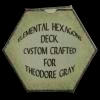
Custom Elemental Hexagon Cards.
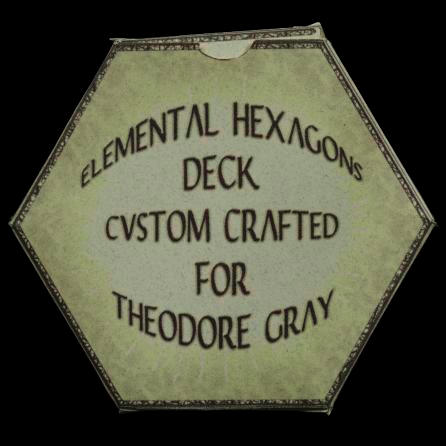
This is a lovely little deck of Elemental Hexagon Cards. They are intended for divination purposes similar to the way you would use Tarot cards. A skilled and sensitive interpreter can tell you a lot about yourself using a deck of cards. Or a box of tea leaves or an old rubber tire, so why not element cards? They are pretty and inventive: This is a "custom" deck, meaning you get to choose the color and backgrounds. See the next sample for the mass-produced version. You can get them here.
Source: Calyxa
Contributor: Theodore Gray
Acquired: 8 March, 2008
Text Updated: 8 March, 2008
Price: $45
Size: 3"
Composition: CHO
|
|
|
|
|
|
|
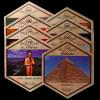
Elemental Hexagon Cards.
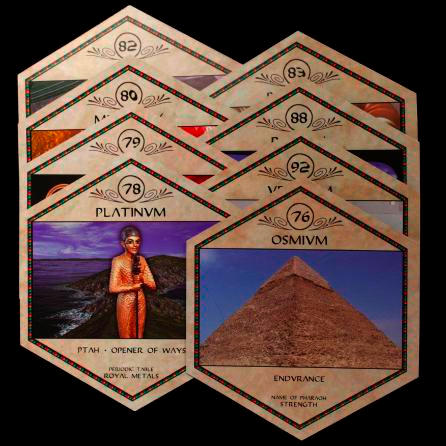
This is a lovely little deck of Elemental Hexagon Cards. They are intended for divination purposes similar to the way you would use Tarot cards. A skilled and sensitive interpreter can tell you a lot about yourself using a deck of cards. Or a box of tea leaves or an old rubber tire, so why not element cards? They are pretty and inventive: This is a mass-produced version printed on standard playing card paper. See the previous sample for a custom-printed version. You can get them here.
Source: Calyxa
Contributor: Theodore Gray
Acquired: 8 March, 2008
Text Updated: 8 March, 2008
Price: $30
Size: 3"
Composition: CHO
|
|
|
|
|
|
|
Fancy chocolate tin.
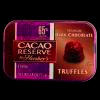
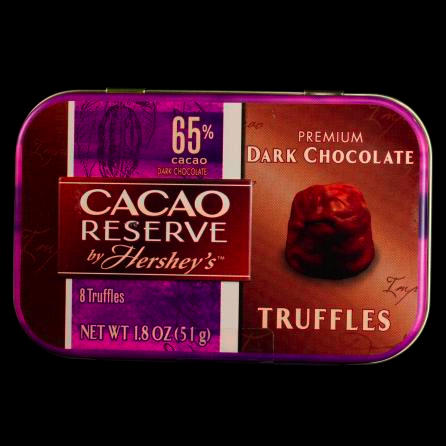
This chocolate tin is a sign of the beginning of the end of good chocolate. It's a tin of Hershey's dark chocolate advertised as 65% cocoa. Promoting chocolate on the basis of its percentage of cocoa is an increasingly common marketing tactic, marred only by the fact that beyond about 50% more cocoa means worse chocolate. 99% chocolate, which is actually available, is basically impossible to eat.
The force at work here is snobbery, and the need for something that tastes really bad to base the snobbery on. (Things that actually taste good are of no use to snobs, because anyone can appreciate them.)
The same force is responsible for vast amounts of perfectly good grape juice being allowed to go sour and become wine. Basically, when you get right down to it, wine does not taste very good. But you can't show off how sophisticated you are by appreciating fine grape juice because pretty much everyone likes it. It tastes good. Wine, on the other hand, tastes bad, so if you go around claiming that you appreciate it at some higher level, and can in even tell the difference between minutely different varieties of it, you can appear refined and sophisticated to the naive who have not yet learned to pretend to like it.
Chocolate used to be about tasting good: In this regard milk chocolate is obviously superior. Now all sorts of people turn their nose up at milk chocolate and sniff that they only consume fine dark chocolate. No less than 80% cocoa please. If you ask why they would want to eat that bitter crap suitable only for baking or mixing with milk to make an edible confection, they start talking about fruity aromas and what year the cocoa beans were harvested. Get the picture? They are chocolate snobs who, exactly like wine snobs, actually don't much like the stuff either, but prefer artificial superiority to genuine enjoyment.
It's a sad day when this attitude infects even Hershey's, long the bastion of low-brow but good-tasting milk chocolate. How long will it be before there are whole stored dedicated to inedible dark chocolate sorted by vintage, while those seeking the simple pleasure of good chocolate have to turn to the back isles of the grocery store, next to the grape juice?
Source: Grocery Store
Contributor: Theodore Gray
Acquired: 8 March, 2008
Text Updated: 8 March, 2008
Price: $4
Size: 4"
Composition: CHO
|
|
|
|
|
|
|
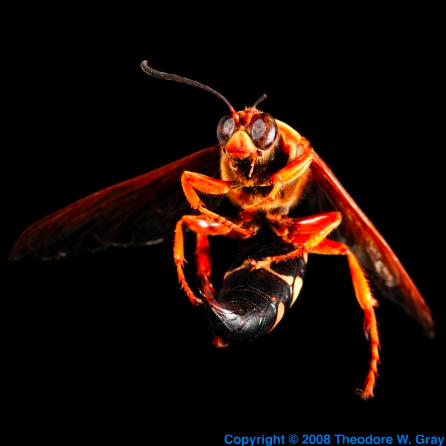
Cicada killer.
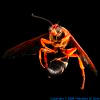
Another bug donated by my assistant Nick. Look at the size of the stinger on that thing! I'm not much of a bug expert but my understanding is that these things kill and eat cicadas: I'm not sure what happens if they turn on you.
Source: Nick Mann
Contributor: Nick Mann
Acquired: 27 October, 2007
Text Updated: 27 September, 2008
Price: Donated
Size: 1"
Composition: C(H2O)
|
|
|
|
|
|
|
Hydroxilherderite.
Description from the source:
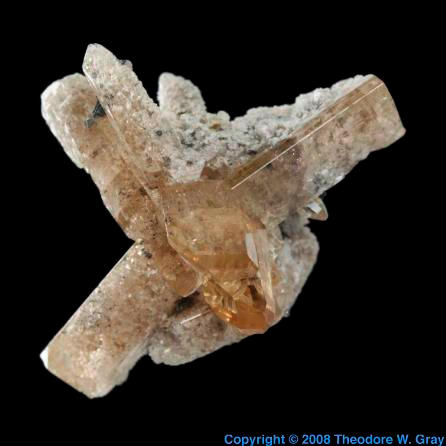
Hydroxilherderite (CaBe(PO4).(OH) mon.), Linopolis, Minas Gerais, Brazil. Geminated, good rare crystal. 3,2x2x1,5 cm; 10 g.
Source: Simone Citon
Contributor: John Gray
Acquired: 26 September, 2008
Text Updated: 28 September, 2008
Price: Trade
Size: 1.25"
Composition: CaBe(PO4).(OH)
|
|
|
|
|
|
|
|
|
|
Alunite.
Description from the source:
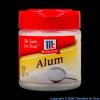
Alunite (KAl3(SO4)2(OH)6 trig.), La Tolfa, Civitavecchia, Lazio, Italy. Small crystal clusters on the same massive material from a classic italian locale. 3,8x2,2x1,5; 22 g.
Source: Simone Citon
Contributor: John Gray
Acquired: 26 September, 2008
Text Updated: 28 September, 2008
Price: Trade
Size: 1.5"
Composition: KAl3(SO4)2(OH)6
|
|
|
|
|
|
|
|
|
|
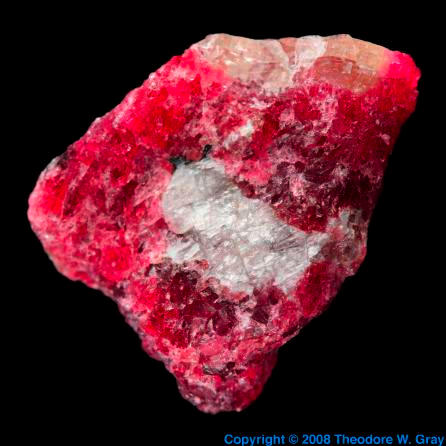
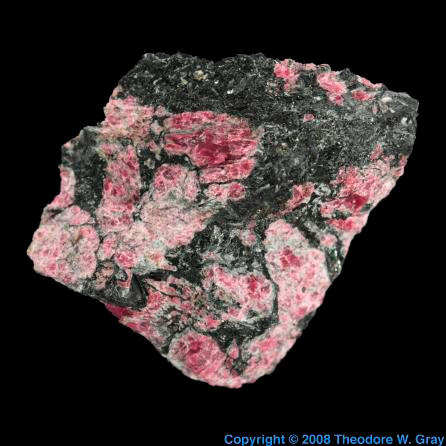
Eudyalite.
Description from the source:
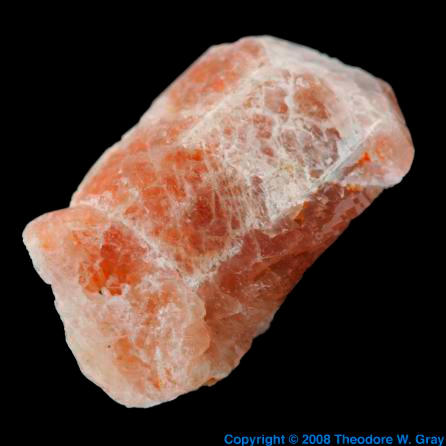
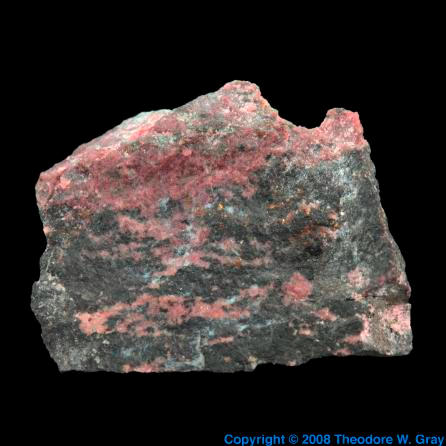
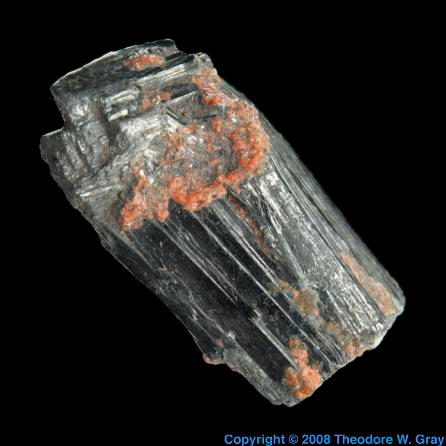
Eudyalite (Na4(CaCe)2(Fe+2Mn+2Y+ZrSi8O22(OHCl)2 trig.), Kipawa Alcalyne Complex, Villedieu Tow., Quebec, Canada. Red, granular, with white fibrous Agrellite and beige Vlasovite. A rich thumbnail. 2,2x1,7x1 cm; 5 g.
Source: Simone Citon
Contributor: John Gray
Acquired: 26 September, 2008
Text Updated: 28 September, 2008
Price: Trade
Size: 0.85"
Composition: Na4(CaCe)2(Fe,2Mn,2Y).ZrSi8O22(OHCl)2
|
|
|
|
|
|
|
Fluellite.
Description from the source:
Fluellite (Al2(PO4)F2(OH).7H2O orth.), Tom's Quarry, Kapunda, South Australia, Australia. Rare crystals on the phosphatic matrix. 3x2,7x2 cm; 15 g.
Source: Simone Citon
Contributor: John Gray
Acquired: 26 September, 2008
Text Updated: 28 September, 2008
Price: Trade
Size: 1.2"
Composition: Al2(PO4)F2(OH).7H2O
|
|
|
|
|
|
|
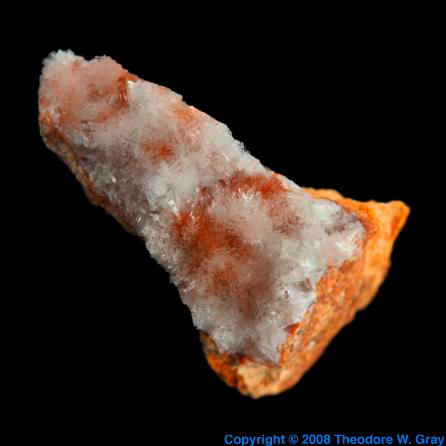
Wavellite.
Description from the source:
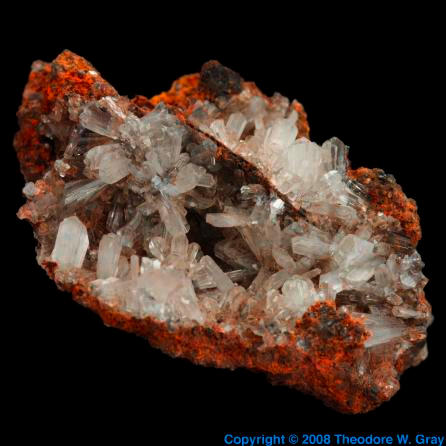
Wavellite (Al3 (PO4)2 (OH,F)3x5H2O orth.), Tom's Quarry, Kapunda, South Australia, Australia. Radiating colorless crystals on limonitic matrix, from a rich in phosphates locality. 1,9x1x0,8 cm; 3 g.
Source: Simone Citon
Contributor: John Gray
Acquired: 30 September, 2008
Text Updated: 1 October, 2008
Price: Trade
Size: 0.75"
Composition: Al3(PO4)2(OH,F)3.5H2O
|
|
|
|
|
|
|
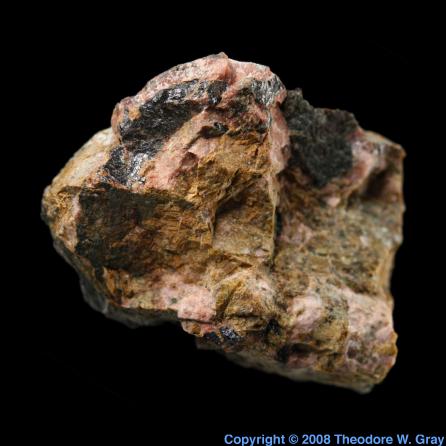
Cerite.
Description from the source:
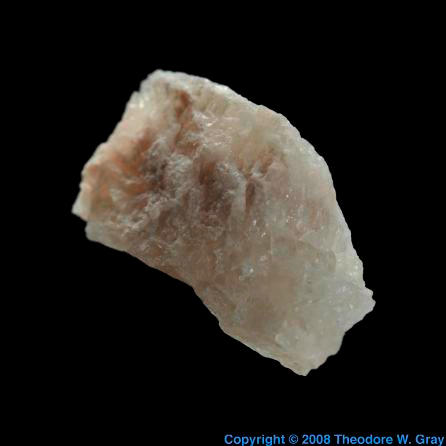
Cerite ( (Ce Ca)10 (Si O4)6 (OH F)5 trig.), Mine of Bastnaes near Riddarhytta, Westmanland, Sweden. Pinkish masses on matrix. Rare. 2x1,7x0,8 cm; 8 g with box.
Source: Simone Citon
Contributor: John Gray
Acquired: 30 September, 2008
Text Updated: 1 October, 2008
Price: Trade
Size: 0.75"
Composition: (CeCa)10(SiO4)6(OH.F)5
|
|
|
|
|
|
|
|
|
|
Azurite.
Description from the source:
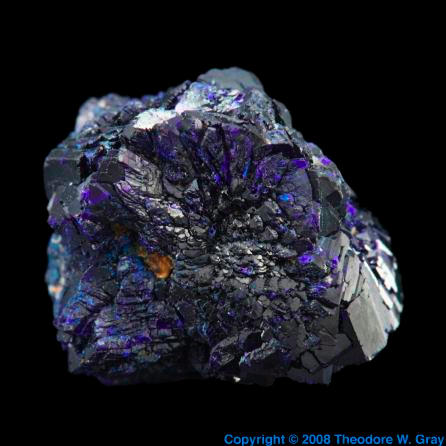
Azurite (Cu+23 (CO3)2 (OH)2 mon.), Ajo, Pima Co., Arizona, USA. Well definited crystals on matrix. 1,8x1,5x1 cm; 8 g.
Source: Simone Citon
Contributor: John Gray
Acquired: 30 September, 2008
Text Updated: 1 October, 2008
Price: Trade
Size: 0.7"
Composition: Cu+23(CO3)2(OH)2
|
|
|
|
|
|
|
Vesuvianite.
Description from the source:
Vesuvianite (Ca10 Mg2 Al4 (SI O4)5 (Si2 O7)2 (OH)4 tet.), Bellecombe, Aosta, Italia. Perfect isolated crystal. 1,2x0,8x0,8 cm; 3 g.
Source: Simone Citon
Contributor: John Gray
Acquired: 30 September, 2008
Text Updated: 1 October, 2008
Price: Trade
Size: 0.5"
Composition: Ca10Mg2Al4(SiO4)5(Si2O7)2(OH)4
|
|
|
|
|
|
|
|
|
|
Wavellite.
Description from the source:
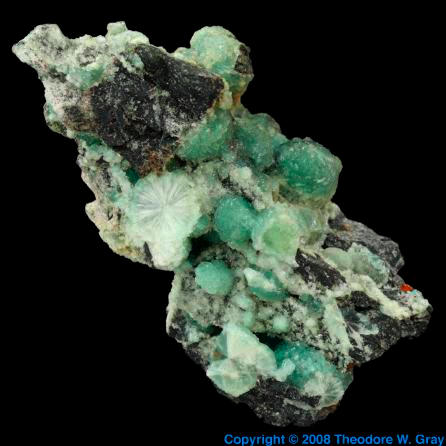
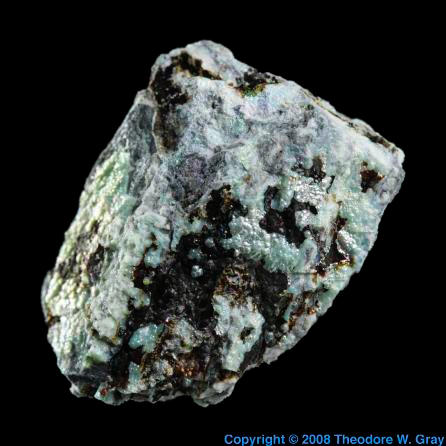
Wavellite (Al3 (PO4)2 (OH,F)3x5H2O orth.), Maulding, Montgomery, Arkansas, USA. Nice spherical crystal clusters on matrix with green color, better than the photo. 7,2x4x3,5 cm; 63 g.
Source: Simone Citon
Contributor: John Gray
Acquired: 30 September, 2008
Text Updated: 1 October, 2008
Price: Trade
Size: 2.8"
Composition: Al3(PO4)2(OH,F)3.5H2O
|
|
|
|
|
|
|
Hemimorphite.
Description from the source:
Hemimorphite (Zn4 Si2 O7 (OH)2 x H2 O orth.), Ojuela Mine, Mapimi`, Durango, Mexico. Transparent, perfect crystals on limonitic matrix. 4,5x3x2 cm; 22 g.
Source: Simone Citon
Contributor: John Gray
Acquired: 30 September, 2008
Text Updated: 1 October, 2008
Price: Trade
Size: 1.75"
Composition: Zn4Si2O7(OH)2.H2O
|
|
|
|
|
|
|
Kleinite.
Description from the source:
Kleinite ( Hg2 N (Cl SO4)\[CenterDot]n H2O hex.), McDermitt Mine, Humboldt Co., Nevada, USA. Yellow crusts on Quartz. 1,8x1x1 cm; 5 g with box.
Source: Simone Citon
Contributor: John Gray
Acquired: 14 October, 2008
Text Updated: 14 October, 2008
Price: Trade
Size: 0.7"
Composition: Hg2N(ClSO4).H2O
|
|
|
|
|
|
|
Malachite.
Description from the source:
Malachite (Cu+22 (CO3) (OH)2 mon.), Germany. Acicular crystals on limonitic matrix. 2,5x1,5x1,2 cm; 12 g with box.
Source: Simone Citon
Contributor: John Gray
Acquired: 14 October, 2008
Text Updated: 14 October, 2008
Price: Trade
Size: 1"
Composition: Cu+22(CO3)(OH)2
|
|
|
|
|
|
|
|
|
|
Atacamite.
Description from the source:
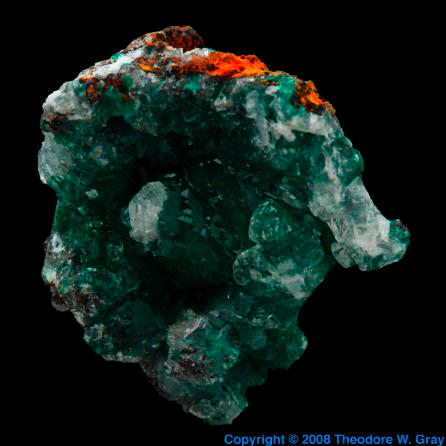
Atacamite (Cu+2 2 Cl (OH)3 orth.), La Farola Mine, Tierra Amarilla, Atacama, Chile. Dark green acicular crystals on matrix. 6x4x2 cm; 52 g.
Source: Simone Citon
Contributor: John Gray
Acquired: 26 October, 2008
Text Updated: 28 April, 2009
Price: Trade
Size: 2.35"
Composition: Cu2[(OH)3|Cl]
|
|
|
|
|
|
|
|
|
|
|
|
|
|
|
|
|
|
|
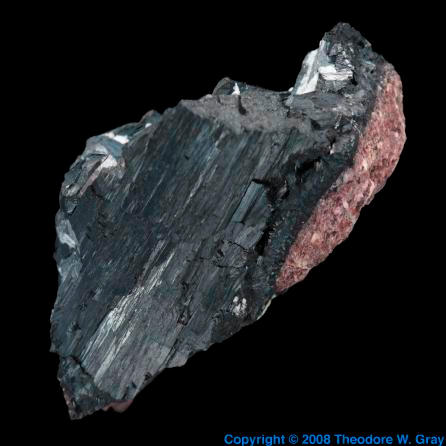
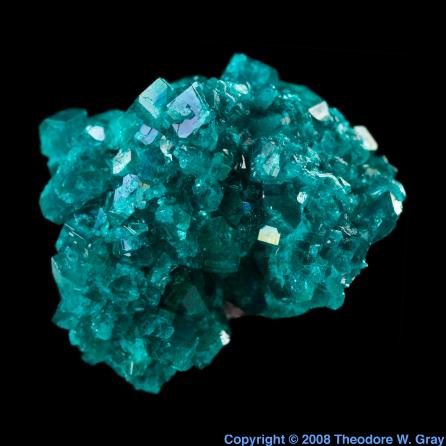
Cornetite.
Description from the source:
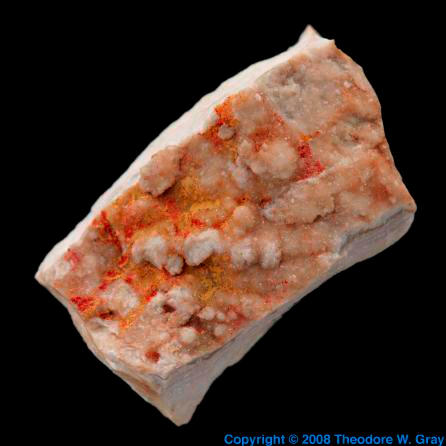
Cornetite (Cu+23(PO4) (OH)3 orth.), Shaba, Rep. Dem. of Congo. Rare crystal sections on matrix. 3,2x2x0,8 cm; 4 g.
Source: Simone Citon
Contributor: John Gray
Acquired: 30 October, 2008
Text Updated: 31 October, 2008
Price: Trade
Size: 1.25"
Composition: Cu+23(PO4) (OH)3
|
|
|
|
|
|
|
Elbaite.
Description from the source:
Elbaite (Na (Li Al)3 Al6 (BO3)3 Si6 O18 (OH)4 trig.), Stak Nala, Haramosh, Skardu, Baltistan, Pakistan. Fascicular crystals on matrix. 4x2,5x1,5 cm; 12 g.
Source: Simone Citon
Contributor: John Gray
Acquired: 30 October, 2008
Text Updated: 31 October, 2008
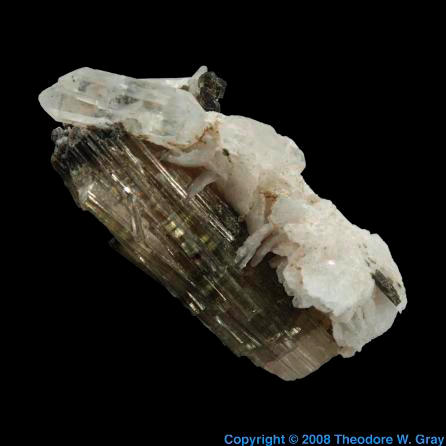
Price: Trade
Size: 1.5"
Composition: Na(LiAl)3Al6(BO3)3Si6O18(OH)4
|
|
|
|
|
|
|
Manganaxinite.
Description from the source:
Manganaxinite (Ca2 Mn+2 Al2 B Si4 O15 (OH) tric.), Dalnegorsk, Russia. Brown greenish, bladed crystal cluster. 2,5x2x1,5 cm; 8 g.
Source: Simone Citon
Contributor: John Gray
Acquired: 30 October, 2008
Text Updated: 31 October, 2008
Price: Trade
Size: 1"
Composition: Ca2Mn+2Al2BSi4O15(OH)
|
|
|
|
|
|
|
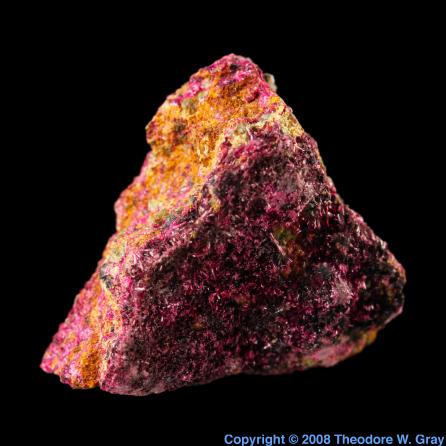
Erythrite.
Description from the source:
Erythrite (Co3 (AsO4)2x8 H2 O mon.), Dome Rock, South Australia, Australia. With pseudocubic Smolianinovite. 3x2,2x1,5 cm; 7 g.
Source: Simone Citon
Contributor: John Gray
Acquired: 30 October, 2008
Text Updated: 13 March, 2009
Price: Trade
Size: 0.75"
Composition: Co3(AsO4)2.8H2 O
|
|
|
|
|
|
|
|
|
|
3D Lenticular Periodic Table Puzzle.
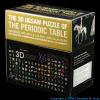
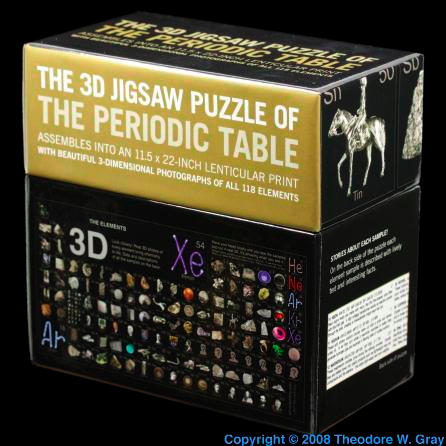
In late 2006 I published a photo periodic table and it's been selling well enough to encourage me to make new products. This is a 3D lenticular (stereo image) periodic table that's been cut up into puzzle pieces and put into a really nice glossy box. I have to admit it's not my favorite periodic table product: The pieces are a little hard to put together. But people seem to like it. Check out my poster page to read about (and buy!) the puzzle and other periodic table products.
Source: Theodore Gray
Contributor: Theodore Gray
Acquired: 19 November, 2008
Text Updated: 20 November, 2008
Price: $25
Size: 5"
Composition: CHO
|
|
|
|
|
|
|
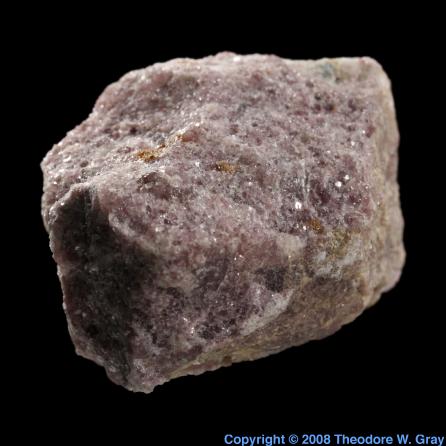
Lepidolite.
Description from the source:
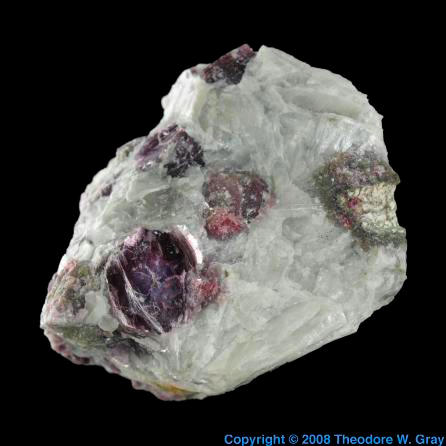
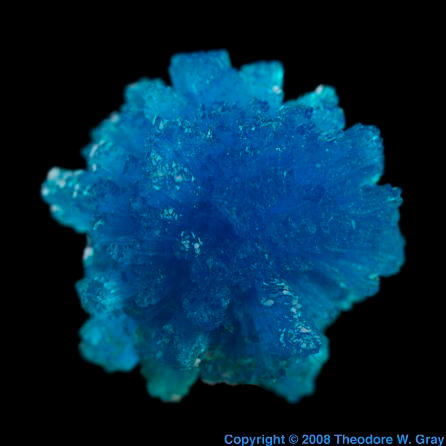
Lepidolite (K (Li Al)3 (Si Al)4 O10 (F OH)2 mon.), Varutra"sk, Skellefteao, Va"sterbotten, Sweden. Laminar deep purple crystals on matrix. 5x3,5x3 cm; 45 g.
Source: Simone Citon
Contributor: John Gray
Acquired: 19 November, 2008
Text Updated: 20 November, 2008
Price: Trade
Size: 2"
Composition: K(LiAl)3(SiAl)4O10(FOH)2
|
|
|
|
|
|
|
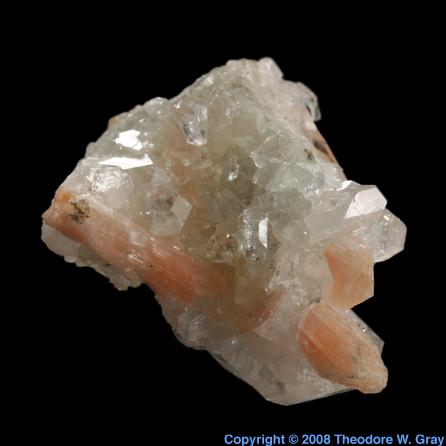
Stilbite.
Description from the source:
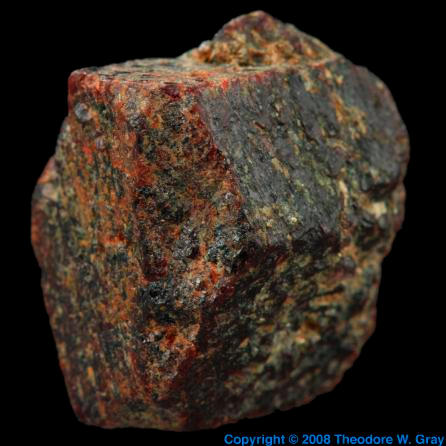
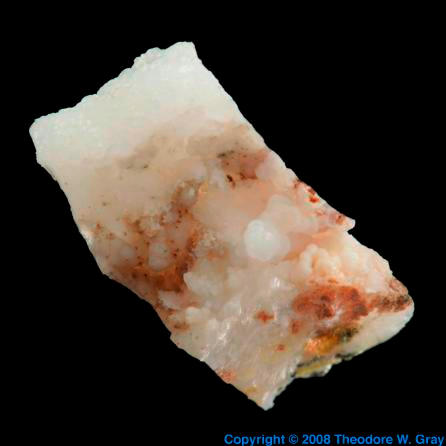
Ca-Stilbite (Na Ca4 (Al9 Si27 O72)x nH2O mon.), Poona, Jalgaon, Maharashtra, India. White crystal cluster with pulverulent Laumontite. 3,5x1,3x1,3 cm; 5 g.
Source: Simone Citon
Contributor: John Gray
Acquired: 27 December, 2008
Text Updated: 28 December, 2008
Price: Trade
Size: 1.4"
Composition: NaCa4(Al9Si27O72).H2O
|
|
|
|
|
|
|
|
|
|
|
|
|
Ulexite.
Description from the source:
Ulexite (Na Ca B5 O6 (OH)6x5 H2O tric.), Boron, California, USA. When viewed parallel to the fibers, Ulexite transmits light in a similar fashion to fiber optics. 3,2x1,5x1 cm; 8 g.
Source: Simone Citon
Contributor: John Gray
Acquired: 27 December, 2008
Text Updated: 28 December, 2008
Price: Trade
Size: 1.25"
Composition: NaCaB5O6(OH)6.5(H2O)
|
|
|
|
|
|
|
|
|
|
|
|
|
Allanite-Y.
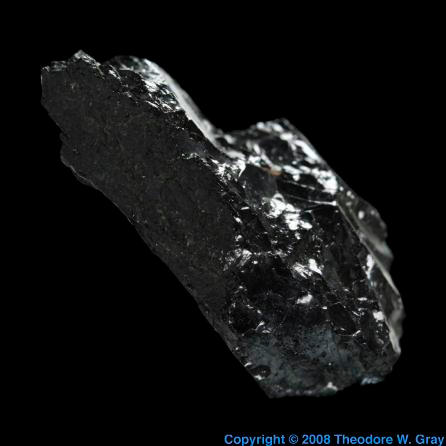
Description from the source:
Allanite-Y, Arendal, Nordge. Black, lustrous, massive. 3x1,5x1 cm; 10 g.
Source: Simone Citon
Contributor: John Gray
Acquired: 10 January, 2009
Text Updated: 10 January, 2009
Price: Trade
Size: 1.2"
Composition: (CaY)(Al2Fe)(O,OH,SiO4,Si2O7)
|
|
|
|
|
|
|
Allophane.
Description from the source:
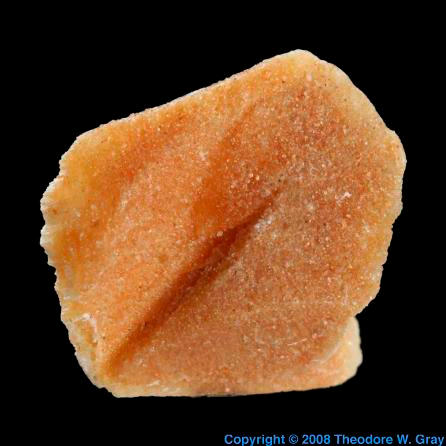
Allophane (amorphous hydrous aluminum silicate), Steyermark, Tyrol, Austria. An amorphous mineral on very delicate matrix. 3x1,8x1 cm; 3 g.
Source: Simone Citon
Contributor: John Gray
Acquired: 10 January, 2009
Text Updated: 10 January, 2009
Price: Trade
Size: 1.2"
Composition: (Al2O3)(SiO2)1.3-2+2.5-3H2O
|
|
|
|
|
|
|
|
|
|
Lepidolite.
Description from the source:
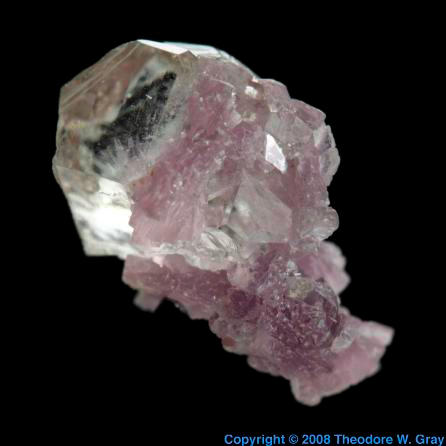
Lepidolite (K (Li Al)3 (Si Al)4 O10 (F OH)2 mon.), Aracuai`, Minas Gerais, Brazil. Little crystals on clear Quartz. 1,2x0,8x0,8 cm: 1 g.
Source: Simone Citon
Contributor: John Gray
Acquired: 10 January, 2009
Text Updated: 10 January, 2009
Price: Trade
Size: 0.5"
Composition: K(Li,Al)3(Si,Al)4O10(F,OH)2
|
|
|
|
|
|
|
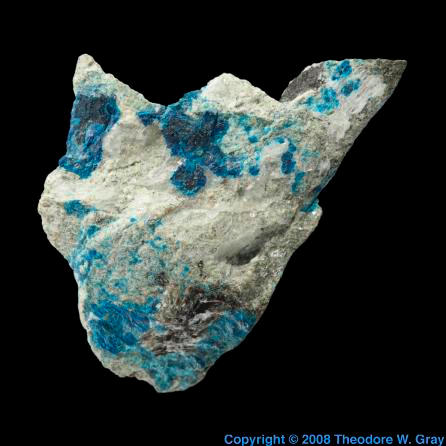
Cavansite.
Description from the source:
Cavansite (Ca (V+4 O) Si4 O10x4 H2O orth.), Wagholi Quarry, Jalgaon, Maharashtra, India. 0,8x0,8x0,8 cm each; 8 g with box the two.
Source: Simone Citon
Contributor: John Gray
Acquired: 28 January, 2009
Text Updated: 29 January, 2009
Price: Trade
Size: 0.3"
Composition: Ca(VO)Si4O10.4(H2O)
|
|
|
|
|
|
|
Elbaite.
Description from the source:
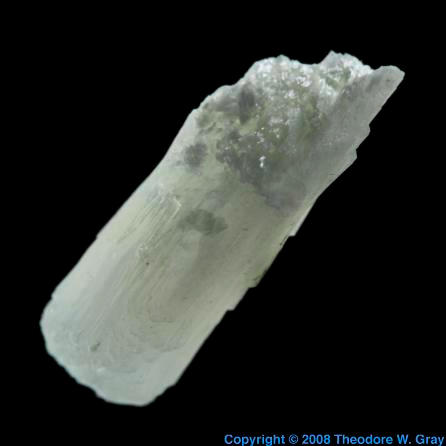
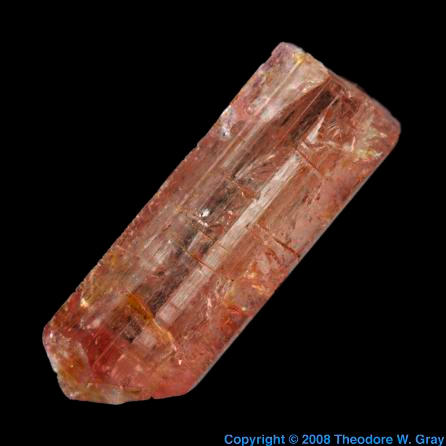
Elbaite (Na (Li Al)3 Al6 (BO3)3 Si6 O18 (OH)4 trig.), Minas Gerais, Brazil. Isolated, terminated crystal with rare pink-orange color. 2,3x0,8x0,8 cm; 4 g.
Source: Simone Citon
Contributor: John Gray
Acquired: 28 January, 2009
Text Updated: 29 January, 2009
Price: Trade
Size: 1"
Composition: Na(LiAl)3Al6(BO3)3Si6O18(OH)4
|
|
|
|
|
|
|
Manganite.
Description from the source:
Manganite (Mn+3 O (OH) mon.), Ilfeld, Harz, Germany. Isolated, terminated black crystals. 1,3x0,6x0,5 cm the bigger; 3 g all.
Source: Simone Citon
Contributor: John Gray
Acquired: 28 January, 2009
Text Updated: 29 January, 2009
Price: Trade
Size: 0.5"
Composition: MnO(OH)
|
|
|
|
|
|
|
|
|
|
|
|
|
Burned Barbie doll (with glasses).
This Barbie (TM) brand doll head is meant for kids to practice hair dressing on: It's about 3/4 life size. Unfortunately this Barbie decided to play with fireworks and had a bad day. Fortunately, she was wearing her safety glasses, and while she may spend some time in the hospital, she's going to be fine, her eyes intact and undamaged.
You don't have to imagine what her fate would have been if she'd failed to ware safety glasses, just check out the next sample.
Source: Walmart
Contributor: Theodore Gray
Acquired: 8 February, 2009
Text Updated: 8 February, 2009
Price: $40
Size: 12"
Composition: CHO
|
|
|
|
|
|
|
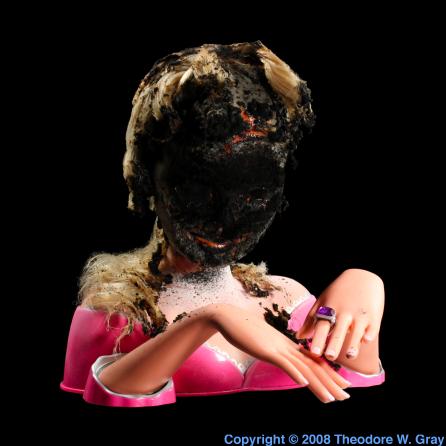
Burned Barbie doll (no glasses).
This Barbie (TM) brand doll head was very foolish. She, like her sister featured in the previous sample, had a bad day playing with fireworks. But unlike her sister, she failed to ware safety glasses and as a result will now spend the rest of her life blind in both eyes.
Everyone learn from foolish Barbie: WEAR SAFETY GLASSES when working with dangerous chemicals, especially if there is a team making a safety video in the area.
Source: Walmart
Contributor: Theodore Gray
Acquired: 8 February, 2009
Text Updated: 8 February, 2009
Price: $40
Size: 12"
Composition: CHO
|
|
|
|
|
|
|
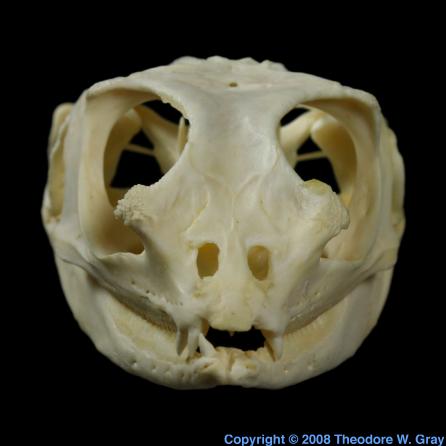
Frilled dragon skull.
I've always wanted to buy something from The Bone Room and I finally settled on this pretty Frilled Dragon skull. It's some kind of lizard, and very complex inside, look at the 3D rotation video to see all the internal structures.
Source: The Bone Room
Contributor: Theodore Gray
Acquired: 8 February, 2009
Text Updated: 8 February, 2009
Price: $70
Size: 2"
Composition: Ca10(PO4)6(OH)2
|
|
|
|
|
|
|
|
|
|
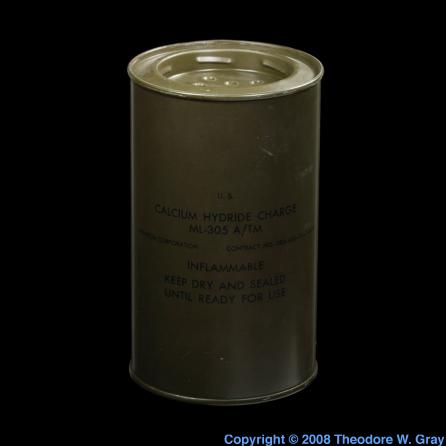
Calcium hydride canister.
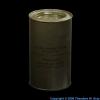
This canister is meant to be used to generate a volume of hydrogen gas to inflate a weather balloon. I think you poke out the indentation on the top and add water, but I'm not sure.
Source: eBay
Contributor: Theodore Gray
Acquired: 28 February, 2009
Text Updated: 1 March, 2009
Price: Forgot
Size: 6"
Composition: CaH2
|
|
|
|
|
|
|
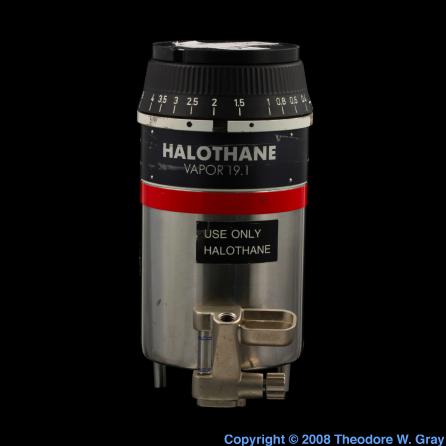
Halothane vaporizer.
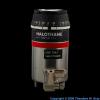
Halothane is C2HBrClF3, basically a chlorofluorocarbon of the ozone-depleting variety. But surprisingly, it's also a very widely used surgical anesthetic. This vaporizer is used for administering the gas to patients and has controls for carefully adjusting the dose.
Source: eBay seller i_sell_tech
Contributor: Theodore Gray
Acquired: 28 February, 2009
Text Updated: 1 March, 2009
Price: $100
Size: 8"
Composition: C2HBrClF3
|
|
|
|
|
|
|
|
|
|
|
|
|
|
|
|
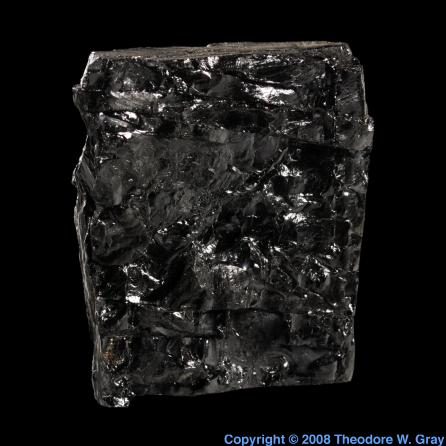
Crude Oil.
Very hard to get considering how much of the stuff trades hands every day. Just try to buy less than a shipload of it. This is semi-sweet crude from the Frontier Formation in Riverton, Wyoming, and dates to the late Cretaceous, about 65 million years ago. The "sweetness" of crude refers to its sulfur content: The "light sweet crude" you hear about on the news whenever its price is particularly extreme is low-sulfur, low-viscosity crude considered particularly disarable for refining into gasoline.
It actually does taste sweet, I'm told by people who probably haven't tasted it either.
Source: eBay seller quartzpegmatite
Contributor: Theodore Gray
Acquired: 11 March, 2009
Text Updated: 13 March, 2009
Price: Donated
Size: 1"
Composition: CH2
|
|
|
|
|
|
|
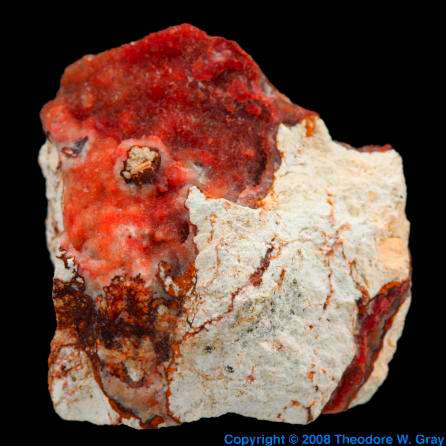
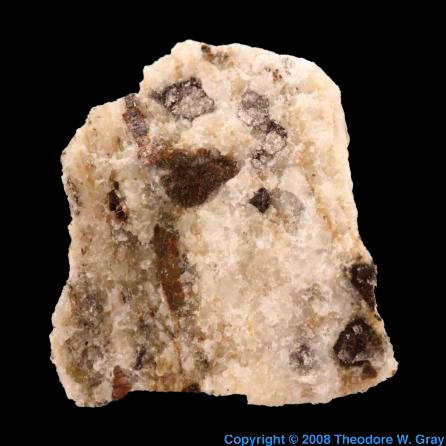
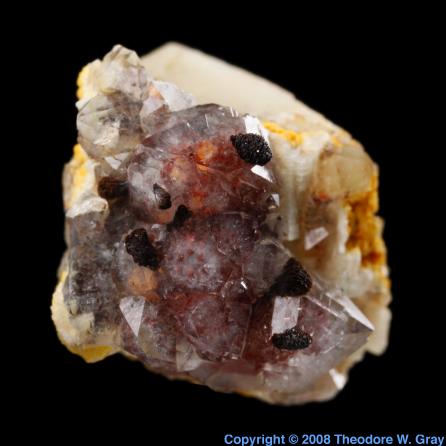
Miserite.
Description from the source:
Miserite (K (Ca Ce)6 Si8 O22 (OH F)2 tric.), Kipawa Alcalyne Complex, Villedieu Tow., Quebec, Canada. Purple section crystals with granular red Eudyalite and beige Vlasovite. Rich in rare earth elements. 2x1,5x1,5 cm; 6 g.
Source: Simone Citon
Contributor: John Gray
Acquired: 11 March, 2009
Text Updated: 3 April, 2009
Price: Trade
Size: 0.75"
Composition: K(Ca,Ce)6Si8O22(OH,F)2
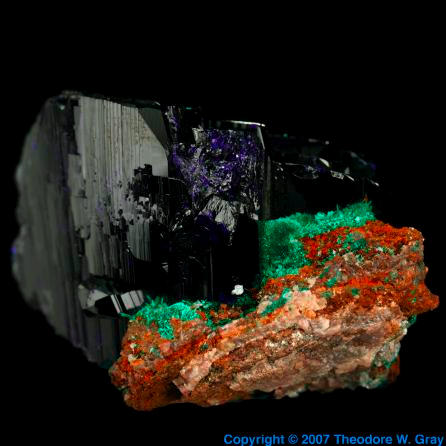
|
|
|
|
|
|
|
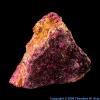
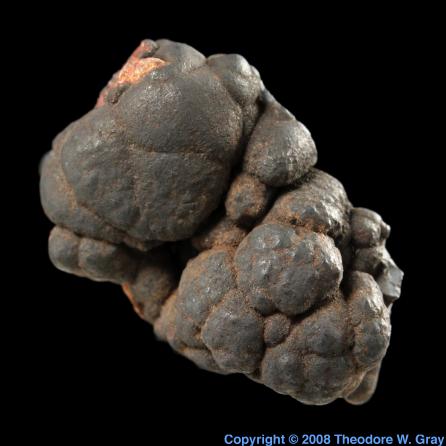
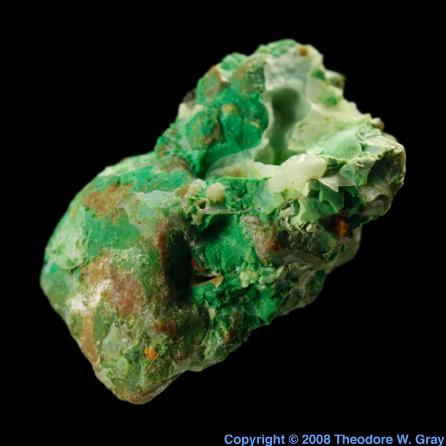
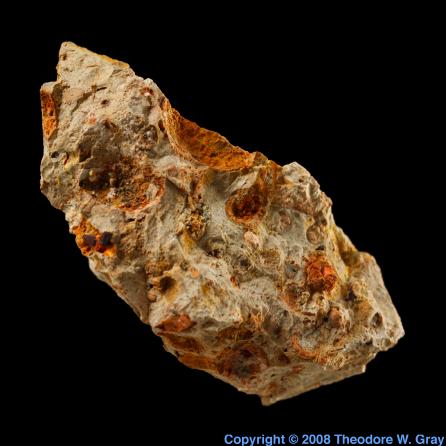
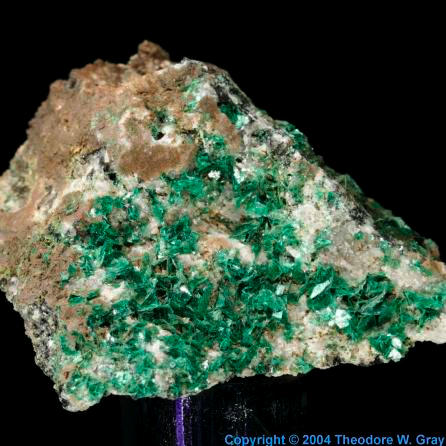
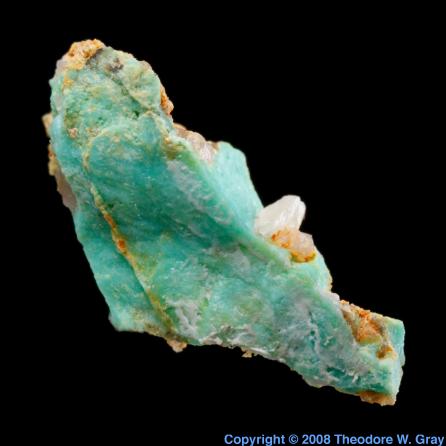
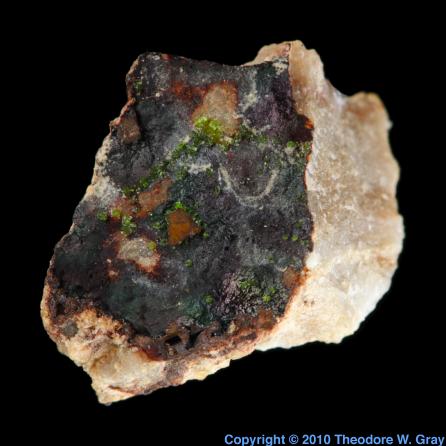
Metatorbernite.
Description from the source:
Metatorbernite ( Cu+2 (UO2)2 (PO4)2x8H2O tet.), Monte Painter, Australia. Green laminar crystals on limonitic, rich in oxides matrix. 6,5x5x3 cm; 87 g.
Source: Simone Citon
Contributor: John Gray
Acquired: 11 March, 2009
Text Updated: 12 March, 2009
Price: Trade
Size: 2.5"
Composition: Cu(UO2)2(PO4)2.8H2O
|
|
|
|
|
|
|
|
|
|
|
|
|
|
|
|
|
|
|
|
|
|
|
|
|
|
|
|
Dragonfly.
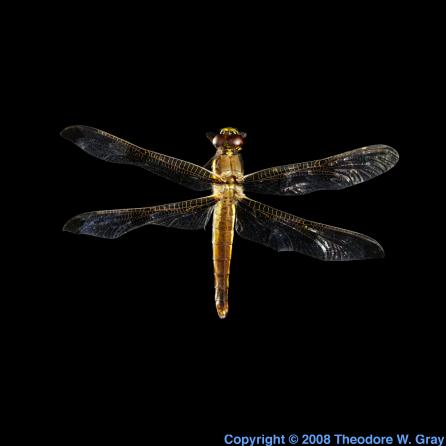
Another in the line of dead insects supplied by my assistant Nick, behold this magnificent dragonfly. As with the previous fly and cicada killer contributions, all these insects died a natural death: No bugs were harmed in the creation of this website.
Source: Nick Mann
Contributor: Nick Mann
Acquired: 13 June, 2009
Text Updated: 14 June, 2009
Price: Donated
Size: 3"
Composition: C(H2O)
|
|
|
|
|
|
|
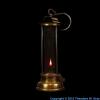
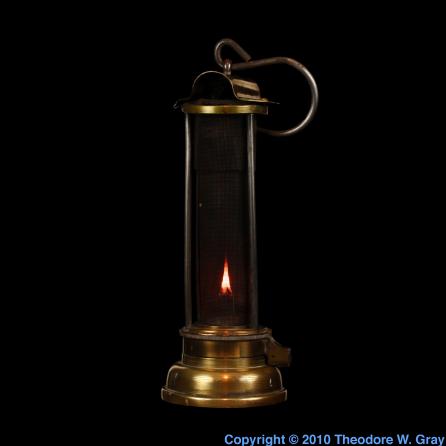
Davy Lamp.
An antique "Davy lamp", named after Sir Humphry Davy and used by miners before the invention of electric lights. The wire mesh, against all odds, prevents the flame from igniting flammable gases surrounding the lamp in a mine.
Source: eBay seller curiodream100
Contributor: Theodore Gray
Acquired: 13 January, 2010
Text Updated: 13 January, 2010
Price: $50
Size: 10"
Composition: CuZnCH
|
|
|
|
|
|
|
Emmonsite.
Description from the source:
Emmonsite (Fe2+3 Te3+4 O9 x 2 H2 O tric.), Moctezuma, Sonora, Mexico. Green crust on matrix, rare. 1,1x1x0,7 cm; 4 g with box.
Source: Simone Citon
Contributor: John Gray
Acquired: 13 January, 2010
Text Updated: 13 January, 2010
Price: Trade
Size: 0.5"
Composition: Fe3Te4O9.2(H2O)
|
|
|
|
|
|
|
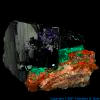
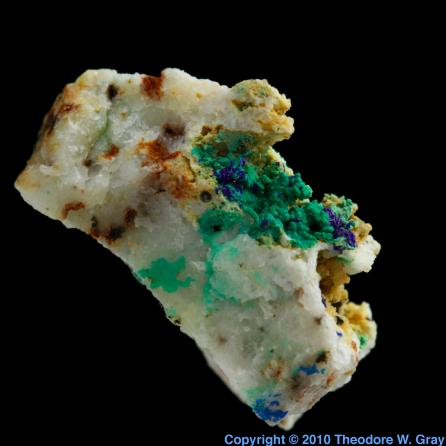
Azurite and Malachite.
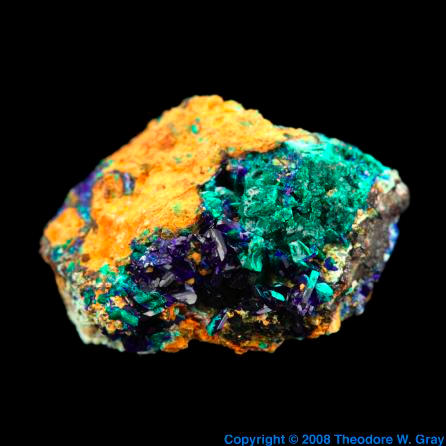
Azurite and Malachite (Cu+23 (CO3)2 (OH)2 mon. ; Cu+22 (CO3) (OH)2 mon.), Brixlegg, Tyrol, Austria. Nice, from an historic alpine mine. 2,2x1,5x1 cm; 10 g with box.
Source: Simone Citon
Contributor: John Gray
Acquired: 13 January, 2010
Text Updated: 13 January, 2010
Price: Trade
Size: 1"
Composition: Cu3(CO3)2(OH)2+Cu2(CO3)(OH)2
|
|
|
|
|
|
|
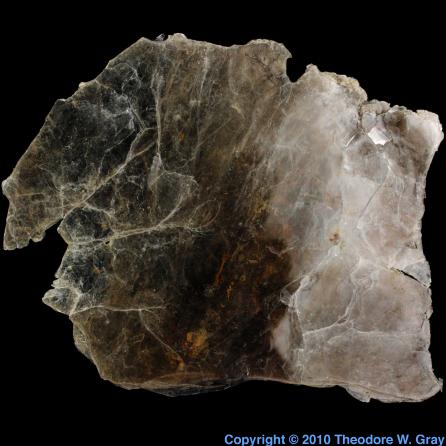
Mica sheet.
This is a sheet of mica, a papery thin mineral that was often used as an electrical insulator. The term mica refers to a range of specific minerals and I don't know which one this is exactly, so the composition is just a guess.
Source: Mark Peterson
Contributor: Mark Peterson
Acquired: 13 January, 2010
Text Updated: 13 January, 2010
Price: Donated
Size: 3"
Composition: (KLi2Al(Al,Si)3O10(F,OH)2
|
|
|
|
|
|
|
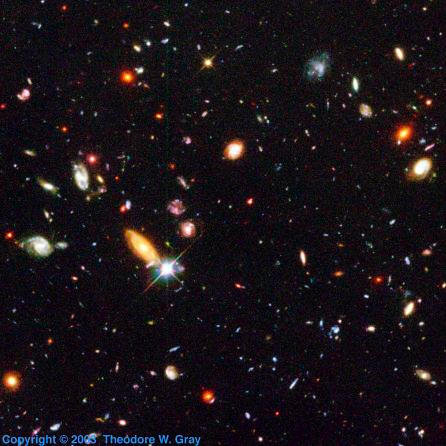
The Universe. (External Sample)
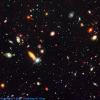
The universe is about 75% hydrogen by weight: Good enough to count as an element sample. As an external sample, this one is not physically located within the table, but rather in its complement. (This is the famous Hubble Deep Field image.)
Location: The Universe
Photographed: 3 October, 2002
Size: 6000000000000000000000000000"
Purity: 75%
|
|
|
|
|
|
|
|
|
|
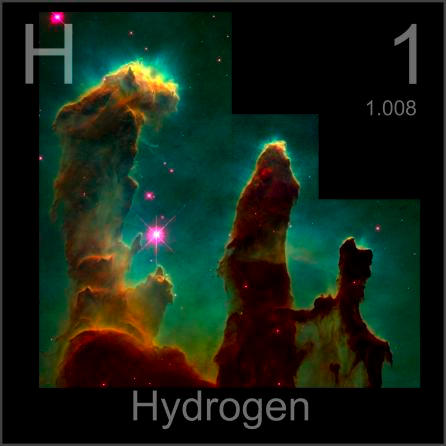
The Eagle Nebula. (External Sample)
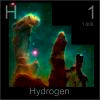
By weight, 75 percent of the visible universe is hydrogen. Ordinarily it is a colorless gas, but vast quantities of it in space absorb starlight, creating spectacular sights such as the Eagle Nebula (seen by the Hubble Space telescope).
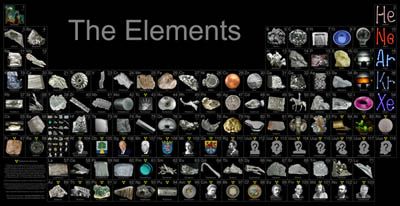
This sample represents its element in my Photographic Periodic Table Poster. The sample photograph includes text exactly as it appears in the poster, which you are encouraged to buy a copy of.
 . .
Location: Eagle Nebula
Photographed: 3 October, 2002
Text Updated: 25 November, 2006
Size: 5500000000000000000"
Purity: 75%
|
|
|
|
|
|
|
|
|
|
|
|