|
|
|
|
|
|
|
|
|
|
|
|
|
|
|
|
I thought niobium was exotic, very expensive, and very hard to get. Ha! Turns out you can find some stuck on or into a good fraction of the teenagers you see on the streets. Niobium is used in "body jewelry", the stuff you see stuck into young people's lips, noses, tongues, ears, eyebrows, foreheads, and God only knows where else. This is sensible since it is completely non-reactive with human tissue, and it can be colored beautifully by oxidation.
I know for a fact that genuine solid niobium jewelry exists, because I have tested one by x-ray fluorescence spectroscopy. And it turns out the stuff really isn't very expensive, so there's no particular reason not to use it even for inexpensive ornaments. Maybe when the current fad for piercings passes there will be a huge market for surplus used niobium pins, and I can buy a bucket full to melt down into ingots.
|
|
| |
|
|
|
|
|
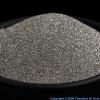
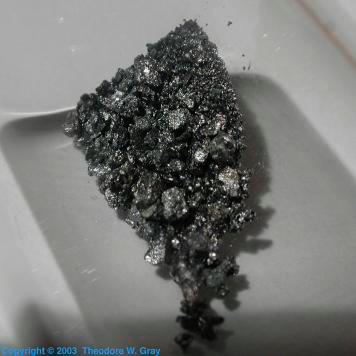
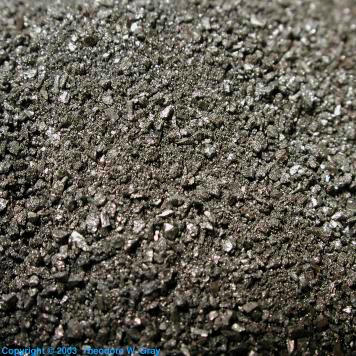
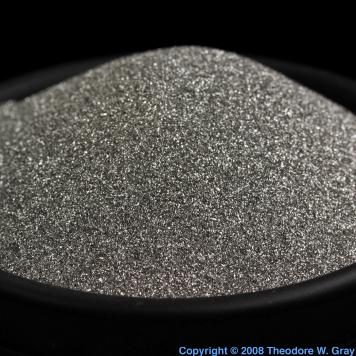
Powder, 99.98%.
Kindly donated by David Franco, who sent many elements after seeing the slashdot discussion, and this one after I sent him some Mathematica t-shirts.
Source: David Franco
Contributor: David Franco
Acquired: 11 June, 2002
Price: Donated
Size: 0.005"
Purity: 99.98%
Sample Group: Powders
|
|
|
|
|
|
|
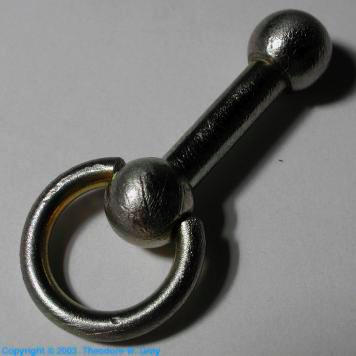
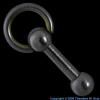
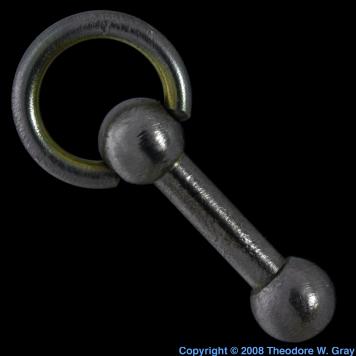
 Barbell (Enslaved). Barbell (Enslaved).
Niobium is used for jewelry because it's non-reactive and can be colored by oxidation (the color depending on how long you heat it for). This one is meant to be stuck in some part of your body, I'm not sure which. It came with a gold-colored coating, which I removed using a rotating brass wire brush. I was afraid that might have been all the niobium and that the core was some other metal, but analysis by x-ray fluorescence spectroscopy at the Center for Microanalysis of Materials, University of Illinois (partially supported by the U.S. Department of Energy under grant DEFG02-91-ER45439) indicates that the barbell is virtually pure niobium, within the detection limits of the machine. Score one for the accuracy of descriptions on eBay.
Source: eBay seller pinta-beads
Contributor: Theodore Gray
Acquired: 10 July, 2002
Text Updated: 11 March, 2007
Price: $10
Size: 1"
Purity: >80%
Sample Group: Medical
|
|
|
|
|
|
|
|
|
|
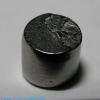
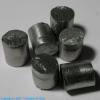
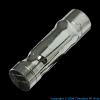
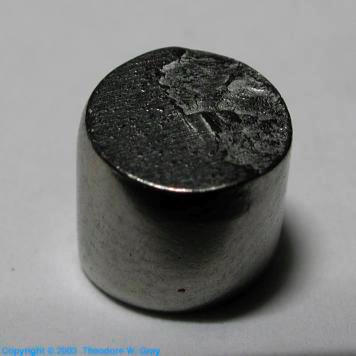
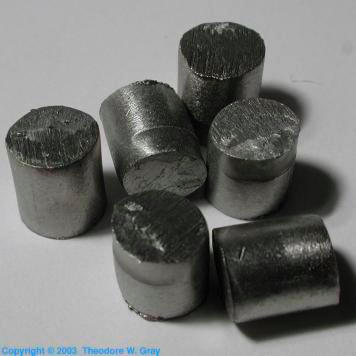
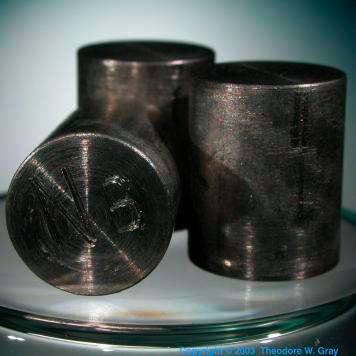
Tiny cylinder.
Ed bought half a dozen different tiny metal cylinders from David Franco, intending to make some kind of puzzle out of them (Ed's a puzzle person). But they turned out to be too irregular, so he donated them to the table.
Source: David Franco
Contributor: Ed Pegg Jr
Acquired: 19 August, 2002
Text Updated: 11 August, 2007
Price: Donated
Size: 0.2"
Purity: 99.98%
|
|
|
|
|
|
|
|
|
|
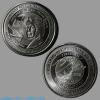
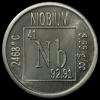
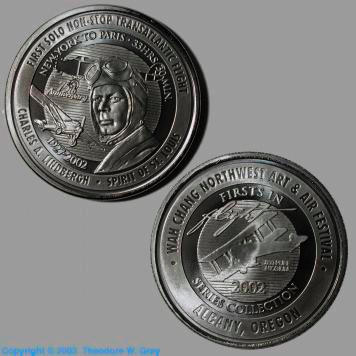
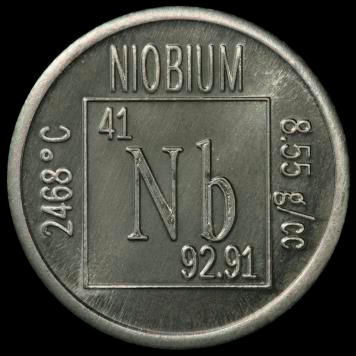
Wah Chang commemorative coin.
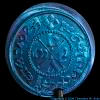
This pure niobium coin was issued by the large specialty metals refiner Wah Chang. I thought they did it just to show they could, but according to Kirk Richardson in their marketing department they did it to show what attractive coins can be made from niobium. He said "We believe niobium is marketable as a unique metal for high-end gaming tokens (niobium would be very difficult to counterfeit) and collectible commemorative." The contrast in weight between this coin and my similarly-sized titanium coin is dramatic.
They are now offering this and another commemorative coin from their website at www.hotmetalshop.com. I've got the three they have issued so far, and a new one is planned each year for several more years.
This was the 200th sample added to the Periodic Table Table.
Source: Wah Chang
Contributor: Theodore Gray
Acquired: 10 September, 2002
Text Updated: 11 August, 2007
Price: $30
Size: 1"
Purity: 99.9%
Sample Group: Coins
|
|
|
|
|
|
|
Sample from the RGB Set.
The Red Green and Blue company in England sells a very nice element collection in several versions. Max Whitby, the director of the company, very kindly donated a complete set to the periodic table table.
To learn more about the set you can visit my page about element collecting for a general description or the company's website which includes many photographs and pricing details. I have two photographs of each sample from the set: One taken by me and one from the company. You can see photographs of all the samples displayed in a periodic table format: my pictures or their pictures. Or you can see both side-by-side with bigger pictures in numerical order.
The picture on the left was taken by me. Here is the company's version (there is some variation between sets, so the pictures sometimes show different variations of the samples):

Source: Max Whitby of RGB
Contributor: Max Whitby of RGB
Acquired: 25 January, 2003
Text Updated: 11 August, 2007
Price: Donated
Size: 0.2"
Purity: 99.6%
|
|
|
|
|
|
|
Sample from the Everest Set.
Up until the early 1990's a company in Russia sold a periodic table collection with element samples. At some point their American distributor sold off the remaining stock to a man who is now selling them on eBay. The samples (except gases) weigh about 0.25 grams each, and the whole set comes in a very nice wooden box with a printed periodic table in the lid.
To learn more about the set you can visit my page about element collecting for a general description and information about how to buy one, or you can see photographs of all the samples from the set displayed on my website in a periodic table layout or with bigger pictures in numerical order.
Source: Rob Accurso
Contributor: Rob Accurso
Acquired: 7 February, 2003
Text Updated: 29 January, 2009
Price: Donated
Size: 0.2"
Purity: >99%
|
|
|
|
|
|
|
Sample from Wooden Book.
Max Whitby and I talked about publishing a wooden book/CD/DVD/mini element collection, but it didn't go anywhere. It would have consisted of a nicely engraved wooden "book" with a CD and DVD version of the website (for those with slower internet connections), and a set of nine safe, interesting elements in the form of cylinders, cast blocks, nodules, and the like. Think of it sort of like a mineral collection, except it's an element collection and it comes in a much nicer box. Here are a couple of pictures of the prototype:
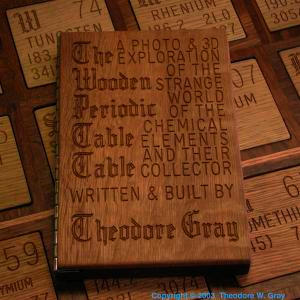 
This cylinder is one of the samples that we planned to include in the product.
Source: Max Whitby of RGB
Contributor: Max Whitby of RGB
Acquired: 12 May, 2003
Text Updated: 11 August, 2007
Price: Donated
Size: 0.5"
Purity: 99.9%
|
|
|
|
|
|
|
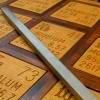
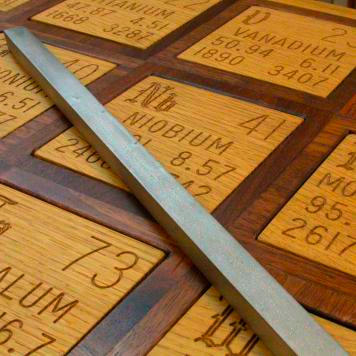
Niobium bar.
Niobium is the most popular metal for upscale piercing jewelry, but this bar would be going a bit far for even the most insecure teenager. I just love big hunky samples of exotic metals: something you could pound a nail with.
Source: Max Whitby of RGB
Contributor: Theodore Gray
Acquired: 16 December, 2003
Price: Donated
Size: 18"
Purity: 99%
|
|
|
|
|
|
|
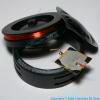
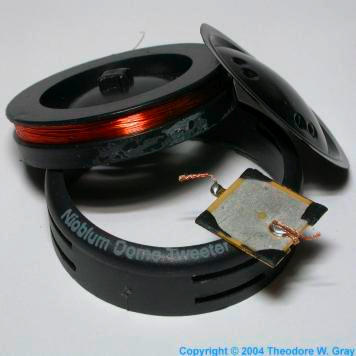
Niobium speaker, maybe.
This speaker is sold as a "600W Niobium Car Stereo Tweeter". I'm not sure what the 600W means: Surely not 600 watts, which would instantly fry the poor thing. I'm also not sure what the niobium in the name means: If there's niobium in there I sure can't find it. Ah well, at least it was cheap.
Source: eBay seller caraudiosupply
Contributor: Theodore Gray
Acquired: 1 May, 2004
Price: $4
Size: 1"
Purity: 0%
|
|
|
|
|
|
|
 High purity button. High purity button.
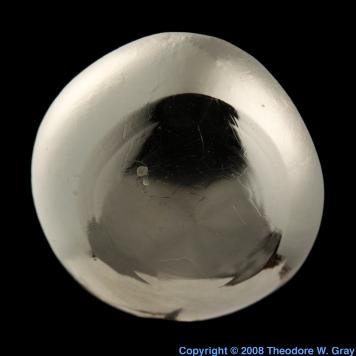
This very high purity button was produced by Kaistar R&D (see Source link below if you want one) in their vacuum electron beam furnace, which Oliver Sacks and I visited in the summer of 2004. I wrote a story about the visit, which includes photographs of the incredible furnace used to produce this button and the many others they offer on eBay and direct to the element collecting hobby. I think it's safe to say that you will not find more perfect samples of transition metals anywhere.
This sort of button is hard to appreciate in a photograph: It's the great smoothness and density that make them so satisfying to hold.
Source: Kaistar R&D
Contributor: Kaistar R&D
Acquired: 6 August, 2004
Price: Donated
Size: 0.75"
Purity: 99.99%
|
|
|
|
|
|
|
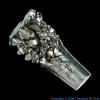
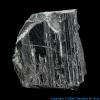
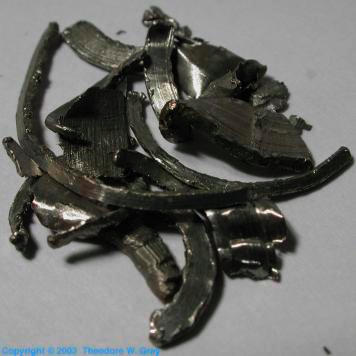
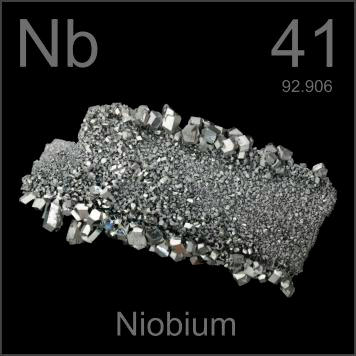
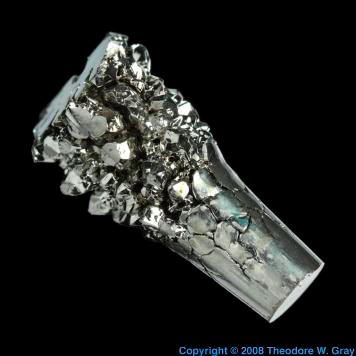
Crystal ribbon.
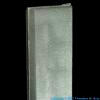
This stunning strip of electrolytic niobium crystals is one of only a small bag left in all the world. The process used to create them is no longer used because a more economical method of producing ultra-high-purity niobium has been developed. A few of these are being offered on eBay by Kaistar R&D: Click the source link below if you want to get one. I am not aware of any other source of niobium crystals in any form.
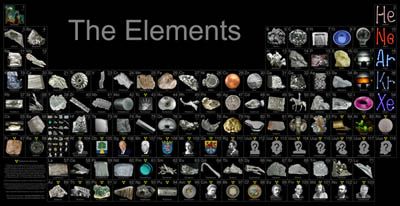
I chose this sample to represent its element in my Photographic Periodic Table Poster. The sample photograph includes text exactly as it appears in the poster, which you are encouraged to buy a copy of.
Source: Kaistar R&D
Contributor: Kaistar R&D
Acquired: 6 August, 2004
Text Updated: 4 May, 2007
Price: Donated
Size: 2"
Purity: >99.995%
|
|
|
|
|
|
|
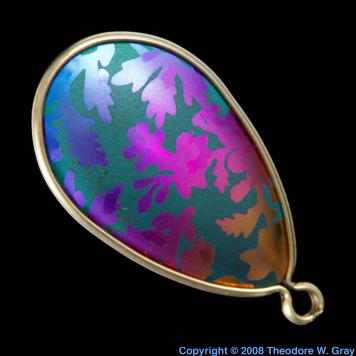
Earrings.
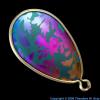
Niobium is used in jewelry both because it is compatible with skin, and because it can be colored by electrolysis (the thickness of the oxide layer determining the color by interference). These are oxide-layer-colored earrings by Holly Yashi, who seems to be a major producer of niobium jewelry.
Source: eBay seller 4theear
Contributor: Theodore Gray
Acquired: 15 August, 2004
Price: $33.50
Size: 0.5"
Purity: 99%
|
|
|
|
|
|
|
Postage stamp cover.
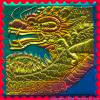
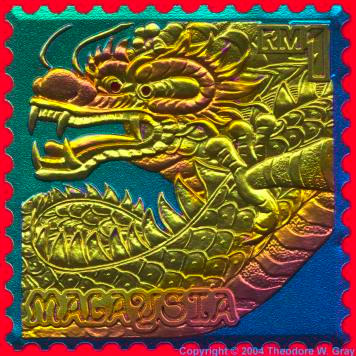
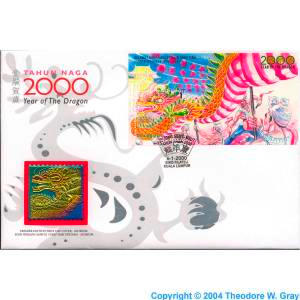
People who collect stamps like to have "first day covers" which contain a sample of the stamp canceled in a fancy way. This one also contains a sort of reproduction of the stamp in, amazingly, niobium foil with colors created by careful oxidation. It's iridescently beautiful, though the niobium foil version of the stamp is not a legal-tender sort of stamp. Here is a picture of the whole package showing the real stamps next to the decorative niobium version:
Warut Roonguthai, who kindly provided this sample, sent the following information about it and the similar tantalum version he sent:I believe that Royal Selangor (the company that produces FDCs (First Day Covers) for Malaysia) put metal cachets on FDCs because they are an expert in making metal objects/arts. So they want to show their ability to make those cachets.There are other versions of cachets like pewter and silver, but I don't think you are interested in such naive metals, and they can't be anodized to create colors. Royal Selangor started their business with pewter because there are a lot of tin deposits (in the form of cassiterite) in Malaysia and the southern part of Thailand.
The tantalum cachet I gave you is the only one they have produced! Now they only use niobium for making colorful cachets for FDCs since tantalum is much more expensive than niobium.
Best wishes,
Warut
Source: Warut Roonguthai
Contributor: Warut Roonguthai
Acquired: 16 August, 2004
Text Updated: 29 January, 2009
Price: Donated
Size: 1"
Purity: 99%
|
|
|
|
|
|
|
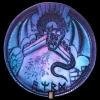
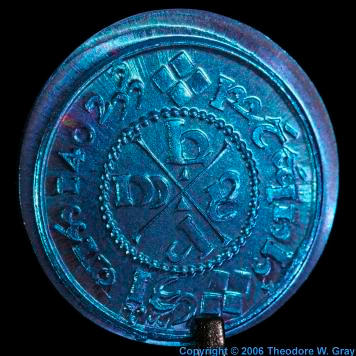
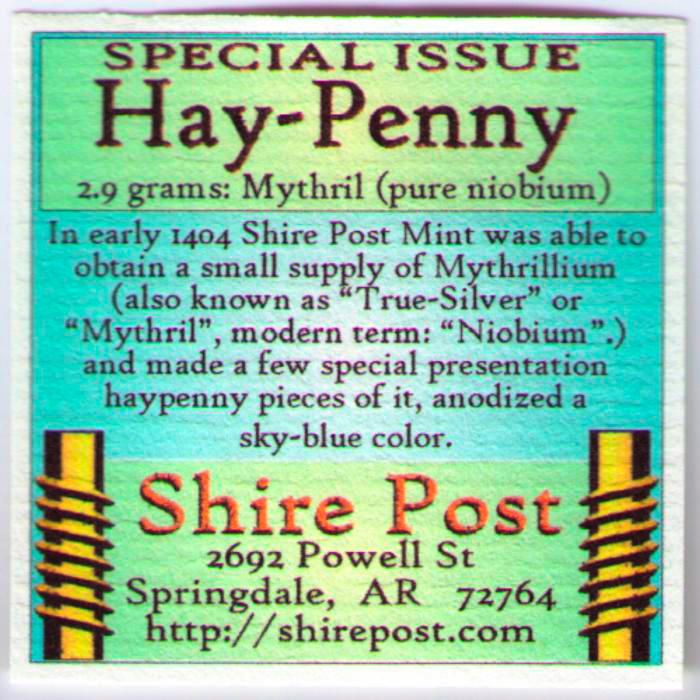
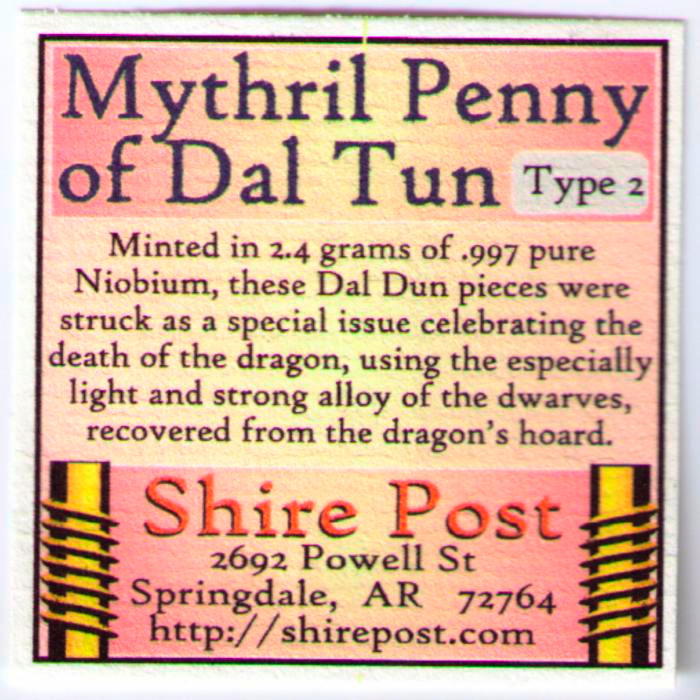
1402 Mythril Haypenny special issue coin.
Shire Post Mint makes and sells an extensive line of fantasy coins based on the stories and worlds of the Lord of the Rings, Star Trek, George R.R. Martin, and others. What I like about this of course is the fact that many of them are made of unusual elements including titanium, niobium, and even hafnium (click the Sample Group link below to see the others).
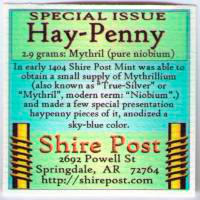
If it's still available, you can buy this coin from Shire Post Mint. (And if not, they have many others like it: If that link doesn't work, go to their home page and follow the links to find lots of coins.)
Source: Shire Post Mint
Contributor: Theodore Gray
Acquired: 10 June, 2006
Text Updated: 11 August, 2007
Price: $12
Size: 0.75"
Purity: 99.7%
Sample Group: Coins
|
|
|
|
|
|
|
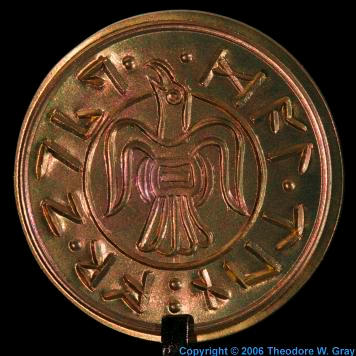
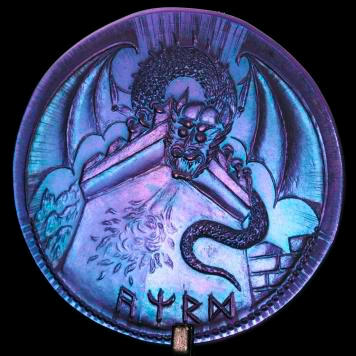
Mythril Raven Penny of Dal Tun, type 2 coin.
Shire Post Mint makes and sells an extensive line of fantasy coins based on the stories and worlds of the Lord of the Rings, Star Trek, George R.R. Martin, and others. What I like about this of course is the fact that many of them are made of unusual elements including titanium, niobium, and even hafnium (click the Sample Group link below to see the others).
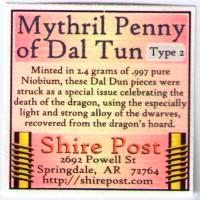
If it's still available, you can buy this coin from Shire Post Mint. (And if not, they have many others like it: If that link doesn't work, go to their home page and follow the links to find lots of coins.)
Source: Shire Post Mint
Contributor: Theodore Gray
Acquired: 10 June, 2006
Text Updated: 11 August, 2007
Price: $12
Size: 0.75"
Purity: 99.7%
Sample Group: Coins
|
|
|
|
|
|
|
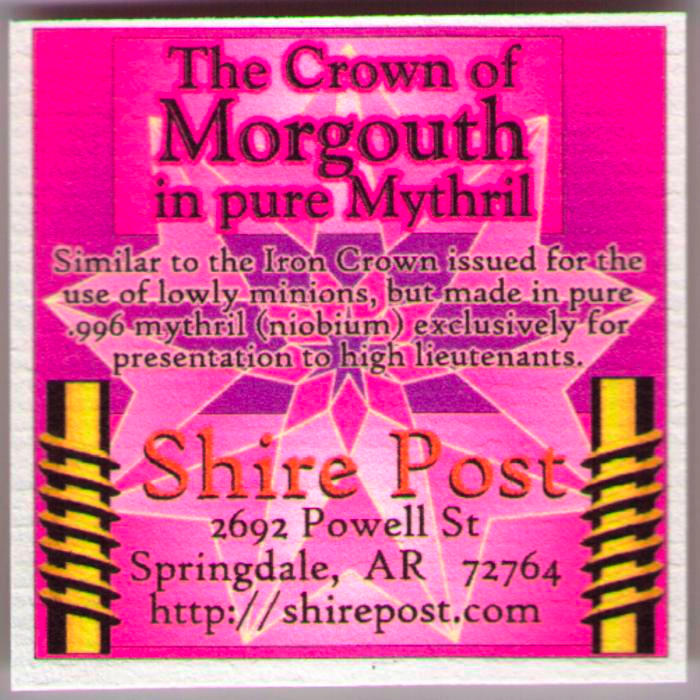
Mythril crown of Morgouth.
Shire Post Mint makes and sells an extensive line of fantasy coins based on the stories and worlds of the Lord of the Rings, Star Trek, George R.R. Martin, and others. What I like about this of course is the fact that many of them are made of unusual elements including titanium, niobium, and even hafnium (click the Sample Group link below to see the others).
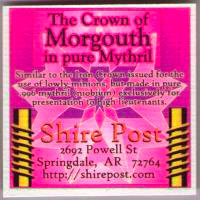
If it's still available, you can buy this coin from Shire Post Mint. (And if not, they have many others like it: If that link doesn't work, go to their home page and follow the links to find lots of coins.)
Source: Shire Post Mint
Contributor: Theodore Gray
Acquired: 10 June, 2006
Text Updated: 11 August, 2007
Price: $22
Size: 1"
Purity: 99.7%
Sample Group: Coins
|
|
|
|
|
|
|
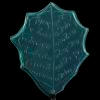
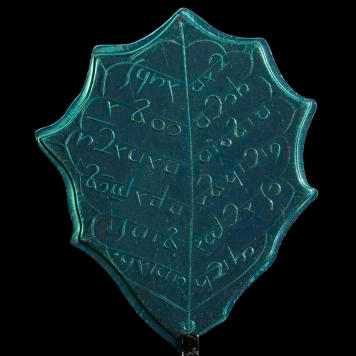
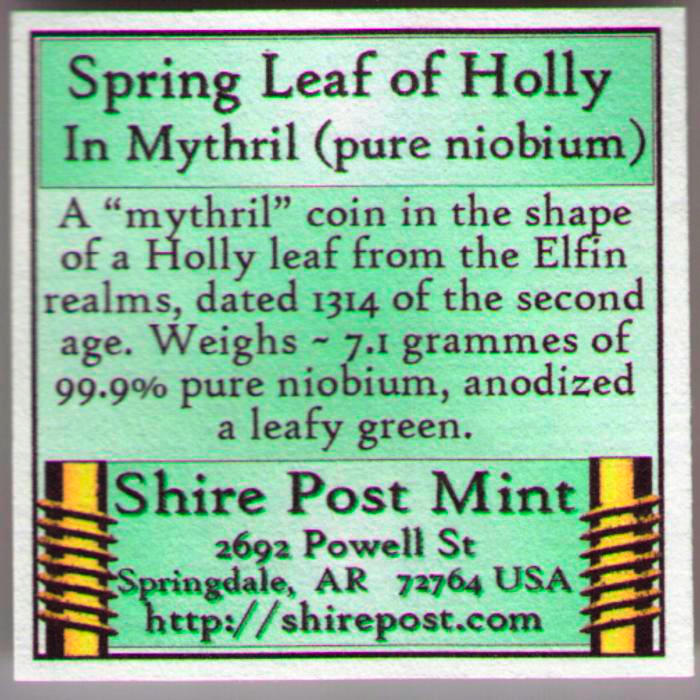
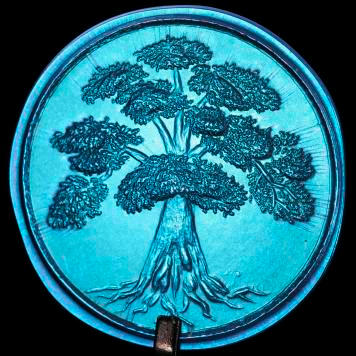
Spring Leaf of Holly in Mythril.
Shire Post Mint makes and sells an extensive line of fantasy coins based on the stories and worlds of the Lord of the Rings, Star Trek, George R.R. Martin, and others. What I like about this of course is the fact that many of them are made of unusual elements including titanium, niobium, and even hafnium (click the Sample Group link below to see the others).
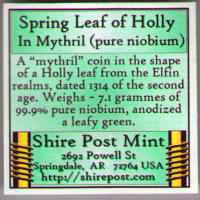
If it's still available, you can buy this coin from Shire Post Mint. (And if not, they have many others like it: If that link doesn't work, go to their home page and follow the links to find lots of coins.)
Source: Shire Post Mint
Contributor: Theodore Gray
Acquired: 10 June, 2006
Text Updated: 11 August, 2007
Price: $10
Size: 1"
Purity: 99.7%
Sample Group: Coins
|
|
|
|
|
|
|
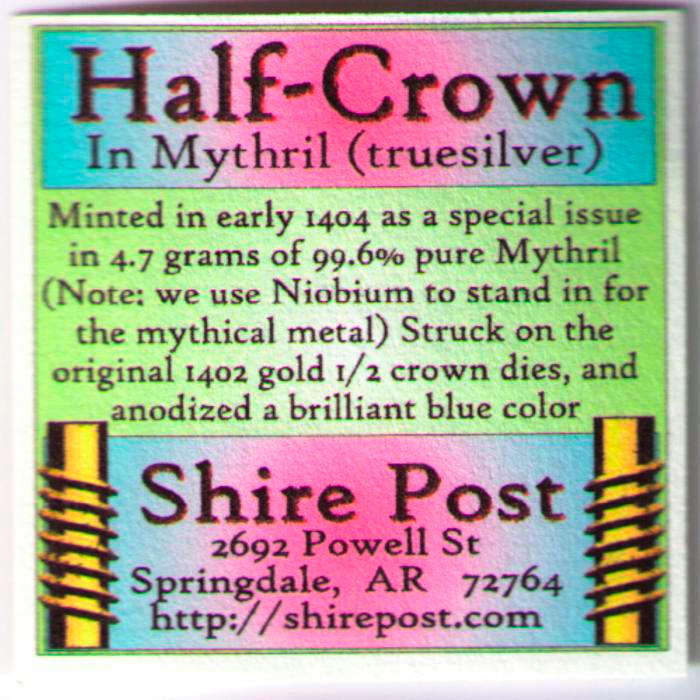
Half-crown in Mythril.
Shire Post Mint makes and sells an extensive line of fantasy coins based on the stories and worlds of the Lord of the Rings, Star Trek, George R.R. Martin, and others. What I like about this of course is the fact that many of them are made of unusual elements including titanium, niobium, and even hafnium (click the Sample Group link below to see the others).
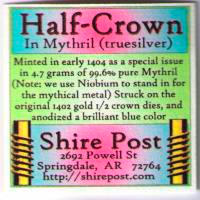
If it's still available, you can buy this coin from Shire Post Mint. (And if not, they have many others like it: If that link doesn't work, go to their home page and follow the links to find lots of coins.)
Source: Shire Post Mint
Contributor: Theodore Gray
Acquired: 10 June, 2006
Text Updated: 11 August, 2007
Price: $22
Size: 1"
Purity: 99.7%
Sample Group: Coins
|
|
|
|
|
|
|
Element coin.
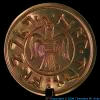
Dave Hamric sells element samples under the name Metallium. He's developed a line of coins struck out of various common and uncommon metals: They are quite lovely, and very reasonably priced, considering the difficulty of creating some of them.
Here is the back side of this coin (click either picture to see it larger):
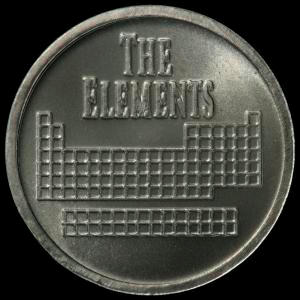
Click the Sample Group link below to see many other coins made of various elements, or click the link to his website above if you want to buy one like this.
Source: Dave Hamric
Contributor: Theodore Gray
Acquired: 1 December, 2006
Text Updated: 14 January, 2007
Price: $12
Size: 0.75"
Purity: >99%
Sample Group: Coins
|
|
|
|
|
|
|
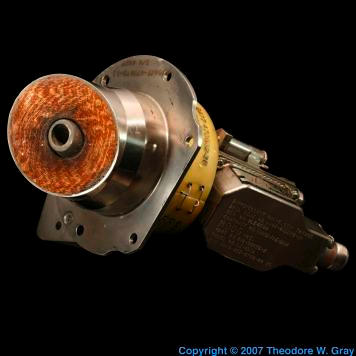
Missile thruster nozzle.
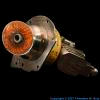
Sometimes it helps to know antique element names. This item was listed on eBay as being made of "columbium", which is the old name for niobium, still used sometimes in commerce, never in science. I think the only part of it made of niobium is the small nozzle opening inside the thick round insulation. This was said to be a navigational thruster from a Minute Man ICBM (Inter-Continental Ballistic Missile). From the look of it, I'd say it ran on a two-part, spontaneously combustible liquid fuel. There are two inlet hose fittings, and if two such components were to flow in through two separate tubes and light themselves on contact, the result would obviously be a lot of hot gas shooting out the nozzle. If I'm right, this small unit (only about 7" across) is in fact a complete rocket engine, though of course its only job was to nudge the missile a little bit this way or that, not to actually lift it off the ground.
Source: eBay seller selwrite
Contributor: Theodore Gray
Acquired: 20 January, 2007
Text Updated: 21 January, 2007
Price: $152
Size: 7"
Purity: >99%
|
|
|
|
|
|
|
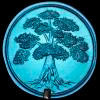
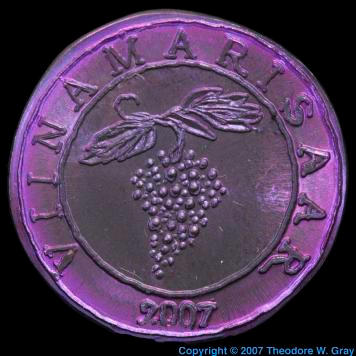
Coin from Viinamarisaar.
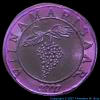
I'm pretty sure that Viinamarisaar is not a real country. It's described as a small island in the Baltic sea, but in fact it's a figment of the imagination, based loosely on the real Baltic sea island Ruhnu. Being a figment of someone's imagination has never stopped a country from having its own currency, in this case a quite attractive line of anodized niobium and titanium coins, plus assorted other coins and notes. Think of it as a fantasy baseball league for frustrated coinage designers.
Source: eBay seller b-turner
Contributor: Theodore Gray
Acquired: 24 February, 2007
Text Updated: 24 February, 2007
Price: $15
Size: 0.5"
Purity: >99%
Sample Group: Coins
|
|
|
|
|
|
|
|
|
|
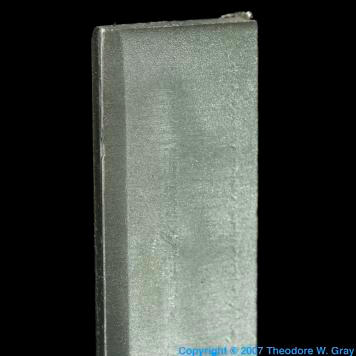
Thick sheered plate.
Juan and his mechanic friend play with elements in their spare time. This is a 1/4" thick slab of niobium (which Juan prefers to call by its old name, columbium) in its natural state. Compare with the next two samples (to be added soon) which show various colors achieved by anodizing the same material.
Source: Juan Jimenez
Contributor: Juan Jimenez
Acquired: 18 March, 2007
Text Updated: 6 April, 2007
Price: Donated
Size: 6"
Purity: 99.95%
|
|
|
|
|
|
|
Thick anodized plate.
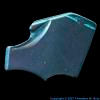
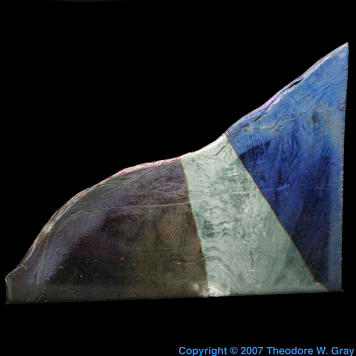
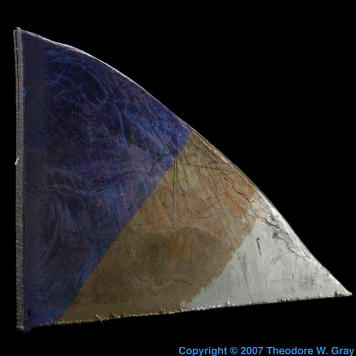
This lovely thick plate of niobium was anodized using a battery charger by Juan and friends in their car shop. You can see many other examples of anodized niobium on my site, but this is by far the largest!
Source: Juan Jimenez
Contributor: Juan Jimenez
Acquired: 6 April, 2007
Text Updated: 6 April, 2007
Price: Donated
Size: 5"
Purity: 99.95%
|
|
|
|
|
|
|
|
|
|
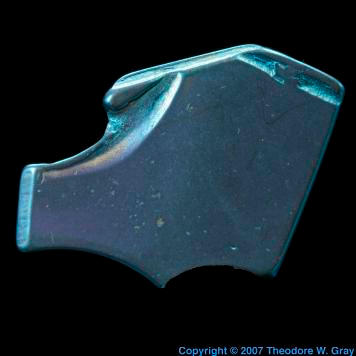
Metal salesmans sample.
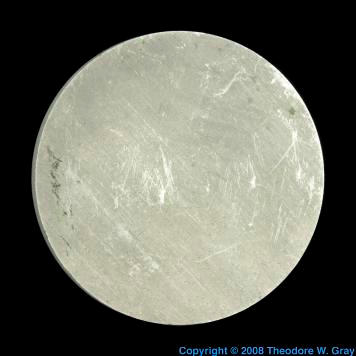
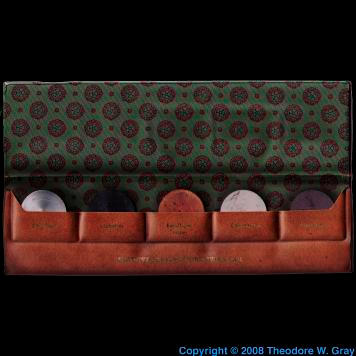
From the eBay item description, which pretty much sums up what this item is:This auction is for a very unusual, what I think would be called a Salesman Sample, of 5 exotic metal disks. The brown plastic case that measures 2.50 in. by 6 in., was received by my Father when he visited the Kawecki Berylco Industries in the 1970's. The company was bought by Cabot Corp. in the late 70's. The disks measure 1.25 in. dia. by .1in. thick. According to the description in the case the 5 metals are Beryllium, Lockalloy, Beryllium Copper, Columbium [an older name for niobium], Tantalum. This is the niobium sample, which this set describes as columbium, an old name for niobium still sometimes used in industry but not in science. Click the Source link to see the samples all together, and here's a picture of the whole set:
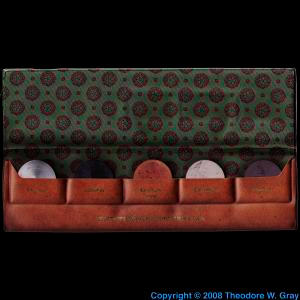
Source: eBay seller jacav111
Contributor: Theodore Gray
Acquired: 27 December, 2008
Text Updated: 28 December, 2008
Price: $134/set
Size: 1.25"
Purity: 97%
|
|
|
|
|
|
|
Experimental pipe, maybe.
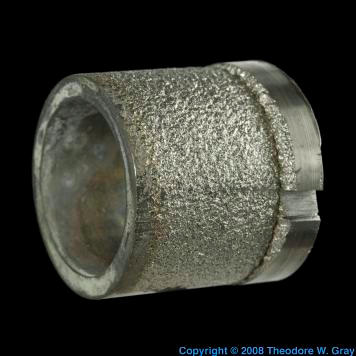
From the source:This is vapor-deposited niobium from some sort of CVD reaction. Unlike the other sample of vapor-deposited niobium, this one was performed on a large heated surface or large-diameter electrode, thus the pipe-like nature of it. In fact, there's a good-to-high probability that this experiment was performed in order to test the possibility of making niobium pipe (used in chemical and nuclear reactors, for example, as well as other demanding applications such as rocket engines) by a simple vapor-deposition process where the outer surface could simply be lathed to size, rather than by painstakingly rolling it in to appropriately sized foil, fabricating it into a tube shape and then joining it by electron-beam welding, where especially the final step is very expensive and time-consuming. I doubt the as-deposited niobium in this case would have possessed the homogeneity and microstructure necessary to give niobium its ideal mechanical properties, but would be nifty to say the least if it worked.
Source: Ethan Currens
Contributor: Theodore Gray
Acquired: 27 December, 2008
Text Updated: 17 March, 2009
Price: Anonymous
Size: 2"
Purity: 99%
|
|
|
|
|
|
|
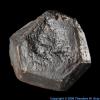
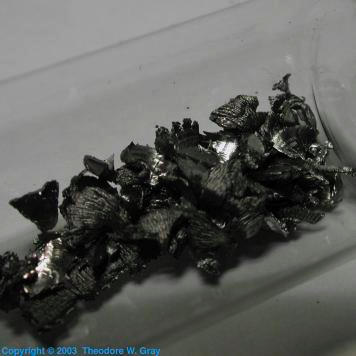
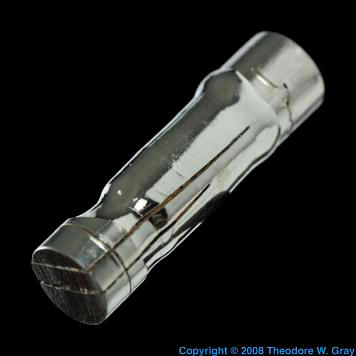
Niobium crystal bar.
From the source:This is a sample of niobium crystal bar, produced by the same basic method as the Van Arkel/de Boer (Iodide) crystal bar process used to purify hafnium, zirconium, titanium, and occasionally thorium, though with different chemical precursors and reaction conditions in order to adapt the process to niobium.
Some of you may be scratching your heads, saying "But I thought the iodide crystal bar process was only used for the metals just mentioned--I've never heard of it being used for niobium." Pat yourselves on the back--you're 100% correct. This piece of niobium crystal bar is, as far as I have ever heard, one of only three or four small pieces in the world, leftover from an experiment on niobium reduction and purification performed about 45 years ago. Some more was produced, but the rest was melted down. If you have any information about this experiment or another like it, please email. I am not sure of exactly what they did, but from how the bar is half-melted, I would guess that the crystal bar was produced, cleaned, and vacuum induction melted into a round bar before it was to be zone-refined and then analyzed for final purity.
Most importantly, though, look at those fabulous crystals. Niobium is a very tough, hard metal that is extremely chemically resistant- left to its own devices on Earth, those beautiful crystalline facets would likely last millions of years, unless they were subducted into the mantle or happened to be in the direct path of a volcanic eruption.
Source: Ethan Currens
Contributor: Theodore Gray
Acquired: 27 December, 2008
Text Updated: 1 March, 2009
Price: Anonymous
Size: 1.5"
Purity: >99.99%
|
|
|
|
|
|
|
Zone refined niobium bar.
From the source:This is a piece of niobium bar that was zone refined using an electron beam-the metal is heated equally around its circumference in a small band, melting one short area of the bar, and the molten zone is moved along the bar to segregate impurities to one end. Imagine shaking up a container with oil and water, and letting the less-dense oil float up to the top- it is a similar effect, though not necessarily because of density. This is an excellent process for increasing the purity of metals and some other materials, except that it is quite expensive--it requires a high vacuum chamber which must be "baked out" before use to remove moisture and other volatile chemicals, and then the zone refining itself is a slow process which is very delicate and tricky to do just right, resulting in a very small amount of finished material. This sample was zone refined along a short length of it, and was intended to be sliced lengthwise, polished, and etched in a special mixture of acids to view the difference in internal microstructure between the raw bar and the zone-refined section, though this piece was not actually prepared except for the initial slices.
Source: Ethan Currens
Contributor: Theodore Gray
Acquired: 27 December, 2008
Text Updated: 17 March, 2009
Price: Anonymous
Size: 1.5"
Purity: >99.99%
|
|
|
|
|
|
|
|
|
|
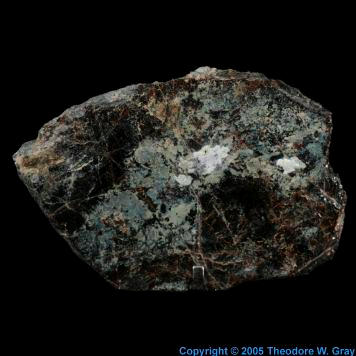
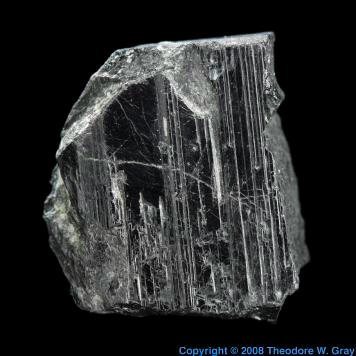
Aeschynite.
The card that came with this shale-like blackish mineral says the following about the name: "From Gk. aeschyne, shame, alluding to the inability of chemists at the time of its discovery to separate some of its constituents". Hm, I wonder if it was the chemists who came up with this name, or the geologists who gave it to them to analyze.
This specimen is from Molland in Iveland, Norway. I bought it for its thorium content: Not that many minerals contain thorium and I'm trying to collect them all.
Reader Magnus Alvestad sent this interesting information about Iveland:Hi. I noticed that your Aeschynite sample is from Iveland in Norway. The small community of Iveland is actually famous for their mines and minerals. Here's a folder with some information about a local exhibition. They also have at least 5 mines that are open to the public for a small price, where you can dig for minerals yourself.
Source: SoCal (Nevada), Inc
Contributor: Theodore Gray
Acquired: 20 September, 2005
Text Updated: 1 December, 2008
Price: $29
Size: 1.5"
Composition: (Y, Ca, Fe, Th)(Ti, Nb)2(O, OH)6
|
|
|
|
|
|
|
|
|
|
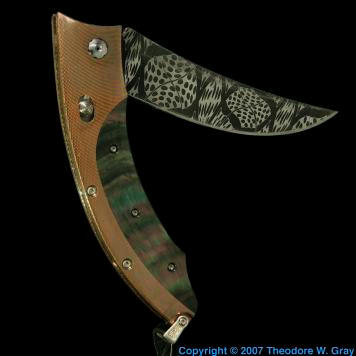
Insanely expensive knife.
This is a really, really nice knife, but honestly, I don't know what I was thinking. I plead temporary insanity. Not that I regret it or anything, this is just too good an, um, element sample to pass up. A bargain at half the price.
Anyway, the blade is the most remarkable thing about it, with the handle running a close second. The blade is patterned Damascus steel: What looks like an etched design on the surface actually goes all the way through the thickness of the blade. You can see other examples of Damascus steel on my site, but notice how they all have random wavy patterns.
Damascus steel is made by taking a sheet of steel, folding it over, heating it in a forge, then hammering it until it's as thin as it was before being folded. Then it's folded again, heated up, hammered out, etc, until it's been folded many times. Because the surface is being oxidized and carbonized from the heat at each stage, you end up with dozens or hundreds of alternating layers of bright steel and hard, dark, carbonized steel. For hundreds of years this was the finest, sharpest, and hardest steel available.
But look at the blade: The pattern is anything but random. In fact, it looks a lot like a 3D plot from Mathematica, which is what first attracted me to the knife. This is Damascus steel where the sequence of folds has been carefully designed to result in a particular pattern, not just a random waves. It's still folded and hammered by hand, but according to a very particular sequence designed, I am told, by computer (thought not with Mathematica, so far as I know).
For the blade it's the pattern that makes it special, but for the handle it's the materials. The handle is also made with a Damascus-style folding technique, but instead of folding steel onto itself, it's made by folding together alternating layers of niobium and copper. Oooo, a niobium-handled knife, now that really gets me going. Looking closely, you can see the reddish copper inclusions clearly within the silver colored niobium metal. (There's also an inlay of black pearl, but this is of no interest to an element collector.)
Adding a further level of interest, among all my dangerous and/or radioactive samples, this is the only one that it might actually be illegal for me to own. It is, you see, a fully spring-loaded switchblade. Push a button and the blade snaps out under its own power. According to my reading of the federal switchblade law there's only one way that I could legally own this knife, and that's by cutting off my arm. Yes really, let me quote from United States Code, Title 15, chapter 29, section 1244 Exceptions:(4) the possession, and transportation upon his person, of any switchblade knife with a blade three inches or less in length by any individual who has only one arm. Since the blade is less than 3" long, the solution is simple.
Or maybe not so simple, because though with one arm I would be allowed to possess and carry it according to Federal law, according to Illinois state law I would still be in hot water. In California, where I got the knife, it is legal to possess such a knife even if you have two arms, but not to carry it on your person, regardless of your arm count. So if anyone asks, I keep the knife in California, but so far have resisted the temptation to use it to cut off my arm.
Source: California Knife Store
Contributor: Theodore Gray
Acquired: 4 September, 2007
Text Updated: 6 September, 2007
Price: $3000
Size: 3.5"
Composition: FeNbCu
|
|
|
|
|
|
|
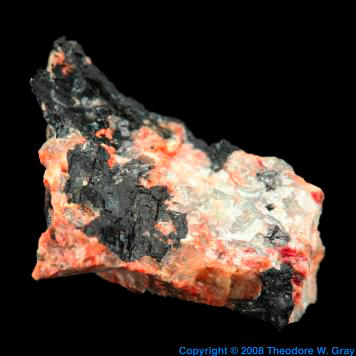
Zirconolite.
Description from the source:
Zirconolite var. Polymignite ((Ca Fe Y Th) (Nb Ti Ta Zr) O4 orth.), Stavern (Fredriksva"rn), Larvik, Vestfold, Norway. Black, fractured on matrix. 2,5x1,4x1,2 cm; 3 g.
Source: Simone Citon
Contributor: John Gray
Acquired: 30 September, 2008
Text Updated: 1 October, 2008
Price: Trade
Size: 1"
Composition: (CaFeYTh)(NbTiTaZr)O4
|
|
|
|
|
|
|
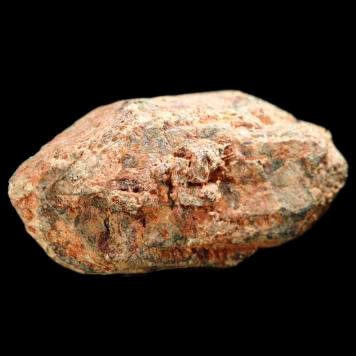
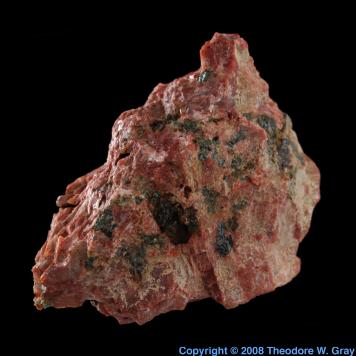
Euxenite.
Description from the source:
Euxenite ( (Y Ca Ce U Th) (Nb Ta Ti)2 O6 orth.), Trout Creek Pass, Chafee Co. Colorado, USA. Crystal cluster, nice and rare example. 2x1,5x1 cm; 14 g with box.
Source: Simone Citon
Contributor: John Gray
Acquired: 30 September, 2008
Text Updated: 1 October, 2008
Price: Trade
Size: 0.75"
Composition: (YCaCeUTh)(NbTaTi)2O6
|
|
|
|
|
|
|
|
|
|
|
|
|
Metal salesman's sample pouch.
From the eBay item description, which pretty much sums up what this item is:This auction is for a very unusual, what I think would be called a Salesman Sample, of 5 exotic metal disks. The brown plastic case that measures 2.50 in. by 6 in., was received by my Father when he visited the Kawecki Berylco Industries in the 1970's. The company was bought by Cabot Corp. in the late 70's. The disks measure 1.25 in. dia. by .1in. thick. According to the description in the case the 5 metals are Beryllium, Lockalloy, Beryllium Copper, Columbium [an older name for niobium], Tantalum. The individual disks are listed under their respective elements (beryllium for lockalloy, copper for beryllium copper).
Source: eBay seller jacav111
Contributor: Theodore Gray
Acquired: 27 December, 2008
Text Updated: 28 December, 2008
Price: $134
Size: 6"
Composition: BeAlCuNbTa
|
|
|
|
|
|
|
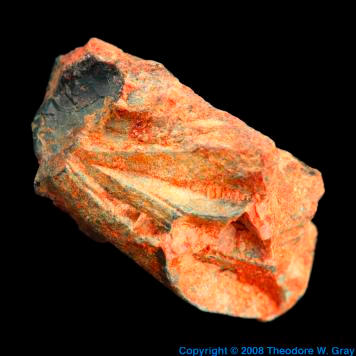
Euxenite from Jensan Set.
This sample represents lutetium in the "The Grand Tour of the Periodic Table" mineral collection from Jensan Scientifics. Visit my page about element collecting for a general description, or see photographs of all the samples from the set in a periodic table layout or with bigger pictures in numerical order.
Source: Jensan Scientifics
Contributor: Theodore Gray
Acquired: 10 January, 2009
Text Updated: 10 January, 2009
Price: Anonymous
Size: 0.6"
Composition: (Y,Ca,Ce,Lu,U,Th)(Nb,Ta,Ti)2O6
|
|
|
|
|
|
|
|
|
|
|
|
|
|
|
|
|
|
|
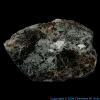
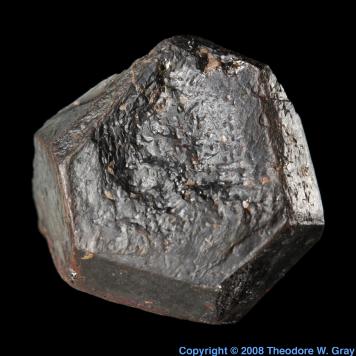
Coltan ore.
You may have heard about an effort some years ago to organize a boycott against cell phones. This is the motivation behind the boycott: Coltan. The name is a contraction of columbite and tantalite, which are the major minerals present in the ore. The name columbite comes from the old name of niobium, columbium. Tantalite is of course named for its major component, tantalum. Coltan is a major ore for tantalum, used in capacitors found in nearly all digital electronics, including cell phones (and computers and talking dolls and defibrillators and pretty much everything else invented since 1980).
The problem with coltan is that some of it comes from a region in the Congo that is one of last habitats for gorillas. It's also an area home to the other kind of gorilla, guerrillas, who are fighting various nasty wars with each other, and using revenues from coltan mining to pay for those wars. Gorillas are being killed to fund guerrilla wars, and digital electronics are the beneficiaries.
The boycott didn't last long, and it's kind of hard to imagine how the sponsors planned to organize it without the use of cell phones. It's also worth noting that less than one percent of the world's supply of tantalum comes from the Congo.
Source: Jensan Scientifics
Contributor: Theodore Gray
Acquired: 16 October, 2009
Text Updated: 18 October, 2009
Price: Anonymous
Size: 1"
Composition: FeNb2O6+FeTa2O6
|
|
|
|
|
|
|
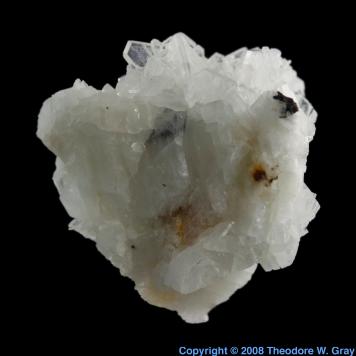
Fergusonite.
Description from the source:
Fergusonite-Y (Y Nb O4 tet.), Gilderdalen, Iveland, Nordge. Black lustrous masses on matrix. 1,4x1x0,6 cm; 5 g with box.
Source: Simone Citon
Contributor: John Gray
Acquired: 31 October, 2009
Text Updated: 31 October, 2009
Price: Trade
Size: 0.5"
Composition: YNbO4
|
|
|
|
|
|
|
|
|
|
|
|