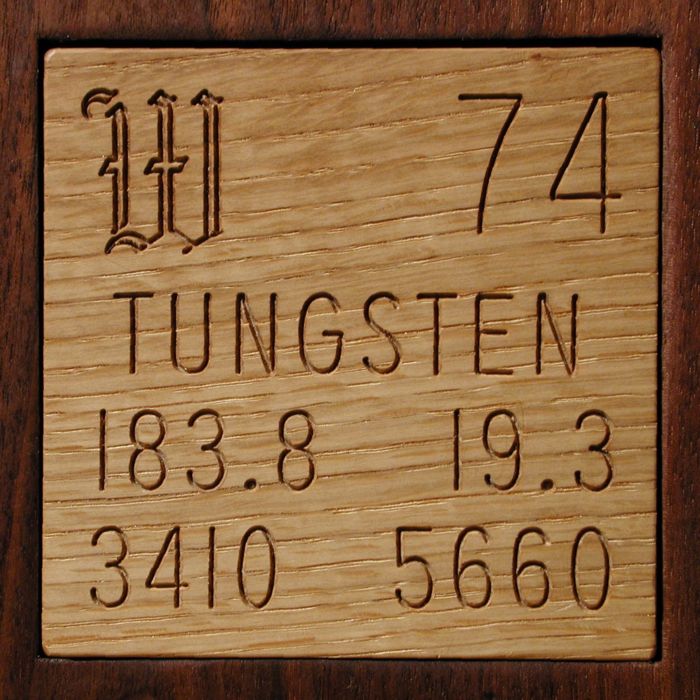
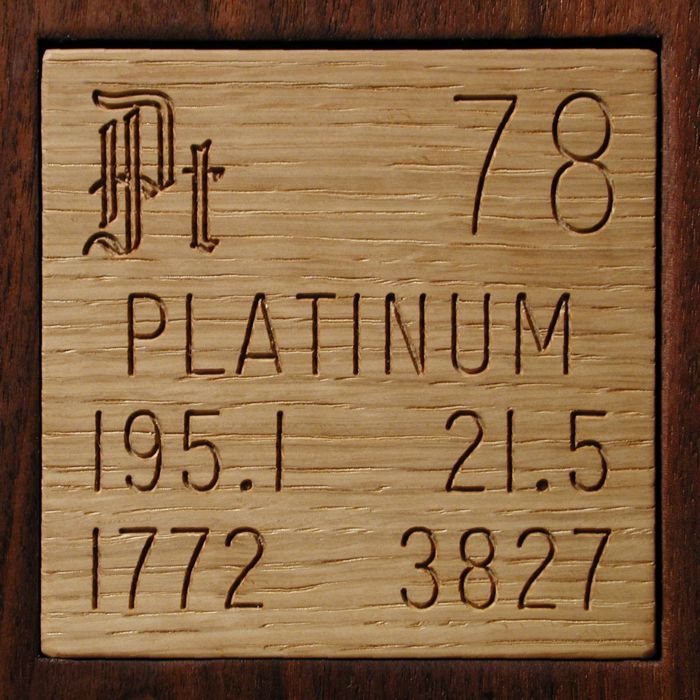
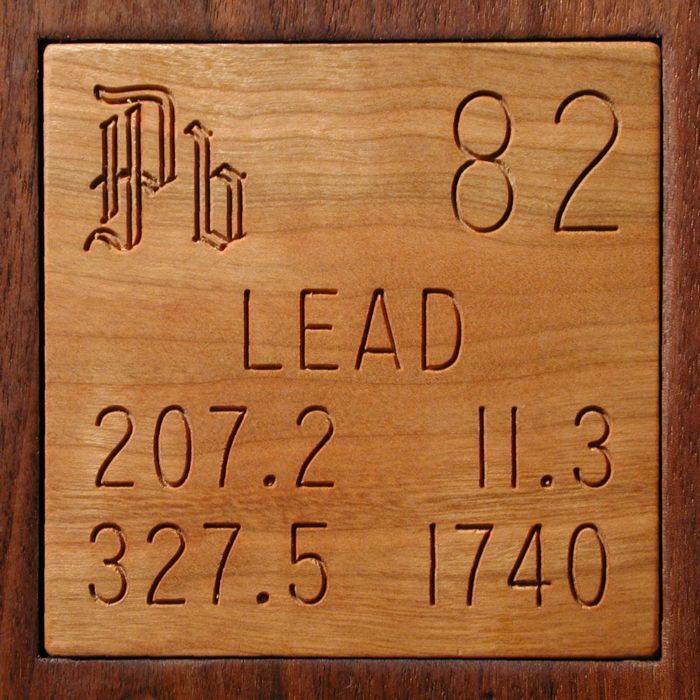
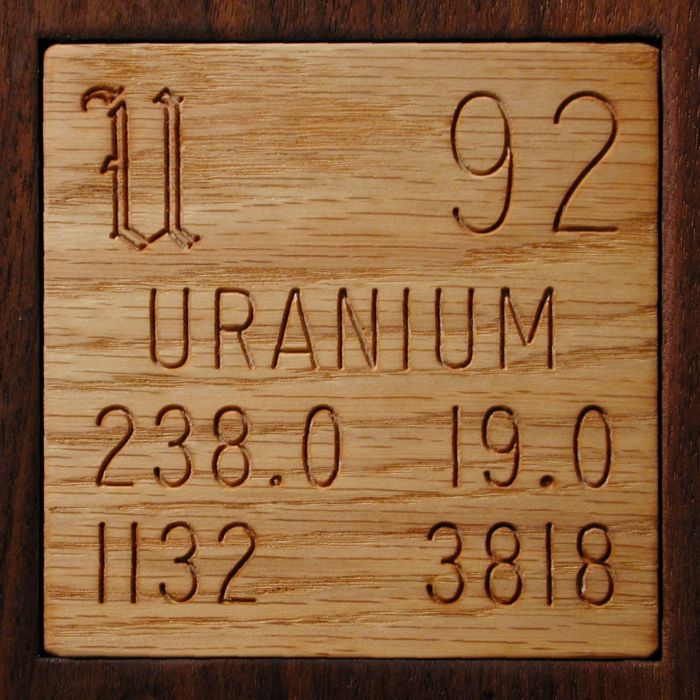
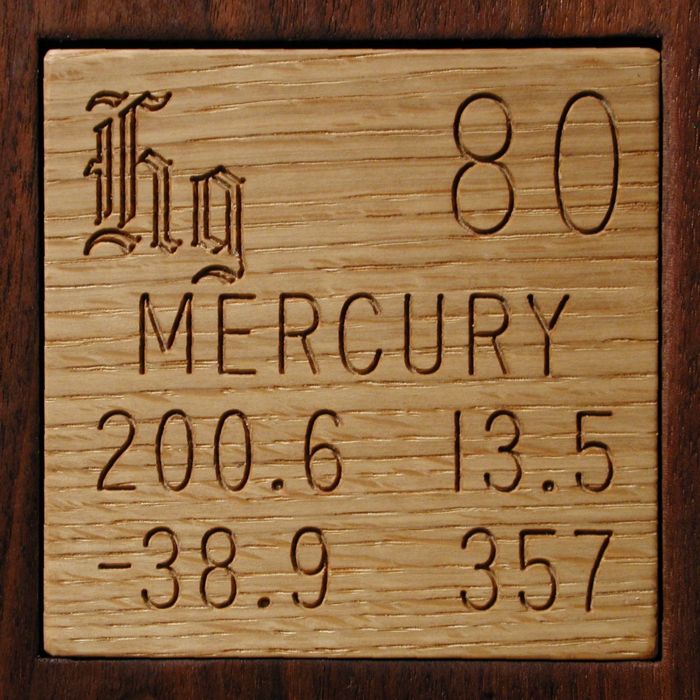
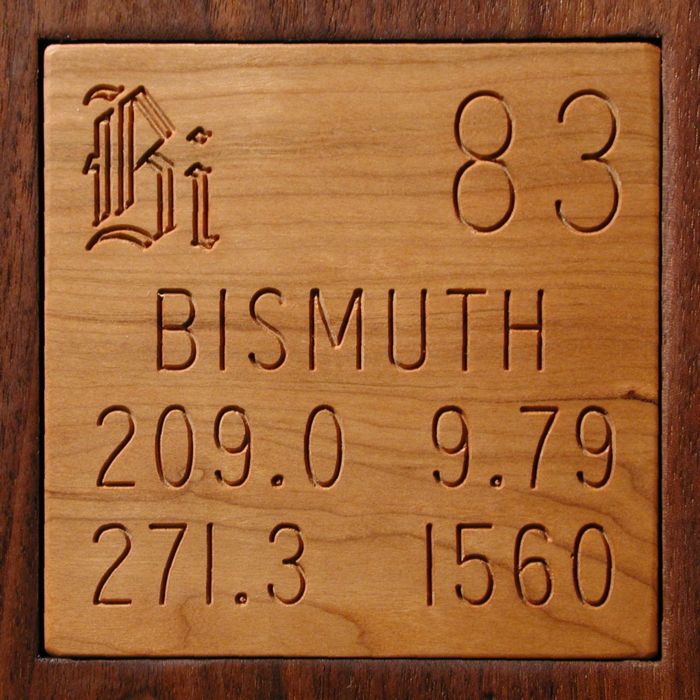
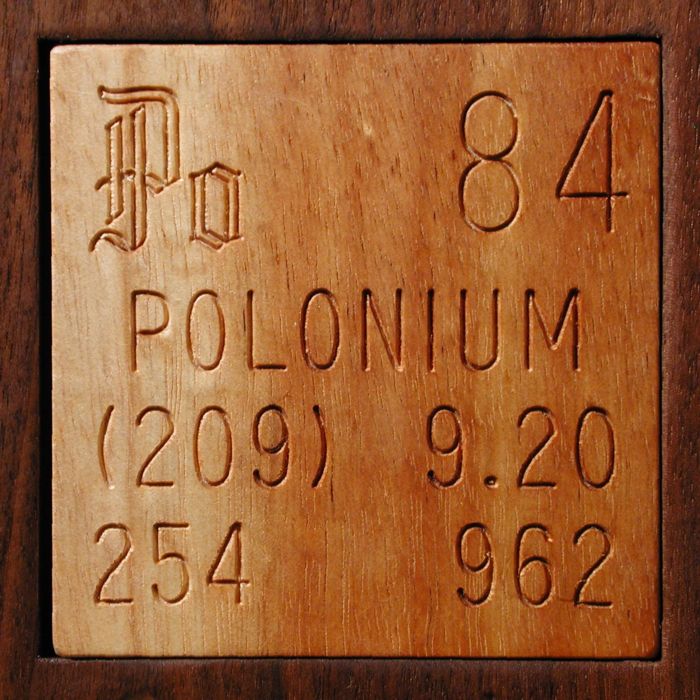
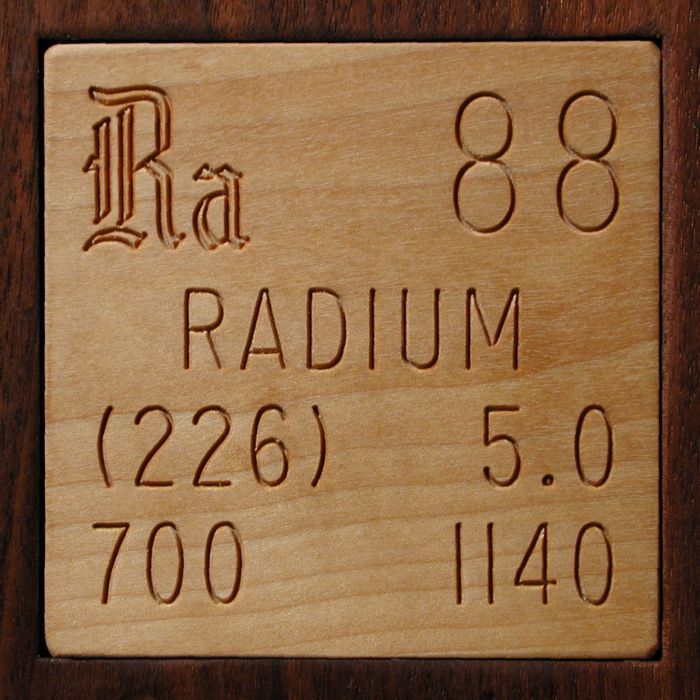
Popularity in Other Collections

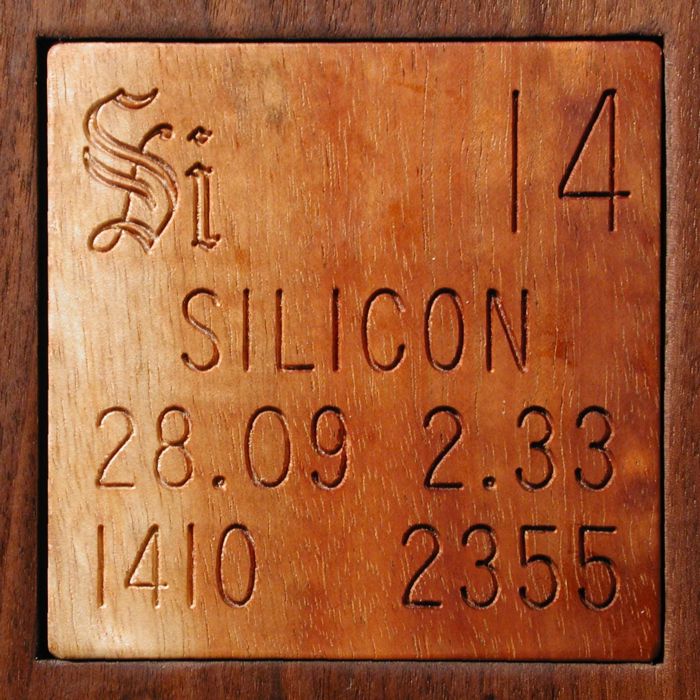
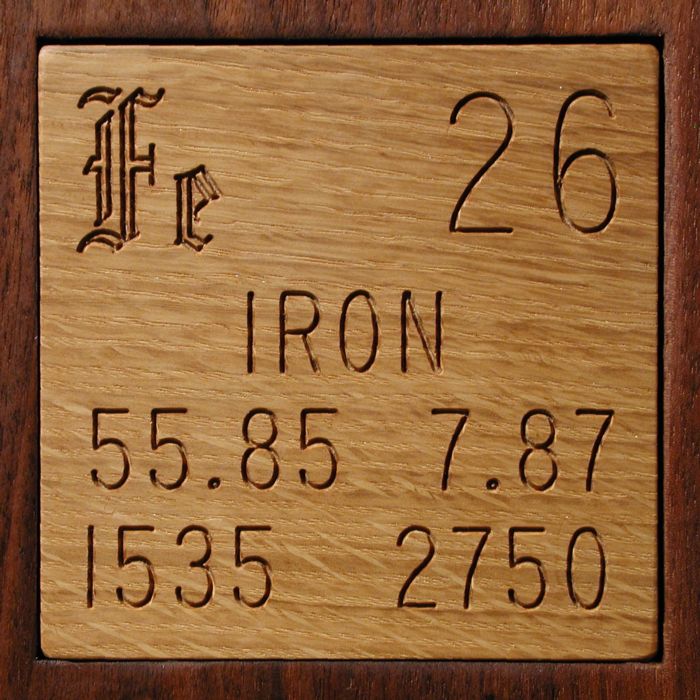
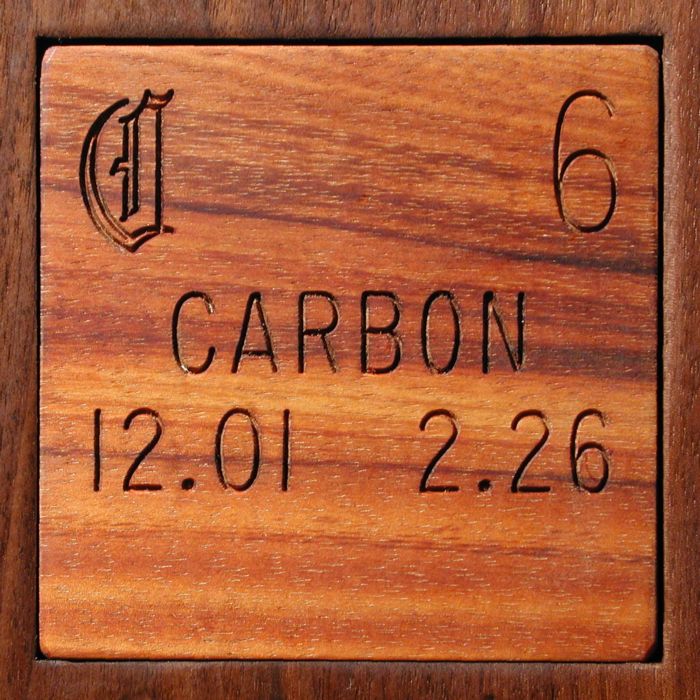
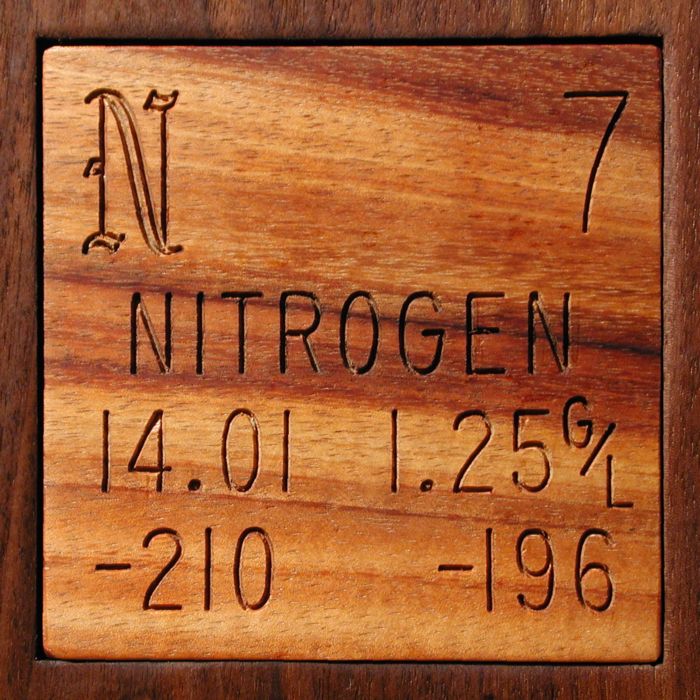
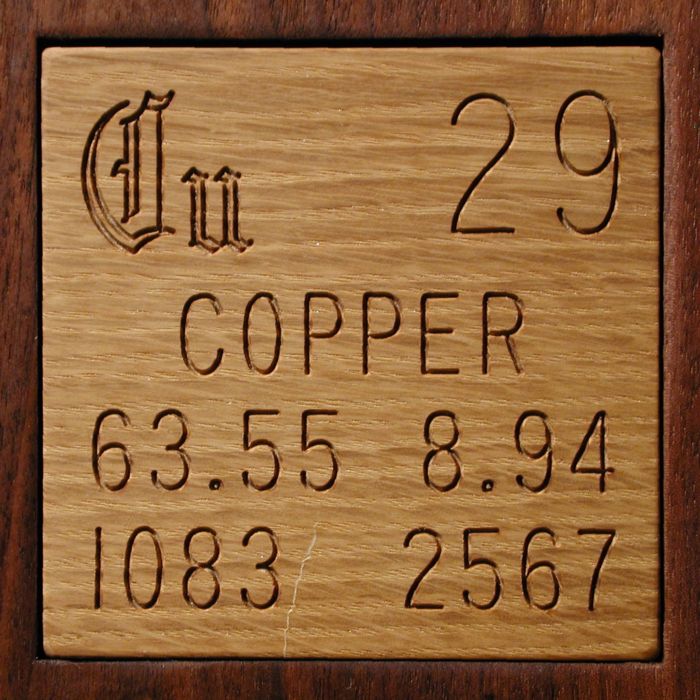
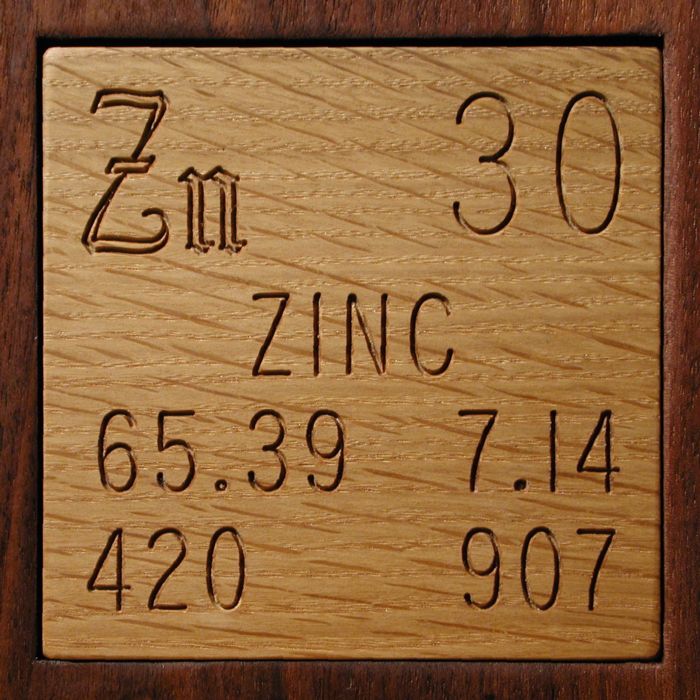
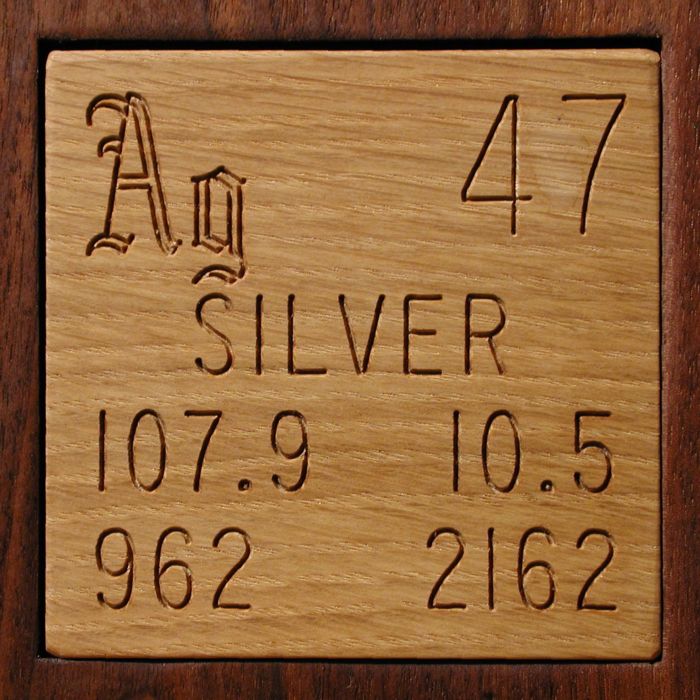
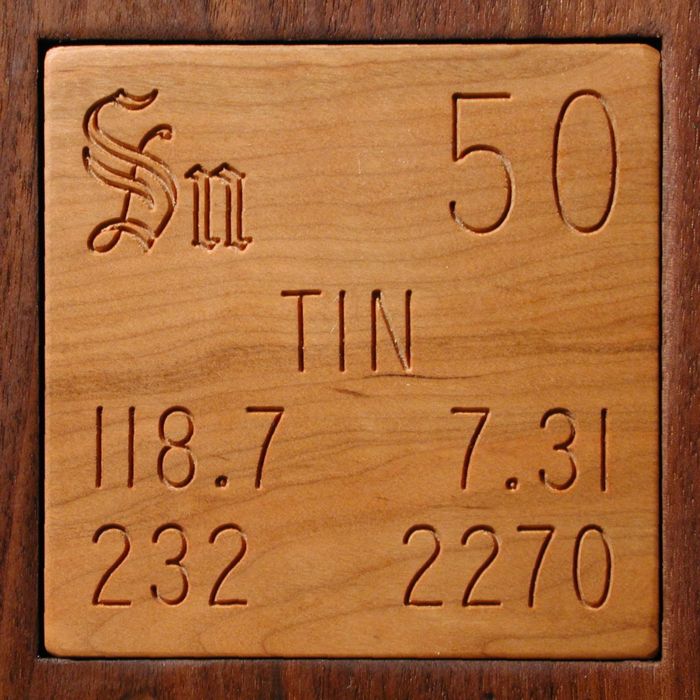
Here is a collection of the elements in order of how many other collections (on this website) they appear in. A measure of versatility? Maybe. The list is cut off at those that occur in only one other collection.

Be Sure to click on some of the sample pictures to see full size versions.
These sample pictures are some of the best you will see on the web.

(The full-size image will open in a separate window.)

Text and images Copyright (c) 2002 by Theodore W.Gray.

Back to Collections of Elements
Back to Periodic Table Home

Group:
Metalloids
Collections:
Favorite Samples
Elements with Sounds
Elements at Walmart
Elements in the Human Body
www.webelements.com
chemicalelements.com
Los Alamos
Royal Society
Environmental Chemistry
Phoenix College
Minerals
X-Ray Properties
Science Fiction Science Fiction Main
Comics
Poetry Poetry Main
Silicon wafer.
These are broken pieces of etched silicon wafer purchased at the Tech Museum in San Jose, in the late 1990s. No idea what chips are on the wafer.
Source: The Tech Museum, San Jose, California
Contributor: Theodore Gray
Date Acquired: 15 April, 2002
Price: $20/unbroken wafer
Size: 1.5
Silicon Boule Top.
This is the cut-off top of a cylindrical crystal grown for slicing into wafers for chip fabrication. The cone-shaped top where the crystal started growing is waste in this process. Purchased in May 2002 through eBay from SoCal (Nevada), Inc, 909-302-9413, socal403@earthlink.net.
This is a weird substance, especially the glossy melt surface. It's so clearly half way between a metal and not a metal: Shiny and lustrous like platinum, yet crystalline and brittle like sulfur. Listen to the sound of this sample and contrast it with the sounds of lumps or bars of metal: It's definitely not a metal sound.
When the package arrived, our teenage baby-sitter took one look at it and said "THAT'S SILICONE???!!". Given the shape and her confusion between silicon and silicone, it's not hard to imagine what was going through her mind.
Source: SoCal (Nevada), Inc
Contributor: Theodore Gray
Date Acquired: 11 May, 2002
Price: $30
Size: 4
Chunk of 99.9999% crystal.
Kindly donated by David Franco, who sent many elements after seeing the slashdot discussion.
Source: David Franco
Contributor: David Franco
Date Acquired: 17 May, 2002
Price: Donated
Size: 1.5
Crumb of asteroid.
Ed talked to Doug Bowman, a local mathematician and asteroid and puzzle collector. (He collects asteroids and puzzles, not mathematicians.) Doug has many nice iron meteorites but was willing to donate this primarily silicon-based one because it was all broken up already.
Source: Doug Bowman
Contributor: Doug Bowman
Date Acquired: 12 July, 2002
Price: Donated
Size: 0.2

Group:
Transition Metals
Collections:
Favorite Samples
Elements with Sounds
Elements at Walmart
Elements in the Human Body
www.webelements.com
chemicalelements.com
Los Alamos
Royal Society
Environmental Chemistry
Phoenix College
Minerals
X-Ray Properties
Science Fiction Science Fiction Main
Comics
Poetry Poetry Main
Steel wool.
This is a bit of the steel wool used to polish the wax finish on the Periodic Table.
Source: Hardware Store
Contributor: Theodore Gray
Date Acquired: 15 April, 2002
Price: $1
Size: 2
Rusty iron plate.
Just some old iron pulled from a junk pile at the farm. The sound is steel plate like this being beaten with a blacksmith's hammer.
Source: Marco's Scrap Metal
Contributor: Theodore Gray
Date Acquired: 15 April, 2002
Price: $0.10/pound for scrap iron.
Size: 1.5
Precision steel micro-bearings.
We think these balls are about 1/32-inch diameter. Ed Pegg reports that these particular balls were accidentally magnetized by noted physicist Stephen Wolfram, making them unsuitable for Ed's experiments.
Source: New England Miniature Ball Corp
Contributor: Ed Pegg Jr
Date Acquired: 15 April, 2002
Price: $5/1000 (which is not a lot of bearings)
Size: 0.03
Civil war cannonball?
Chris reports that he found this approximately 2.5 inch diameter crude iron ball while walking in the woods in Pennsylvania. It must be a civil war cannonball, right, what else could it be? Oh, alright, I don't have any proof of that, and it could be just about anything. Like maybe a revolutionary war cannonball!
Source: Chris Carlson
Contributor: Chris Carlson
Date Acquired: 5 June, 2002
Price: Donated
Size: 2.5

Group:
Non-Metals
Collections:
Elements with Sounds
Elements at Walmart
Elements in the Human Body
www.webelements.com
chemicalelements.com
Los Alamos
Royal Society
Environmental Chemistry
Phoenix College
Minerals
X-Ray Properties
Science Fiction Science Fiction Main
Comics
Poetry Poetry Main
Anthracite coal.
I purchased about 1000 pounds in the early 1990s for blacksmithing use by Jim Zimmerman at our farm. We had to build a special box on the trailer to bring it home, and most of it is still sitting in large plastic containers in the shed. No problem finding a sample for the table!
The sound is steel plate being beaten with a blacksmith's hammer after heating in a coal fire.
Source: Coal Dealer
Contributor: Theodore Gray
Date Acquired: 15 April, 2002
Price: $0.008/ounce ($250/ton)
Size: 2
Graphite rod from lantern battery.
I took apart one of those big lantern batteries probably some time in the late 1970s because I needed a graphite rod for stirring molten metals. Graphite is good because metal doesn't stick to it, it doesn't contaminate the metal, and it retards oxidation to some extent.
Source: Hardware Store
Contributor: Theodore Gray
Date Acquired: 15 April, 2002
Price: $5/battery with 4 of them
Size: 3
Pyrolytic graphite.
Ed reports: The source (and inspiration) was
http://www.scitoys.com/scitoys/scitoys/magnets/pyrolytic_graphite.html
The details for making it are on the site. The main point of these samples is that they have the highest Hall effect of any material (the degree to which it will repel a magnet). The Hall effect is strong enough that a piece of pyrolytic graphite will levitate over neodymium magnets.
Source:
Science Toys
Contributor: Ed Pegg Jr
Date Acquired: 15 April, 2002
Price: $2
Size: 1
Gem cut cubic zirconium just to fool people.
So far, no one has been fooled, probably because it's too big to be believable (10mm round brilliant cut CZ from http://www.pehnec.com). But it is very beautiful!
Source: Pehnec Gems
Contributor: Theodore Gray
Date Acquired: 17 April, 2002
Price: $60/50 stones
Size: 0.39

Group:
Non-Metals
Collections:
Elements with Sounds
Elements at Walmart
Elements in the Human Body
www.webelements.com
chemicalelements.com
Los Alamos
Royal Society
Environmental Chemistry
Phoenix College
Minerals
X-Ray Properties
Science Fiction Science Fiction Main
Comics
Poetry Poetry Main
Natural sample, 78% Pure
I collected this sample of naturally occurring air (78% pure nitrogen) from about 20 feet away from the table in May, 2002. The sound for this sample is a beautiful 78% nitrogen, 21% oxygen wind sound borrowed from ftp://ftp.zib.de/pub/UserHome/Luegger/Urania/Sound/FX-03.WAV .
Source: Air
Contributor: Theodore Gray
Date Acquired: 18 May, 2002
Price: $0/Free like the air we breathe
Size: 2.5

Group:
Non-Metals
Collections:
Elements with Sounds
Elements at Walmart
Elements in the Human Body
www.webelements.com
chemicalelements.com
Los Alamos
Royal Society
Environmental Chemistry
Phoenix College
Minerals
X-Ray Properties
Science Fiction Science Fiction Main
Comics
Poetry Poetry Main
Natural sample, 21% Pure
I collected this sample of naturally occurring air (21% pure oxygen) from about 20 feet away from the table in May, 2002. The sound for this sample is a beautiful 78% nitrogen, 21% oxygen wind sound borrowed from ftp://ftp.zib.de/pub/UserHome/Luegger/Urania/Sound/FX-03.WAV .
Source: Air
Contributor: Theodore Gray
Date Acquired: 18 May, 2002
Price: $0/Free like the air we breathe
Size: 2.5

Group:
Alkali Earth Metals
Collections:
Elements with Sounds
Elements at Walmart
Elements in the Human Body
www.webelements.com
chemicalelements.com
Los Alamos
Royal Society
Environmental Chemistry
Phoenix College
Minerals
X-Ray Properties
Science Fiction Science Fiction Main
Comics
Poetry Poetry Main
Camp fire starter.
Commonly used fire starter: You carve off some shavings of Magnesium from the block using your hunting knife, then strike the flint with the back of the knife to ignite the shavings. I removed the striker bar (see Cerium). This one was purchased from Walmart in April 2002.
Source: Walmart
Contributor: Theodore Gray
Date Acquired: 15 April, 2002
Price: $4
Size: 3
Bulk rod.
Bulk magnesium metal rod, about 1.25" diameter. No idea where it's from or what it was used for, but it burns nicely in shaving form. This one was purchased from eBay in May 2002.
Source: eBay seller magman1000
Contributor: Theodore Gray
Date Acquired: 29 May, 2002
Price: $6/pound
Size: 1.25

Group:
Transition Metals
Collections:
Favorite Samples
Elements with Sounds
Elements at Walmart
www.webelements.com
chemicalelements.com
Los Alamos
Royal Society
Environmental Chemistry
Phoenix College
Minerals
X-Ray Properties
Science Fiction Science Fiction Main
Comics
Poetry Poetry Main
Cylinder, Sponge, and Mossy, 99.98%.
Kindly donated by David Franco, who sent many elements after seeing the slashdot discussion.
Source: David Franco
Contributor: David Franco
Date Acquired: 17 May, 2002
Price: Donated
Size: 0.1
Machined part, 99.999%.
This lovely if perplexing shape of "five nines" titanium was kindly donated by Ivan Petrov, of the Materials Research Laboratory at the University of Illinois. I had gone there to have my artificial knee joint sample tested to see what it was. It turned out to be Aluminum instead of the hoped for titanium. I guess he took pity on me by donating a couple of nice pure metals.
Source: Ivan Petrov
Contributor: Ivan Petrov
Date Acquired: 6 June, 2002
Price: Donated
Size: 3
Electrochemically grown crystals.
These crystals were reported to have been grown in a factory some time ago. I don't know much more about them, but they are heavy, shiny, and titanium-like. A few are about an inch long, the rest crumbled.
Source: eBay seller snooj
Contributor: Theodore Gray
Date Acquired: 11 June, 2002
Price: $13
Size: 1
Intramedullary nails.
Paul Wellin's brother is an orthopedic surgeon. I know this because I was talking to Paul about how I hoped some day to meet an orthopedic surgeon who would have some left over body parts made out of titanium or tantalum that he could donate to my periodic table, upon which Paul said....
These bone pins were defective in some way, though they look rather pretty to me. They are over twelve inches long. Think about someone cutting open your body, drilling out the marrow of your bones and the ramming one of these things the whole length through, so they can screw some fittings on either end. Ouch. But at least you'll have some very attractive titanium in you from then on.
Paul Wellin's Brother sent the following information about these samples:
"Titanium has become a preferred material for Orthopedic implants over the past 10-15 years because of a number of its inherent properties. It is inert in the body, and has sufficient strength to support the mechanical loads (assuming proper design and size of the implant). It is also very resistant to fatigue failure - that is, it can undergo many (millions) of cycles of mechanical loading without failure - a property that is extremely important in an Orthopedic implant that will be subjected to a million cycles of loading a year. Most Orthopedic titanium implants are actually an alloy of titanium with small amounts of aluminum and vanadium, as pure titanium implants are somewhat brittle and have a higher rate of fracture. Titanium alloy is less brittle, and holds up quite well."
"As to why the implants you have are not in someone's body, they are not defective; they were actually in the operating room and taken out of their sterile packaging in anticipation of being implanted, but were for one reason or another not used. In some cases, the devices were implanted, but found to be too long or too short, and were then replaced with a correct sized implant. We are not allowed to re-use devices that have been implanted and removed, as there is no feasible way to ensure that the stresses of implantation have not altered the mechanical properties of the device. So they become very expensive junk. (Any implant that was removed from a patient was thoroughly cleaned and then sterilized before it left the OR). Other devices may have been removed from their packaging, but not implanted because the surgeon changed his/her mind about the size or decided to use a slightly different implant before actually putting in the patient. Depending on the implant, re-sterilization in the hospital may not be practicable - more expensive junk."
"These intramedullary rods or nails are placed inside the intramedullary canal (marrow cavity) of long bones like the femur or tibia to stabilize fractures of these bones until they heal."
Source: Paul Wellin
Contributor: Paul Wellin
Date Acquired: 14 June, 2002
Price: Donated
Size: 12
Hip joint socket.
This is the other half of an artificial hip joint you can see under cobalt, the socket into which the ball from that part fits into. The outer surface is a wonderful matrix of sintered titanium balls (very small), for the hip bone to grow into, firmly attaching the socket to the bone.
Source: Paul Wellin
Contributor: Paul Wellin
Date Acquired: 14 June, 2002
Price: Donated
Size: 2.25
Gibraltar Millennium Coin.
I have a feeling this is one of those coins that isn't actually meant to be spent. Its face value is 5 Gibraltar Pounds, whatever that's worth. I paid $35 for it. It's one of only a very small number of coins that's ever been minted out of titanium, probably because the stuff is pretty hard to work with, and most people wouldn't appreciate the advantages of coinage you could build a jet engine out of.
Dan Lewis, the source of this coin, sent the following story about it:
The titanium coins were minted for Gibraltar by the Pobjoy Mint in the UK. Only 2001 of them were produced, and I think they have kind of given up on making more titanium coins because the hardness of the metal makes it very difficult to work with, not to mention how quickly it destroys the dies. They did issue one other Five Pound coin in the year 2000, this one to commemorate the famous "Tuppenny Blue" postage stamp, which is currently valued at $800,000. I think they were already committed to minting the second coin before they figured out what a pain it would be to produce coins from titanium.
Source: Dan Lewis
Contributor: Theodore Gray
Date Acquired: 14 June, 2002
Price: $35
Size: 1.5

Group:
Transition Metals
Collections:
Elements with Sounds
Elements at Walmart
Elements in the Human Body
www.webelements.com
chemicalelements.com
Los Alamos
Royal Society
Environmental Chemistry
Phoenix College
Minerals
X-Ray Properties
Science Fiction Science Fiction Main
Comics
Poetry Poetry Main
Ingots.
These small ingots are dissolved and electroplated onto bumpers at the Flex-n-Gate manufacturing plant in Urbana, Illinois.
My van had broken down (bad battery) and I was waiting at Peter B's repair shop for them to put in a new one. I noticed I was sitting with nothing to do just across the street from what bills itself as the largest manufacturer of automotive bumpers in the country, Flex-n-Gate. I immediately thought CHROMIUM and took a walk over to their front office.
The receptionist seemed a bit confused about who she should direct me to, but finally went in back to find an engineer: Presumably she thought he would at least know what I was talking about.
The engineer, Douglas Suits, was very understanding, and I showed him some photographs of the Periodic Table on my PowerBook. He said he would check around for some samples, and later that day I went back to pick up an envelope containing this flake for chromium (see) and these two very nice chunks of nickel.
While they receive nickel in metallic form, chromium arrives in the form of chromic acid because that is more convenient for electroplating. So while they probably have more chromium in one place than almost any other place on earth, he was unable to give me any. They have so much nickel they actually have to keep a guard on it because of its value, but presumably no one wants to steal chromic acid!
He explained that bumpers are actually not primarily plated with chromium but rather with nickel. They electroplate 0.0010" of semi-bright nickel, 0.0003" of bright nickel, and only 0.000000066" of chromium onto the base of steel.
Source: Flex-n-Gate, Inc
Contributor: Flex-n-Gate, Inc
Date Acquired: 25 April, 2002
Price: Donated
Size: 1
Plate.
Purchased from Neil Lipson (Lipson@postoffice.att.net) after contact through eBay. This 2.5" rectangle of 1/8" plate is stamped "Ni", indicating it was probably an element sample in a set sold by some educational supply company.
Source: Neil Lipson
Contributor: Theodore Gray
Date Acquired: 29 May, 2002
Price: $10
Size: 2.5
Ball, 99.95%.
Kindly donated by David Franco, who sent many elements after seeing the slashdot discussion, and this one after I sent him some Mathematica t-shirts.
Source: David Franco
Contributor: David Franco
Date Acquired: 11 June, 2002
Price: Donated
Size: 0.3
Canadian Quarters.
My Canadian colleague George Beck brought these back from Canada after I read that Canadian quarters before 2001 were made out of almost pure nickel. It's nice to know that the Canadians know how much their money is worth, eh? Rather than unleash this stack of funny money on the american vending machine market, I'm keeping it in the table as a nickel sample.
Source: Canada
Contributor: George Beck
Date Acquired: 12 June, 2002
Price: $10
Size: 2.5

Group:
Transition Metals
Collections:
Elements with Sounds
Elements at Walmart
Elements in the Human Body
www.webelements.com
chemicalelements.com
Los Alamos
Royal Society
Environmental Chemistry
Phoenix College
Minerals
X-Ray Properties
Science Fiction Science Fiction Main
Comics
Poetry Poetry Main
3/0 electrical wire.
This wire was left over from when I rewired the main service entrance at the farm, and installed the backup generator in the early 1990s.
It's been melted down and left to cool in the standard graphite crucible used for several metal samples. The cylinders came out very clean and required only a power wire brushing to bring out the shine. Coated with a light coat of oil to retard tarnishing.
Source: Hardware Store
Contributor: Theodore Gray
Date Acquired: 15 April, 2002
Price: $1.50/foot
Size: 1.25
Pre-1983 Pennies.
Before 1983, US pennies were made of solid copper. After the price of copper briefly went over a penny per penny, they reconsidered, and now pennies are copper plated zinc.
Source: America
Contributor: Theodore Gray
Date Acquired: 15 April, 2002
Price: $0.01/penny
Size: 0.5
Native Copper.
Found on a beach on one of the Apostle Islands in Lake Superior.
Source: Chris Carlson
Contributor: Lena Carlson
Date Acquired: 11 July, 2002
Price: Donated
Size: 0.6

Group:
Transition Metals
Collections:
Elements with Sounds
Elements at Walmart
Elements in the Human Body
www.webelements.com
chemicalelements.com
Los Alamos
Royal Society
Environmental Chemistry
Phoenix College
Minerals
X-Ray Properties
Science Fiction Science Fiction Main
Comics
Poetry Poetry Main
Scrap roof flashing.
I've been melting and casting roof flashing zinc since the late 1970s. But I couldn't find any just now, so I purchased a new bucket of scrap at Marco's scrap metal in Champaign in April 2002. Later I found many pounds of it in my parents' basement.
This metal was melted down and poured into mini-muffin tins to make nice little coins.
The little turtle is something I made by lost wax casting, probably around 1980.
Source: Marco's Scrap Metal
Contributor: Theodore Gray
Date Acquired: 15 April, 2002
Price: $1/pound for scrap zinc
Size: 1.25

Group:
Transition Metals
Collections:
Favorite Samples
Elements with Sounds
Elements at Walmart
www.webelements.com
chemicalelements.com
Los Alamos
Royal Society
Environmental Chemistry
Phoenix College
Minerals
X-Ray Properties
Science Fiction Science Fiction Main
Comics
Poetry Poetry Main
One ounce silver rounds.
Purchased in Richmond, CA early 1990s for use in castings. Dan Lewis, a coin dealer, tells me that these are called "silver rounds" because they are round but are not actually coins issued by any government. He reports they are the part of the numismatic world known as exonumia.
Source: Coin Shop in California
Contributor: Theodore Gray
Date Acquired: 15 April, 2002
Price: $5/ounce
Size: 1.5
Turnings, 99.998%.
Kindly donated by David Franco, who sent many elements after seeing the slashdot discussion, and this one after I sent him some Mathematica t-shirts. My coins are bigger, but his turnings are more pure.
Source: David Franco
Contributor: David Franco
Date Acquired: 11 June, 2002
Price: Donated
Size: 0.2
Sassanian Dirham of Chosroes II.
This certainly takes the prize for oldest sample: 1400 years. Dan Lewis, a coin dealer (click on source link below for contact information), sent it for free (!) because it's broken and he thought it would make a good silver sample, which it certainly does. It's quite brittle, which indicates it's not terribly pure, but let's see you do any better 1400 years ago!

I asked him how much he though this coin would have been worth when it was minted. He said he could only guess that because of its size and silver content it was probably fairly valuable, certainly more than a week's wages. So maybe someone bought a horse with it one time, or used a handful to buy a Roman as a slave. Given how long it was probably in circulation, it's no doubt been used to buy a lot of things by a lot of people. History is funny that way, especially when you're holding it in your hand.

Dan sent the following interesting history of this type of coin:
From Ardashir I in 211 A.D. to Yazdegerd III (632-651 A.D.) a series of 42 Sassanian kings ruled over Persia. The Sassanians were ardent devotees of the Zoroastrian doctrine. This fire cult was vigorously disseminated throughout the empire.

In the early period they were the most persistent and successful foe of the Romans. In 260 A.D. the Roman emperor Valerian, while marching through Mesopotamia, was captured and spent the rest of his life as a captive. A century later, in 363 A.D. the Roman emperor Julian II (The Apostate) died from wounds suffered fighting the Sassanians in their capital city of Ctesiphon, near Baghdad. His successor, Jovian, found his situation so perilous that he could only extricate himself and his army by a humiliating peace which ceded many possessions along the Tigres, the great fortress at Nisibis and a Roman pledge to abandon Armenia.

One of the last Sassanian kings, Chosroes II (590-628 A.D.) appears on the obverse of this coin. When his friend and ally the Byzantine Emperor Maurice was assassinated in 602, Chosroes II embarked on an initially successful, protracted campaign of revenge against the Romans. In 614 he invaded and sacked Jerusalem and carried off the remains of the Holy Cross to Ctesiphon. Chosroes fortunes changed when the Byzantine Emperor Heraclius retook lost territories from the Persians and finally in 627 returned the Cross to Jerusalem. This event was well received by Christians who celebrate the event at the annual feast of the Exaltation of the Cross.

Chosroes weakness led to the defeat of the Persians by the Byzantines. During the ensuing revolution Chosroes was deposed and murdered by his son Kavadh II in 628. One hundred years of nearly constant war with the Byzantines and Chosroes incompetence left the Sassanian Empire crippled and vulnerable to their demise at the hands of the emerging Islamic Arabs.

This coin is an example of late 6th and early 7th century Persian craftsmanship during the zenith of the Sassanian Empire. That empire emerged over a ten year period beginning in circa 224 A.D. when King Ardashir I expanded his local fiefdom in Iran to include all of Iran, Iraq, Afghanistan, and much of the remainder of central Asia. He introduced a new coinage with his own crowned portrait on the obverse, his throne and a Zoroastrian fire altar on the reverse and inscriptions in the Pahlavi language. Although the portraits and styles would change with each succeeding reign, the basic design would remain for 450 years. The most significant image change was made by Ardashir's son, Shapur I (241-270 A.D.) when the throne was eliminated and the altar was flanked by two holy figures. Later, mintmarks and regnal dates would appear. Some of the royal crowns that are pictured were reputed to be so heavy with gold and jewels that the wearer had to have them suspended from the ceiling above the throne by chains in order to wear them.

Source: Dan Lewis
Contributor: Dan Lewis
Date Acquired: 18 June, 2002
Price: Donated
Size: 1

Group:
Other Metals
Collections:
Elements with Sounds
Elements at Walmart
Elements in the Human Body
www.webelements.com
chemicalelements.com
Los Alamos
Royal Society
Environmental Chemistry
Phoenix College
Minerals
X-Ray Properties
Science Fiction Science Fiction Main
Comics
Poetry Poetry Main
Lead-free fishing weights.
Melted down and allowed to cool in the standard graphite crucible used for several metal samples. Environmental concerns have prompted a switch from lead to tin for fishing sinkers.Purchased at Walmart in April 2002. Source originally suggested by Ed Pegg.
Source: Walmart
Contributor: Theodore Gray
Date Acquired: 24 April, 2002
Price: $14/10 bags of weights
Size: 1.25
Crying bars.
The "Tin Cry" is an oft-described, seldom-heard phenomenon. If, it is claimed, you bend a bar of tin, it will "cry" as the crystal structure is disrupted. When NPR's Science Friday program asked to interview me about the Periodic Table Table, I decided it was time for the world to hear the tin cry live on the radio.
I had to make these bars in a hurry, before the kids woke up in the morning and needed to be fed, so I just poured out some silica sand and drew a line in it with my finger, then poured the molten tin into the groove, forming these crude bars. Then I bent them by hand and using a pair of pliers while holding them up to a microphone connected to a laptop.
I'll let you be the judge of whether they "cry" or not: Personally I'd call it more of a crackle-crackle-crackle sound. In any case, click the speaker icon to hear it (the bent up bar at top of the picture is the one that made this sound). I would certainly be curious to hear from anyone who has created a better crying sound from tin.
Source: Walmart
Contributor: Theodore Gray
Date Acquired: 16 July, 2002
Price: $14/10 bags of weights
Size: 3

Group:
Transition Metals
Collections:
Favorite Samples
Elements with Sounds
Elements at Walmart
www.webelements.com
chemicalelements.com
Los Alamos
Royal Society
Environmental Chemistry
Phoenix College
Minerals
X-Ray Properties
Science Fiction Science Fiction Main
Comics
Poetry Poetry Main
Surplus 11 pound metal cylinder.
Purchased from Neil Lipson (Lipson@postoffice.att.net) after contact through eBay. Said to originate from a company closure.
This is by far the most tactile sample in the collection: People just can't put it down, because it's so darn heavy. I always point out that it's almost exactly the same density as gold, so holding this lump is as close as you're likely to come to the experience of holding about $50,000 (at $350/troy ounce) worth of gold.
I had a suspicion that it was probably not pure tungsten. Research on the internet indicated it was probably about 97% tungsten, 1% iron and 2% nickel. The iron and nickel are mixed with tungsten powder and the mixture heated under great pressure to fuse the iron-nickel alloy into a matrix around the tungsten particles.
Through the good graces of Inga Karliner of the University of Illinois physics department I was put in contact with Ivan Petrov of the U of I's materials research department, which just happens to be a national collaborative center for materials testing, which means they have a hallway with something like two dozen very fancy instruments for telling me what my tungsten cylinder is made of. (I was pleased that even at a national collaborative center for materials testing my tungsten cylinder was considered interesting and heavy.)
Petrov's colleague Jim Mabon confirmed my guess with a quantitative analysis by x-ray fluorescence spectroscopy;
96.32% tungsten
1.23% Iron
2.45% Nickel
Source: Neil Lipson
Contributor: Theodore Gray
Date Acquired: 29 May, 2002
Price: $315
Size: 3
Bar of 99.99% tungsten.
Ivan Petrov (see above cylinder sample discussion) kindly donated a couple of very pure metal samples, including this lovely machined bar of "four nines" tungsten. It looks like powder metallurgy origin to me, but he didn't know for sure.
When NPR's Science Friday program asked to interview me about the Periodic Table Table, I decided to record "the sound of sintered tungsten", as mentioned in Uncle Tungsten. Oliver Sacks has actually listened to this recording and confirms that it's the kind of sound his uncle was talking about. (Wow, how authentic can you get!) Click the speaker icon to hear the sound of tapping this bar with a mallet.
Source: Ivan Petrov
Contributor: Ivan Petrov
Date Acquired: 6 June, 2002
Price: Donated
Size: 4
Welding electrode.
Rods of solid tungsten from 1/16 to 1/8 inch diameter and 3-7 inches long are used as electrodes in certain kinds of arc welding. Claudin Welding Supply kindly donated one when I went there looking for Hafnium.
Source: Claudin Welding Supply
Contributor: Claudin Welding Supply
Date Acquired: 24 July, 2002
Price: Donated
Size: 7
Fine wire.
This is really, really fine tungsten wire: 0.0025 inches diameter. It's quite strong, but what's really surprising as usual is how heavy the spool is. I need to figure out something to do with it, like hang a picture, because I've got 5000 feet of it.
Source: eBay seller 7890inky
Contributor: Theodore Gray
Date Acquired: 23 July, 2002
Price: $22
Size: 2.5

Group:
Transition Metals
Collections:
Elements with Sounds
Elements at Walmart
Spark Plugs
www.webelements.com
chemicalelements.com
Los Alamos
Royal Society
Environmental Chemistry
Phoenix College
Minerals
X-Ray Properties
Science Fiction Science Fiction Main
Comics
Poetry Poetry Main
One ounce bullion bar.
I purchased this bar for spurious reasons in the early 1990s from a coin dealer near Berkeley, California. I think I paid about $500 for it, and now it's worth about $550, but in the meantime it's been worth more than double that, because of the price spike caused by catalytic converters in cars. I never noticed between then and now how much the price had gone up and back down.
In April 2002 I had Brian Knox jewelers in Champaign, Illinois weld a 90%Pt/10%Ir alloy loop onto the back of it, so it could be locked down to the table with a length of stainless steel cable.
Source: Coin Shop in California
Contributor: Theodore Gray
Date Acquired: 15 April, 2002
Price: $600/including loop
Size: 1.5
Spark Plug.
People make spark plugs out of the craziest elements, like Polonium. Platinum is used because it doesn't corrode under harsh conditions.
I remember hearing, probably on NPR's Car Talk show, that platinum spark plugs last so long that by the time you need to change them, they may have fused themselves to the aluminum block they are screwed into, making it impossible to remove them without stripping the engine block. They recommended just unscrewing and rescrewing them every couple of years. Ah, such modern problems.
Source: eBay seller accurateimage@yahoo.com
Contributor: Theodore Gray
Date Acquired: 31 July, 2002
Price: $15
Size: 3

Group:
Other Metals
Collections:
Favorite Samples
Elements with Sounds
Elements at Walmart
www.webelements.com
chemicalelements.com
Los Alamos
Royal Society
Environmental Chemistry
Phoenix College
Minerals
X-Ray Properties
Science Fiction Science Fiction Main
Comics
Poetry Poetry Main
Plumbing lead.
I purchased several 10lb bars of plumbing lead from a hardware store probably in the early 1990s. It's still available in this form so far as I know.
I asked Jim Zimmerman to use a cold chisel to chop off a lump of one of the bars and pound it into a nice primitive-looking lump. (Sawing it off would have generated poisonous lead dust.)
Source: Hardware Store
Contributor: Theodore Gray
Date Acquired: 15 April, 2002
Price: $1/pound
Size: 2.5
9mm bullets.
I plucked these off some 9mm rounds I got in California many years ago. But you can pretend they were used in a bank robbery or something, it that makes them seem more interesting. The copper color comes from a thin plating of copper, but inside it's all hot lead.
The sound for this sample is a nice shot borrowed from da-admiral.com.
Source: Gun Shop in California
Contributor: Theodore Gray
Date Acquired: 15 April, 2002
Price: $0.20/bullet
Size: 0.5
"Atomic Potluck"
This is art, ok? It's a bowl with a cloth thrown over it, just like a housewife in the 1950's would take to the potluck block party. Except it's made out of 40 pounds of lead, and we use it as a containment vessel for our highly radioactive Fiestaware bowl (see uranium), which is also exactly the kind of thing a 1950's housewife would take to the potluck.
I came into the lead for it when I had an opportunity to scavenge about 3/4 of a ton of lead shielding from an abandoned hospital x-ray room. (I could have had the CAT scan machine too, but it was too hard to move.)
I was scheduled to tour this abandoned hospital with a developer (who is trying to sell my company on the idea of moving to the office complex he's going to build after demolishing the hospital), and I had actually planned to stop by the hardware store on the way back to work to pick up a few bars of lead, because I needed some to make some kind of enclosure for the Fiestaware. I thought 10 pounds would do (and it would have).
But that plan obviously changed after I saw the huge quantities of lead in the x-ray room. A single sliding door (which we were ultimately unable to recover) had at least 1500 pounds of lead in it (6 by 8 feet by 1/2 inch thick).
The day after the tour Ed Pegg, Jim, and I went in with sledge hammers, nail pullers, lanterns, and of course permission, to see how much lead we could mine. It came in two forms, 1/8" thick sheets about 2 by 4 feet: Ed and Jim smashed the drywall covering them and un-nailed about 15 sheets from the wall. And 1/2" thick plates about one foot square, covered over in thin cinderblocks: I smashed out 22 of them, each weighing 36 pounds.
In two hours we had a lifetime supply of lead.
I melted down one of those thick plates in a medium-sized stainless steel mixing bowl, then used some wood blocks to press the next smaller size of bowl down into the molten lead, pressing it into the space between the two sizes of bowl. Thus was formed the bowl part of "Atomic Potluck".
For the lid I simply traced out a circle somewhat larger than the bowl on one of the thin sheets, cut it out with tinsnips, then used my (now sore) thumbs to flute the edges artistically.
Both parts are heavily varnished to prevent lead transfer to people touching them (though I'd still never store food in it).
Source: Theodore Gray
Contributor: Theodore Gray
Date Acquired: 31 July, 2002
Price: Donated
Size: 9
"Atomic Potluck II"
Flushed with the success of "Atomic Potluck", I made another one as a thank you for Ed, for helping extract the lead on a very hot day. This one has more of a traditional pot lid: I made the handle by bending a bar of lead into the right shape and then setting it into the lid when it was still molten.
Source: Theodore Gray
Contributor: Theodore Gray
Date Acquired: 3 August, 2002
Price: Donated
Size: 9

Group:
Rare Earth Metals
Collections:
Favorite Samples
Elements with Sounds
Radioactive Elements
www.webelements.com
chemicalelements.com
Los Alamos
Royal Society
Environmental Chemistry
Phoenix College
Minerals
X-Ray Properties
Science Fiction Science Fiction Main
Comics
Poetry Poetry Main
M-735 Tank penetrating munition.
Armor piercing projectiles are generally made of depleted uranium, which is uranium metal from which most of the isotopes other than U-238 have been removed. The material is still somewhat radioactive, but not very.
Depleted Uranium is used for three main reasons. First, it's very, very dense, so at a given velocity it carries a lot of energy and hence penetrating force. Second, it's very hard, which of course also helps its penetrating effectiveness. Third, it's pyrophoric, which means it reacts chemically on impact causing an explosion inside whatever it's managed to penetrate.
There's a lot of controversy about the use of depleted uranium munitions, because people are afraid of the environmental effects on the countries that have been shot up with them. If they stayed intact there really wouldn't be much to worry about, and the radioactivity certainly isn't anything to worry about. But they don't stay intact, they vaporize on impact, and besides the trivial radioactivity, uranium is also a toxic heavy metal, sort of like mercury. Would you want someone to dump thousands of pounds of mercury in the countryside around you? Probably not. On the other hand, the number of people killed by uranium poisoning is probably, at a guess, significantly smaller than the number killed by whatever difficulty was causing their country to get shot up in the first place. It might be a more efficient use of ones efforts to worry about that than about the uranium dust that's left over.
A depleted uranium munition is the ultimate sample for a periodic table collection, because of the great difficultly in getting one. Unfortunately, I don't have one: This sample is only a practice round that contains no actual depleted uranium. Sniff. It weighs about 8 pounds, which might sound like a lot, but if it were real, it would be about to two and a half times heavier.
If you should happen to have a real depleted uranium round, please consider donating or selling it to me!
Source: Sovietski Catalog
Contributor: Theodore Gray
Date Acquired: 19 July, 2002
Price: $70
Size: 18
Marbles.
Vaseline glass contains small amounts of uranium to give it the yellow color. You can find these kinds of marbles all over eBay from several different sellers. These two register just barely on our Geiger counter.
The sound for this sample is from the Geiger counter.
Source: Ed Pegg Jr
Contributor: Ed Pegg Jr
Date Acquired: 24 July, 2002
Price: Donated
Size: 0.5
Death on the breakfast table.
Fiestaware was a very popular brand of ceramic tableware. Before the early 1940's the orange color of it was made with uranium in the glaze (uranium was used to get the color, not just accidentally). I think it's a good thing they stopped, because this thing is hot! It registers about 35,000 counts per minute, or almost 10 MREM/hour.
Listen to the sound for this sample and contrast it with the other radioactive samples (uranium marbles, thorium mantle, americium smoke detector). This one has that "let's get out of here now before we fry" ring to it.
To give a sense of how much radiation this is, if you held it in close proximity for 10 hours, you would double your yearly background radiation dose. If you kept it close for 20 days, you would have exceeded the yearly occupational exposure limit for nuclear power plant workers.
I don't know about you, but I wouldn't want to eat out of it.
Coincidentally right after it arrived, I came across an opportunity to scavenge about 3/4 of a ton of lead shielding from an abandoned hospital x-ray room. (I could have had the CAT scan machine too, but it was too big.) So I melted some down and made a 40 pound containment bowl to hold this little orange bowl. Overkill, yes, but then isn't this whole project just one huge case of overkill? You can see the lead bowl under lead.
Source: Charles and Susan Kunze
Contributor: Charles and Susan Kunze
Date Acquired: 30 July, 2002
Price: Donated
Size: 5
50 calibre armor piercing shell. Real depleted uranium this time, I hope.
I've been looking hard for depleted uranium shell, and here they are! Hopefully! The hopefully uranium is made visible in the one where the copper cladding has been cut away on a lathe. It does not register on my Geiger counter, but the consensus of opinion of people who probably should know is that it wouldn't be expected to. Still, I have no real proof yet that it is uranium.
Despite repeated efforts to determine it, I frankly don't know whether possession of these things is legal or not. Since they have been thoroughly decommissioned by removing of the cladding and cartridge, they are certainly not a weapon anymore, and my reading indicates possession of up to 15 pounds of un-enriched uranium is legal, so hopefully I'm on safe ground. However, if you're the FBI and I'm not on safe ground, please take into consideration that the non-machined one actually doesn't contain a uranium core (note lack of black painted tip). It looks identical to what the other one looked like before being machined. And the machined one is clearly not functional anymore.
Source: eBay seller accurateimage@yahoo.com
Contributor: Theodore Gray
Date Acquired: 31 July, 2002
Price: $10/each
Size: 2.5

Group:
Rare Earth Metals
Collections:
Elements with Sounds
Elements at Walmart
Radioactive Elements
www.webelements.com
chemicalelements.com
Los Alamos
Royal Society
Environmental Chemistry
Phoenix College
Minerals
X-Ray Properties
Science Fiction Science Fiction Main
Comics
Poetry Poetry Main
Smoke detector element.
I'm told it's illegal to disassemble a smoke detector and remove the tiny radioactive dot that is contained in every ionization detector. But I did anyway, using an old one in May 2002. It's contained in a glued-shut box with a glass top that is harder to disassemble than the smoke detector was, and then inside a lead cup with a lid, just so our personnel manager doesn't freak out.
This article by Ken Silverstein:
http://fp2.antelecom.net/brianb/Download%20Files/Nuke%20Kid%20On%20The%20Block.pdf (first published as "The Radioactive Boy Scout" in Harper's Magazine, November 1998) describes the amazing case of a teenage boy who did incredible (and incredibly dangerous) things with smoke detector americium.
The sound is from the Geiger counter: I think most of the radiactivity is shielded by the glass cover glued in place over this sample, so it's not really representative.
Source: Hardware Store
Contributor: Theodore Gray
Date Acquired: 15 May, 2002
Price: $10/smoke detector
Size: 0.01

Group:
Non-Metals
Collections:
Elements with Sounds
Elements in the Human Body
www.webelements.com
chemicalelements.com
Los Alamos
Royal Society
Environmental Chemistry
Phoenix College
Minerals
X-Ray Properties
Science Fiction Science Fiction Main
Comics
Poetry Poetry Main
Kitchen matches.
Boy, if these were chemicals the warnings on them would be a mile wide. Caution! Pyrophoric! May spontaneously ignite with friction! Wear appropriate protective gear when handling this substance. Never expose to heat or rough handling. Probably the second most dangerous element we have after cesium.
Source: Grocery Store
Contributor: Theodore Gray
Date Acquired: 12 June, 2002
Price: $2
Size: 2

Group:
Non-Metals
Collections:
Elements at Walmart
Elements in the Human Body
www.webelements.com
chemicalelements.com
Los Alamos
Royal Society
Environmental Chemistry
Phoenix College
Minerals
X-Ray Properties
Science Fiction Science Fiction Main
Comics
Poetry Poetry Main
Flowers of sulfur.
This sulfur was purchased at a Walgreens pharmacy in April 2002. They had only one partially used bottle left, which no one knew the use of!
Many years ago I used to buy sulfur and saltpeter from pharmacies to grind up into gunpowder (the carbon came from readily available charcoal). I had to be sure not to buy both sulfur and saltpeter from the same pharmacist. Back then neither seemed to raise any eyebrows, and I don't think I ever had to use my planned excuse that "my mom asked me to buy this for her, I don't know what she's going to do with it".
But in 2002, it seems people don't buy sulfur at the pharmacy anymore. I actually had half seriously planned to say "my wife asked me to buy this for her, I don't know what she's going to do with it", but when the stern-faced pharmacist asked me, staring over his glasses, what I planned to do with it, I broke down and told him the truth. It worked.
Source: Walgreens Pharmacy
Contributor: Theodore Gray
Date Acquired: 18 April, 2002
Price: $2
Size: 2.5
Crystals.
These are nice lumpy crystals of sulfur. Ah, the memories that smell brings back!
Source: Mark Rollog
Contributor: Mark Rollog
Date Acquired: 20 July, 2002
Price: Donated
Size: 0.3

Group:
Transition Metals
Collections:
Elements at Walmart
Elements in the Human Body
www.webelements.com
chemicalelements.com
Los Alamos
Royal Society
Environmental Chemistry
Phoenix College
Minerals
X-Ray Properties
Science Fiction Science Fiction Main
Comics
Poetry Poetry Main
Small crystal lumps 99.9%.
Kindly donated by David Franco, who sent many elements after seeing the slashdot discussion. Very attractive little bits of metal!
Source: David Franco
Contributor: David Franco
Date Acquired: 17 May, 2002
Price: Donated
Size: 0.3
Electroplated foil.
This is a thin foil of chromium electroplated on nickel foil, from the Flex-n-Gate manufacturing plant in Urbana, Illinois.
My van had broken down (bad battery) and I was waiting at Peter B's repair shop for them to put in a new one. I noticed I was sitting with nothing to do just across the street from what bills itself as the largest manufacturer of automotive bumpers in the country, Flex-n-Gate. I immediately thought CHROMIUM and took a walk over to their front office.
The receptionist seemed a bit confused about who she should direct me to, but finally went in back to find an engineer: Presumably she thought he would at least know what I was talking about.
The engineer, Douglas Suits, was very understanding, and I showed him some photographs of the Periodic Table on my PowerBook. He said he would check around for some samples, and later that day I went back to pick up an envelope containing this flake for chromium and two very nice chunks of nickel (see).
Unfortunately, while they receive nickel in metallic form, chromium arrives in the form of chromic acid because that is more convenient for electroplating. So while they probably have more chromium in one place than almost any other place on earth, he was unable to give me any. They have so much nickel they actually have to keep a guard on it because of its value, but presumably no one wants to steal chromic acid!
He explained that bumpers are actually not primarily plated with chromium but rather with nickel. They electroplate 0.0010" of semi-bright nickel, 0.0003" of bright nickel, and only 0.000000066" of chromium onto the base of steel.
Source: Flex-n-Gate, Inc
Contributor: Flex-n-Gate, Inc
Date Acquired: 25 April, 2002
Price: Donated
Size: 0.3
Granular powder.
This is a nice dense granular powder of metallic chromium. Weighs more than you'd expect for a powder.
Source: Mark Rollog
Contributor: Theodore Gray
Date Acquired: 20 July, 2002
Price: $8
Size: 0.01

Group:
Transition Metals
Collections:
Elements with Sounds
Elements in the Human Body
www.webelements.com
chemicalelements.com
Los Alamos
Royal Society
Environmental Chemistry
Phoenix College
Minerals
X-Ray Properties
Science Fiction Science Fiction Main
Comics
Poetry Poetry Main
Anode button.
Purchased from Neil Lipson (Lipson@postoffice.att.net) after contact through eBay. I'm very unclear on what process this odd item was a result of, but clearly electro-accumulation is a reasonable claim. It's quite peculiar.
Source: Neil Lipson
Contributor: Theodore Gray
Date Acquired: 29 May, 2002
Price: $5
Size: 1.25
Another anode button.
This one was donated by David Franco in exchange for Mathematica T-shirts. It's similarly peculiar.
Source: David Franco
Contributor: David Franco
Date Acquired: 11 June, 2002
Price: Donated
Size: 1.25
Top of knee joint.
This is the top of an artificial knee joint: I've removed the plastic block that attaches just underneath this metal part, and which mates with the double-ball of the other half, which you can see under aluminum. Unfortunately they seem to be a different brand or something because the parts don't fit each other.
I originally thought these were
titanium, but the source, Paul Wellin's Brother, reports as follows:
"The top of knee joint and the hip joint ball attachment are probably made of a different alloy, cobalt-chrome, for increased strength and decreased flexibility as compared to titanium."
I don't know whether there is more cobalt or more chromium in the alloy, so I've somewhat arbitrarily chosen to put them under cobalt.
Source: Paul Wellin
Contributor: Paul Wellin
Date Acquired: 14 June, 2002
Price: Donated
Size: 2.5
Hip joint ball attachment.
This is the part of an artificial hip which is inserted into the long bone of the leg, whatever that's called. Then a ball screws onto the end of it. The middle section is coated with some kind of rough probably ceramic surface, to encourage bone to grow into and attach to it. The ball fits into a socket which you can see under titanium.
Source: Paul Wellin
Contributor: Paul Wellin
Date Acquired: 14 June, 2002
Price: Donated
Size: 5

Group:
Transition Metals
Collections:
Favorite Samples
Elements with Sounds
www.webelements.com
chemicalelements.com
Los Alamos
Royal Society
Environmental Chemistry
Phoenix College
Minerals
X-Ray Properties
Science Fiction Science Fiction Main
Comics
Poetry Poetry Main
Small lump 99.6%.
Kindly donated by David Franco, who sent many elements after seeing the slashdot discussion.
Source: David Franco
Contributor: David Franco
Date Acquired: 17 May, 2002
Price: Donated
Size: 0.2
Gem cut Zirconium oxide (cubic).
These beautiful 10mm brilliant cut CZ were purchased from http://www.pehnec.com in April 2002. Everyone who sees them agrees they are spectacular, especially when you consider the same size diamond would cost 10,000 times more and not look much better, if any.
Source: Pehnec Gems
Contributor: Theodore Gray
Date Acquired: 17 April, 2002
Price: $60/50 stones
Size: 0.39
Slice of Historical Sample.
We are very honored to have received a slice cut from one of the first batches of pure zirconium metal ever to have been isolated. Randall Fullman donated this sample, and has this story about it:

"My grandfather, Martin Farlee, was an engineer who worked on the process to refine this metal at the US Bureau of Mines, Albany Research Center. Due to the flammable nature of the metal and the need for high purity for the nuclear industry, the process developed involved refining it in a vacuum using induction heating. I wished I could have gotten photos of the crucibles and induction equipment. In the same chamber in which it was refined, it was poured to make ingots for the tests. This sample is from these tests."
"As an industrial metal, it is not traded as a precious metal such as gold, silver, platinum, etc. However about 30 years ago it was more valuable than platinum. "
"The metal properties that are of interest are it's high strength, and the fact that it is transparent to radiation. The main use for the metal is in fuel rods in nuclear reactors. It holds the fuel pellets while not interfering with the reaction by absorbing radiation."
"Due to the use of the metal in the nuclear industries, the refining process came under the gun of the nuclear regulatory commission. Even though the metal is not radioactive, it is refined from sand from Australia. A survey of the tailings of the sand found a background radiation level very much like the level found in most red bricks used in buildings. As such it was declared low level radioactive waste, just the same as many old government buildings. This has created much grief for WaChang (a major refiner of zirconium), just as it has for many demolition companies trying to dispose of old bricks."

On the subject of why he's willing to send us a piece of this sample, Randall reports:
"Due to the shape of the sample, and the fact I had used it to pound nails in a pinch, taking a small slab off the bottom is not a problem. As promised, I got a sample cut for you after I found someone with a saw with liquid cooling."
Source: Randall Fullman
Contributor: Randall Fullman
Date Acquired: 26 June, 2002
Price: Donated
Size: 3
Fake Emerald.
This is a fake (cubic zirconium based) emerald from http://www.pehnec.com. We once thought the color was from yttrium, but now I doubt that, so it's been moved under zirconium because that's the one thing I do believe about it.
Source: Pehnec Gems
Contributor: Ed Pegg Jr
Date Acquired: 15 July, 2002
Price: $10
Size: 0.4

Group:
Transition Metals
Collections:
Favorite Samples
Elements with Sounds
www.webelements.com
chemicalelements.com
Los Alamos
Royal Society
Environmental Chemistry
Phoenix College
Minerals
X-Ray Properties
Science Fiction Science Fiction Main
Comics
Poetry Poetry Main
Plasma cutter electrode.
Plasma cutters are really neat: You can cut thick steel using nothing but electricity and air. No acetylene, no fuel of any sort, just the iron burning in air. Jim uses one on our farm to make metal art. Here's a picture of the arc plasma as it's reaching out to the metal, a fraction of a second before the metal ignites:

Here it is just after the metal ignites:

The sound for this sample is the sound of this plasma torch: The quieter sound at the start is the sound of the compressed air blowing out of the tip before the arc starts. Then it ignites and becomes much louder, and towards the end shuts off again leaving just the air sound.
Oh, wait, I guess I should explain what this has to do with hafnium! Ed found out that in the center of the electrode for just about any air-based plasma torch there is a small button of hafnium! Very strange where you find these elements. I think the ones in our torch have such a button, but they are chrome colored and it's hard to see. I went to my favorite welding shop and asked to pick out one where the dot was most prominent. This one shows a nice color contrast. I had planned to pay for the tip, but I guess he thought it was such a strange request he'd just give it to me.
Source: Claudin Welding Supply
Contributor: Claudin Welding Supply
Date Acquired: 24 July, 2002
Price: Donated
Size: 1

Group:
Transition Metals
Collections:
Elements with Sounds
Elements at Walmart
www.webelements.com
chemicalelements.com
Los Alamos
Royal Society
Environmental Chemistry
Phoenix College
Minerals
X-Ray Properties
Science Fiction Science Fiction Main
Comics
Poetry Poetry Main
One ounce bullion bar.
I purchased several small bars of gold for spurious reasons in the early 1990s from a coin dealer near Berkeley, California. They added up to one ounce total. In April 2002 I traded them for a single one ounce bar at Specialty Stamp and Coin in Champaign, Illinois (for $25). I then had a 14K gold loop welded to the back of it by Brian Knox jewelers, Champaign, Illinois, so it could be locked down to the table with a length of stainless steel cable.
Pure gold is incredibly soft! It keeps getting bent, but I think if I put a label on it saying "please don't bend the gold" it would only make the problem worse.
Source: Coin Shop in California
Contributor: Theodore Gray
Date Acquired: 15 April, 2002
Price: $400/including loop
Size: 1.5

Group:
Transition Metals
Collections:
Elements with Sounds
Elements at Walmart
www.webelements.com
chemicalelements.com
Los Alamos
Royal Society
Environmental Chemistry
Phoenix College
Minerals
X-Ray Properties
Science Fiction Science Fiction Main
Comics
Poetry Poetry Main
Tilt switch from old thermostat.
I replaced an old thermostat at our square house in Urbana, Illinois in late 2001, and this is the tilt switch from it. It had probably been there for decades. A thermostat works by mounting this kind of tilt switch on a coiled bi-metallic strip, which coils and uncoils slightly as the temperature changes. When the switch tilts out of level the mercury flows to one side or the other, turning on the heat or air-conditioning depending on the direction of tilt. The weight of the mercury tips the balance slightly further in the direction it went, providing a built-in hysteresis effect.
Source: Hardware Store
Contributor: Theodore Gray
Date Acquired: 15 April, 2002
Price: $10/new thermostat
Size: 1
Vial of antique mercury.
This small glass vial came from Rob Raguet-Schofield's wife's coworker's parents who had it in their basement and didn't know what to do with it. They thought about burying it in the back yard but I took it off their hands instead.
You have got to listen to the sound of this sample.
Source: Rob Raguet-Schofield
Contributor: Rob Raguet-Schofield
Date Acquired: 22 May, 2002
Price: Donated
Size: 3

Group:
Other Metals
Collections:
Elements with Sounds
Elements at Walmart
www.webelements.com
chemicalelements.com
Los Alamos
Royal Society
Environmental Chemistry
Phoenix College
Minerals
X-Ray Properties
Science Fiction Science Fiction Main
Comics
Poetry Poetry Main
Reagent-grade metal.
Around 2001 Stephen Wolfram asked Ed Pegg and me if we could experiment with growing hopper crystals with bismuth. Ed bought some from Alfa Aesar and I brought in my small electric kiln to the office. We were able to create crystals almost immediately: Simply pouring into a stainless steel measuring cup, allowing to cool until the outer edge is solid, then pouring the center off is all it takes. We made several nice small hopper crystals, and it's obvious that one could make any number just by refining the conditions and using more bismuth.
Source: Alfa Aesar
Contributor: Ed Pegg Jr
Date Acquired: 15 April, 2002
Price: $100/Kg
Size: 2
Eggs.
These lovely artificially grown bismuth eggs show what you can do if you learn to control the conditions of crystallization. Based on our experiments, I think it's safe to say these probably take just a few minutes each to make, once you get the system down.
Source: Mr. Bismuth
Contributor: Ed Pegg Jr
Date Acquired: 15 April, 2002
Price: $20
Size: 2
Small crystal, 99.999%.
Kindly donated by David Franco, who sent many elements after seeing the slashdot discussion, and this one after I sent him some Mathematica t-shirts.
This is a nice example of a hopper crystal. Not as big as our other samples, but much more pure of course, since it came from David.
Source: David Franco
Contributor: David Franco
Date Acquired: 11 June, 2002
Price: Donated
Size: 0.2

Group:
Metalloids
Collections:
Radioactive Elements
Spark Plugs
www.webelements.com
chemicalelements.com
Los Alamos
Royal Society
Environmental Chemistry
Phoenix College
Minerals
X-Ray Properties
Science Fiction Science Fiction Main
Comics
Poetry Poetry Main
Radioactive Sparkplugs.
For some crazy reason, in the 1950's Firestone made automotive sparkplugs containing radioactive polonium. Presumably the idea was that the ionizing radiation would allow the spark to travel more easily, making for better ignition. I think it's a fairly far-fetched idea.
According to the information I have found on these plugs, they probably contain(ed) Polonium-210, with a half-life of only 138 days. Whatever radioactivity there was in 1950 is long gone now! Though, my geiger counter does reveal a very slight increase over background, maybe 300cpm, around the ceramic portion of the plug, none around the electrode tip. My guess is there is some totally unrelated radioactive contamination in the ceramic material or the glaze.
Amusingly, the Geiger counter I used to test them is a very nice one I got (for $40) at the closing out auction of a local Bridgestone/Firestone tire plant (it's the one that made the tires that practically put Firestone out of business in 2001). So I'm using equipment from a failed Firestone plant to test a failed Firestone product from 50 years ago!
This, incidentally, is the 100th sample installed in the table.
Source: eBay seller glenben1
Contributor: Theodore Gray
Date Acquired: 17 July, 2002
Price: $31
Size: 3
Antistatic brush.
These brushes, which you can still buy today (2002) are made for brushing static charge off of photographic negatives. The radiation from the polonium element (which must be replaced every year or so because the half life is only 138 days) ionizes the air around the brush, making it conductive and carrying away the static charge.
This particular brush has an interesting history. Today (the date given below) I spent the afternoon at an old abandoned hospital complex tearing lead sheeting out of the former x-ray room (with, of course, the full permission of the owner, a developer who is going to demolish the building shortly). Ed Pegg, Jim, and I mined about 3/4 of a ton of lead in two and a half hours. It was hot, so we had to take breaks which consisted of wandering around this very large and quite eerie complex, bumping into things like stacks of old medical records and sharps containers with their contents of syringes and needles spilled out on the floor.
Near the CAT scan machine, which was still there, this brush was just lying on the table. I'd been intending to buy a new one exactly like it when I got around to it, but this is much better. Except for the fact that, as you can see in the picture, it is due to be replaced in 1984, and therefore has essentially no actual polonium left in it. That's the problem with these silly radioactives: They just keep evaporating on you.
Source: Theodore Gray
Contributor: Theodore Gray
Date Acquired: 31 July, 2002
Price: Donated
Size: 1

Group:
Alkali Earth Metals
Collections:
Favorite Samples
Radioactive Elements
www.webelements.com
chemicalelements.com
Los Alamos
Royal Society
Environmental Chemistry
Phoenix College
Minerals
X-Ray Properties
Science Fiction Science Fiction Main
Comics
Poetry Poetry Main
Oil pressure gauge luminous dial.
This oil pressure gauge is out of a WWII bomber and it has a luminous dial made with radium paint. The luminosity seems to have faded, as expected given the half-life of radium, but it's still definitely radioactive as measured by a Geiger counter. It was donated by Trish Craig of the Environmental Health & Safety department at the University of Illinois at Urbana-Champaign.
Source: Trish Craig
Contributor: Trish Craig
Date Acquired: 28 May, 2002
Price: Donated
Size: 3