|
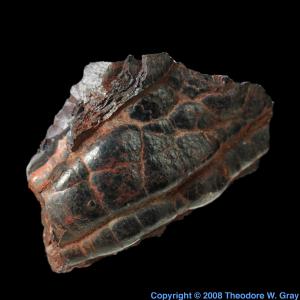
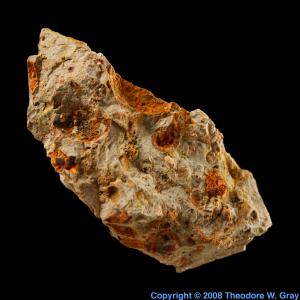
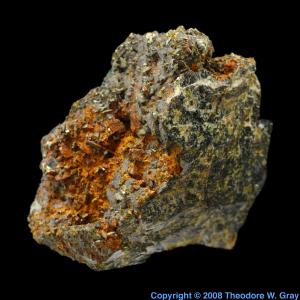
|
|
|
|
|
|
|
|
|
|
|
|
|
|
|
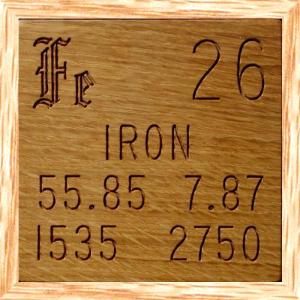
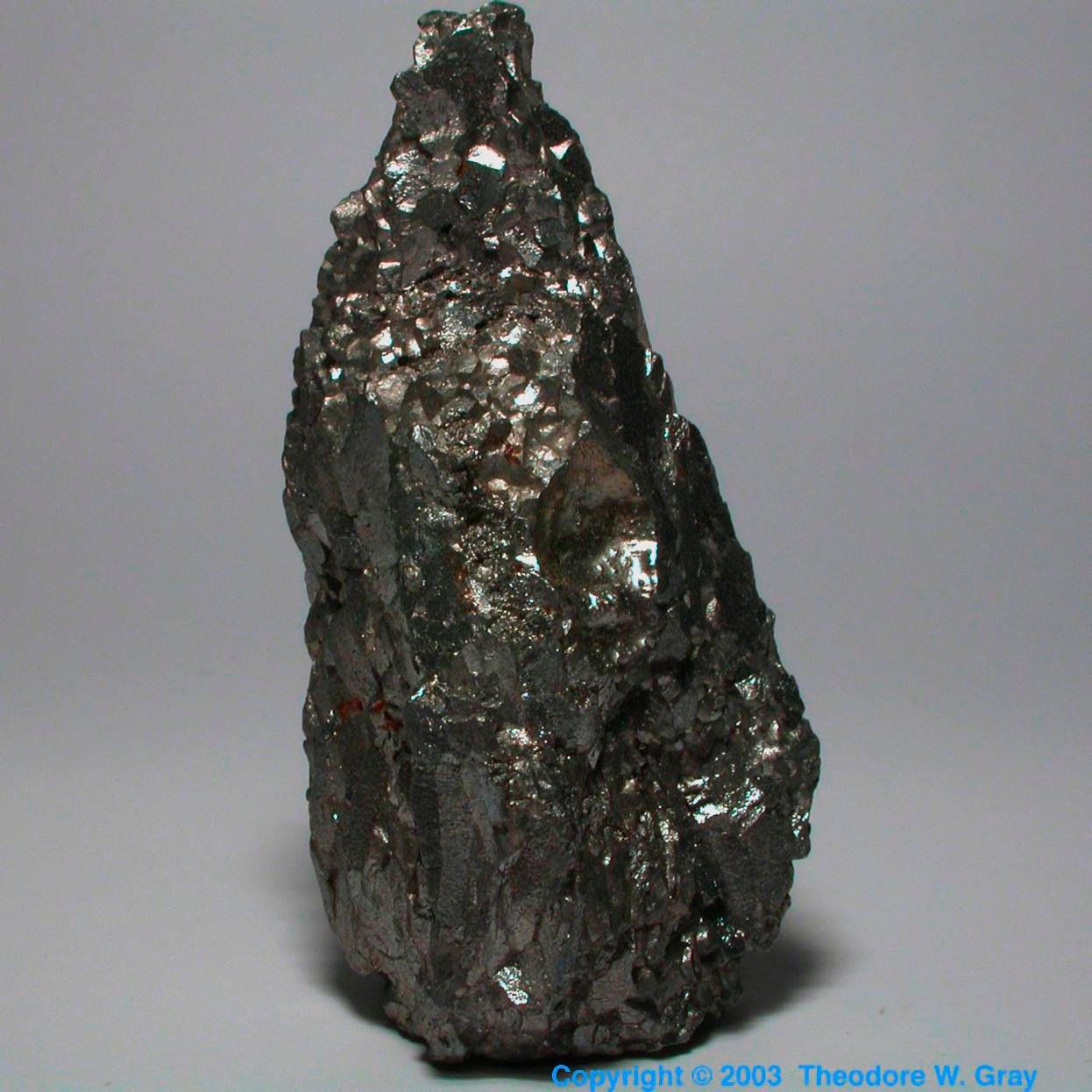
Iron is the metal of industry. Tools, machines, railroads, cars, bridges, buildings, all are built primarily out of steel, which is just iron with a few percent of carbon added. Of all the metal refined every year the largest fraction by a huge margin is iron.
The reason for this is strictly because it's incredibly plentiful, easy to refine, and cheap. It's actually a pretty lousy metal in many ways. It's very heavy, but worst of all it's reactive and unstable in air. In other words, it rusts. Not only that, it rusts in the worst possible way, into a flaky powder that splits off and exposes fresh metal to rust. (Aluminum rusts too, but aluminum oxide (rust) is a tough, hard, transparent coating that actually makes the aluminum stronger, and that completely stops the rusting process as soon as a thin layer is formed.)
If aluminum were dirt cheap and iron cost as much as aluminum does, almost none of it would be used. It would still have application for machine tool bits that need to be very, very hard, but bridges, buildings, cars, etc, would be built exclusively of aluminum, and they would last virtually forever instead of rusting away to nothing after just a few decades.
Frankly, the fact that iron rusts the way it does is one of the great lousy breaks in the world of chemistry.
|
|
| |
|
|
|
|
|
|
|
|
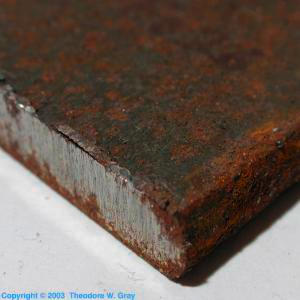
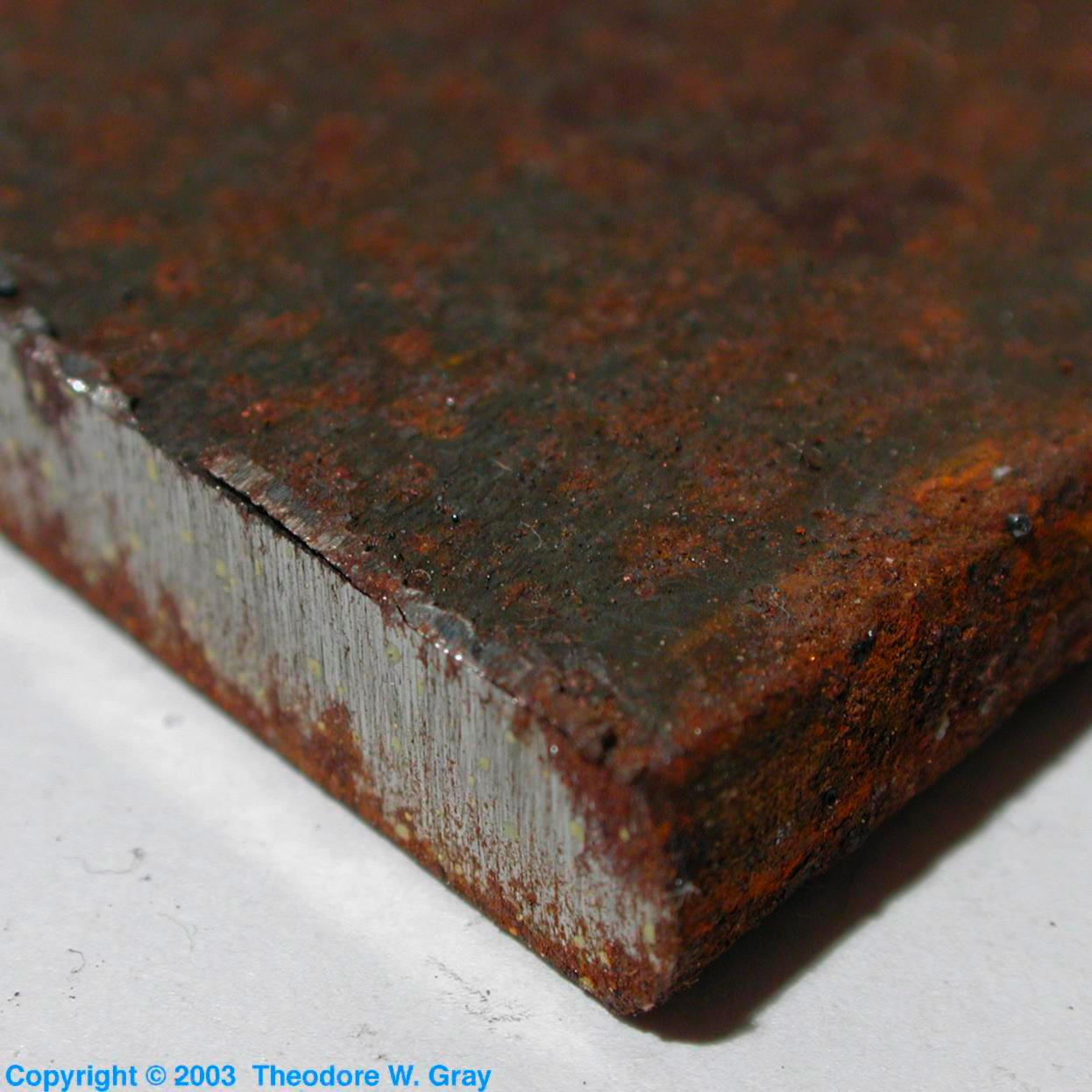
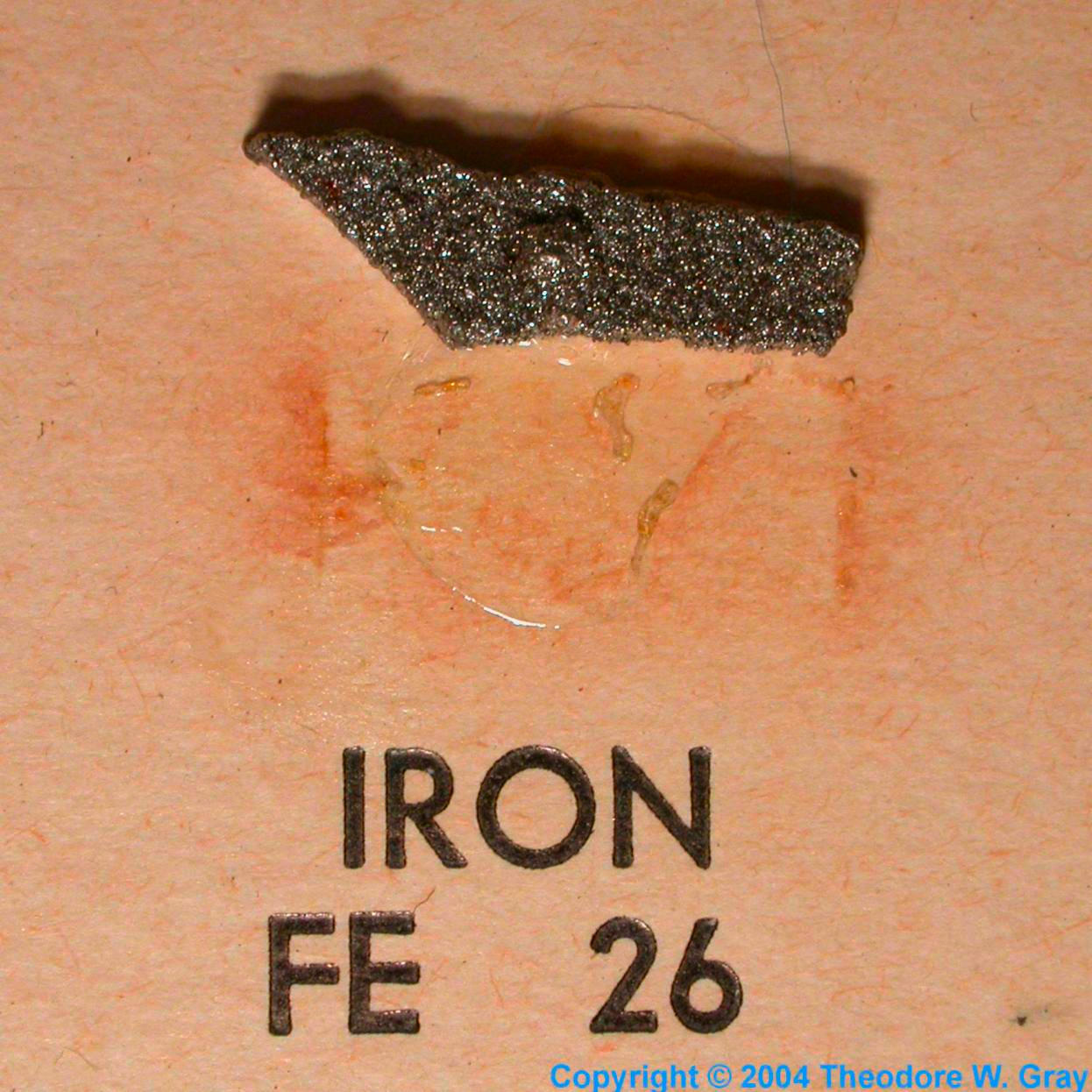
 Rusty iron plate. Rusty iron plate.
Just some old iron pulled from a junk pile at the farm. The sound is steel plate like this being beaten with a blacksmith's hammer.
See hafnium for some pictures of a plasma-arc cutting torch cutting some steel plate much like this, and see oxygen for a story about how oxyacetylene cutting torches actually work.
Source: Marco's Scrap Metal
Contributor: Theodore Gray
Acquired: 15 April, 2002
Text Updated: 29 January, 2009
Price: $0.10/pound for scrap iron.
Size: 1.5"
Purity: >95%
|
|
|
|
|
|
|
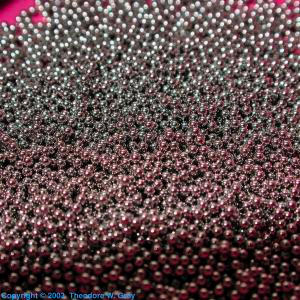
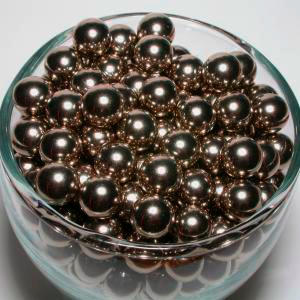
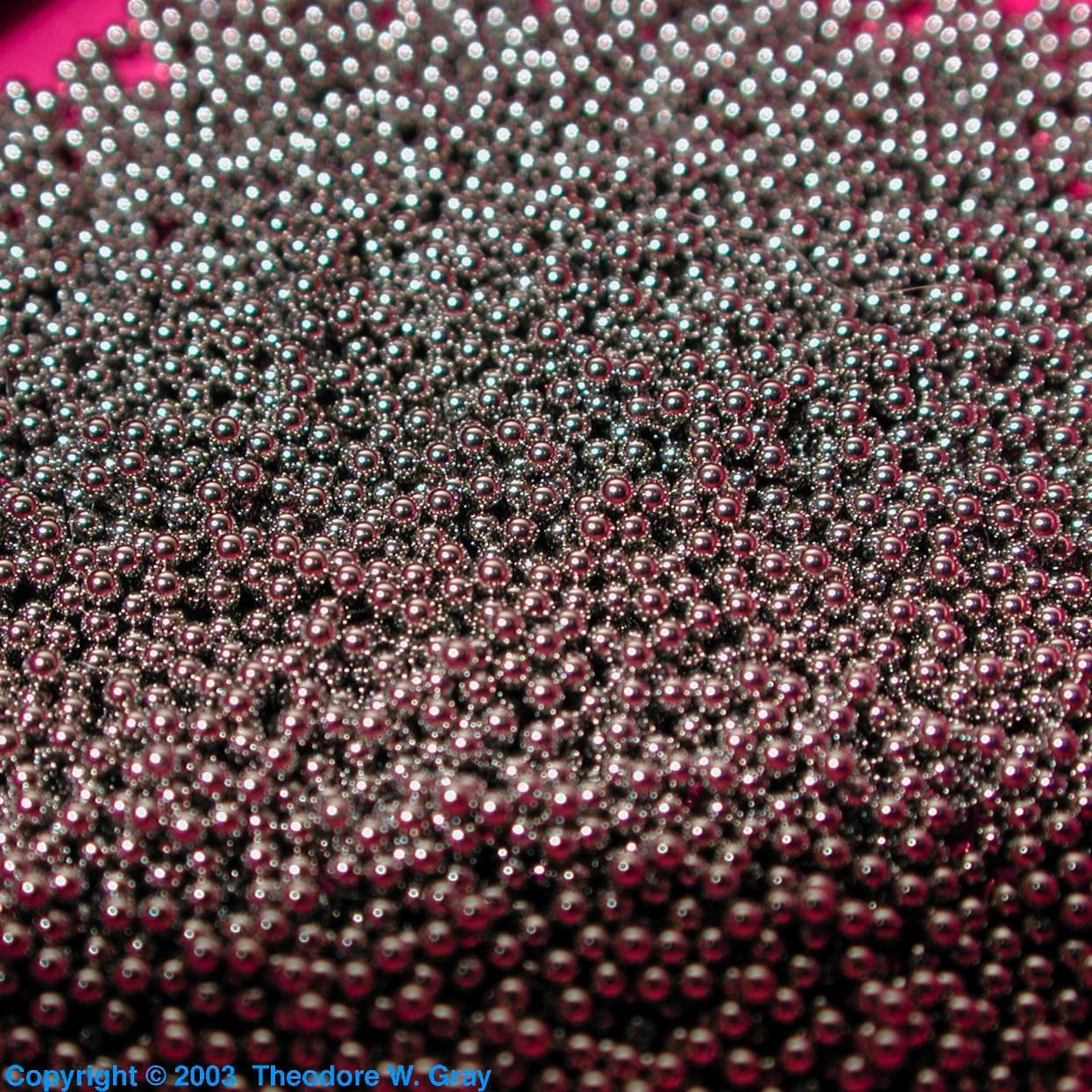
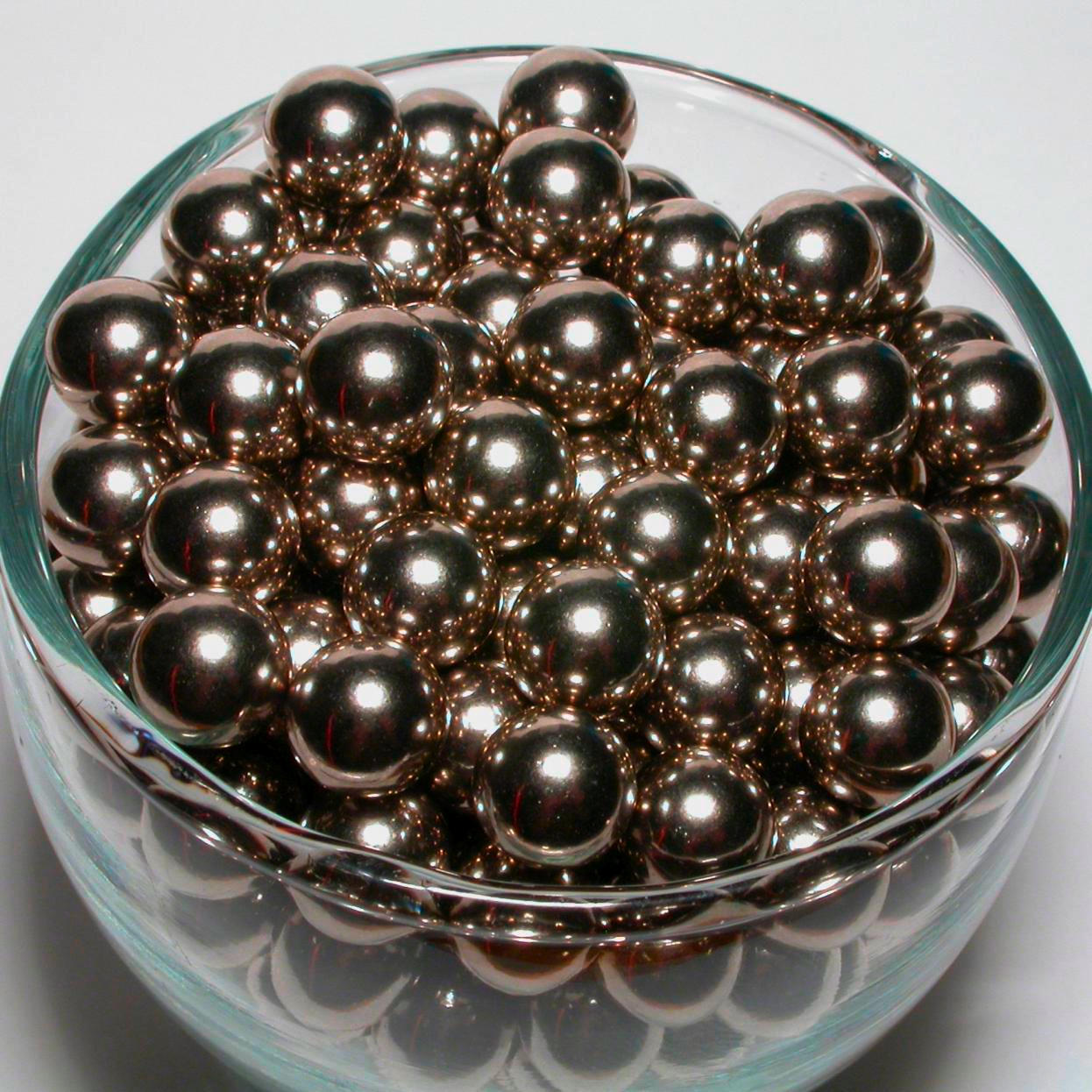
Precision steel micro-bearings.
We think these balls are about 1/32-inch diameter. Ed Pegg reports that these particular balls were accidentally magnetized by noted physicist Stephen Wolfram, making them unsuitable for Ed's experiments.
Source: New England Miniature Ball Corp
Contributor: Ed Pegg Jr
Acquired: 15 April, 2002
Price: $5/1000 (which is not a lot of bearings)
Size: 0.03"
Purity: >95%
|
|
|
|
|
|
|
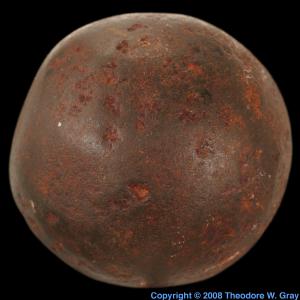
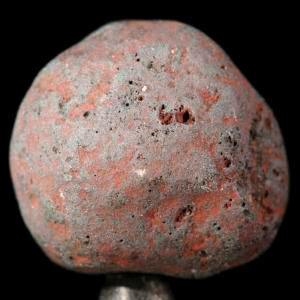
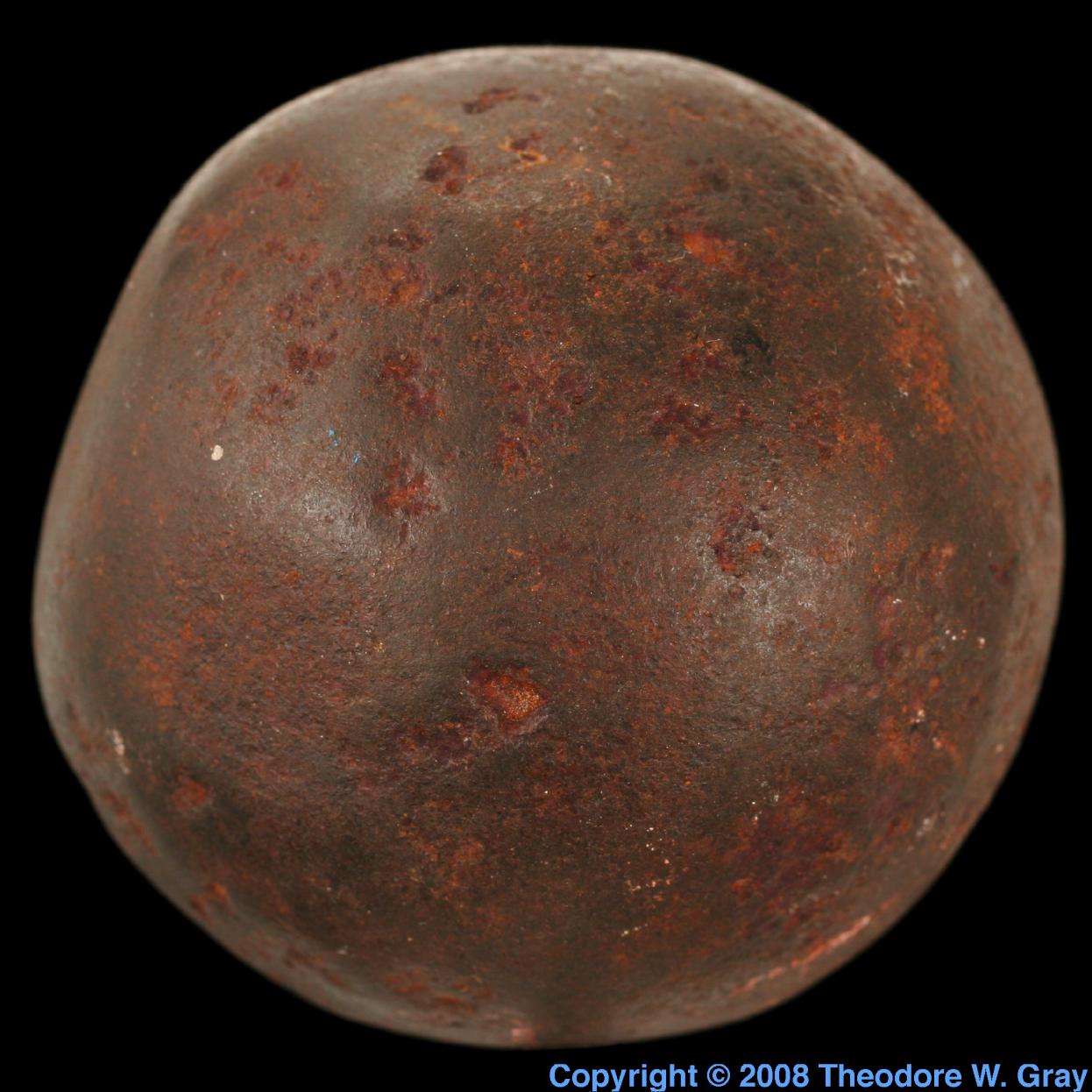
  Civil war canister shot. Civil war canister shot.
Chris reports that he found this approximately 2.5 inch diameter crude iron ball while walking in the woods in Pennsylvania. I immediately assumed it was a civil war cannonball, because that's the most interesting thing it could be. But a close second, and probably more likely according to a civil war author I asked, is that it's "canister shot", which is like shotgun pellets on a larger scale. Or it could be a crushing ball from a stone tumbler, but that's so boring it just can't be.
Analysis by x-ray fluorescence spectroscopy at the Center for Microanalysis of Materials, University of Illinois (partially supported by the U.S. Department of Energy under grant DEFG02-91-ER45439) indicates that it is virtually pure iron.
Source: Chris Carlson
Contributor: Chris Carlson
Acquired: 5 June, 2002
Price: Donated
Size: 2.5"
Purity: >99%
|
|
|
|
|
|
|
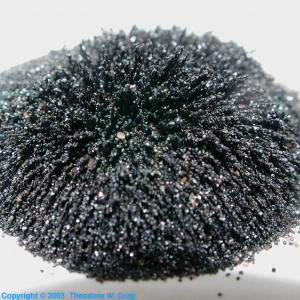
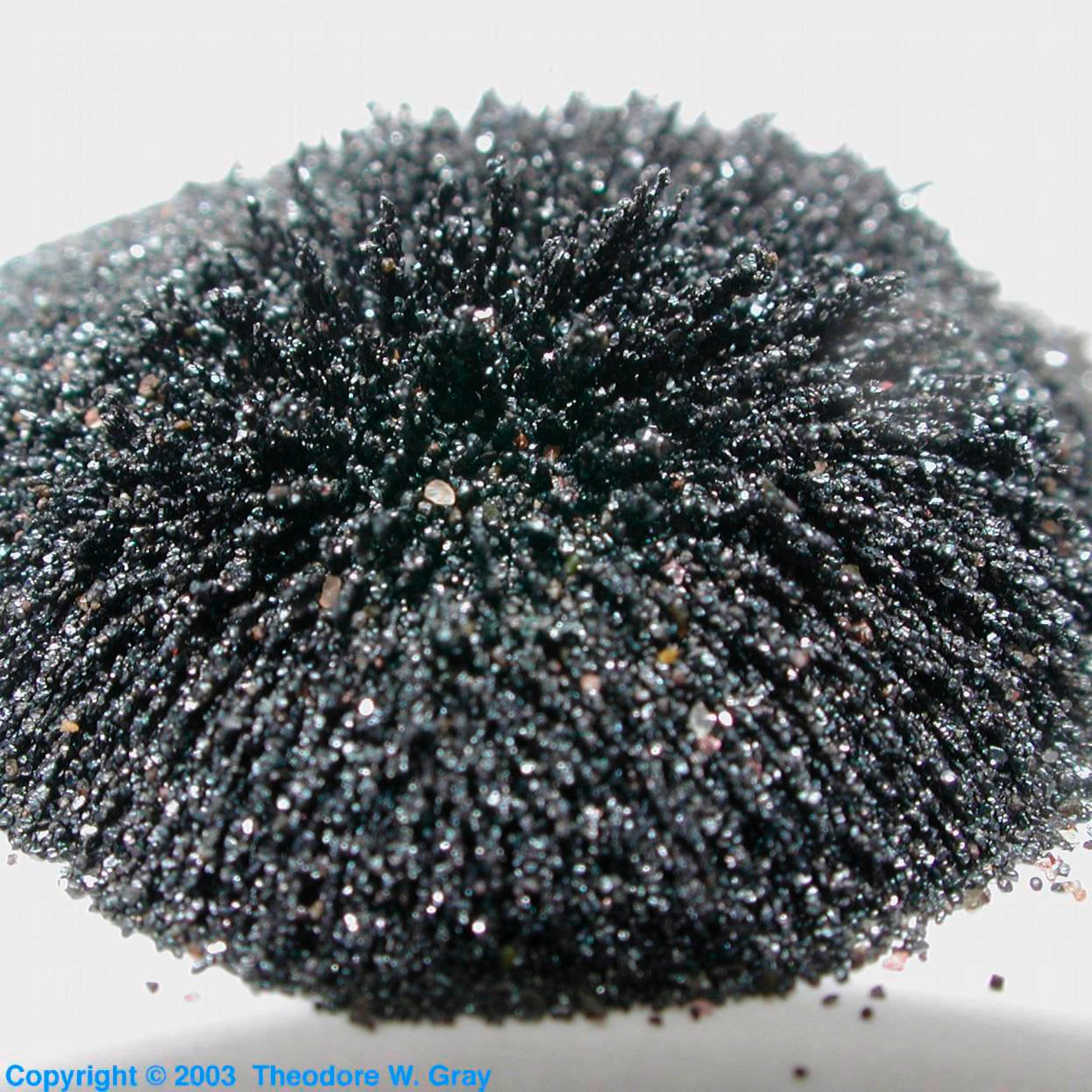
Magnetite sand.
Another element (compound actually) from Chris. He panned this sand from a Lake Michigan beach, like panning for gold except you get black magnetic granules instead of rich. It is very magnetic, as you can see from this picture (there's a magnet under the paper, which is making the sand stick up).
Source: Chris Carlson
Contributor: Chris Carlson
Acquired: 15 August, 2002
Price: Donated
Size: 1"
Purity: <40%
|
|
|
|
|
|
|
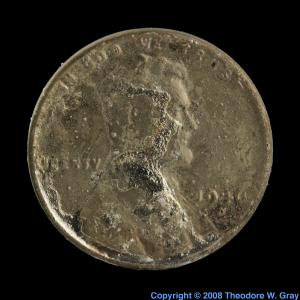
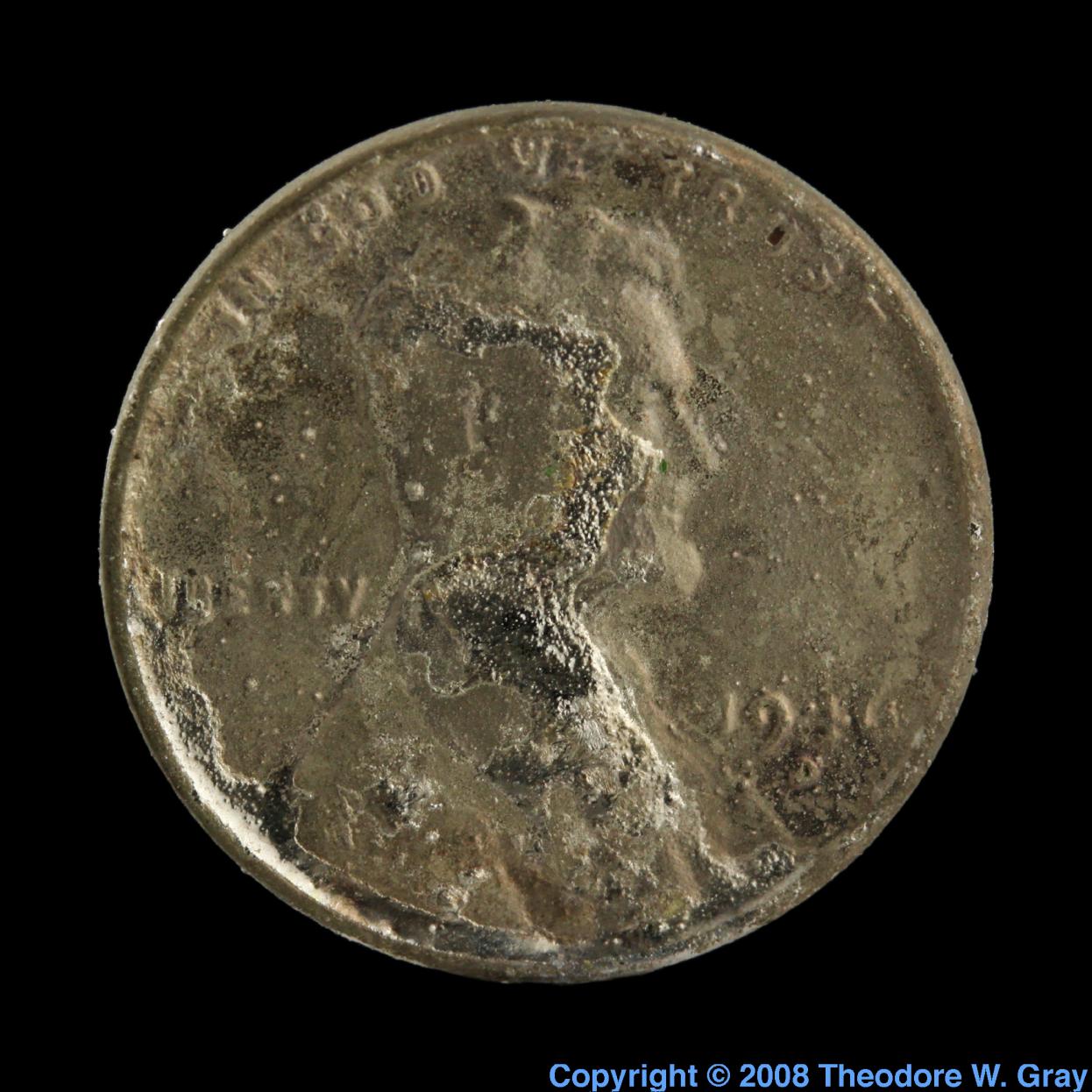
Steel pennies.
During 1943, the height of the second world war, copper was in such demand for the war effort that pennies were briefly made out of steel. They probably should never have gone back to copper, because exactly 40 years later in 1982 the price of copper and the value of a penny crossed paths again, and they had to switch to zinc, for good this time.
Steel pennies are actually zinc-plated steel, just like cheap roof flashing, and they corrode the same way.
Source: Theodore Gray
Contributor: Theodore Gray
Acquired: 20 September, 2002
Text Updated: 18 December, 2007
Price: Donated
Size: 0.5"
Purity: >90%
Sample Group: Coins
|
|
|
|
|
|
|
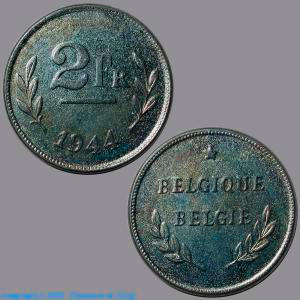
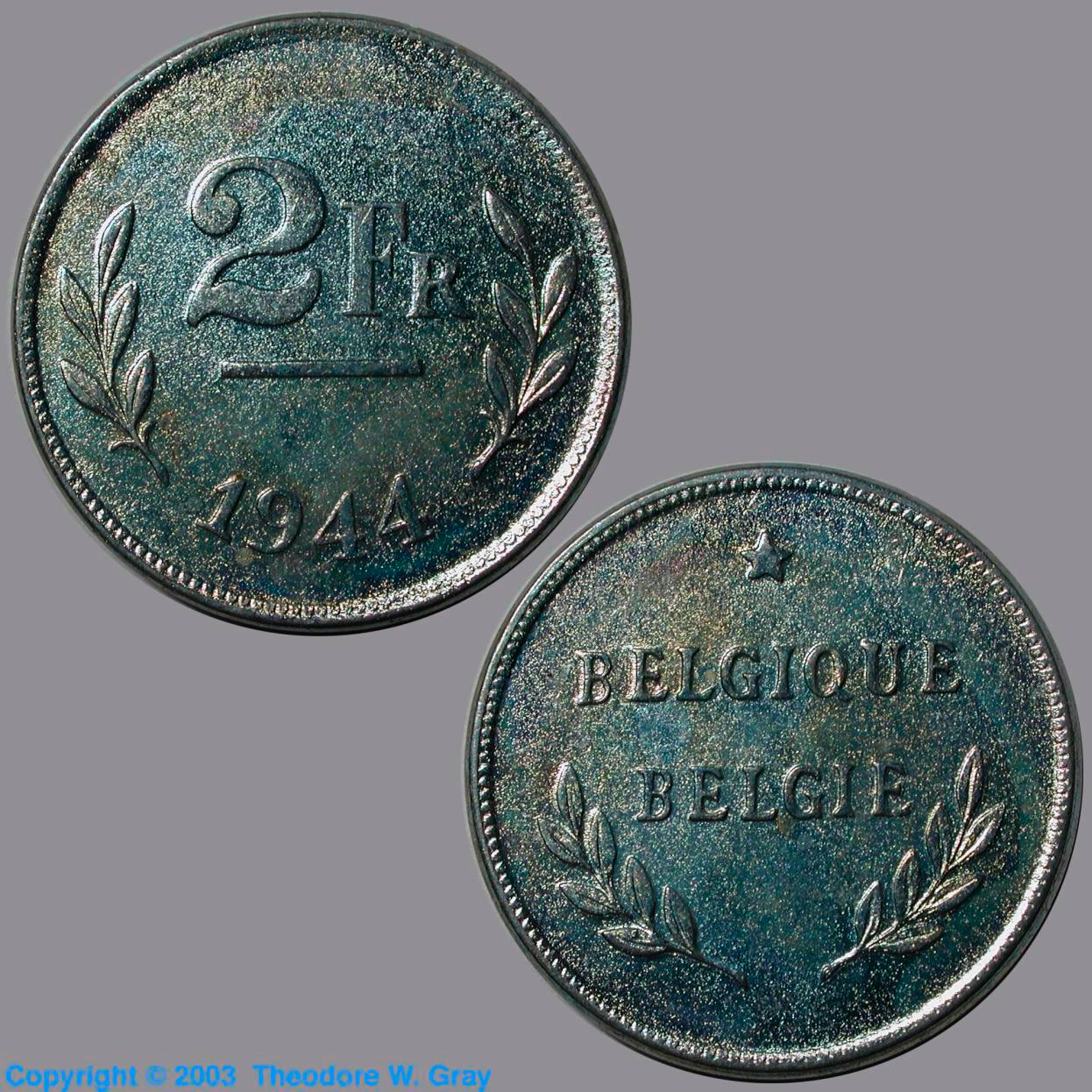
1944 zinc steel penny Belgian 2 franc.
This peculiar coin was minted on the same blanks as US steel pennies (see above), but it was made by the US for use in Belgium during the war. From the eBay description:Here is the greatest anomaly in modern United States coinage history. During World War II, as the Americans advanced into Belgium, it was decided that the USA would create this first coin of "liberation". These two Francs coins of 1944 were minted in Philadelphia on the blanks of US zinc coated steel pennies of 1943 ( this metallic combination was used but once in our history, replacing the former copper pennies, as copper was desperately needed in the war effort ).
Source: eBay seller wholesalenow
Contributor: Theodore Gray
Acquired: 20 September, 2002
Price: $10
Size: 0.5"
Purity: >90%
Sample Group: Coins
|
|
|
|
|
|
|
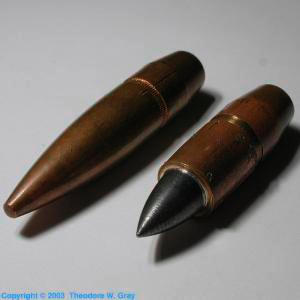
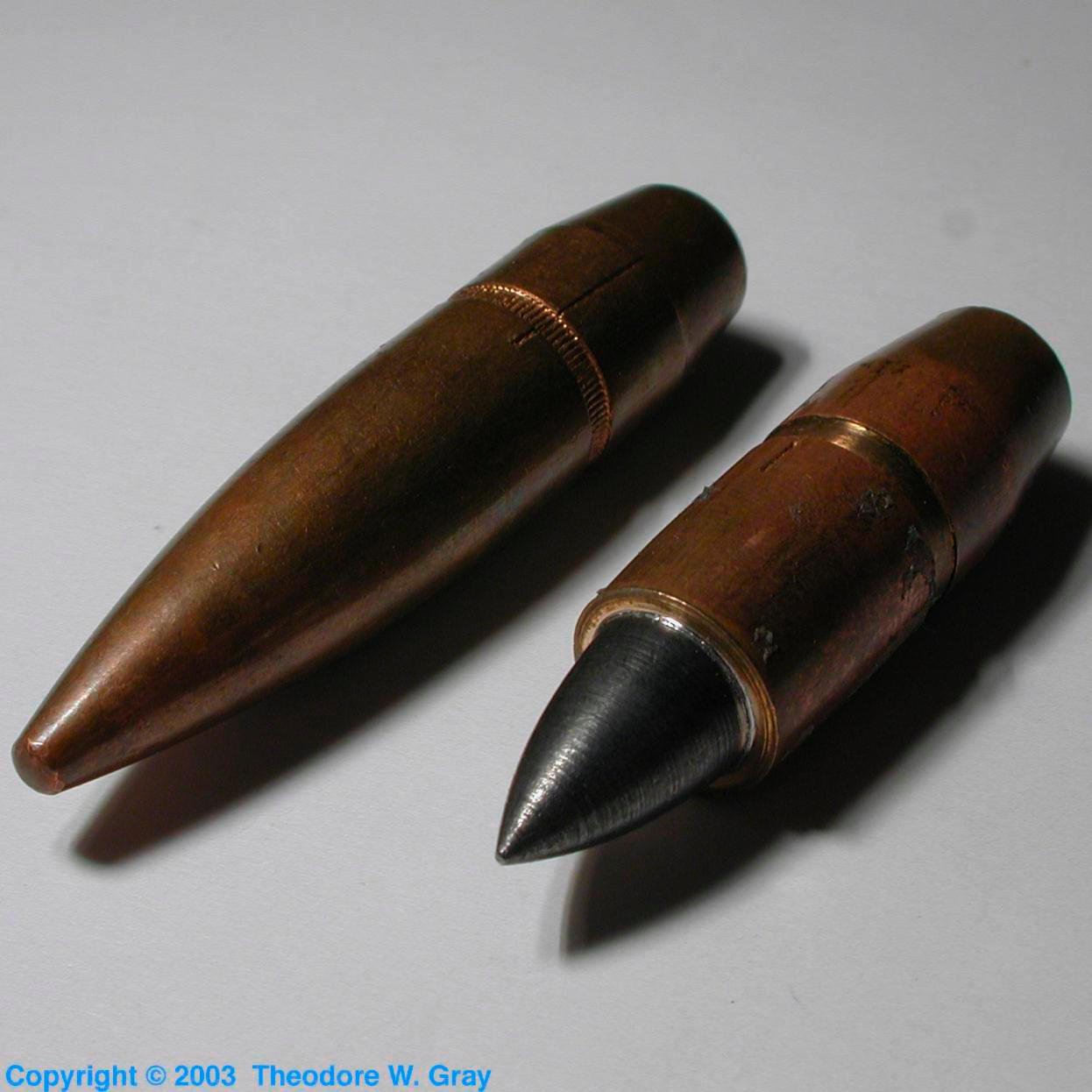
.50 caliber armor piercing shell. Not uranium after all.
I had high hopes that this rifle shell contained a depleted uranium core. But it doesn't. Analysis by x-ray fluorescence spectroscopy at the Center for Microanalysis of Materials, University of Illinois (partially supported by the U.S. Department of Energy under grant DEFG02-91-ER45439) revealed the following composition for the core of the shell (the cladding having been cut away on a lathe):
98.84% Iron
0.54% Molybdenum
0.47% Lead
0.16% Copper
No uranium.
Source: eBay seller accurateimage
Contributor: Theodore Gray
Acquired: 31 July, 2002
Text Updated: 29 January, 2009
Price: $10/each
Size: 2.5"
Purity: 98.84%
|
|
|
|
|
|
|
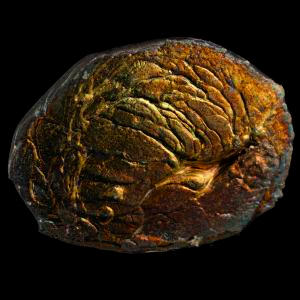
Strange lump.
Ed Pegg found this strange-looking lump of metal/crystal in some sand when he was 6 years old, and has managed to keep it for 33 years through about 20 moves. He never knew what it was until I took it in for analysis by x-ray fluorescence spectroscopy at the Center for Microanalysis of Materials, University of Illinois (partially supported by the U.S. Department of Energy under grant DEFG02-91-ER45439).
You'll never guess what it is: I was certainly quite surprised to find out and so was Ed. It is a mixture of 62% iron and 38% titanium (!). Since he found it near an air force base in Florida, it's almost certainly some kind of alien space metal that fell off a truck transporting a crashed flying saucer to the secret lab at the air force base.
Either that or Ed should go back to where he found it and become fabulously wealthy after staking a titanium mining claim.
Source: Ed Pegg Jr
Contributor: Ed Pegg Jr
Acquired: 18 December, 2002
Price: Donated
Size: 1"
Purity: 62%
|
|
|
|
|
|
|
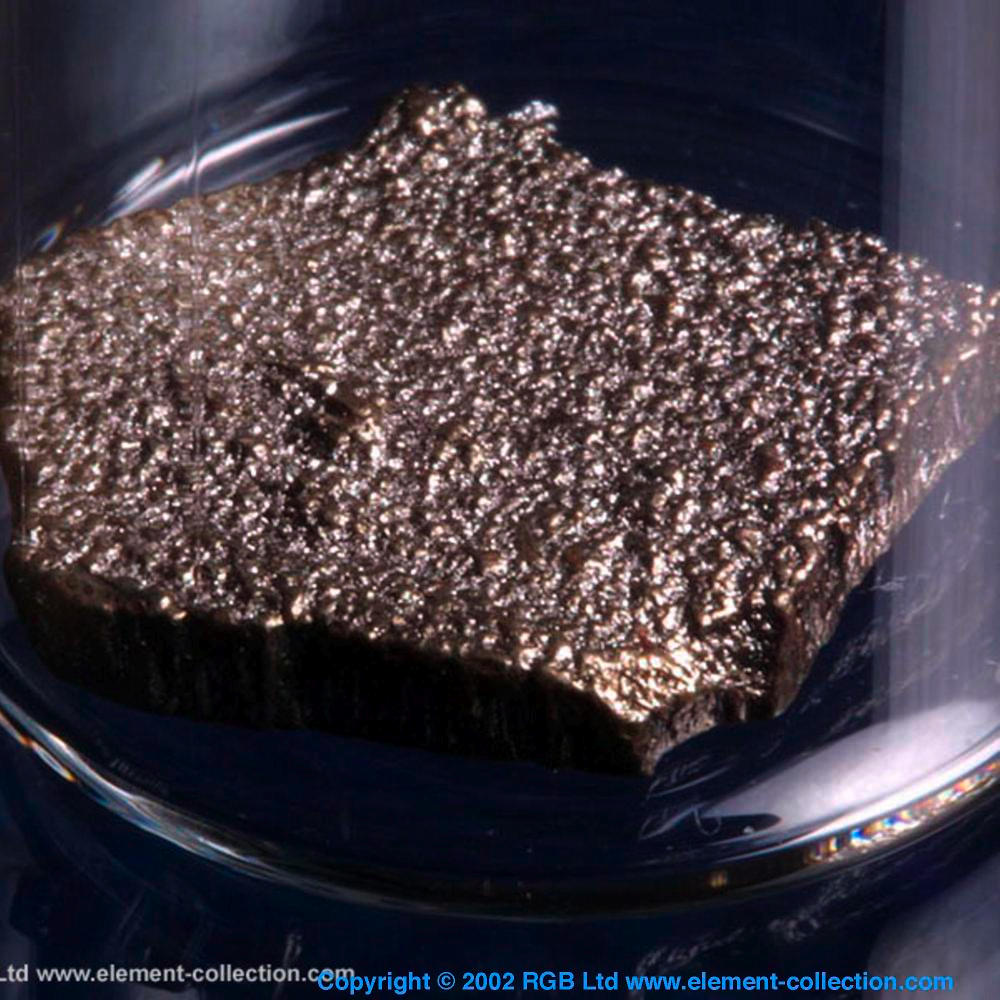
Sample from the RGB Set.
The Red Green and Blue company in England sells a very nice element collection in several versions. Max Whitby, the director of the company, very kindly donated a complete set to the periodic table table.
To learn more about the set you can visit my page about element collecting for a general description or the company's website which includes many photographs and pricing details. I have two photographs of each sample from the set: One taken by me and one from the company. You can see photographs of all the samples displayed in a periodic table format: my pictures or their pictures. Or you can see both side-by-side with bigger pictures in numerical order.
The picture on the left was taken by me. Here is the company's version (there is some variation between sets, so the pictures sometimes show different variations of the samples):
Source: Max Whitby of RGB
Contributor: Max Whitby of RGB
Acquired: 25 January, 2003
Text Updated: 11 August, 2007
Price: Donated
Size: 0.2"
Purity: 99.97%
|
|
|
|
|
|
|
Sample from the Everest Set.
Up until the early 1990's a company in Russia sold a periodic table collection with element samples. At some point their American distributor sold off the remaining stock to a man who is now selling them on eBay. The samples (except gases) weigh about 0.25 grams each, and the whole set comes in a very nice wooden box with a printed periodic table in the lid.
To learn more about the set you can visit my page about element collecting for a general description and information about how to buy one, or you can see photographs of all the samples from the set displayed on my website in a periodic table layout or with bigger pictures in numerical order.
Source: Rob Accurso
Contributor: Rob Accurso
Acquired: 7 February, 2003
Text Updated: 29 January, 2009
Price: Donated
Size: 0.2"
Purity: >99%
|
|
|
|
|
|
|
First arc-melted sample.
My friend Max Whitby sent me an email about an arc melting furnace he had seen at a university in England. It could easily melt even very high-melting metals, like iridium.
It seemed like a device I could approximate at home using some things I had lying around. The most important component was an old stick welder I inherited from the former owner of the farm buildings in my compound. I've never learned to use it as a welder (my modern wire feed welder is much easier to use), but it's an excellent source of brute electric current when you need it (up to a couple hundred amps).
After I got a nice big chunk of graphite from eBay, and some graphite electrodes from Farm & Fleet (my local farm supply store), I decided it was time to give it a try. The furnace at the university had a vacuum chamber built around it allowing for melting of reactive metals without oxidation or other contamination. I may go that route some day, but for a first proof of concept experiment I just did it in the open air.
I cut an approximately 2"x2"x1" block of graphite, hollowed out a cup in the middle, and clamped the ground electrode of the welder to it. Then I placed my metal sample in the cup, put on a welding helmet, and touched the graphite electrode to the sample. After a bit of practice, I could easily bring the whole thing to white heat in a couple of seconds.
Judge for yourself whether I was successful in melting the iron: This thing used to be a 7/16" hex nut.
Source: Theodore Gray
Contributor: Theodore Gray
Acquired: 27 April, 2003
Text Updated: 11 August, 2007
Price: Donated
Size: 0.75"
Purity: >95%
|
|
|
|
|
|
|
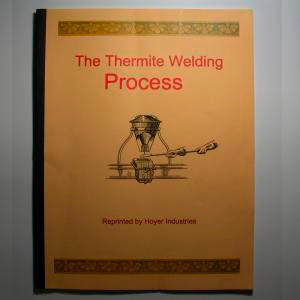
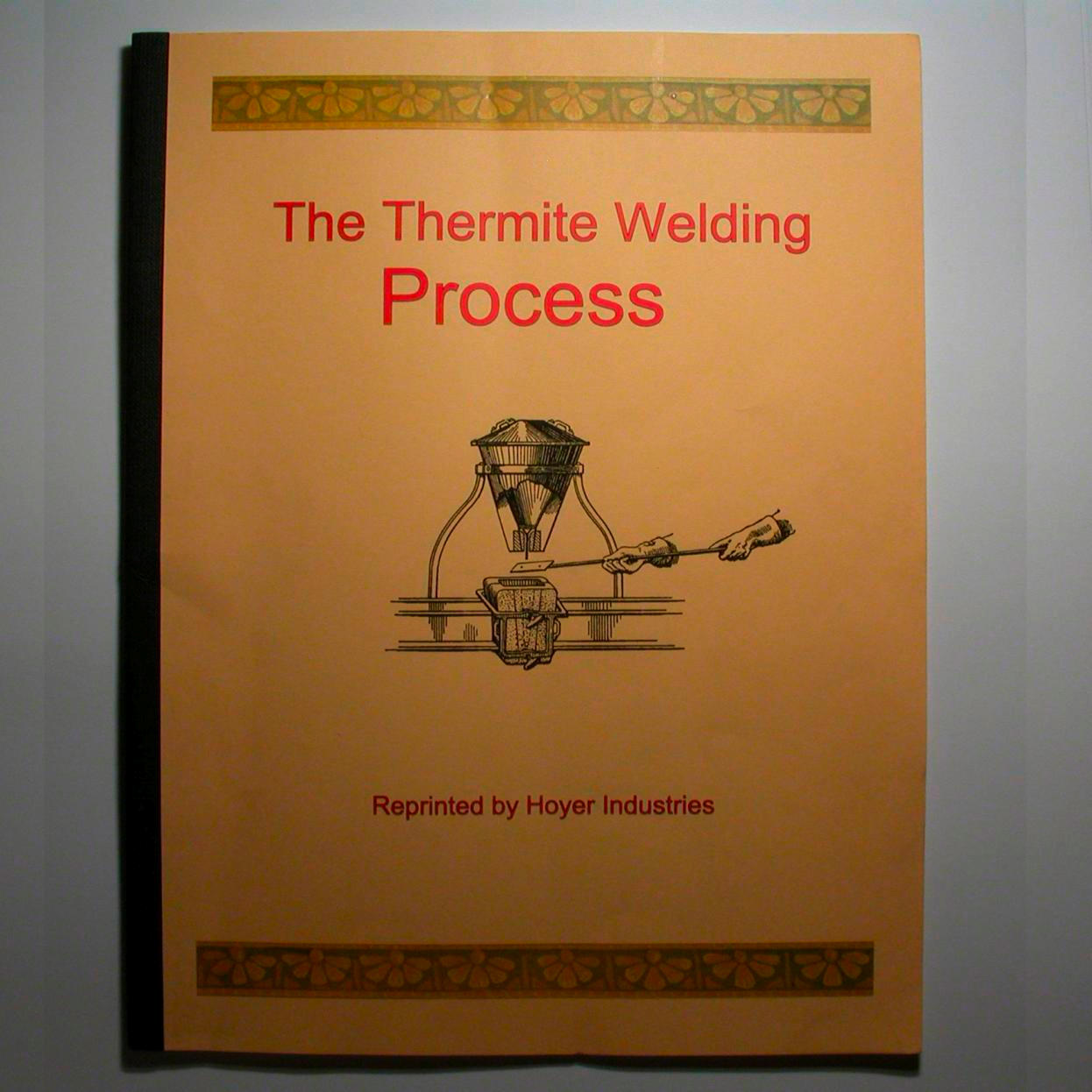
Thermite booklet.
This is a reprint of an early 20th century booklet about the thermite process. Remarkably, thermite is used to this day in essentially the same way, using the same formulas. See the next sample for more about thermite.
Source: eBay seller karlhoyer
Contributor: Theodore Gray
Acquired: 2003-07-1
Price: $12
Size: 11"
Purity: 0%
|
|
|
|
|
|
|
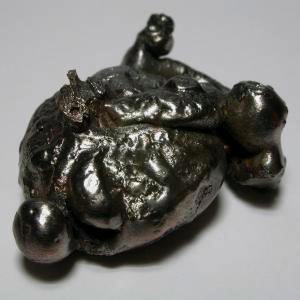
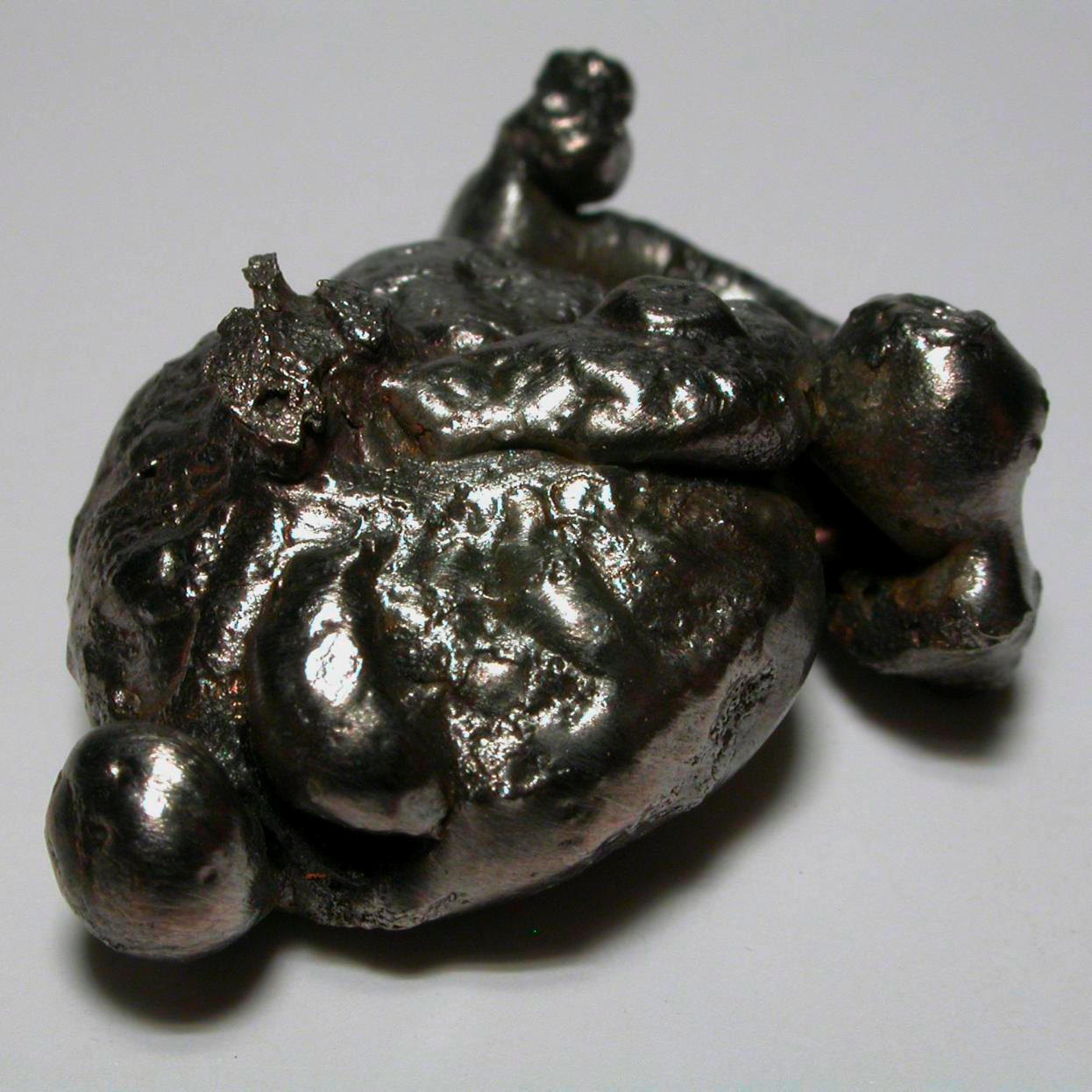
Thermite steel.
Thermite is amazing stuff: Take some magnetite sand, which you can collect from many beaches by dragging a magnet through the sand (I got mine on Ocean Beach in San Francisco, thanks to a magnet from the helpful folks at the Exploratorium), and some aluminum powder which you can buy in a very well-stocked paint or artists supply store, and you can mix up a powder that, when lit, burns hotter than almost any other chemical reaction and produces as its end product white-hot molten steel (see chain link sample below for a video of this reaction). Great fun, and insanely dangerous if anything does not go according to plan.
Done properly, thermite burns vigorously but not explosively, and you can controllably create a mass of molten steel falling out the bottom of a ceramic cone. This steel can be used to make castings or to weld large pieces of existing steel. For example, high-speed train track is commonly welded using the thermite process, which allows two sections of rail to be joined into a single piece, leaving no visible weld or weak spot in the track. Welding the conventional way could not join the rails as completely, but thermite steel is so hot it is able to fuse the sections completely.
To get the steel to fall out the bottom of the crucible at the right moment, you plug a hole in the bottom with a disk of material designed to melt through when the hot iron reaches it. My first large batch, about a pound, burned great for about 3 seconds and then exploded, which is not something thermite is supposed to do. It turns out I should not have used a zinc penny to cover the hole in the bottom of the crucible: The boiling point of zinc is much less than the temperature reached by the reaction, so when the molten iron hit the penny, it exploded into zinc vapor. A copper penny was only slightly less explosive: Turns out you're supposed to use an aluminum disk. Using folded up layers of aluminum foil I have had no more problems with explosions. Which is not to say I'm anywhere closer than 20 feet away whenever I ignite thermite: It would be really quite stupid not to take into account that at any moment, there could be blobs of white hot steel flying in all directions at a rapid rate of travel.
Thermite is a mixture of iron oxide and aluminum. When it is set off, the aluminum rips the oxygen away from the iron oxide, forming aluminum oxide and iron metal. This releases a lot of heat because aluminum binds oxygen much more tightly than iron. (Which is reflected in the fact that we learned how to reduce iron oxide to iron metal thousands of years before we learned how to reduce aluminum oxide to aluminum metal.)
There are actually several different kinds of iron oxide, Fe2O3 (red rust), and Fe3O4 (magnetite) being the most common. Thermite can be made with either: Magnetite thermite is said to burn hotter than red rust thermite, but both work. The fun thing about magnetite is that you can find it lying around any beaches in many parts of the country. I collected about 40 pounds on Ocean Beach in San Francisco, in less than half an hour using a large magnet.
Source: Theodore Gray
Contributor: Theodore Gray
Acquired: 13 July, 2003
Price: Donated
Size: 0.75"
Purity: >90%
|
|
|
|
|
|
|
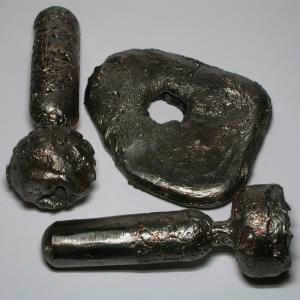
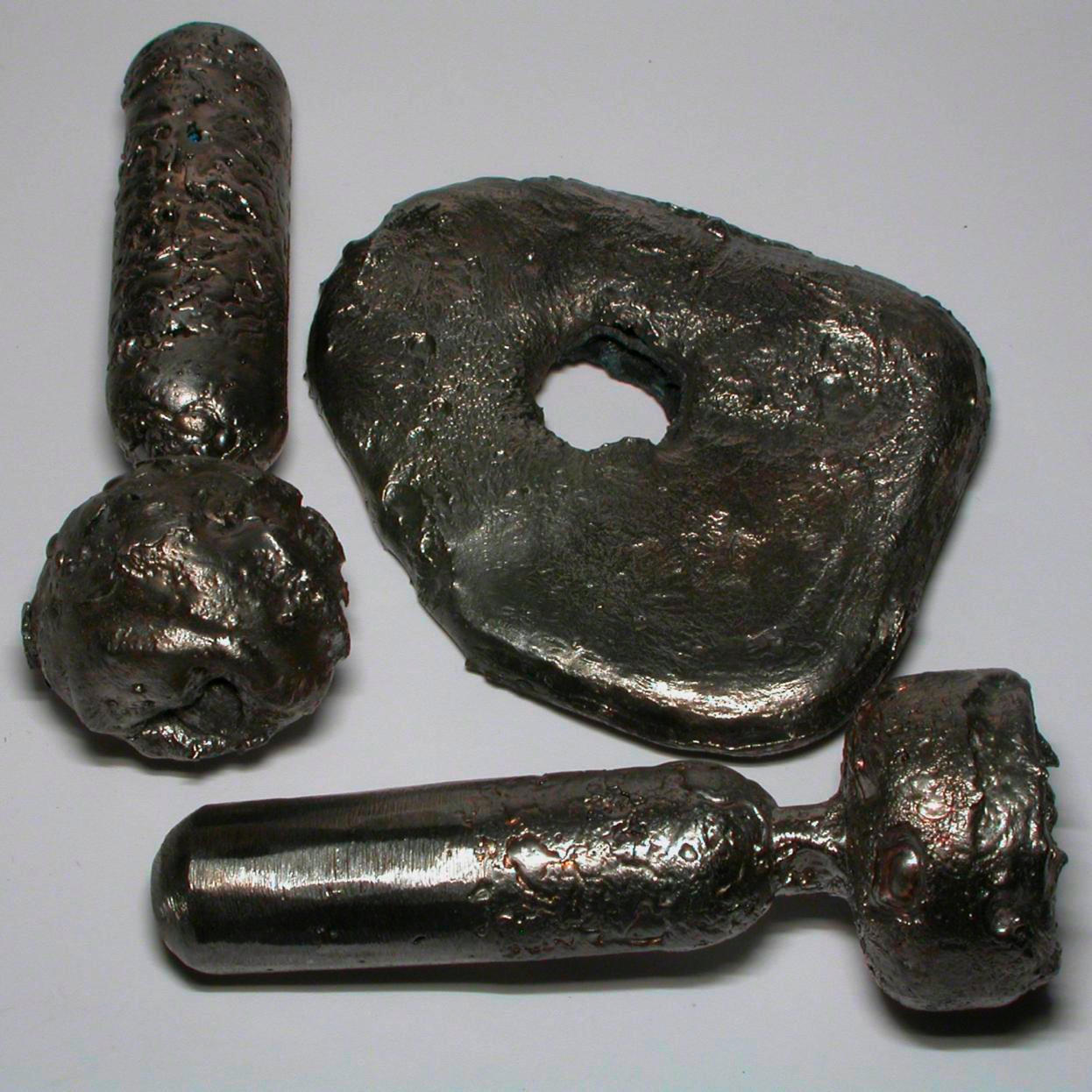
Thermite steel, larger.
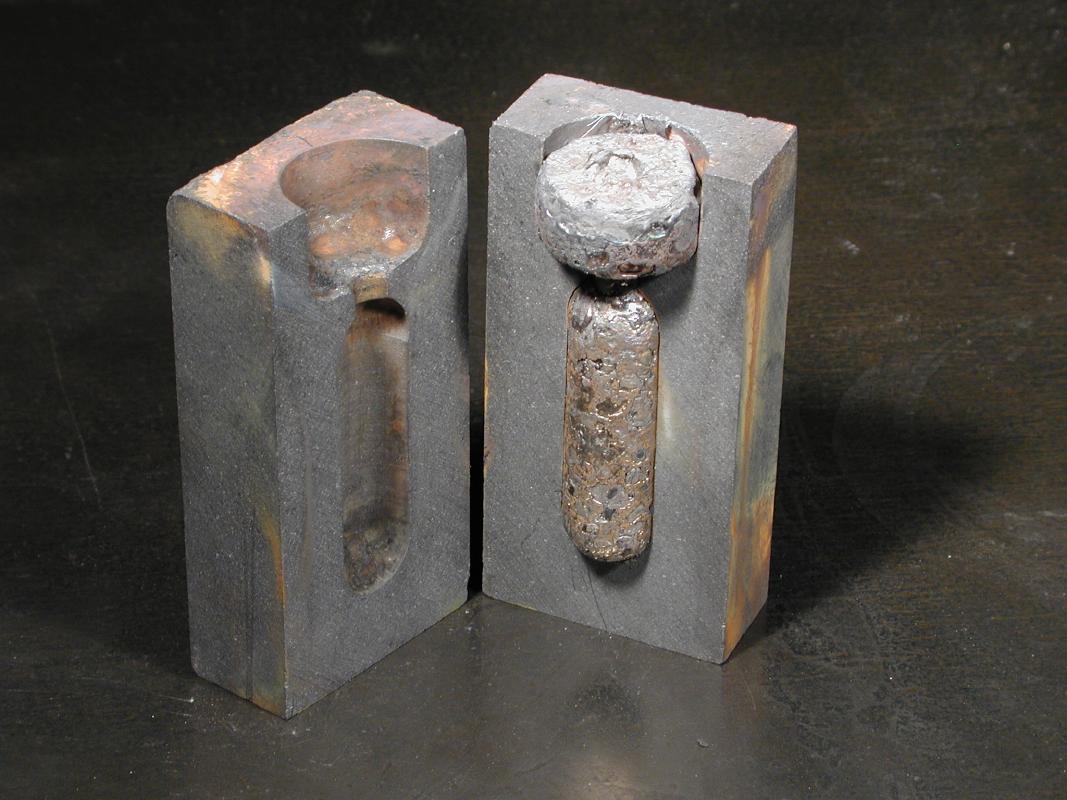
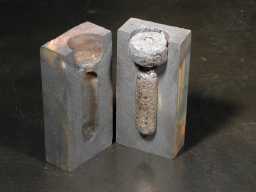
After I got my technique down, I started practicing thermite casting with a standard batch of about a pound of powder. These pieces are examples of the output of those reactions, cast into different kinds of graphite molds. Here's a picture of the mold that makes the cylinders:
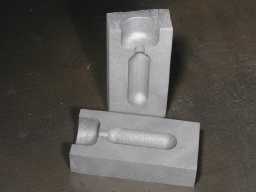
Here's what it looks like just after opening it:
See below for what I was practicing for: An iron link in my multi-metal chain.
Source: Theodore Gray
Contributor: Theodore Gray
Acquired: 27 July, 2003
Price: Donated
Size: 3"
Purity: >90%
|
|
|
|
|
|
|
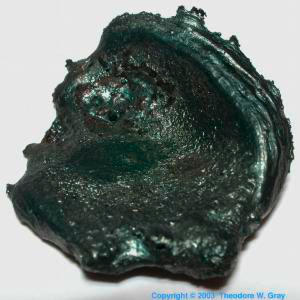
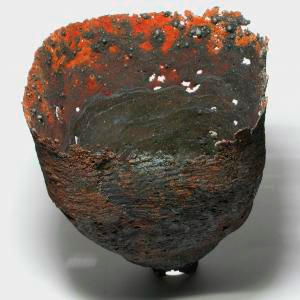
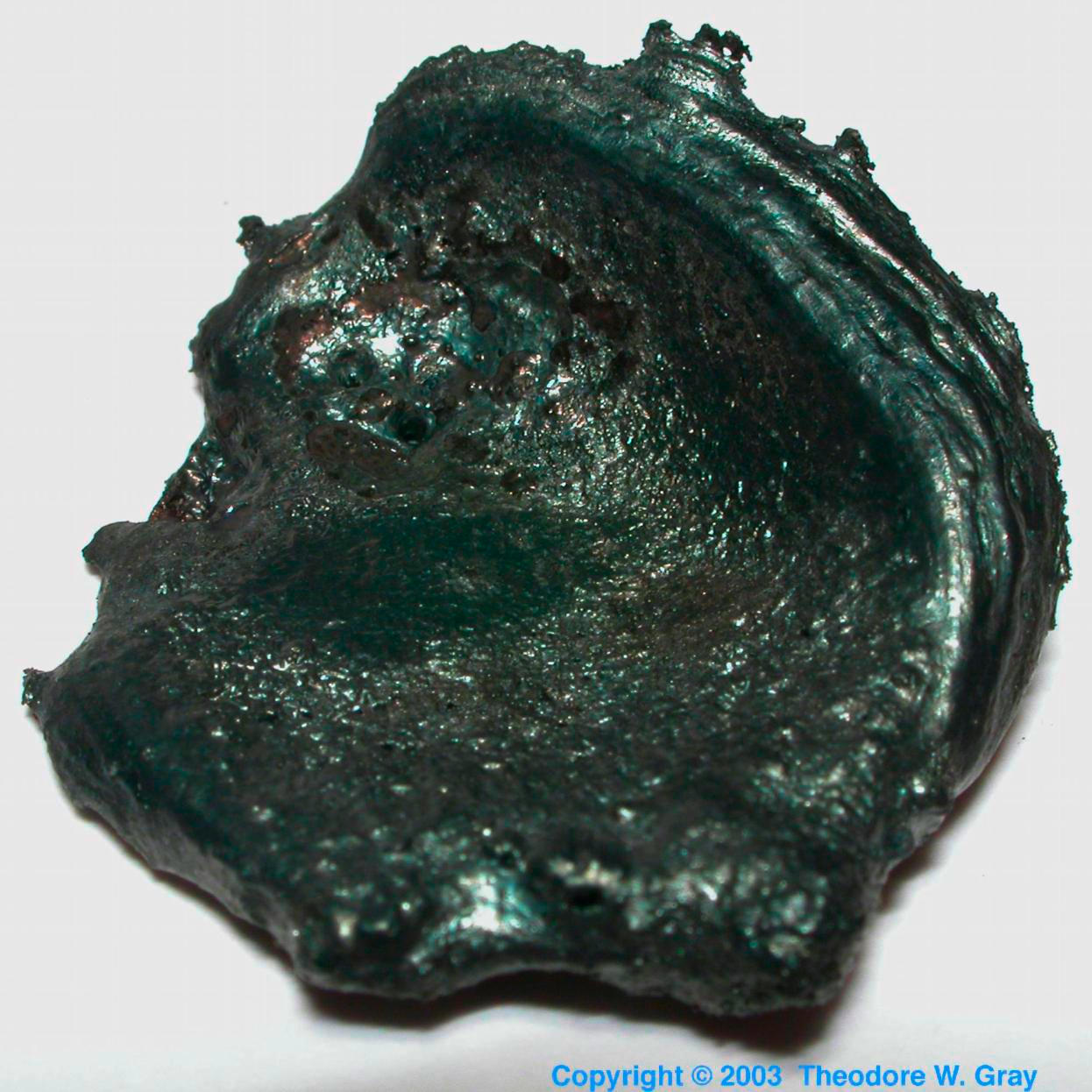
Thermite steel slag.
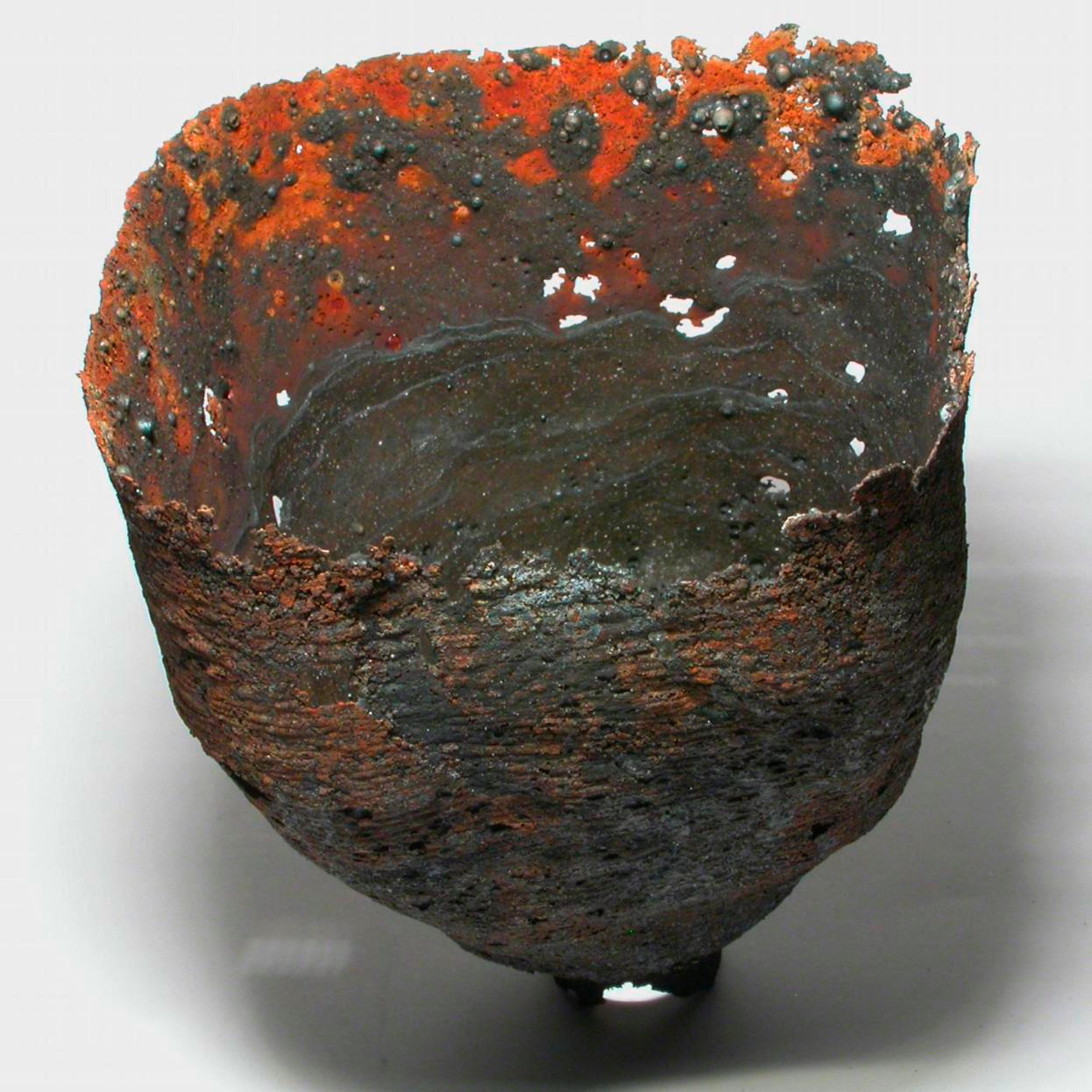
The thermite reaction produces a lot of slag, maybe 3 times as much slag by volume as metal. Fortunately the slag is lighter than the metal, so the metal falls out the bottom of the crucible first (after melting through the aluminum plug). I've been getting these interesting shells of slag mixed with un-reacted magnetite sand and some beads of iron from the reaction, forming on the inside surface of my graphite reaction crucible. They are fragile, but strong enough to come out intact sometimes. This isn't really an element sample, it's just an interesting by-product.
Source: Theodore Gray
Contributor: Theodore Gray
Acquired: 27 July, 2003
Price: Donated
Size: 4"
Purity: 50%
|
|
|
|
|
|
|
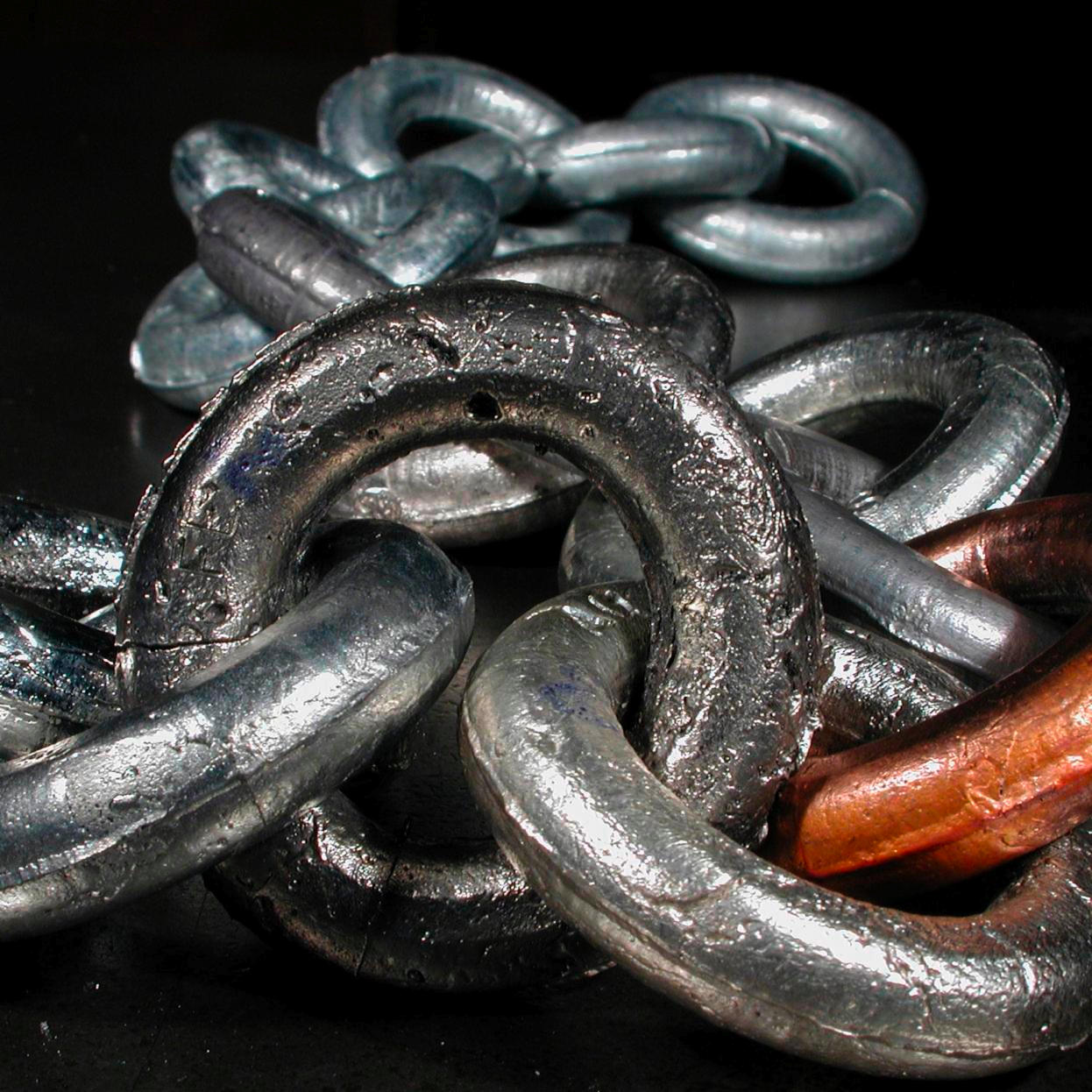
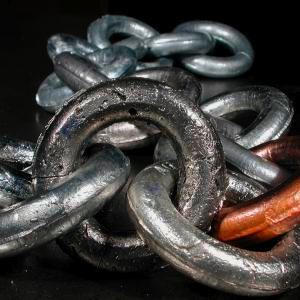
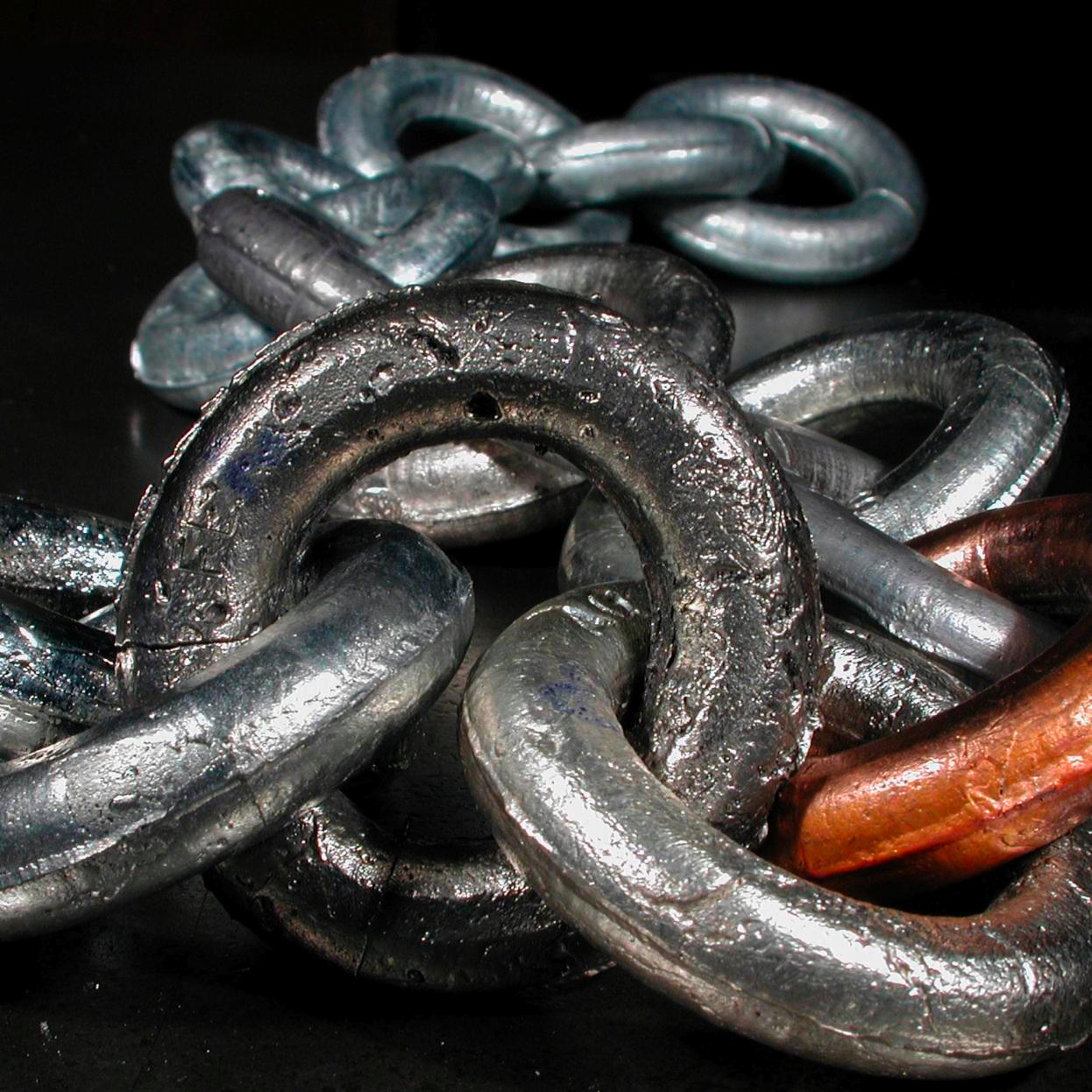
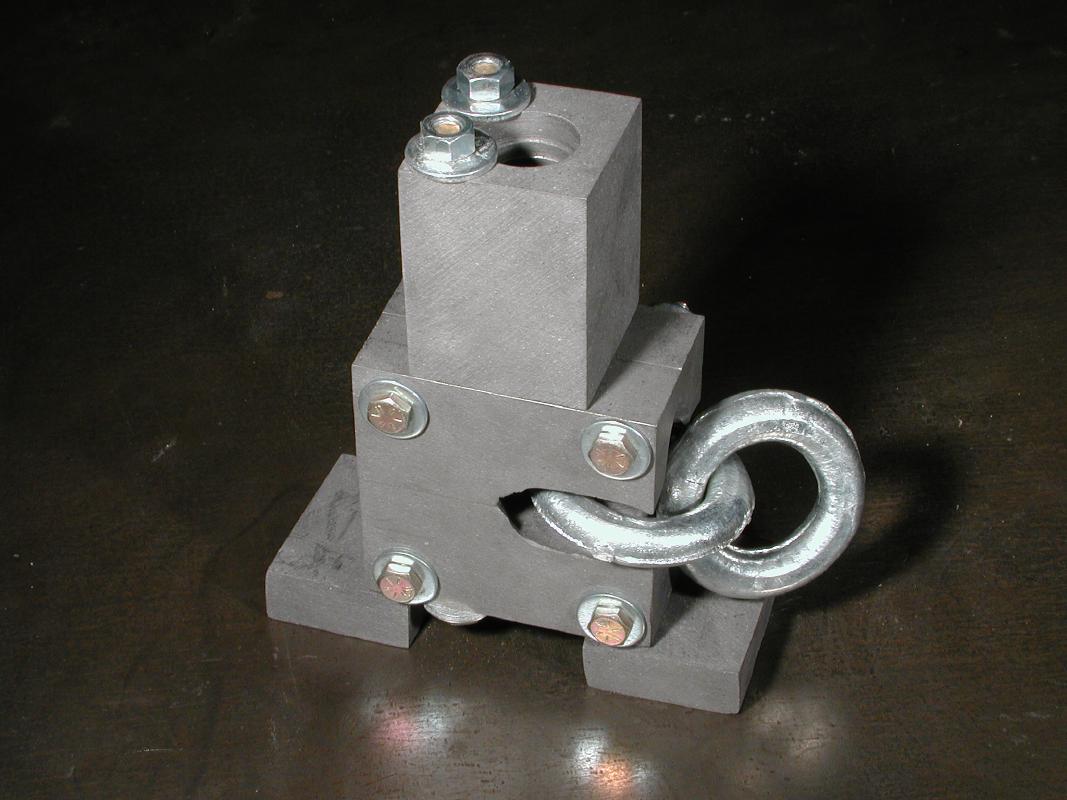
 Link in multi-metal chain. Link in multi-metal chain.
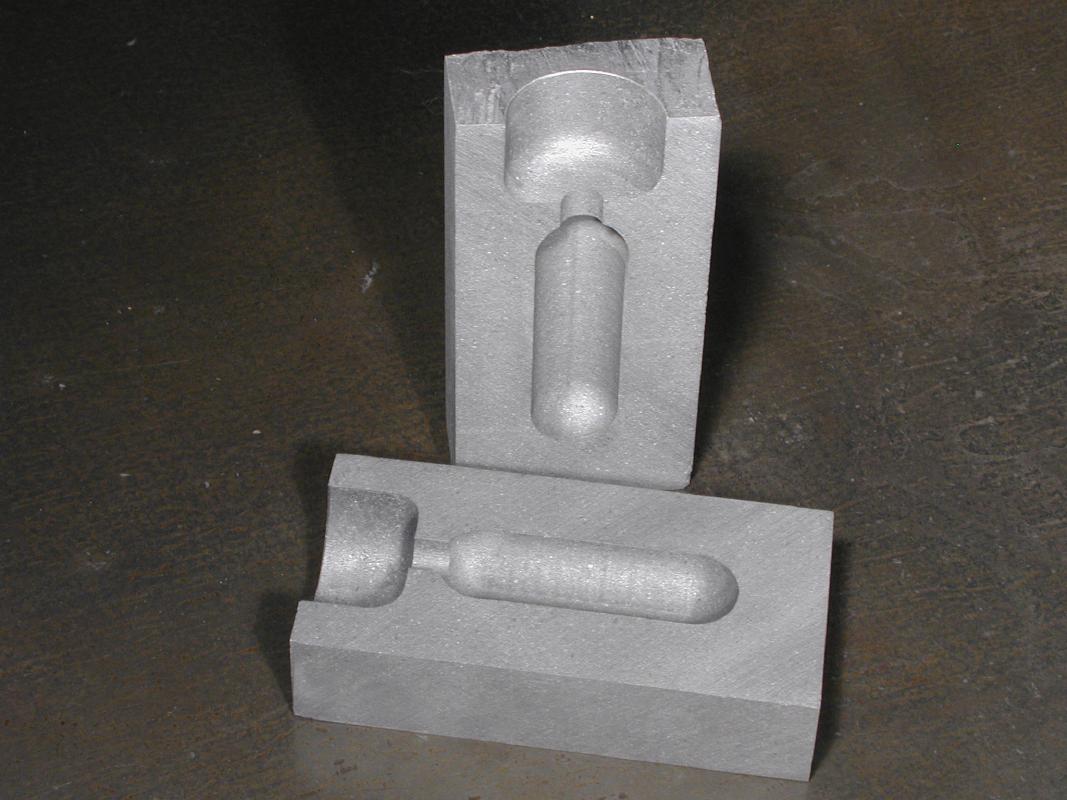
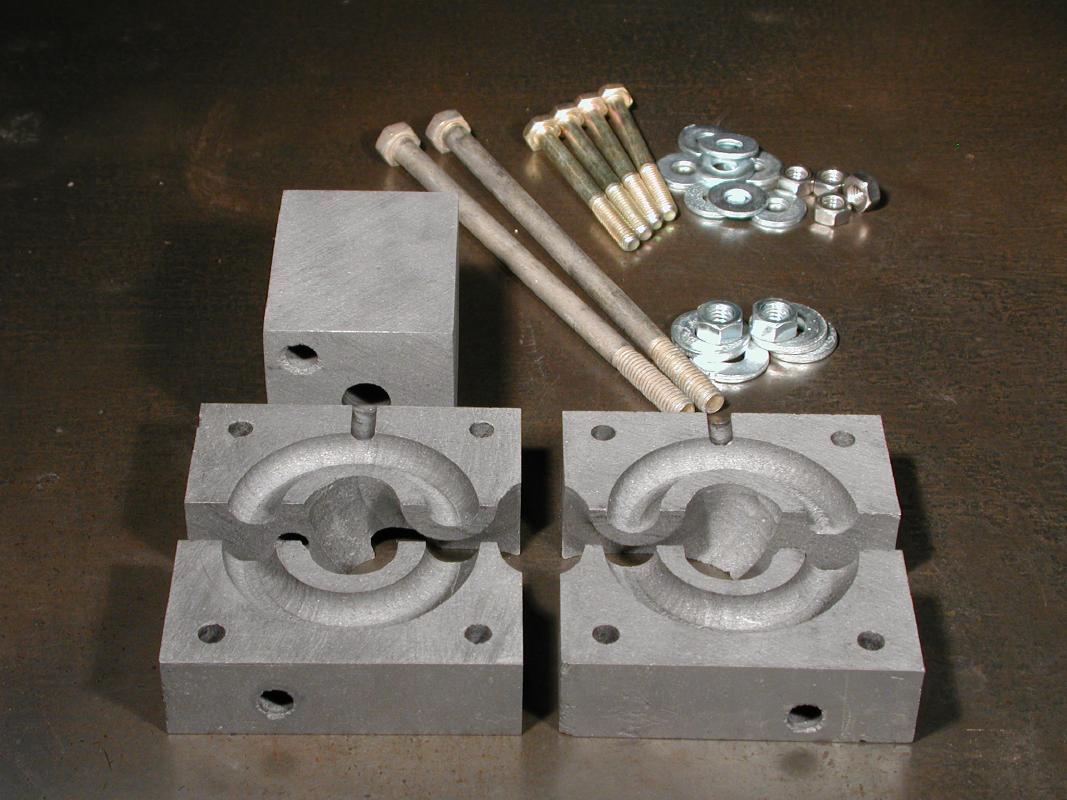
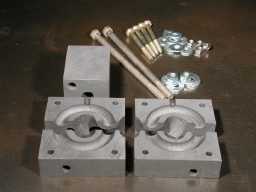
I had been wondering about how hard it would be to make a multi-part graphite mold with which I could cast chain links around each other. That is, given an existing link, cast a new one interlinked with it. This turns out to be quite do-able: Here is the mold I made (using my drill press as a vertical mill and a round-ended router bit):
 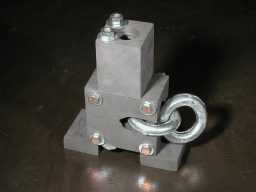
In case you ever want to try this, I'll give you an important hint: The third link is the real test, not the second one.
Using this mold I have cast a chain out of all the metals I can easily cast. Click the Sample Group link below to see all the links together.
Making the iron link was definitely the most exciting, because I did it with thermite, the only practical home method of making molten iron. (Iron is basically impossible to melt and cast without very special equipment, but see some of the other samples above for a description of the thermite process, which creates molten iron on demand.) The video for this sample shows the casting process in action: It's worth a look. Amazingly, the mold actually survived and went on to make more links after iron. (By the way, for heaven's sake don't try making thermite yourself unless you really know what you are doing. It could be very dangerous. For example, the first time I tried it, it exploded sending molten steel 20 feet in every direction. Fortunately, I figured something like that might happen so I didn't get hurt. If you were to try making thermite without also assuming something like that might happen, you could be very badly burned and if you were not wearing safety glasses, you might very well spend the rest of your life blind.)
This chain (counted as one sample) is the 600th sample added to my collection.
Source: Theodore Gray
Contributor: Theodore Gray
Acquired: 9 August, 2003
Text Updated: 20 February, 2006
Price: $1/pound
Size: 3"
Purity: >90%
Sample Group: Multi-metal Chain
|
|
|
|
|
|
|
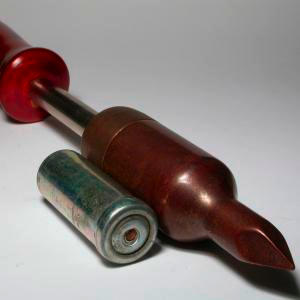
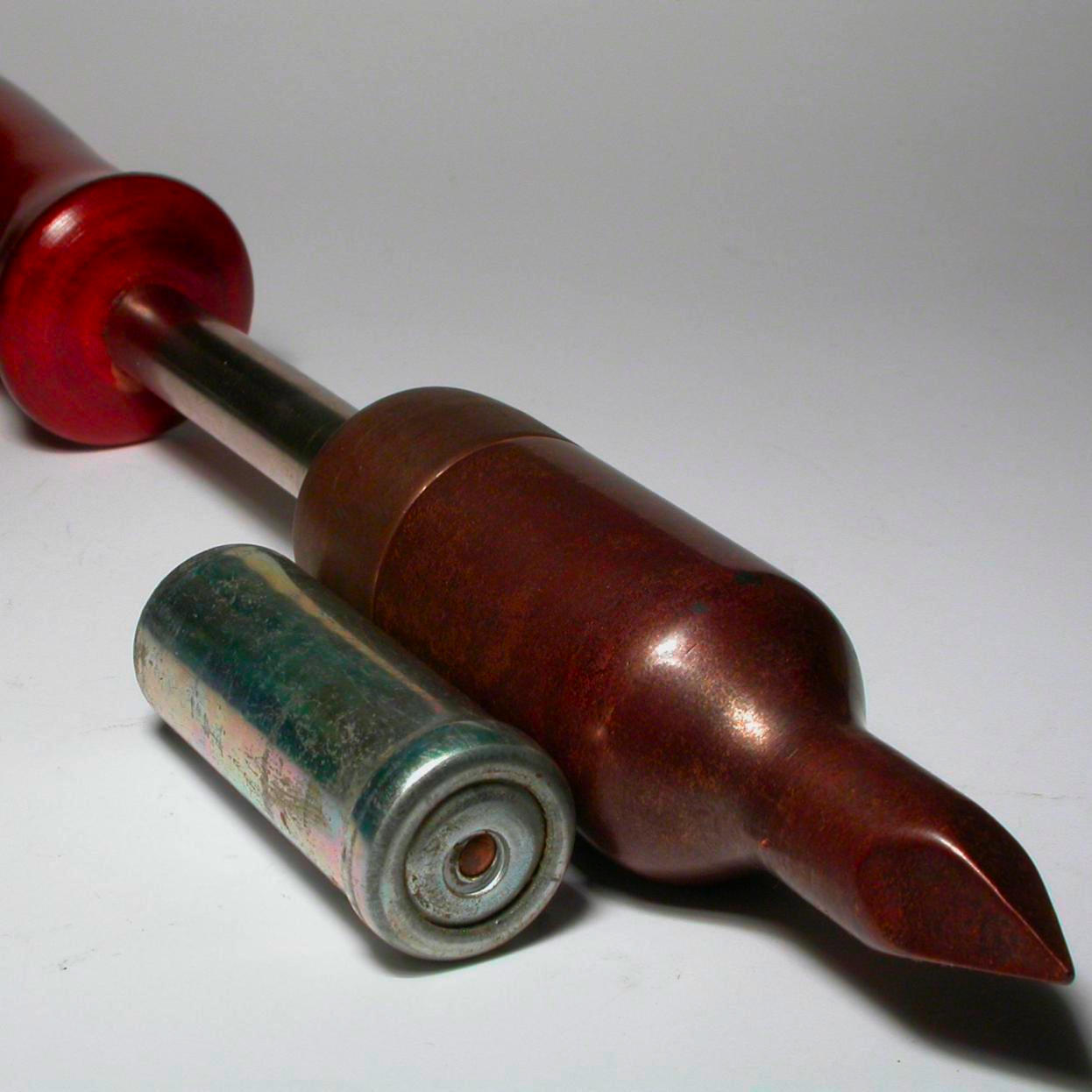
Thermite-powered soldering iron.
I've heard of butane-powered portable soldering irons (even have one) but this is the first I've heard of a thermite powered one. Actually, though it was sold as thermite-powered, nothing in the box or instructions actually says so explicitly. It definitely can't be plain thermite, which would melt the end of the thing right off. But some variation of thermite with a moderator to slow down and cool reaction would make sense. If anyone knows what it really is, I'd be interested!
In operation, the cartridge is placed in the head and the firing pin on the back is pulled and released to set off whatever it is. I have only one cartridge, and no, I'm not going to try it.
Source: eBay seller greatresults
Contributor: Theodore Gray
Acquired: 21 August, 2003
Price: $22
Size: 10"
Purity: 20%
|
|
|
|
|
|
|
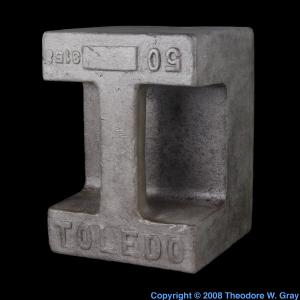
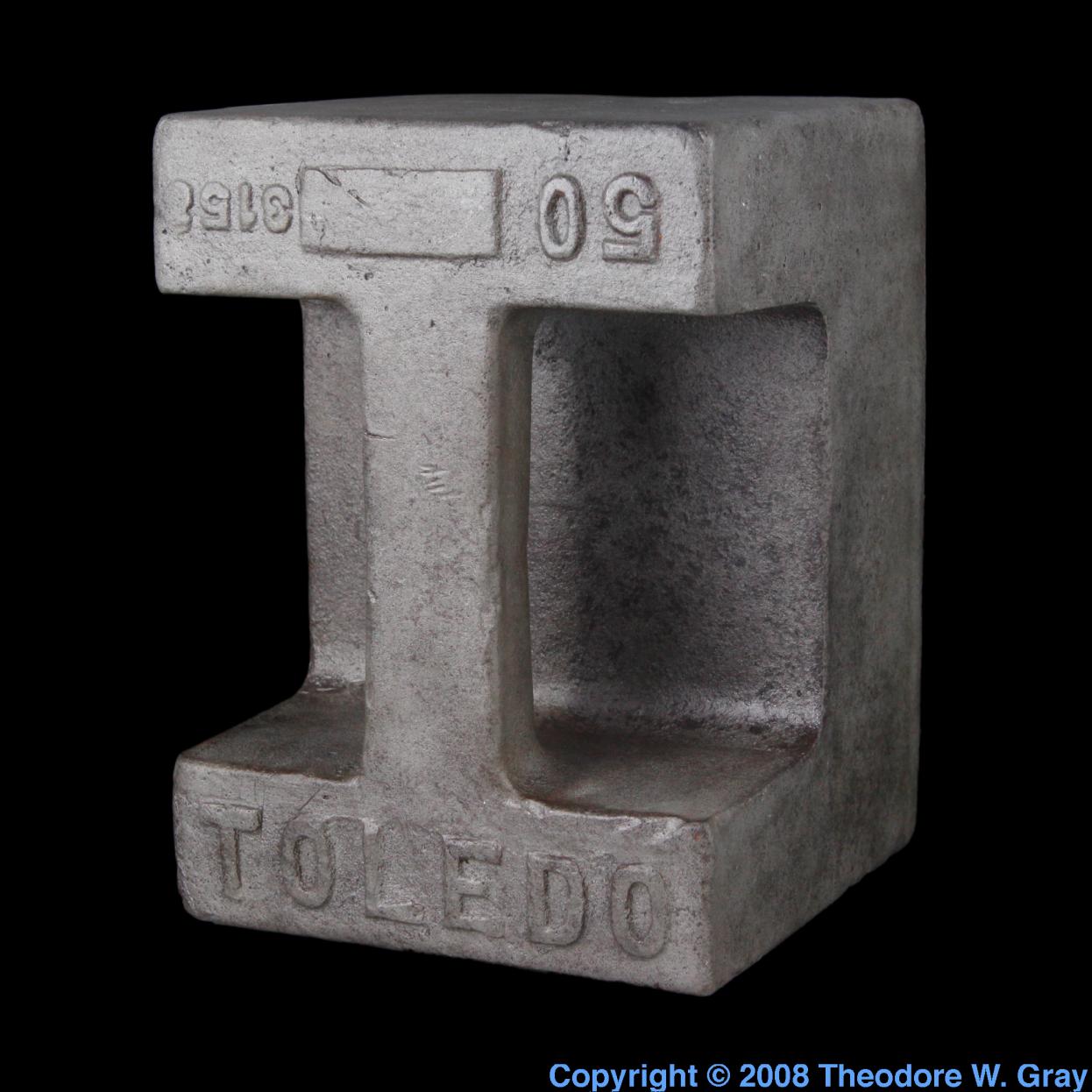
 50 pound weight. 50 pound weight.
This is a 50 pound cast iron weight intended for a large pan balance, or possibly as a calibration weight. It came from the liquidation auction of an Amish welding operation near Arthur Illinois. As a sample of iron it's ideal because it's using the element simply for the that fact of its being there, for its weight.
I wrote a story about this auction: Click the storybook icon for this sample to read about this quite interesting auction.
Source: Herschberger Welding Auction
Contributor: Theodore Gray
Acquired: 14 September, 2003
Price: $25
Size: 8"
Purity: 95%
|
|
|
|
|
|
|
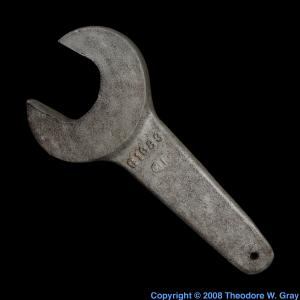
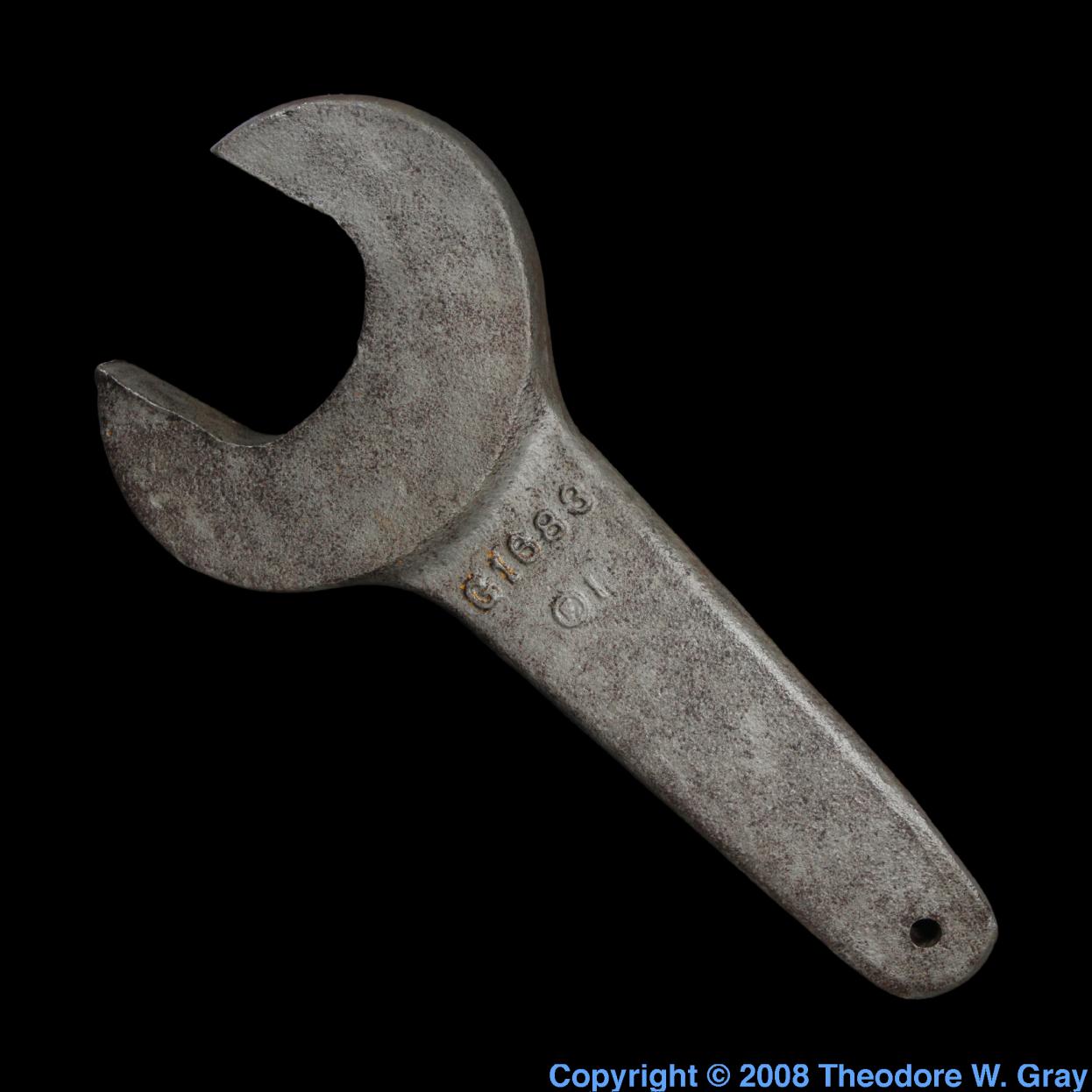
Really big wrench.
This is a really, really big wrench from the same auction as the weight above. It has a stubby handle that you are meant to slip a large pipe over to get enough leverage.
Source: Herschberger Welding Auction
Contributor: Theodore Gray
Acquired: 14 September, 2003
Price: $10
Size: 12"
Purity: 95%
|
|
|
|
|
|
|
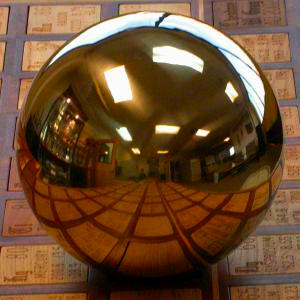
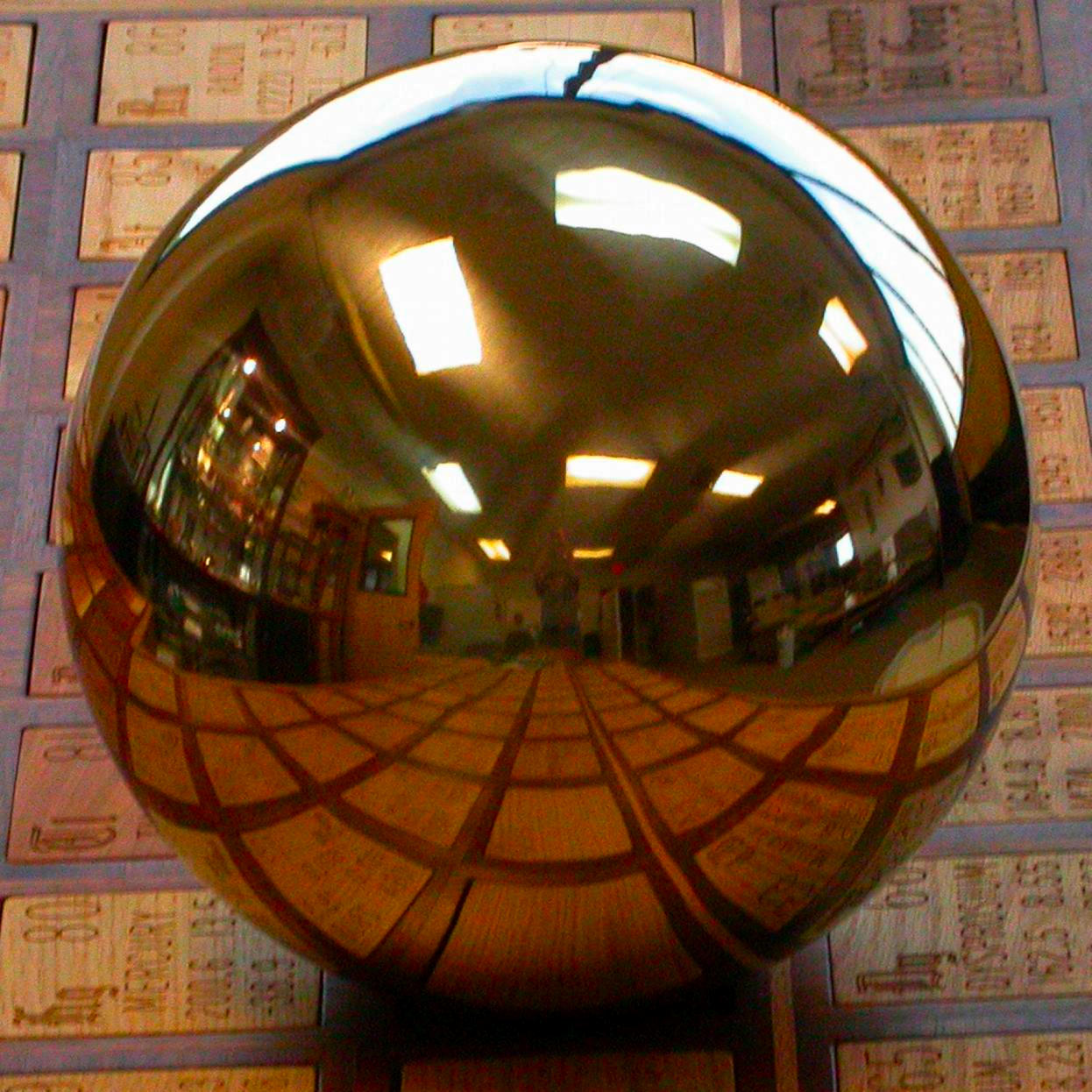
Gazing ball.
This is a stainless steel ball 12" in diameter. It's intended to be used in a garden as a gazing ball, but I like it because it's a great contrast to the several very heavy samples I store on the floor near the Table. Being hollow, it only weighs a few pounds, compared to 50 or more for the other floor samples. It surprises people.
Source: outdoordecor.com
Contributor: Theodore Gray
Acquired: 14 September, 2003
Price: $40
Size: 12"
Purity: 75%
|
|
|
|
|
|
|
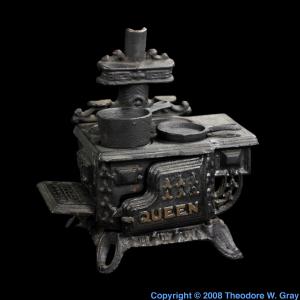
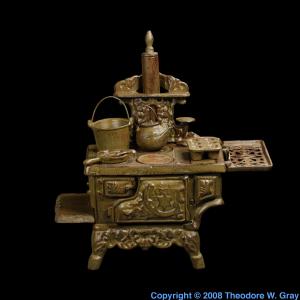
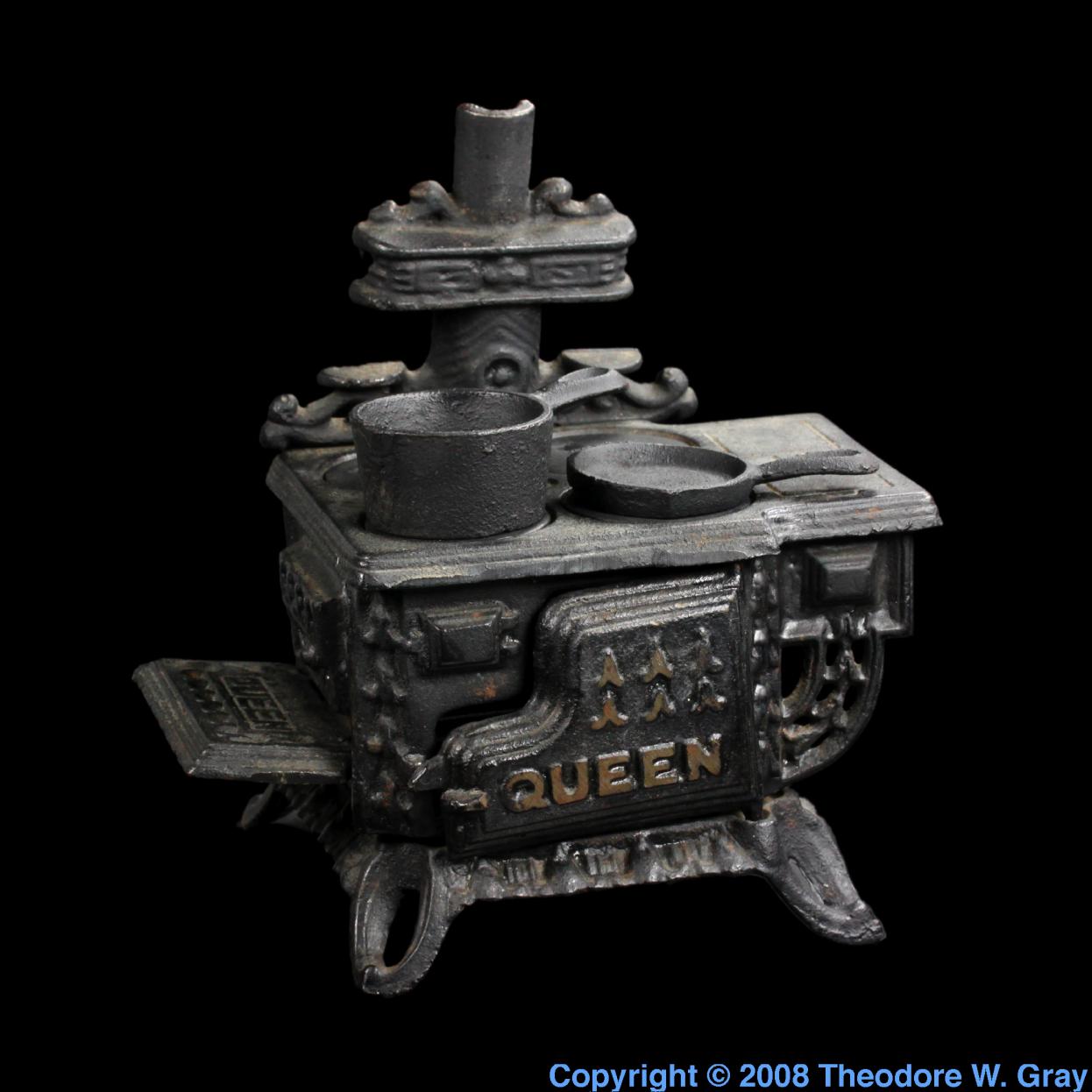
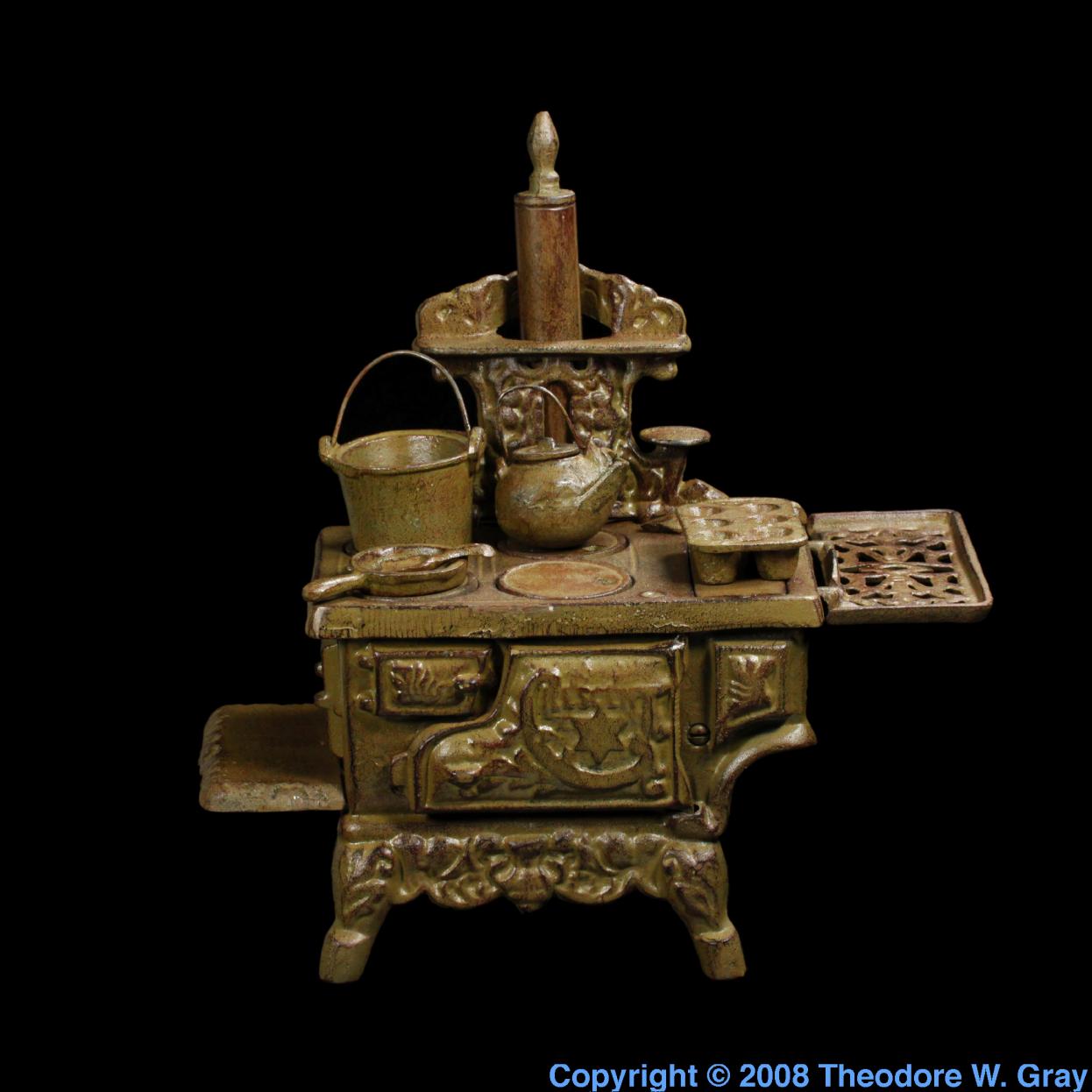
Mini cast iron stove.
This is a "salesman's sample" miniature cast iron stove. Salesmen would carry a (heavy) suitcase of these around to show the housewives the latest models of wood stove.
I have a feeling this one might be a relatively modern reproduction, because the pans are labeled "TAIWAN" on the bottom. I'm no expert, but I doubt that such an item would have been made in Taiwan in the 1800s. Of course I could care less whether it's old or new: Either way it's a really neat little mini-stove, and it's definitely cast iron.
Source: eBay seller yesterdaisys
Contributor: Theodore Gray
Acquired: 20 September, 2003
Price: $10
Size: 6"
Purity: 95%
|
|
|
|
|
|
|
|
|
|
Cheap ball bearings.
If you look around long enough, eventually you can find a cheap source of almost anything. It turns that in the case of ball bearings, the secret word is "slingshot ammunition". These may not be very high-precision, but they are many times cheaper than those sold for actual use in actual bearings.
Source: Cabelas
Contributor: Theodore Gray
Acquired: 26 September, 2003
Price: $15/400
Size: 3/8"
Purity: 99%
|
|
|
|
|
|
|
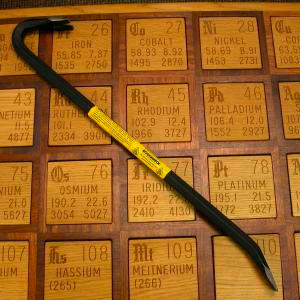
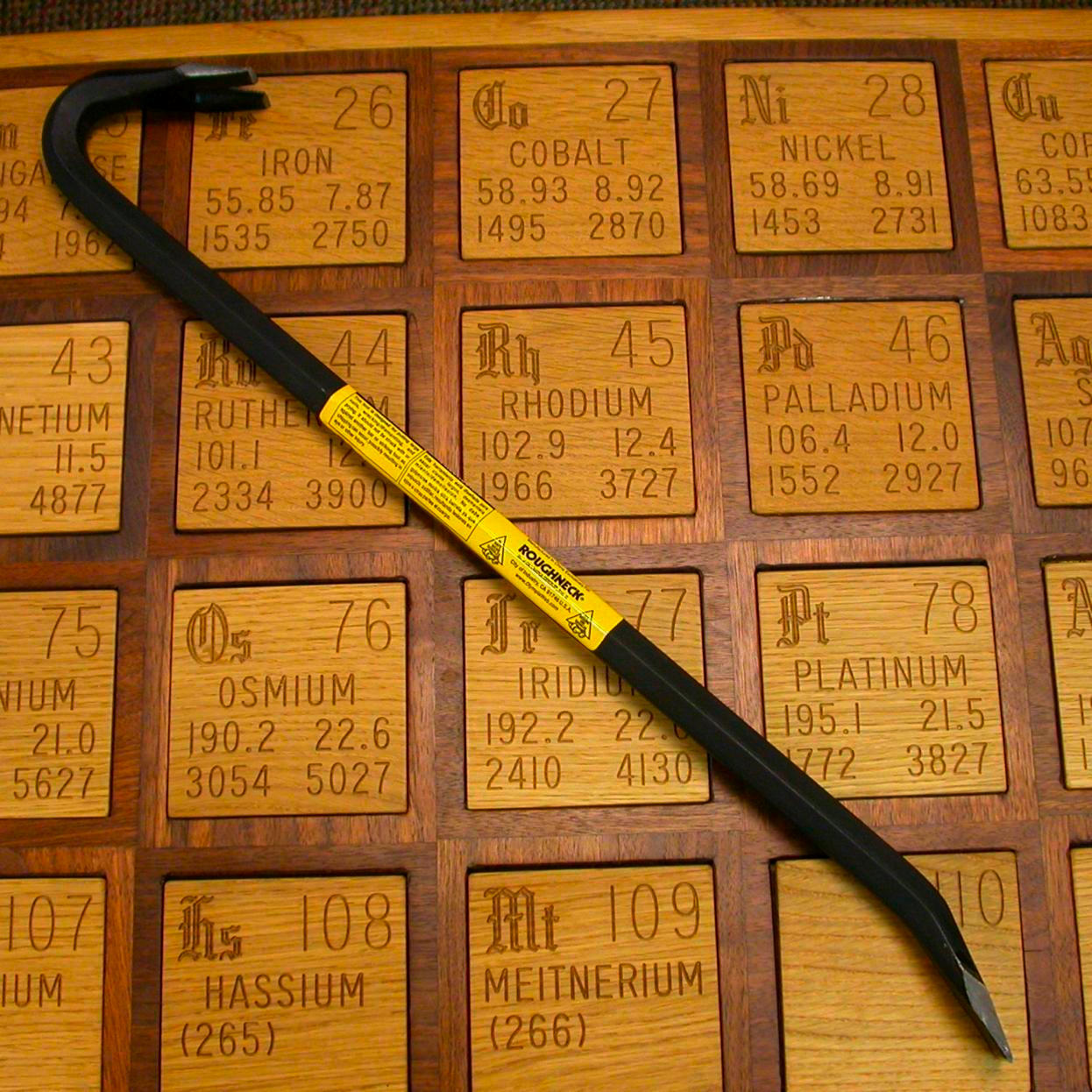
Crowbar.
This is an ordinary iron crowbar, nothing special about it except that it's a nice contrast to my titanium crowbar of approximately the same size. I keep them next to each other so people can compare the weight.
Source: Hardware Store
Contributor: Theodore Gray
Acquired: 15 November, 2003
Price: $5
Size: 22"
Purity: 98%
|
|
|
|
|
|
|
|
|
|
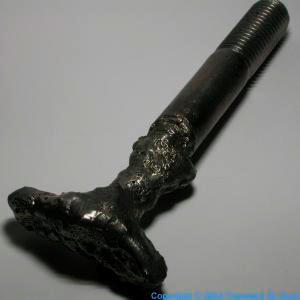
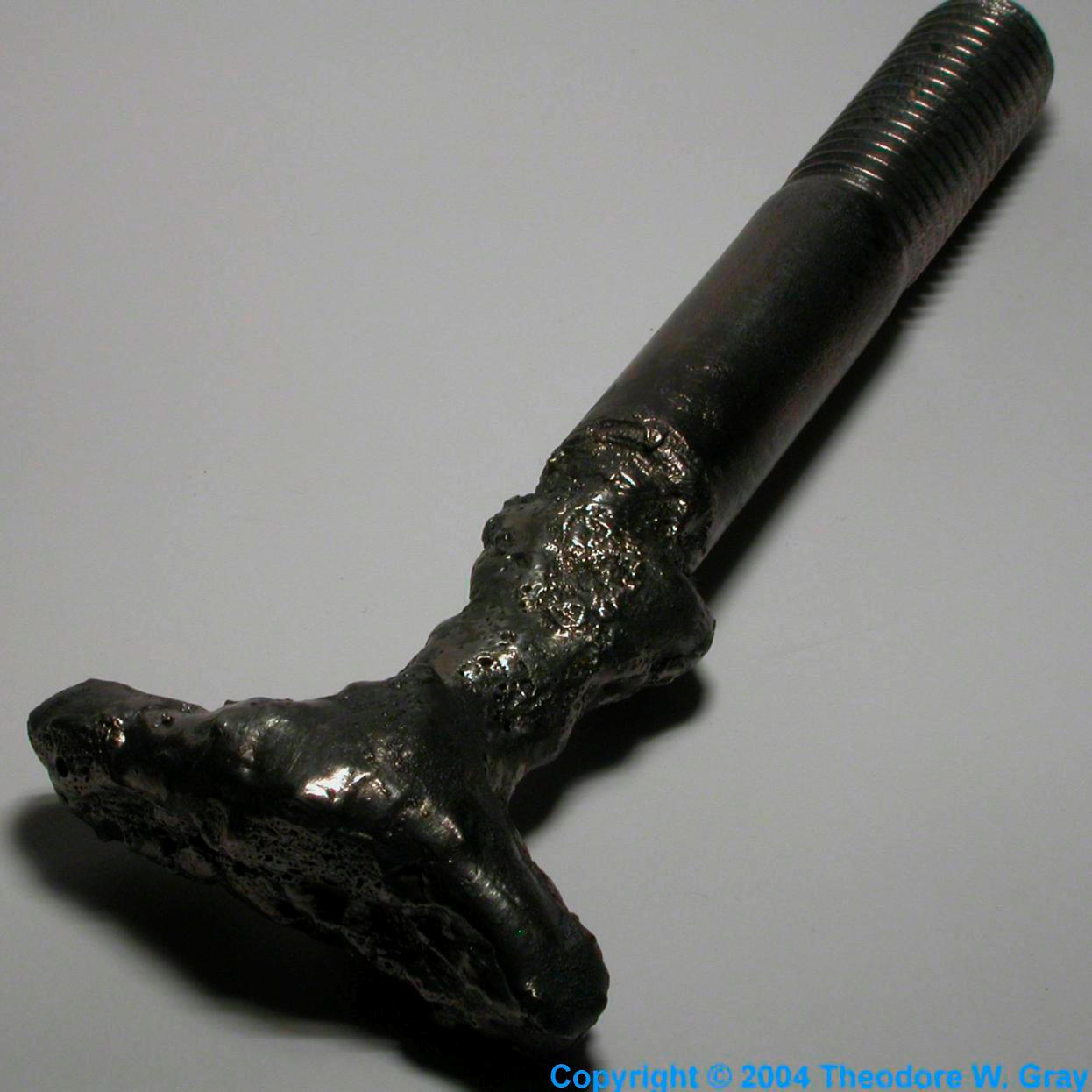
Thermite-cast bolt.
I made this bolt by thermite casting (see earlier iron samples for more details) during a photo shoot for my column in the August issue of Popular Science magazine.
Source: Theodore Gray
Contributor: Theodore Gray
Acquired: 29 March, 2004
Price: Free
Size: 6"
Purity: >90%
|
|
|
|
|
|
|
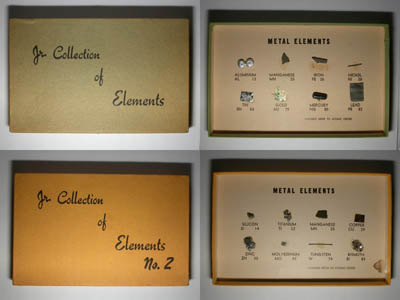
Mini element collection.
This is a nice little set from the 1960's. The enclosed price list indicates it cost a few dollars, and the enclosed mercury sample indicates it predates current environmental concerns! Here's a picture of the whole 2-box set:
Source: Blake Ferris
Contributor: Theodore Gray
Acquired: 15 July, 2004
Price: $61/set
Size: 1"
Purity: >98%
|
|
|
|
|
|
|
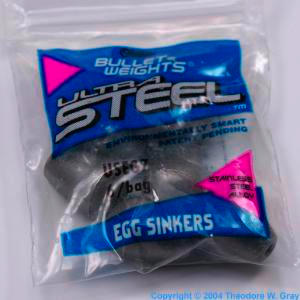
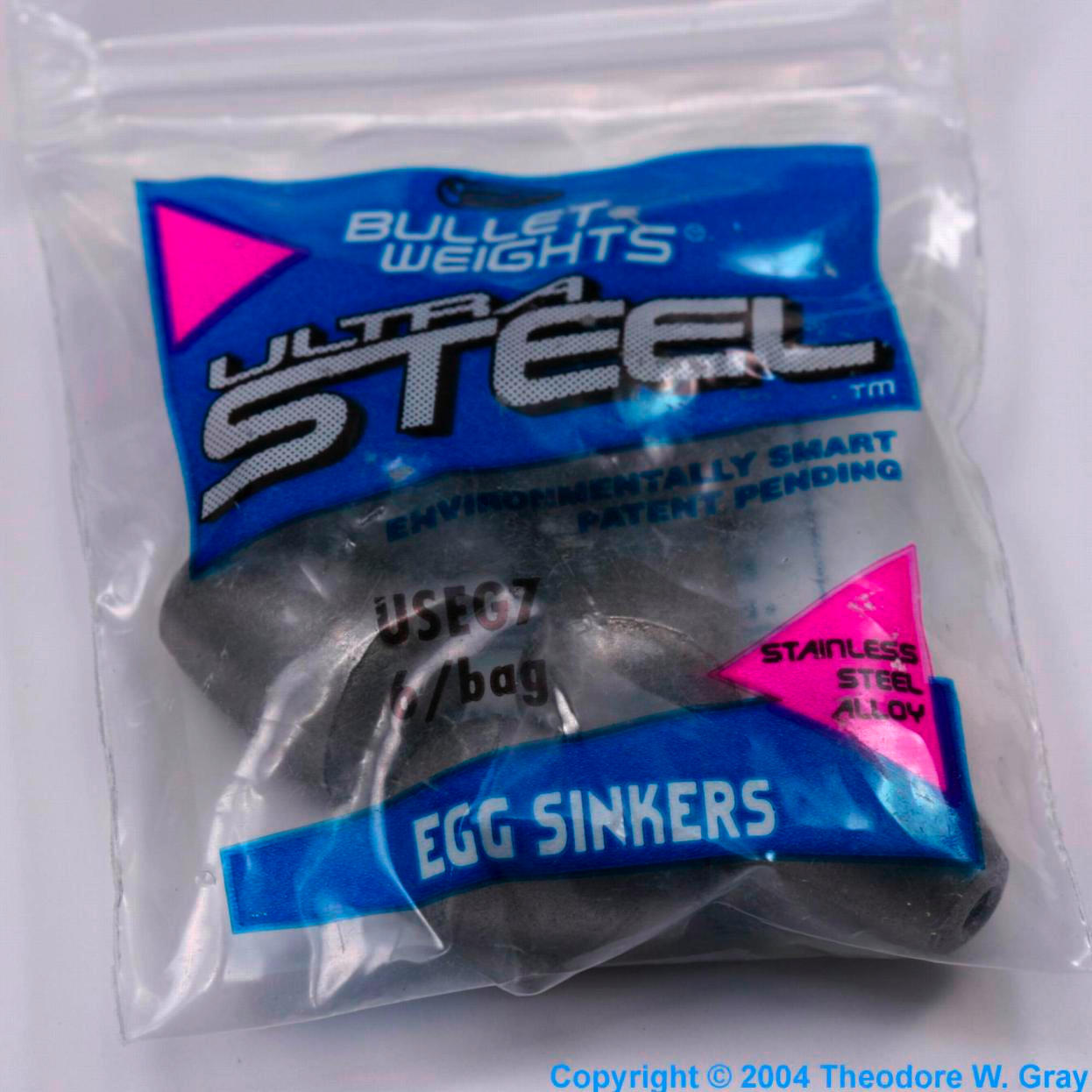
Lead-free fishing weights.
Environmental concerns have prompted a switch from lead to other metals for fishing sinkers. Click the sample group link below to see what metals have been used.
Source: Walmart
Contributor: Theodore Gray
Acquired: 15 July, 2004
Price: $1.50
Size: 0.5"
Purity: >95%
Sample Group: Fishing Weights
|
|
|
|
|
|
|
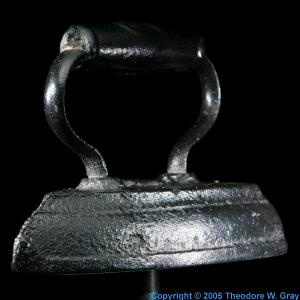
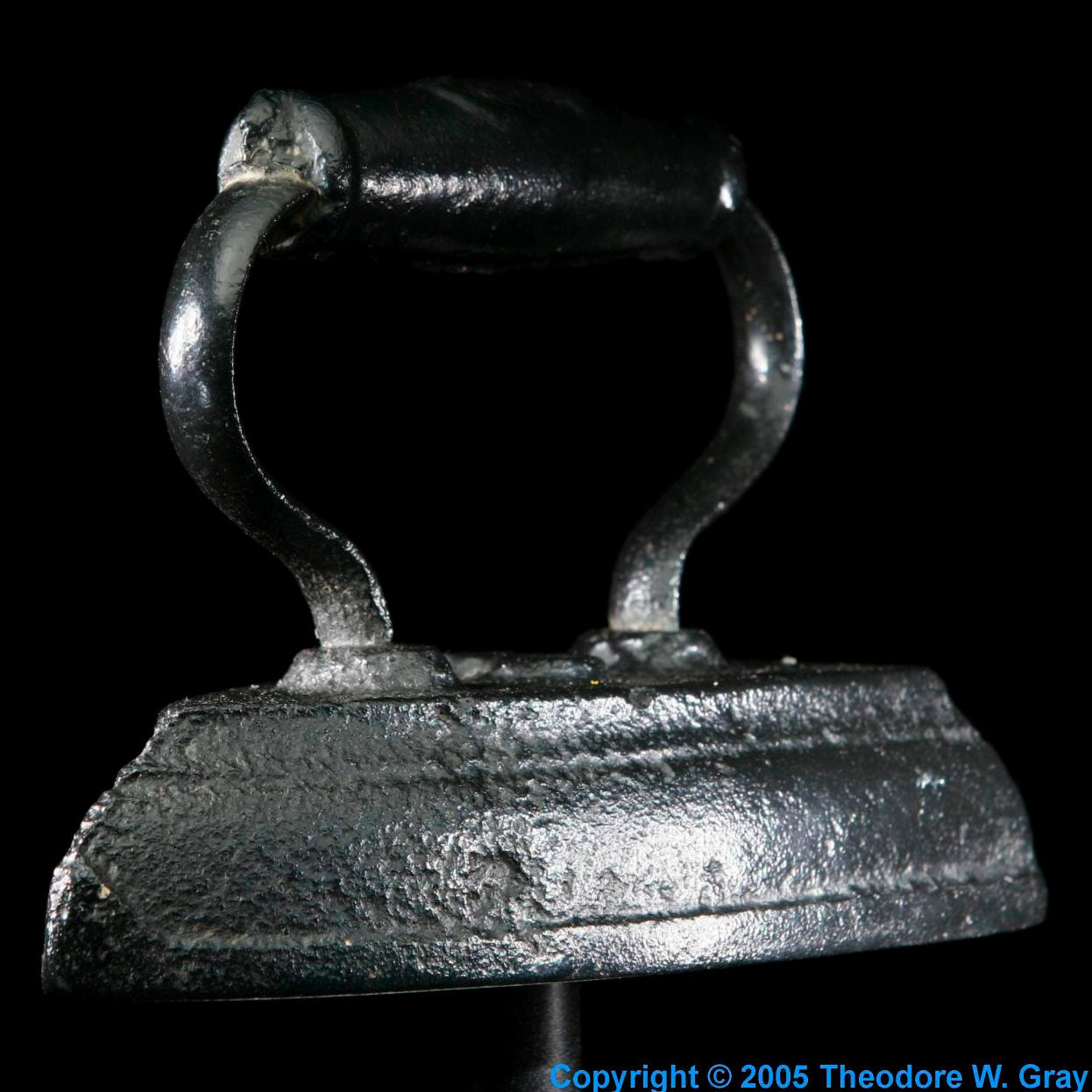
Iron.
An iron made of iron: What of concept! I got this one at the auction of a balloon store going out of business. It's solid iron and quite heavy.
Source: Auction
Contributor: Theodore Gray
Acquired: 24 September, 2005
Price: $10
Size: 7"
Purity: >95%
|
|
|
|
|
|
|
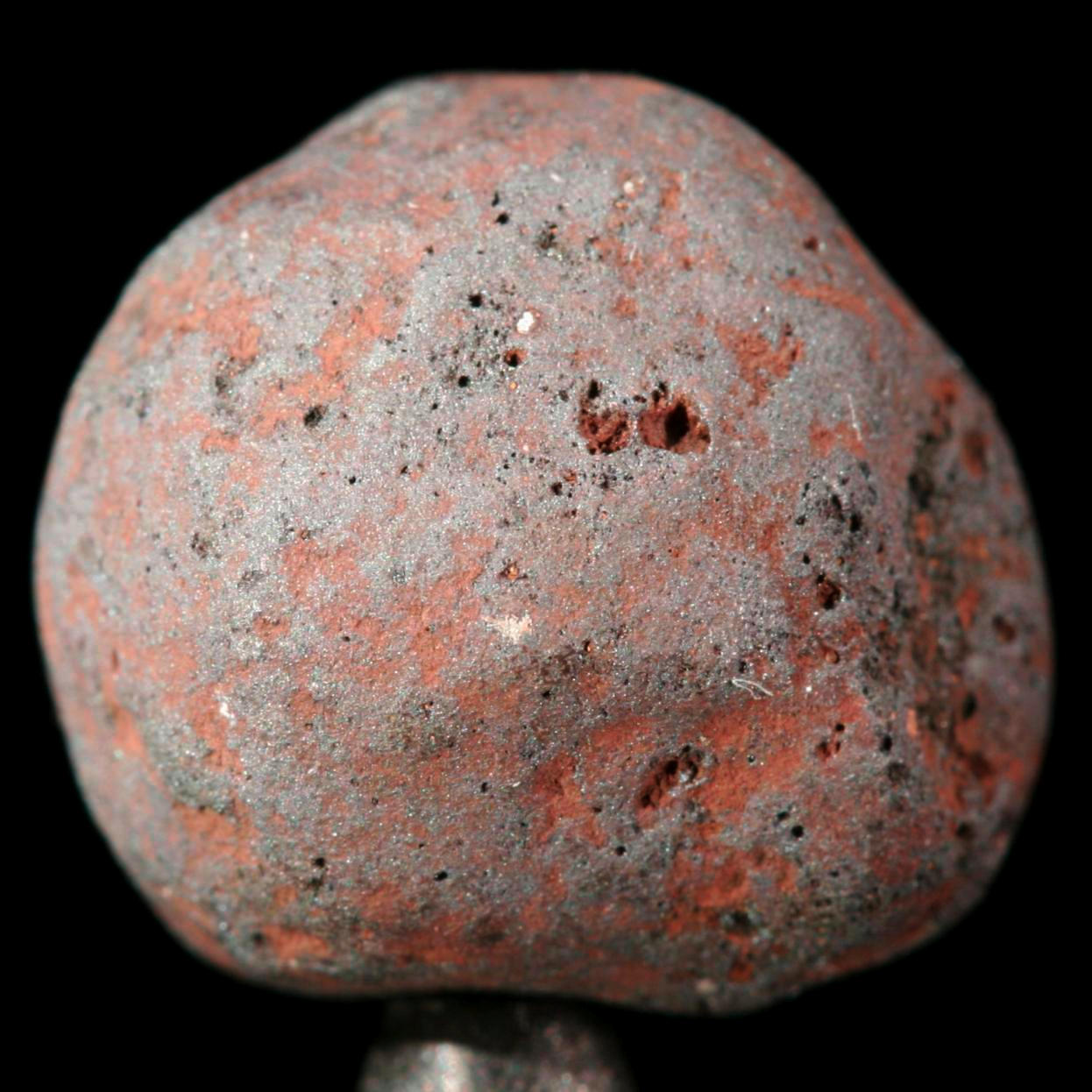
Pressed powder balls.
These are said (by the reputable supplier) to be iron powder from northern Michigan pressed into balls for shipment to smelters.
Source: SoCal (Nevada), Inc
Contributor: Theodore Gray
Acquired: 5 October, 2005
Price: $7
Size: 0.5"
Purity: >95%
|
|
|
|
|
|
|
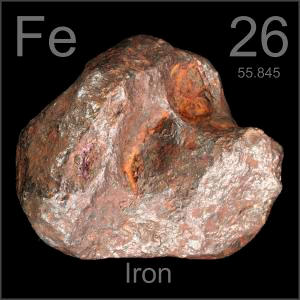
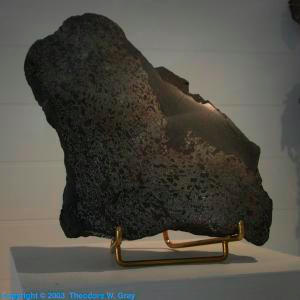
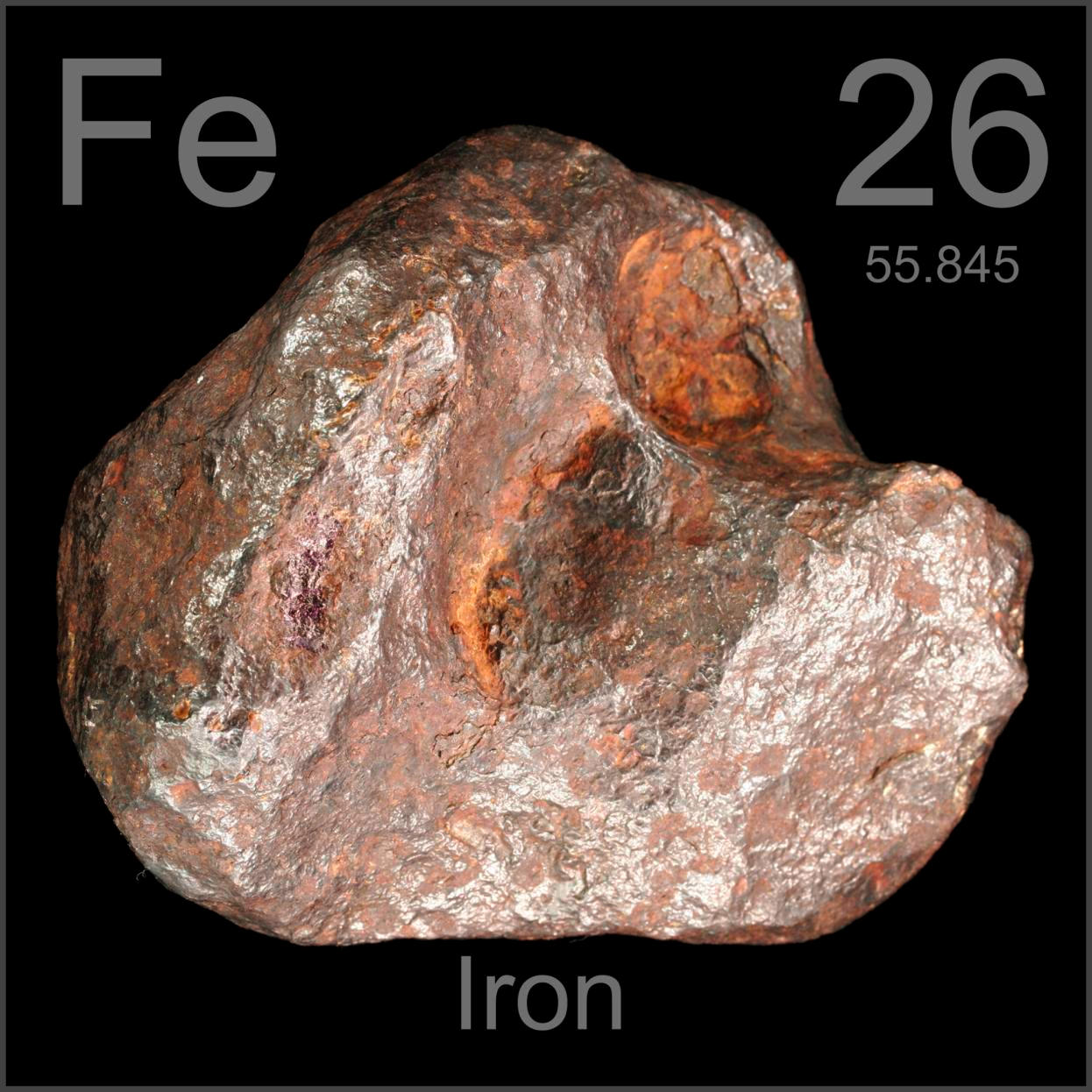
Meteorite.
This meteorite is part of a large one, known as Toluca, which fell in ancient times in Xiquipilco, Mexico State, Mexico. Known as an "individual", it is a complete chunk that broke off the main piece as it was falling to earth. This particular chunk was at one point in the collection of Oscar Monnig, and was given his catalog number M8.137. I don't know when this chunk was found, but samples first started making their way out of Mexico in the late 1700's.
This is one of the most expensive samples in my collection, but it's also one of the most fascinating. It's a real live space rock, a chunk of a failed planet that you can hold in your hand. How can you put a price on that? (Easy: eBay can put a price on anything.)
The outside surface is smooth, presumably from melting during fall. If this piece were cut in half (heaven forbid!), the inside would probably look a lot like the sample below.
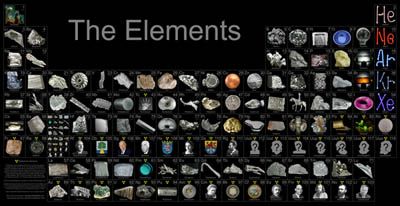
I chose this sample to represent its element in my Photographic Periodic Table Poster. The sample photograph includes text exactly as it appears in the poster, which you are encouraged to buy a copy of.
Source: eBay seller meteoritesandmore
Contributor: Theodore Gray
Acquired: 10 October, 2005
Text Updated: 11 August, 2007
Price: $1000
Size: 5"
Purity: >90%
|
|
|
|
|
|
|
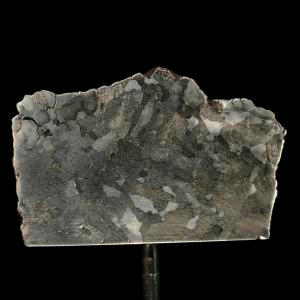
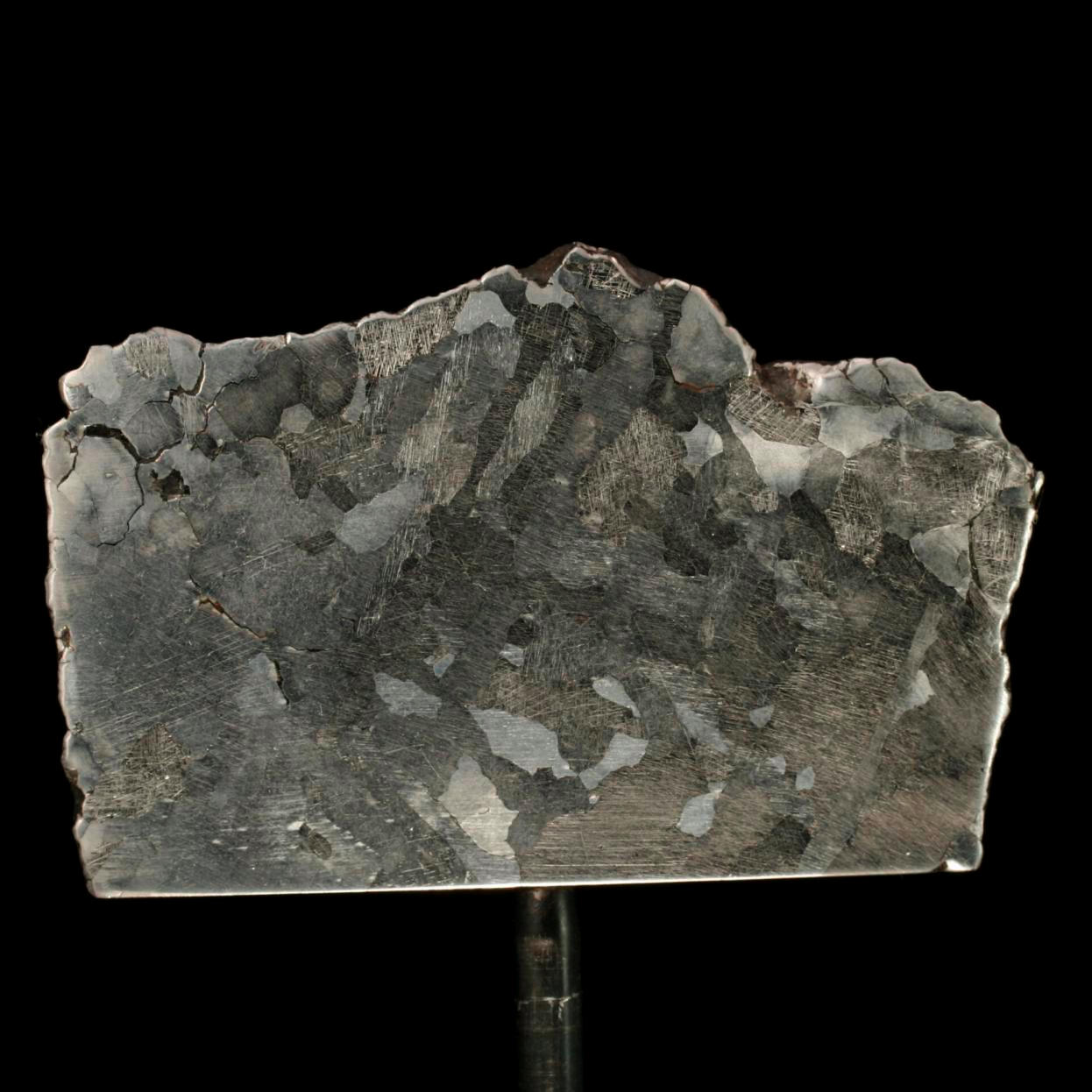
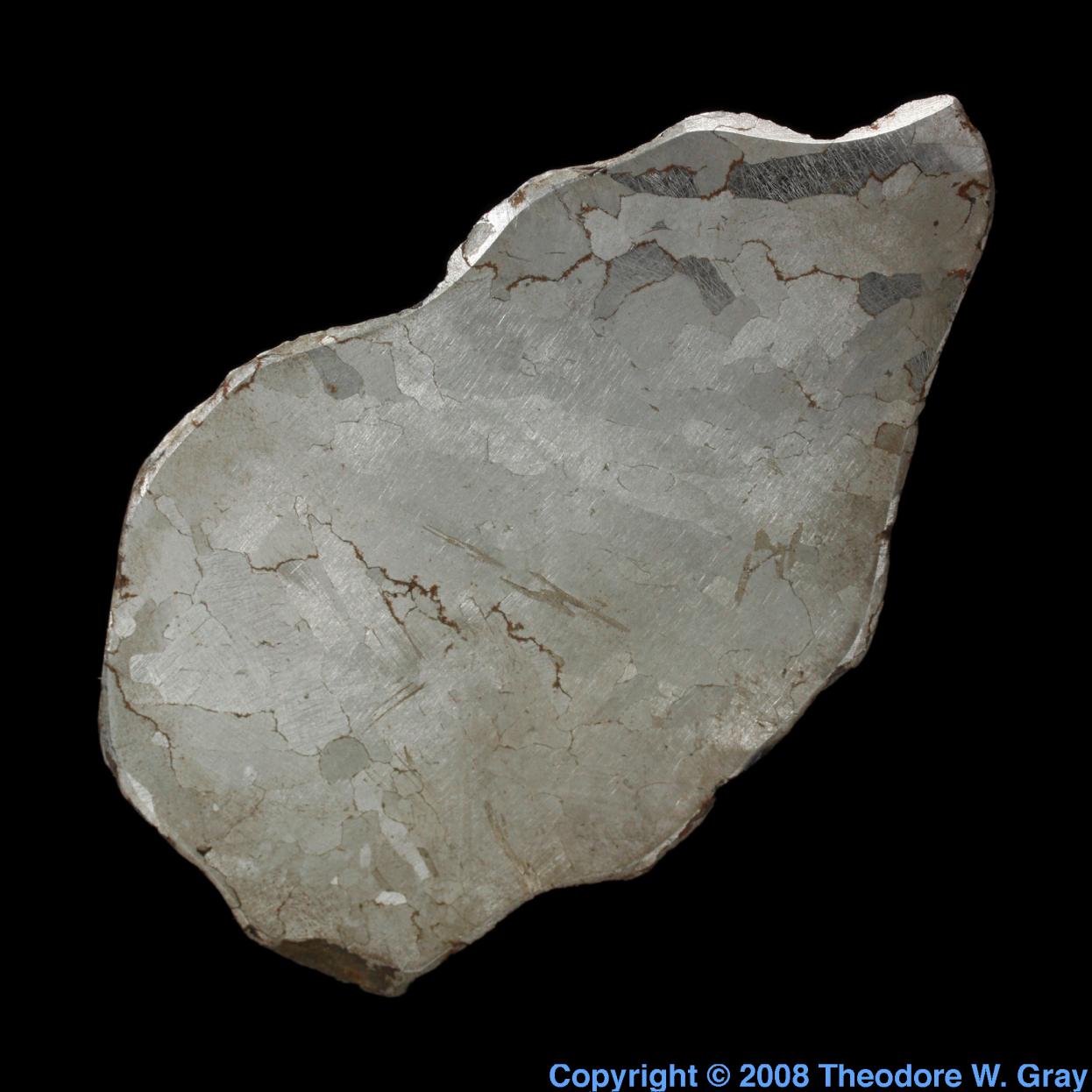
Large meteorite slice.
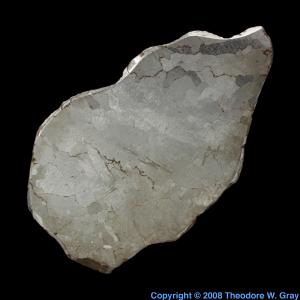
This is a 1/4" thick slice from the Campo del Cielo Iron Meteorite from Chaco, Gran Chaco Gualamba Argentina. Like the full chunk above from Mexico, it is a course iron octahedrite, so there's a good chance that the inside of the one from Mexico looks similar to this one. The surface has been etched with acid (a common technique) to make the crystal zones visible.
Source: eBay seller lee1414
Contributor: Theodore Gray
Acquired: 10 October, 2005
Price: $39
Size: 4"
Purity: >90%
|
|
|
|
|
|
|
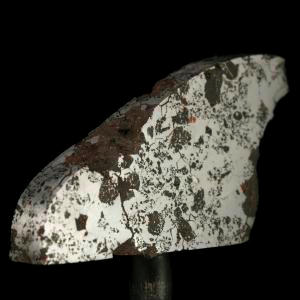
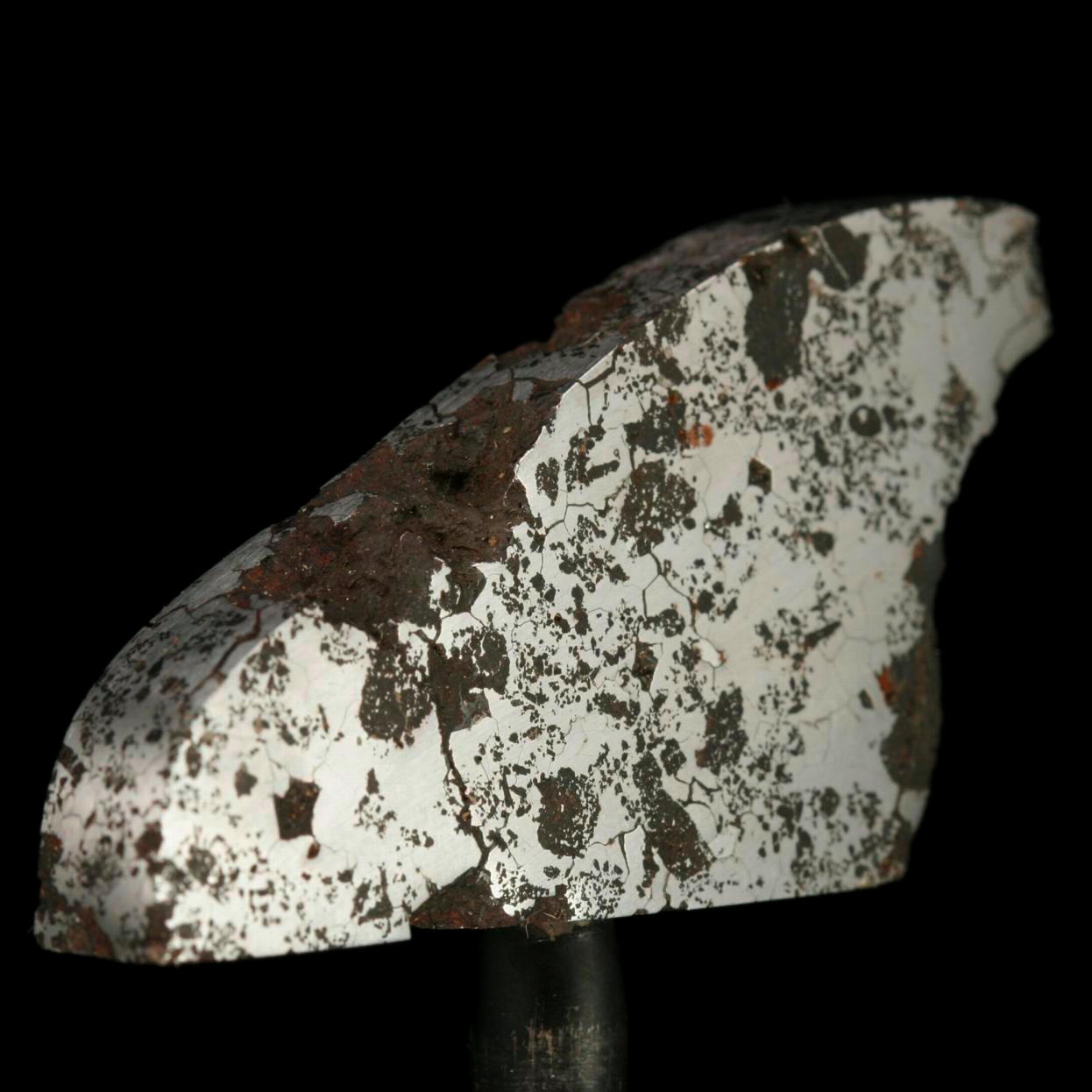
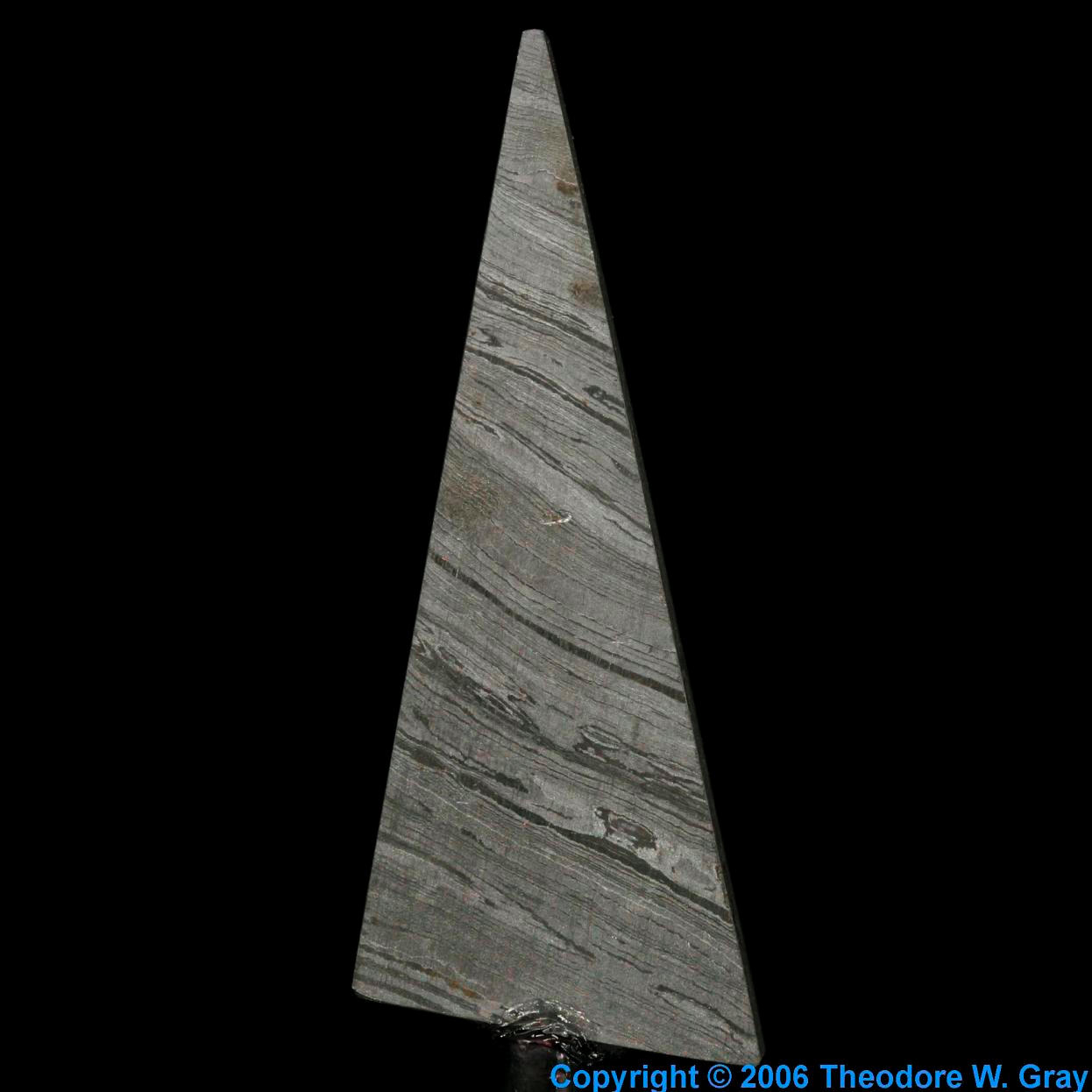
Silicated iron meteorite slice.
One of the really neat things about meteorites is that often the exact time and place they fell out of the sky is known, because people don't forget when something like that happens. This slice is from the "Lueders" meteorite of 1973, which fell in a cotton field outside Lueders in Shackleford County, Texas. It is a class IAB silicated iron meteorite, and this slice weighs weighs 34.9 grams.
A strange properly of meteorite collectors is that they have no qualms about cutting the meteorites, which I would personally consider to be historical artifacts, into dozens of small slices and trading them with each other. For example, a total of 34.5 kilograms of this particular meteorite has been recovered, but it's typically sold in 10 to 100 gram slices, which means that what used to be a solid chunk of iron is now dispersed into something like a thousand pieces. (For example, my slice is almost exactly 1/1000 of the original.) It seems odd to me: They don't cut Napoleon's coat into one inch squares of cloth so everyone can have a piece, but I guess it's a cultural thing.
I have noticed another thing about meteor collectors: People who bid on meteorites on eBay are sophisticated users of sniping services (which place your bid seconds before the end of the auction so no one can respond by raising their bid). This is not an issue when bidding for most other sorts of element samples (which of course means that, as a user of a sniping service, I have an advantage), but if you're trying to win a meteorite, expect the price to skyrocket in the last few seconds of the auction.
Source: eBay seller meteoritesandmore
Contributor: Theodore Gray
Acquired: 10 October, 2005
Price: $180
Size: 1.5"
Purity: >90%
|
|
|
|
|
|
|
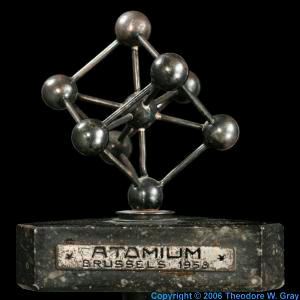
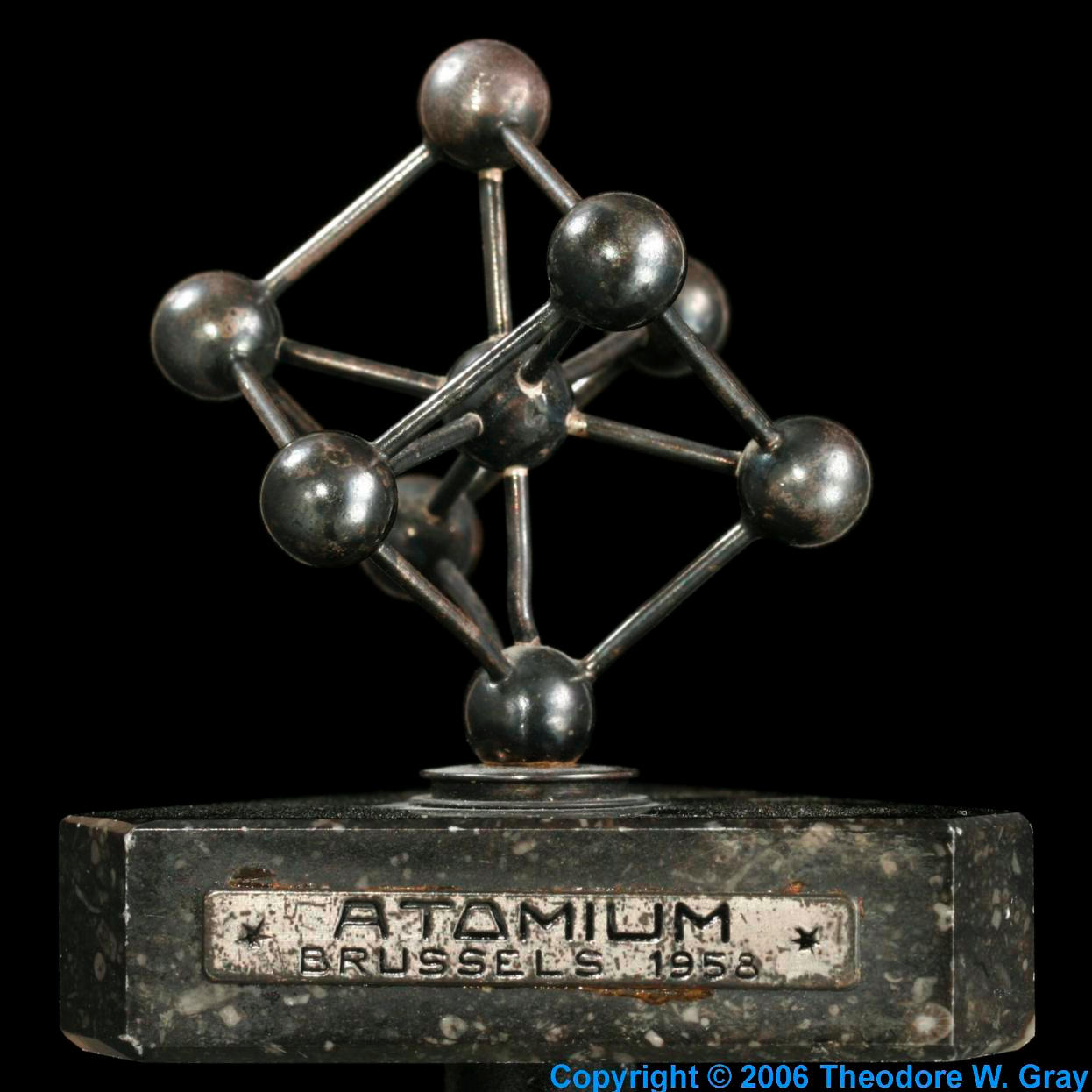
Atomium souvenir.
The Atomium is a very, very strange building (if you can call it that) built for the World's Fair in Brussels, Belgium in 1958. Visit their website to see a lot of pictures of this most peculiar construction. For a while they were selling aluminum panels removed from the building during its renovation in 2005, but I couldn't get one of those, so I had to settle for this souvenir from the grand opening. I have Atomium-related items listed under iron because it is said to have been based on the crystal structure of iron.
Source: eBay seller tnp5659
Contributor: Theodore Gray
Acquired: 10 December, 2005
Text Updated: 11 August, 2007
Price: $40
Size: 3"
Purity: >90%
|
|
|
|
|
|
|
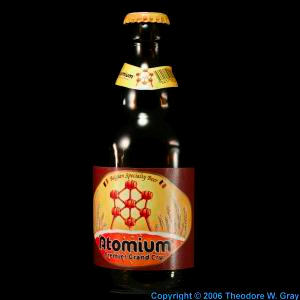
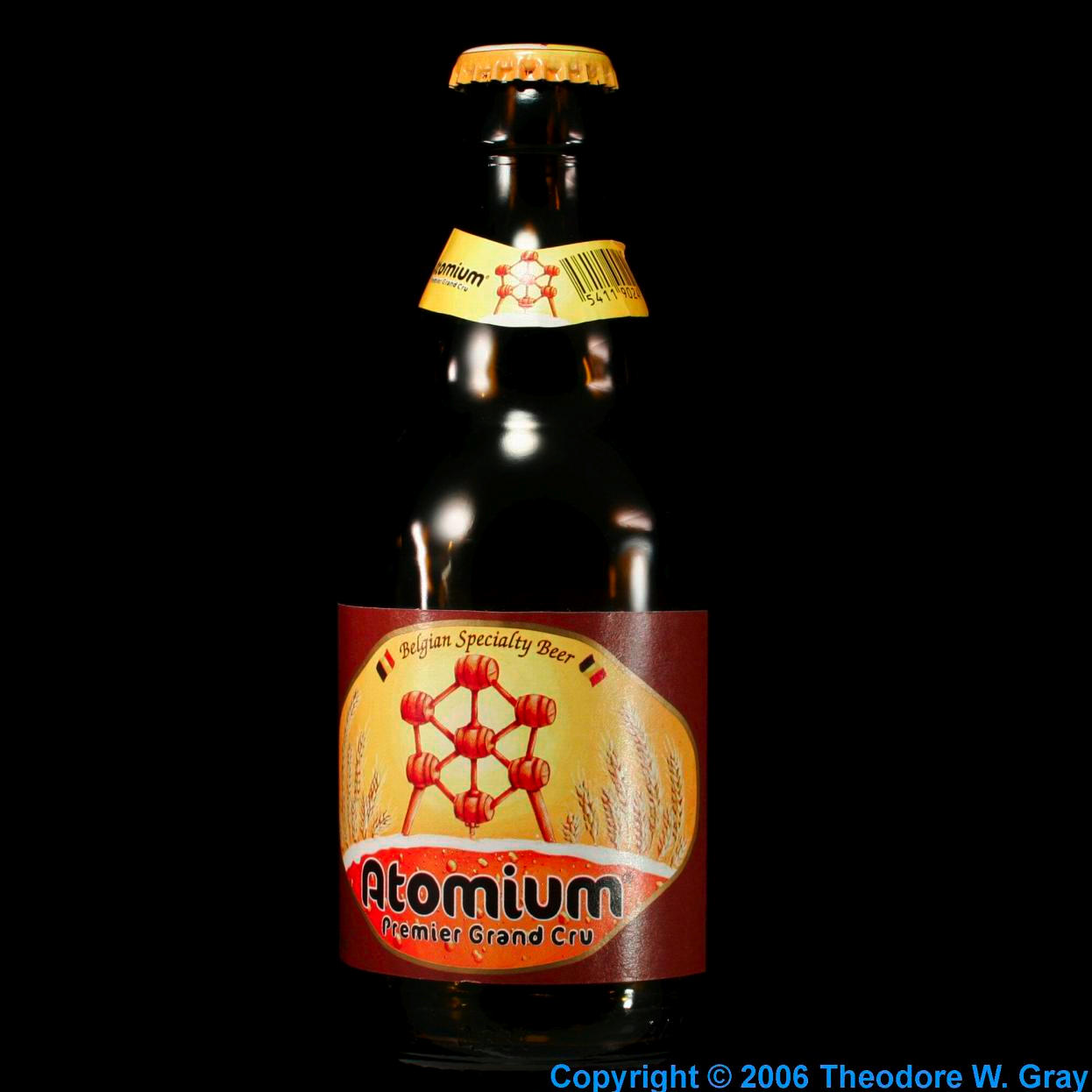
Atomium beer.
See previous sample for more about the Atomium. This sample simply proves that if you build a weird enough building-thingy, someone will inevitably name a beer after it. Or at least, in this case they did.
Source: Chris Carlson
Contributor: Chris Carlson
Acquired: 1 December, 2005
Text Updated: 11 August, 2007
Price: Donated
Size: 7"
Purity: 0%
|
|
|
|
|
|
|
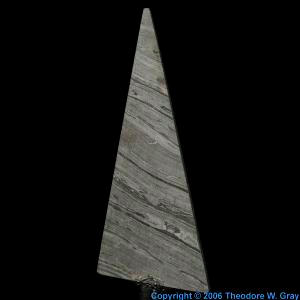
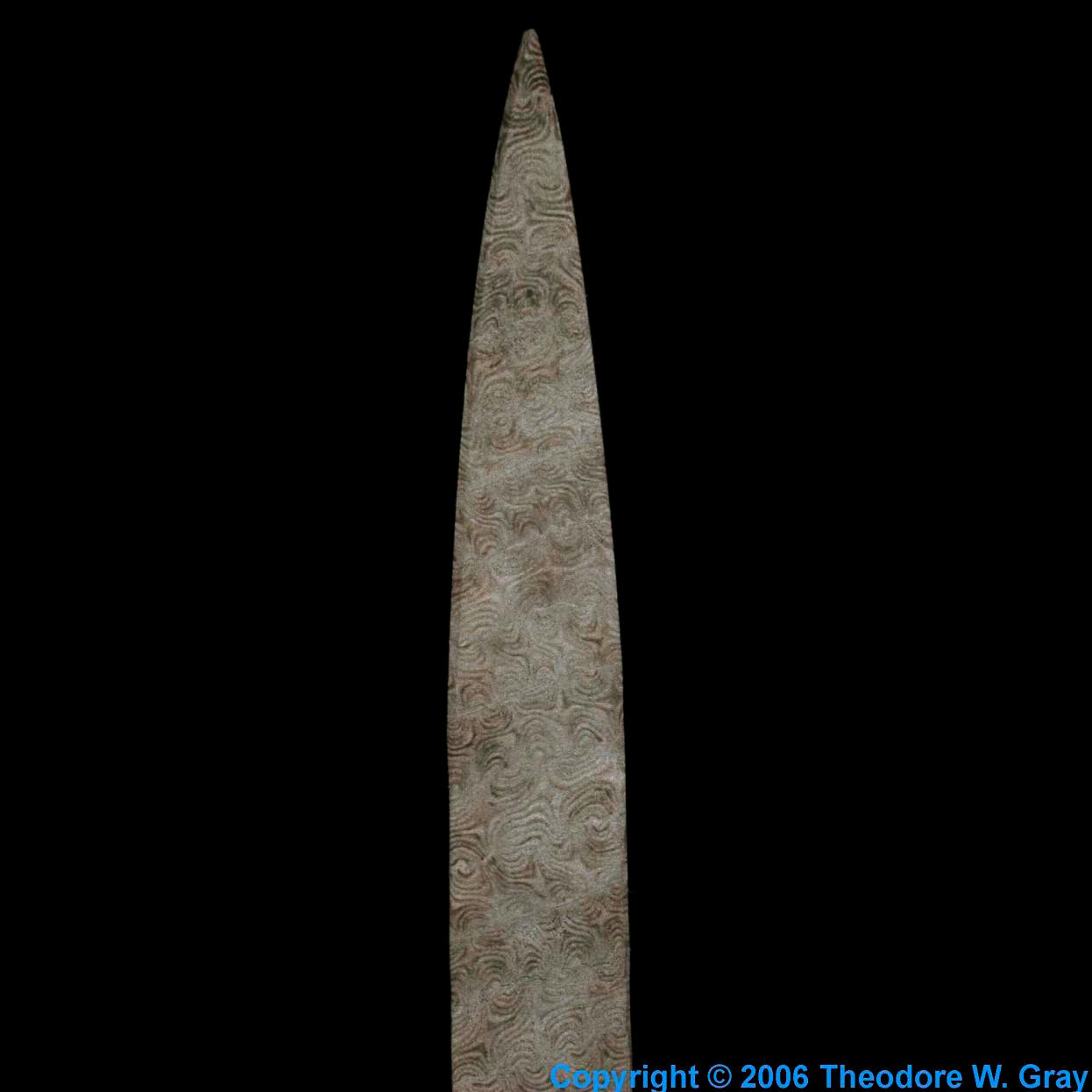
Damascus steel (modern).
Steel is iron plus just the right amount of carbon. Too little and you have soft iron. Too much and you have brittle cast iron. Just right, and you have steel able to slice lesser metals like butter. Mastering the art of getting the mixture just right took literally thousands of years after original discovery of iron. One of the interesting methods people invented to deal with this problem came to be known as Damascus Steel. It is made from alternating layers of high and low carbon steels: The high carbon steel is hard but potentially fragile, the low-carbon steel is tough and resistant to fracturing.
This sample is a modern example made with the pattern-welding technique. It is made in a "twist" pattern out of 1095 and O1 steels with 8% pure nickel twisted in, so says Michael Z. Williamson the author and knife expert who donated this sample to my table.
See below for an example of antique Damascus steel.
Source: Michael Z. Williamson
Contributor: Michael Z. Williamson
Acquired: 1 December, 2005
Text Updated: 11 August, 2007
Price: Donated
Size: 2.5"
Purity: >90%
|
|
|
|
|
|
|
|
|
|
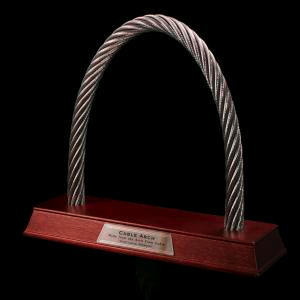
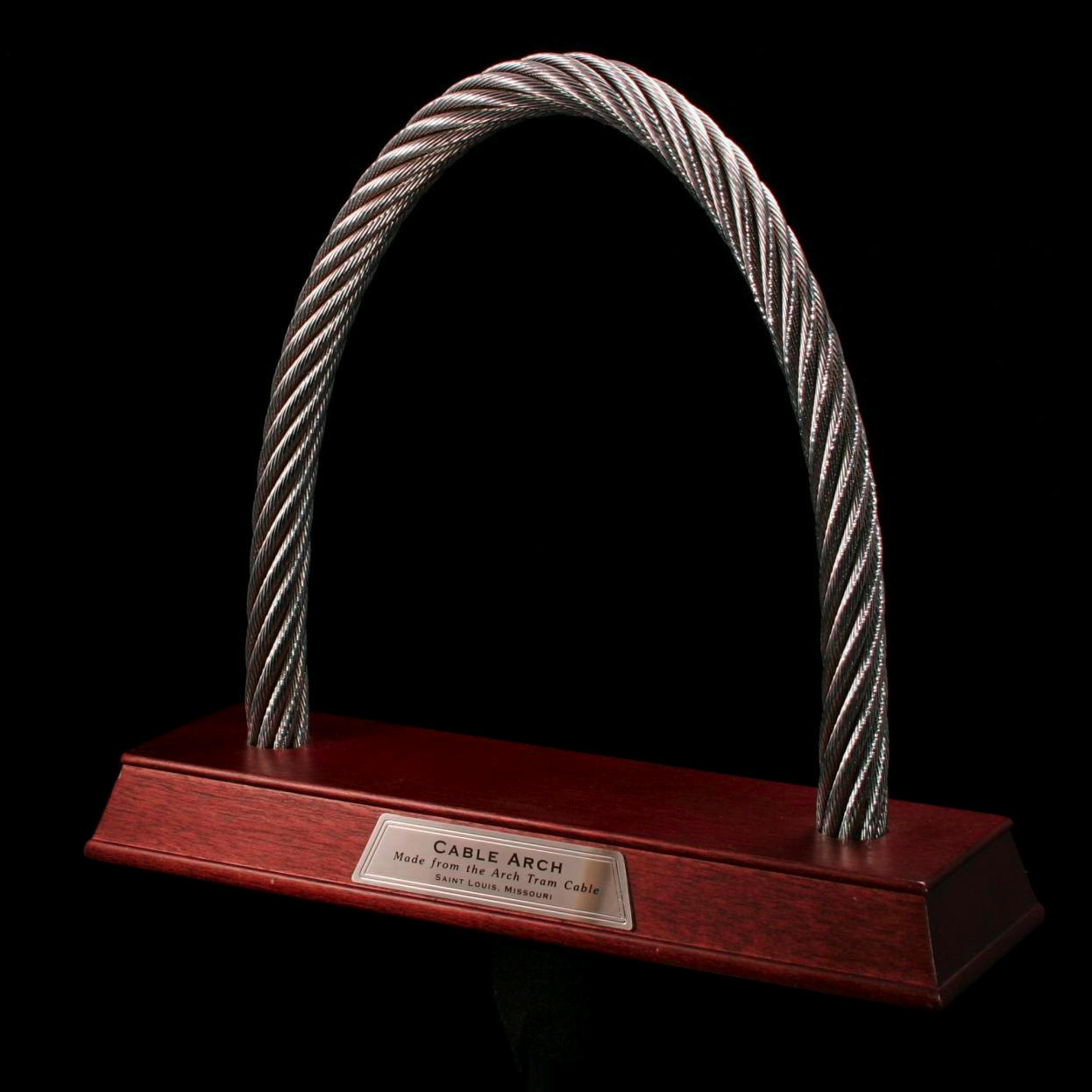
St. Louis Arch tram cable.
This is an arch roughly the same shape as the famous Arch in St. Louis. It's made out of an old cable once used to hoist the tram that takes visitors to the top of the arch (a tram that might best be described as a series of large washing machine drums hung on a rope).
I got it in the gift shop under the arch, and chose it on the grounds that it was the only item there that actually contained a piece of the arch itself. I would have like one of the stainless steel panels that make up the outer shell, but they weren't for sale.
Source: St. Louis Arch Gift Shop
Contributor: Theodore Gray
Acquired: 5 January, 2006
Text Updated: 11 August, 2007
Price: $50
Size: 9"
Purity: >90%
|
|
|
|
|
|
|
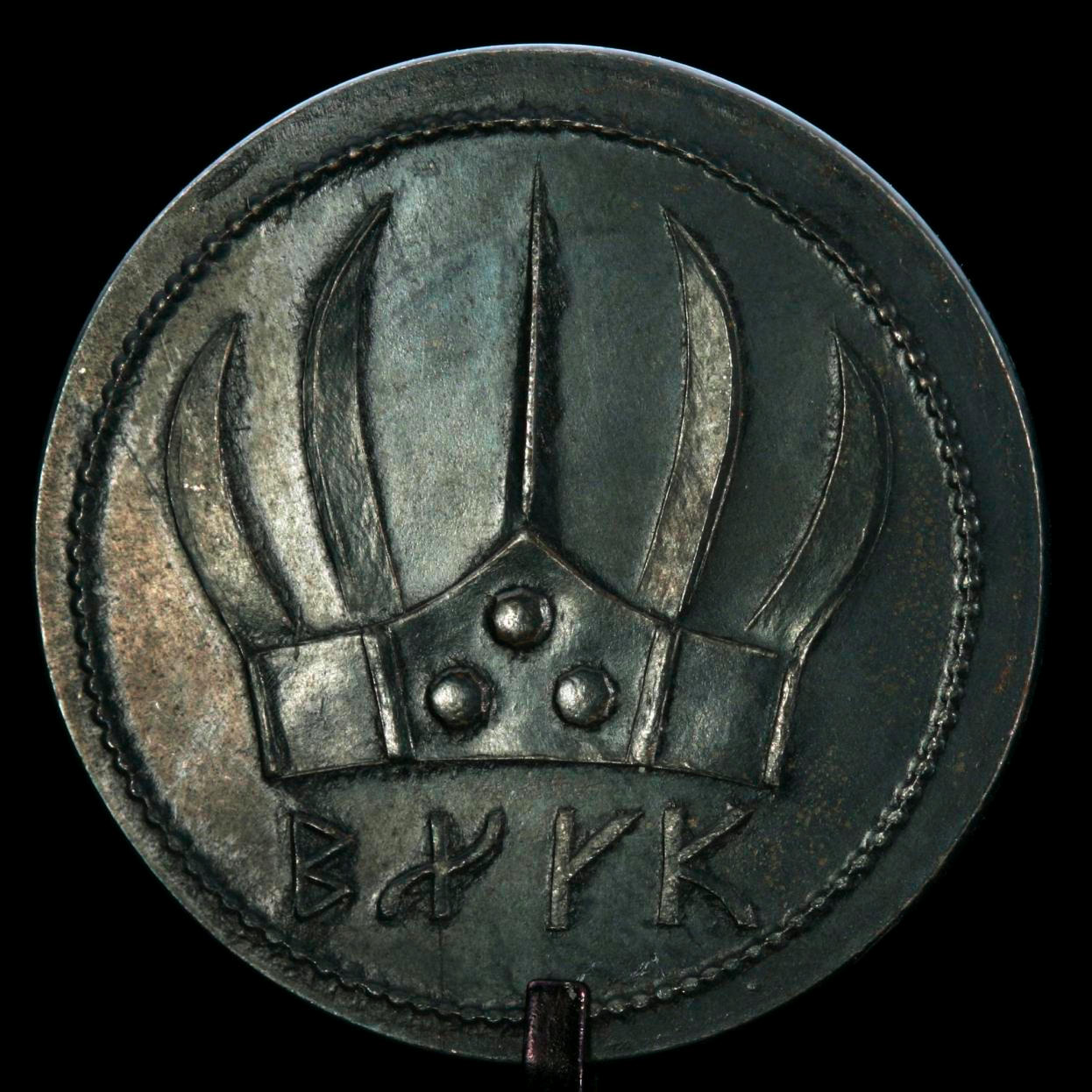
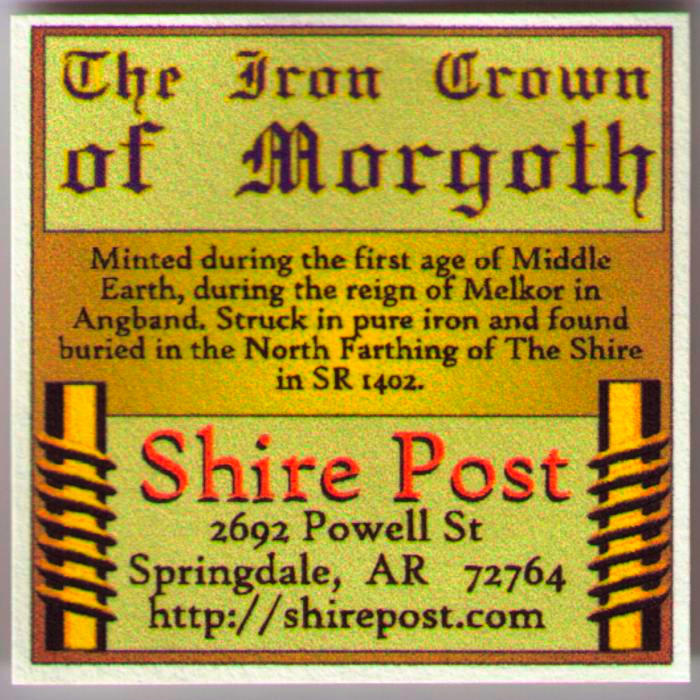
Iron crown of Morgouth.
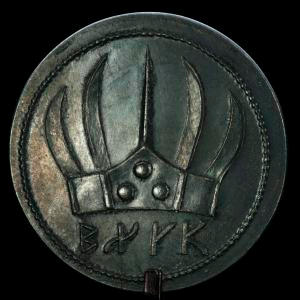
Shire Post Mint makes and sells an extensive line of fantasy coins based on the stories and worlds of the Lord of the Rings, Star Trek, George R.R. Martin, and others. What I like about this of course is the fact that many of them are made of unusual elements including titanium, niobium, and even hafnium (click the Sample Group link below to see the others).
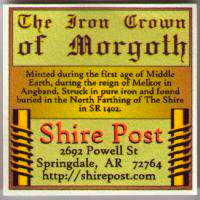
If it's still available, you can buy this coin from Shire Post Mint. (And if not, they have many others like it: If that link doesn't work, go to their home page and follow the links to find lots of coins.)
Source: Shire Post Mint
Contributor: Theodore Gray
Acquired: 10 June, 2006
Text Updated: 11 August, 2007
Price: $12
Size: 1"
Purity: 99.7%
Sample Group: Coins
|
|
|
|
|
|
|
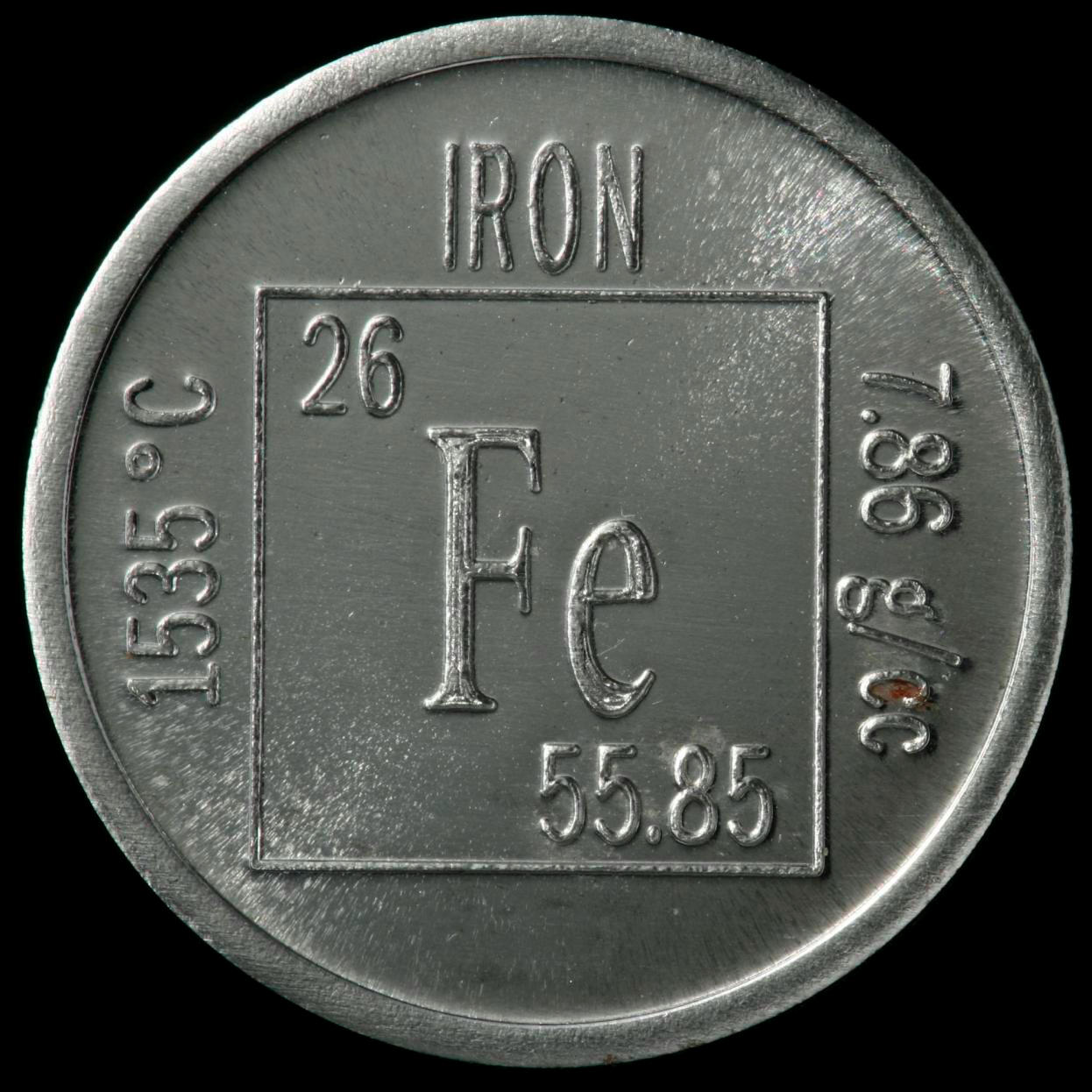
Element coin.
Dave Hamric sells element samples under the name Metallium. He's developed a line of coins struck out of various common and uncommon metals: They are quite lovely, and very reasonably priced, considering the difficulty of creating some of them.
Here is the back side of this coin (click either picture to see it larger):
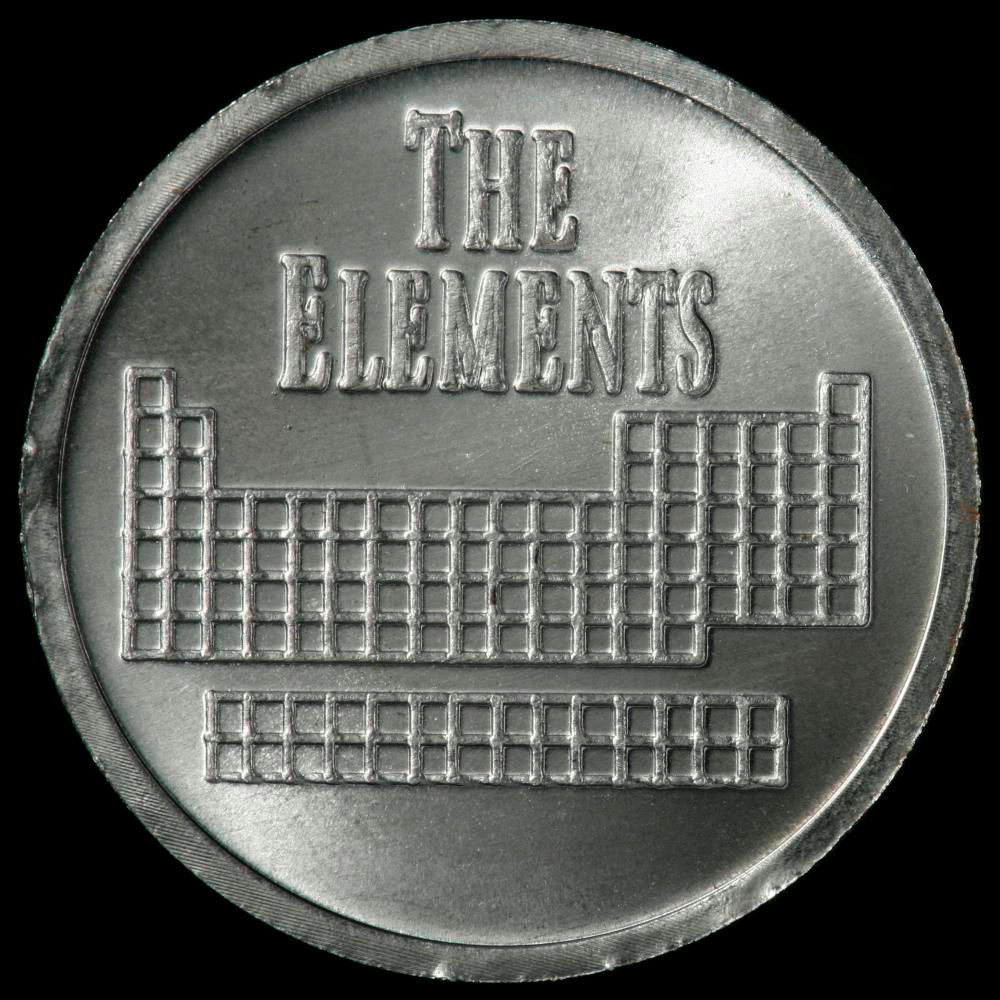
Click the Sample Group link below to see many other coins made of various elements, or click the link to his website above if you want to buy one like this.
Source: Dave Hamric
Contributor: Theodore Gray
Acquired: 1 December, 2006
Text Updated: 14 January, 2007
Price: $13
Size: 0.75"
Purity: >99%
Sample Group: Coins
|
|
|
|
|
|
|
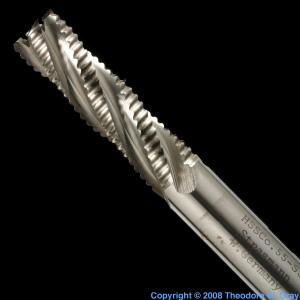
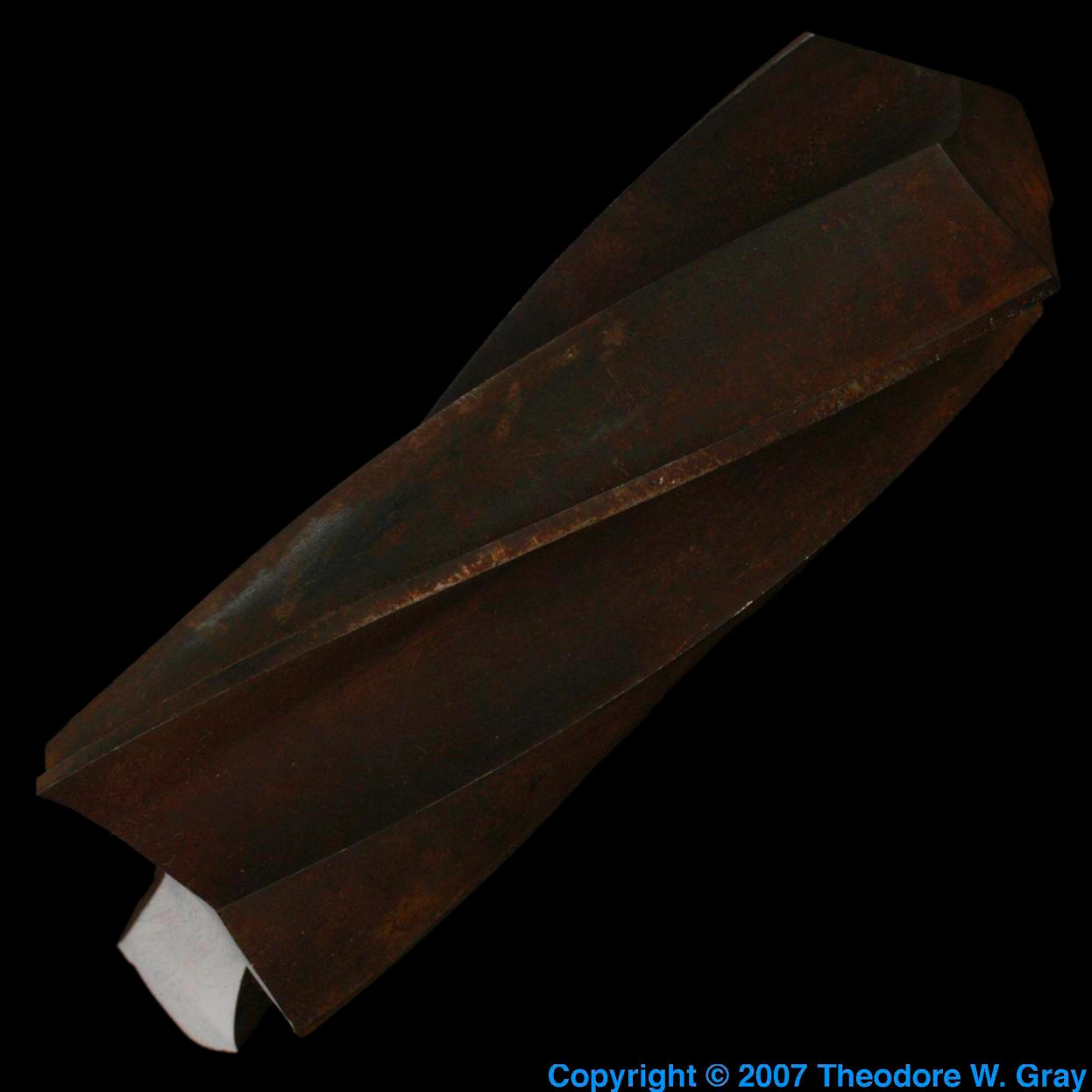
HUGE drill bit.
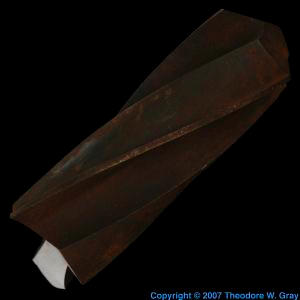
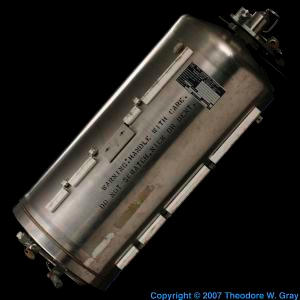
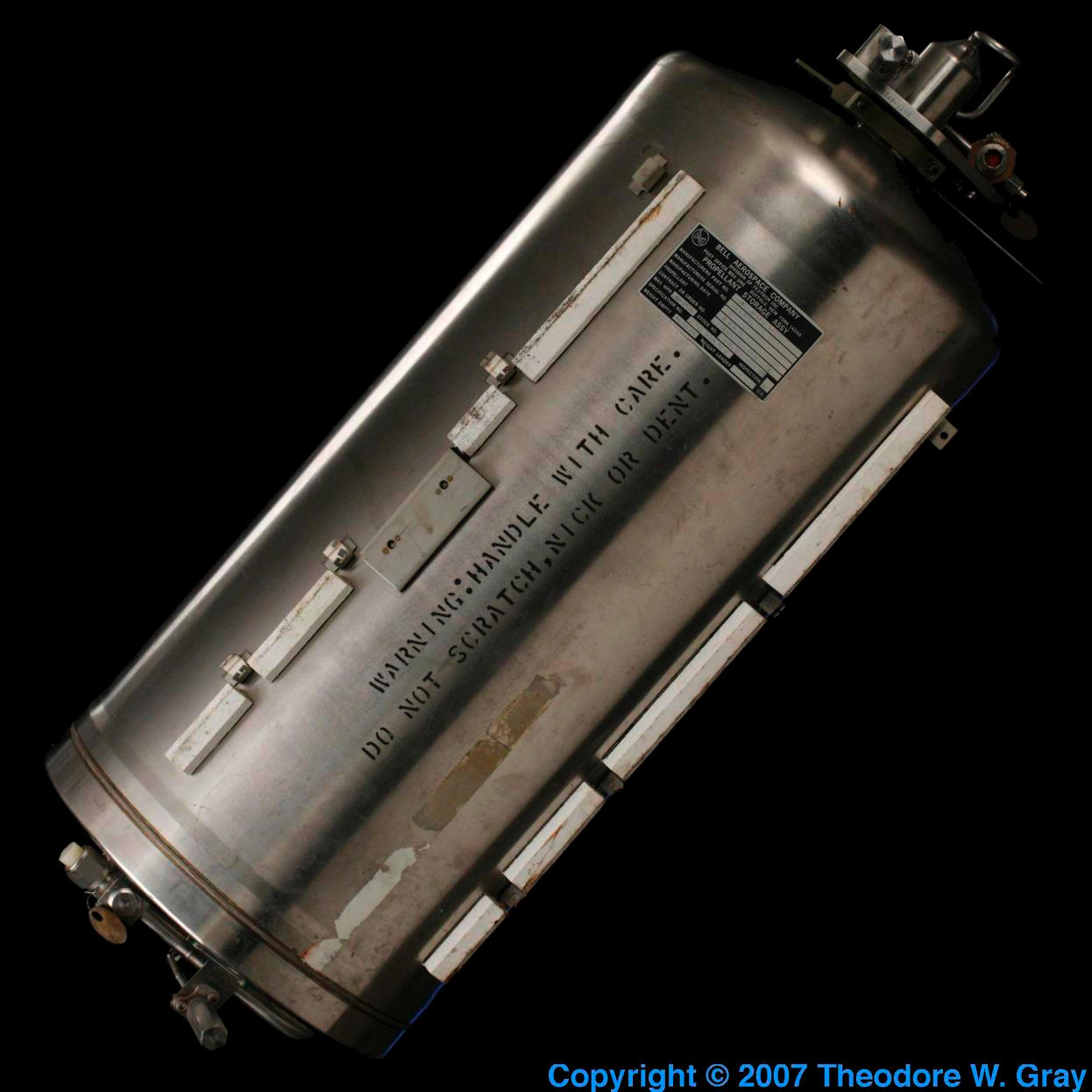
This is one big drill bit, about 3" diameter and 15" long, before it broke. Broke, you say? Yes, I was using it, dangling on the end of a thin steel cable, as a counterweight to balance a rocket fuel tank on my rotation photography turntable (see next iron sample). The cable broke as I was adjusting it, dropping this bit about four feet to the concrete floor, where it snapped neatly in two. Yes, it landed about an inch and a half from my toes, and no, I was not wearing shoes.
I would like to say in my defense that I did consider at all times the possibility that it might fall, and I was making an effort to keep my bare feet out from under its likely path to the ground. I like to think that's why it missed my toes.
The fact that it broke in half was a complete surprise. This is a drill bit meant to cut through steel, and it's going to just shatter like that? But actually this is not so surprising. In order to cut through steel a bit has to be extremely hard, and the harder you make steel, the more brittle it becomes. Apprentice machinists are taught to treat the most expensive bits carefully, not just because they are expensive, but because they are also more likely to be damaged by just this kind of fall. Hardness is not the same thing as toughness.
Fortunately it's no great loss, I got this bit in a box of scrap and random stuff at the closing out auction of a large industrial manufacturing concern. It was no use to me (like I have a boring machine that big?). In fact, I wasn't even going to list it as a sample until it broke, revealing the fresh, cleanly broken surface inside. The fall greatly improved its value as an element sample. The fine grain (visible most easily in the 72-frame 3D rotation) on the broken surface shows this to be high-grade tool steel.
Source: Theodore Gray
Contributor: Theodore Gray
Acquired: 9 May, 2007
Text Updated: 29 January, 2009
Price: $1
Size: 8"
Purity: >95%
|
|
|
|
|
|
|
|
|
|
Archaeological nuts.
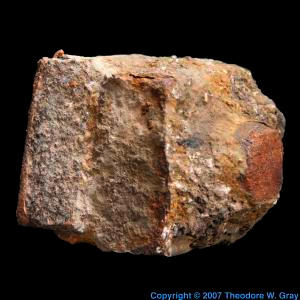
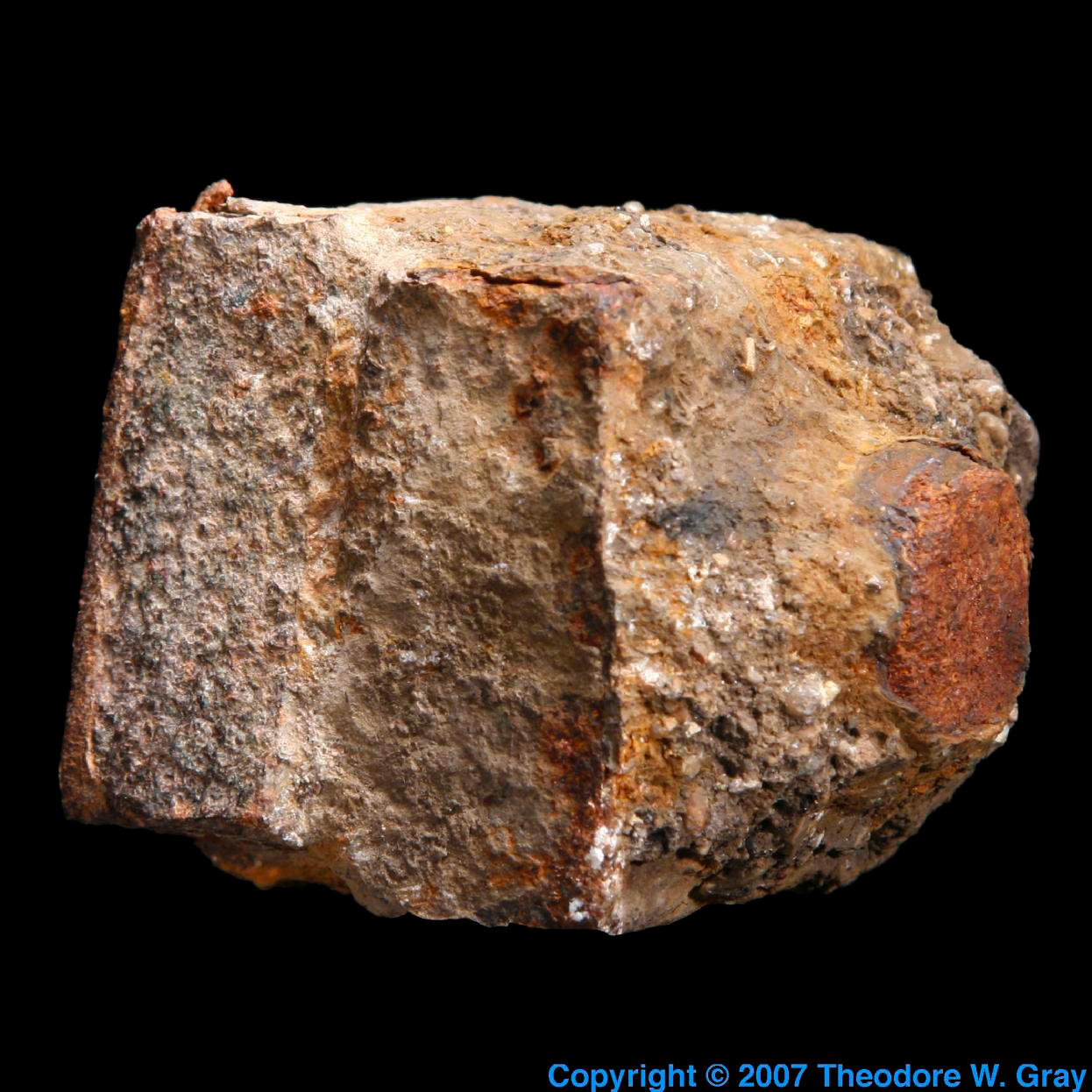
This object showed up on my farm. It's too heavy to be a rock, so what is it? Look closely and you can see two square shapes slightly rotated relative to each other, and something that looks round on the right side. It's two large steel (iron) nuts screwed onto a short section of steel bolt. Over the decades it's been in the ground the nuts and bolt have rusted into each other and become so encrusted in limestone that it's almost unrecognizable. In another few hundred years there would be nothing left but a reddish iron oxide stain. Such is the fate of our civilization, except for the parts made of aluminum.
Source: Theodore Gray
Contributor: Theodore Gray
Acquired: 11 August, 2007
Text Updated: 29 January, 2009
Price: $15
Size: 2"
Purity: 95%
|
|
|
|
|
|
|
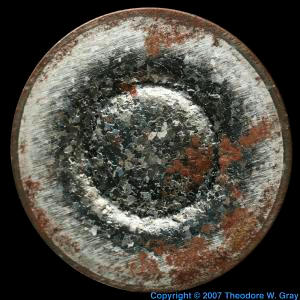
Rusty sputtering target.
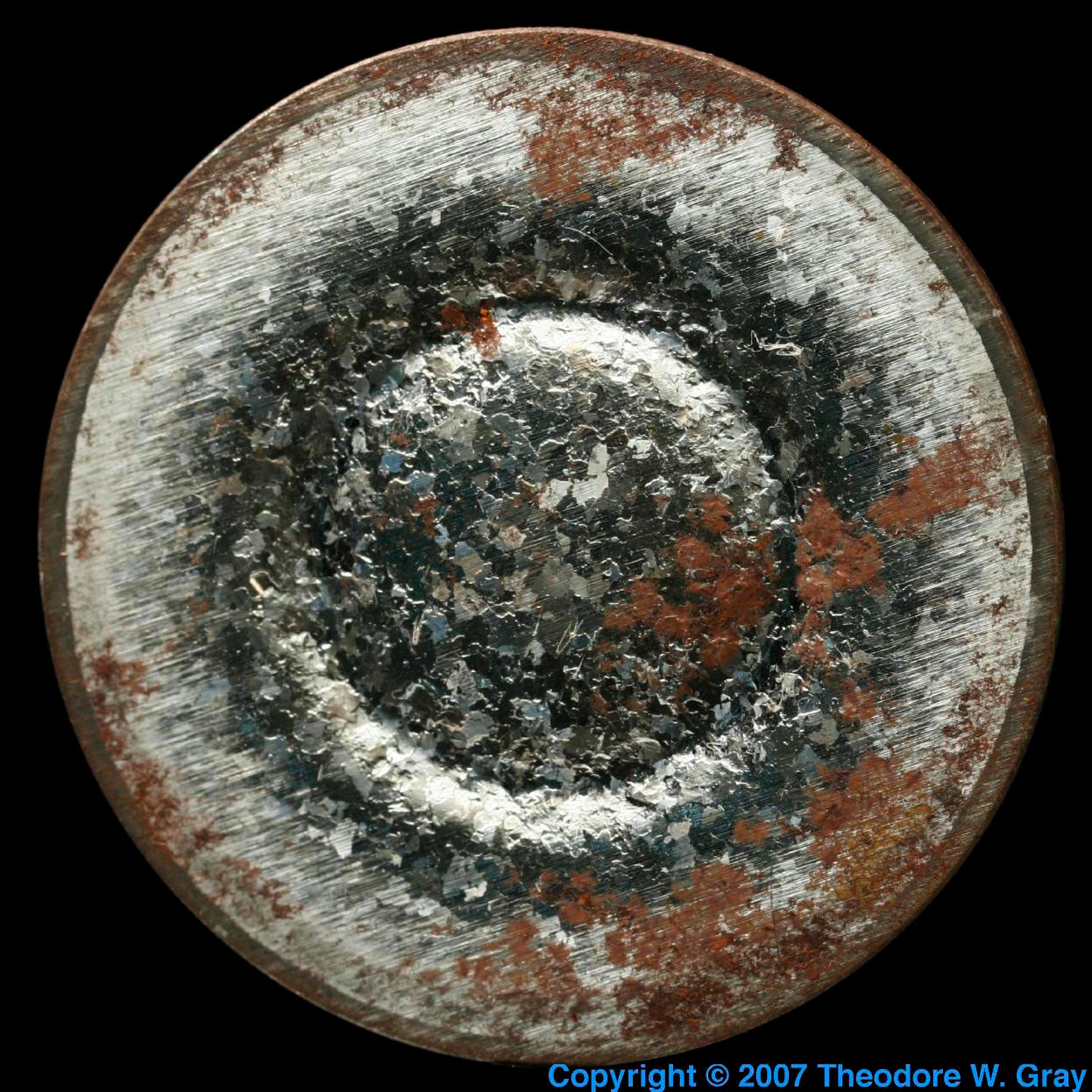
There's something very curious about a rusty sputtering target. Sputtering is used to deposit thing layers of metal, and more often than not the reason you're doing that is to create a corrosion-resistant coating. So sputtering targets (which are where the metal being sputtered comes from) are usually found made of metals like titanium, chromium, or nickel, which are suitable for this purpose precisely because they don't rust.
Source: Ethan Currens
Contributor: Ethan Currens
Acquired: 30 September, 2007
Text Updated: 19 November, 2007
Price: Donated
Size: 2.5"
Purity: 99.99%
|
|
|
|
|
|
|
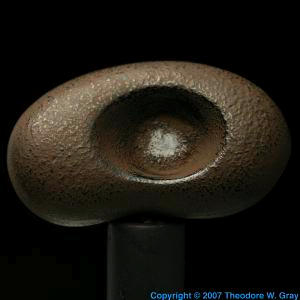
Incense burner.
I got this little solid iron incense burner at a charity auction in support of the local university's Japan House, a cultural institution dedicated to tea ceremonies, as far as I can tell.
Source: Japan House
Contributor: Theodore Gray
Acquired: 30 September, 2007
Text Updated: 30 September, 2007
Price: $50
Size: 2.5"
Purity: 95%
|
|
|
|
|
|
|
Old iron coin.
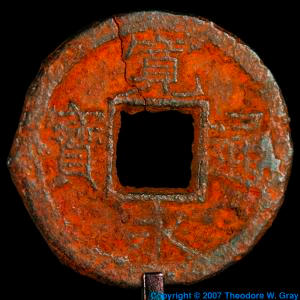
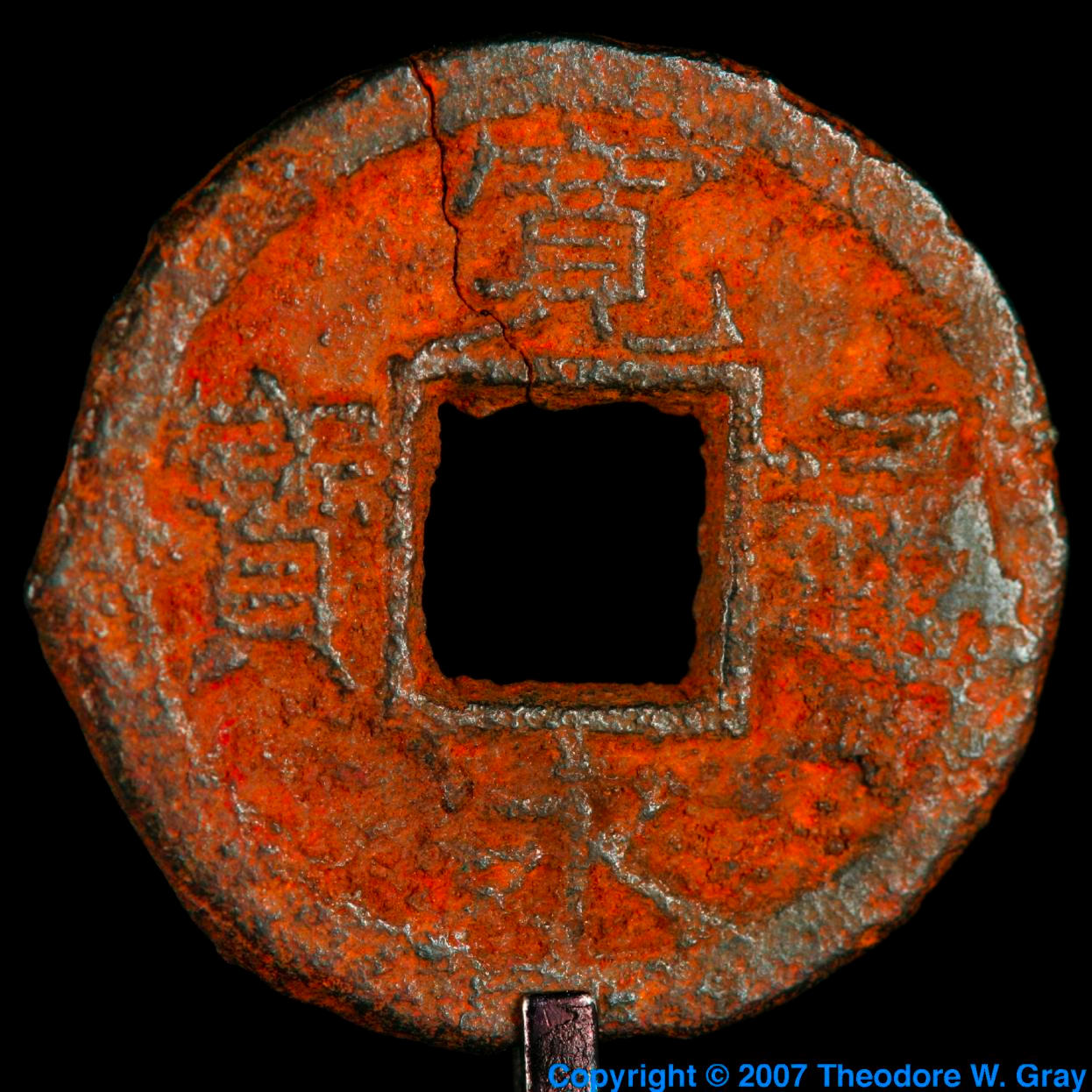
On a recent trip to Japan I stopped at a coin shop and asked the owner, through my interpreter, whether he had any coins made of metals that coins are not normally made of. After some conversation between him and my interpreter, which may, for all I know, have included some discussion of the wisdom of humoring the nutty foreigner, he came up with several coins, including this iron one. I think it demonstrates quite nicely why coins are not commonly made of iron.
Source: Japan
Contributor: Theodore Gray
Acquired: 20 November, 2007
Text Updated: 21 November, 2007
Price: $1
Size: 0.5"
Purity: >90%
Sample Group: Coins
|
|
|
|
|
|
|
|
|
|
|
|
|
|
|
|
Kryptonite padlock.
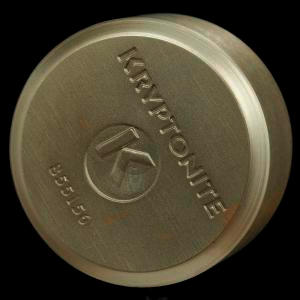
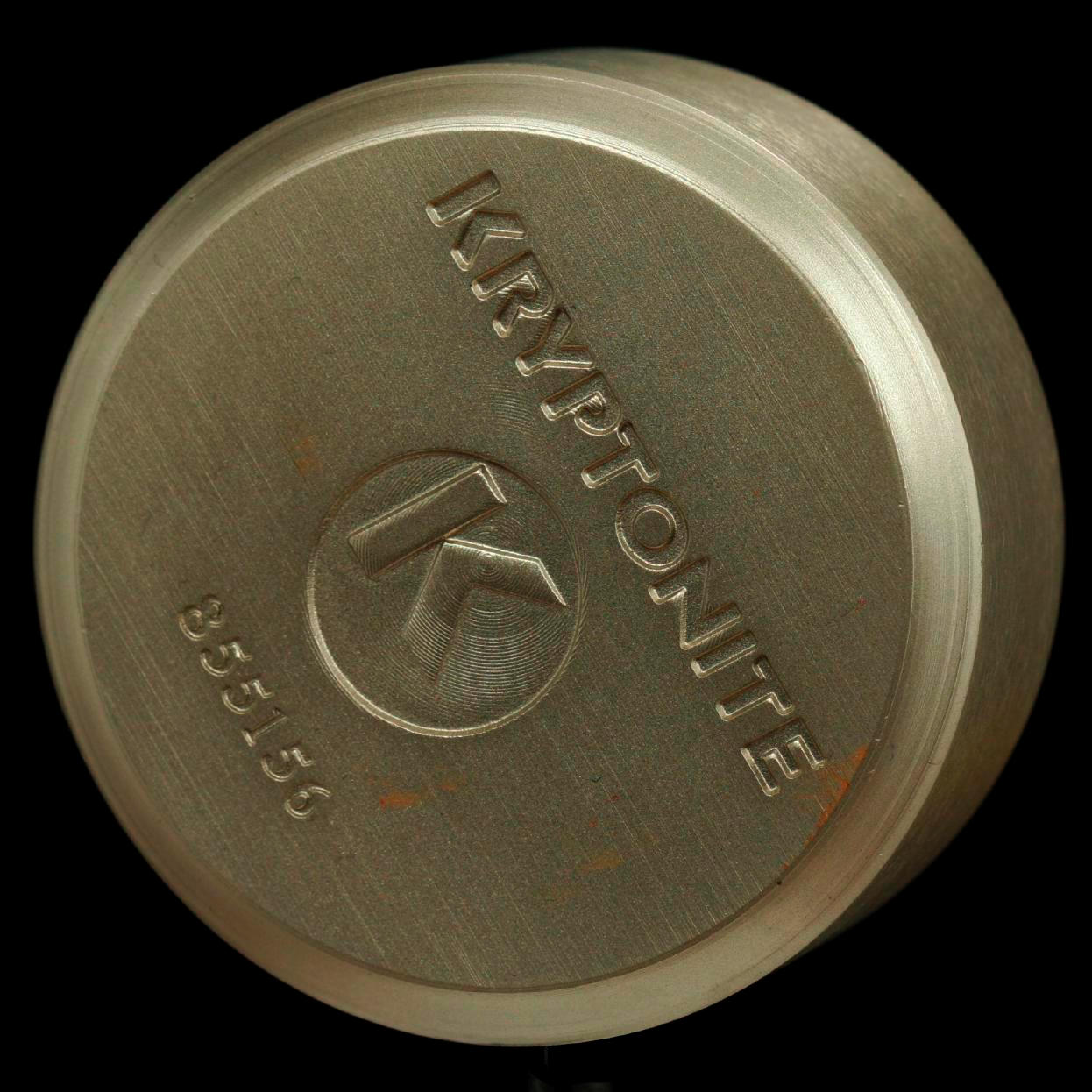
In the Superman comics and movies, "kryptonite" is a fictional element, or perhaps a compound, I'm not sure, from another planet. You can be pretty sure that this padlock isn't actually made of kryptonite, since that is an entirely fictional substance. I think most people know it's fictional, and will correctly assume that the name is being used metaphorically here, to represent the great strength of Superman.
That's less clear in the case of the "Titanium" padlocks made by the same company (MasterLock). Titanium is a real element, one known for its great strength, and one with a very high quality reputation. Are MasterLock Titanium padlocks made of real titanium? No, it turns out they are using the word titanium just as metaphorically as they use the word kryptonite. Their so-called Titanium padlocks are made of ordinary steel and stainless steel, just like this one.
You can read more about fake titanium products in my column for Popular Science.
Source: Walmart
Contributor: Theodore Gray
Acquired: 3 February, 2008
Text Updated: 3 February, 2008
Price: $20
Size: 3"
Purity: >90%
|
|
|
|
|
|
|
Cast iron mortar and pestle.
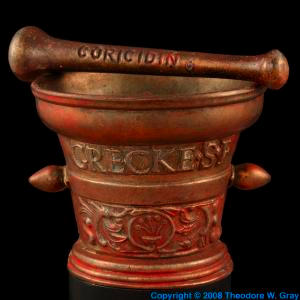
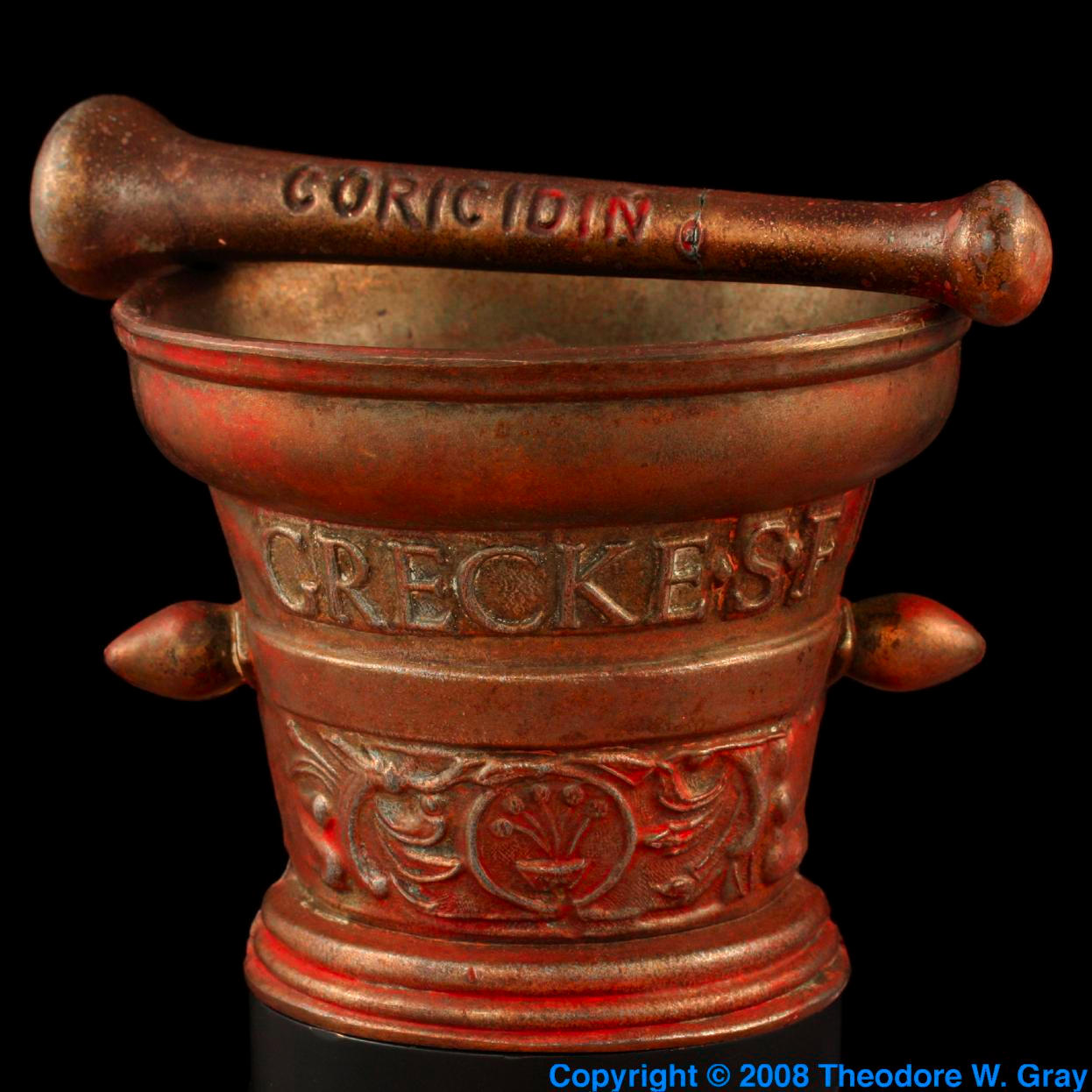
The description claimed this was antique, from the 1787, I think that's a bit far fetched, more likely the date (cast into the mortar on the back side and visible in the rotation video) is a patent date or the date of the founding of the company that made it. It's quite common for many items to have stamped or engraved dates far earlier than the date on which that particular example was actually made.
This is an apothecary mortar and pestle, which means it was meant to be used to grind up and combine medicinal ingredients. In the past this was often done to order for individual customers using bulk ingredients, a practice that lives on today in various traditional systems (for example in Chinese medicine, where herbs and other ingredients are mixed up to order).
Source: eBay seller vintageandcollectables
Contributor: Theodore Gray
Acquired: 14 June, 2008
Text Updated: 14 June, 2008
Price: $15
Size: 6"
Purity: >95%
|
|
|
|
|
|
|
Chain mail.
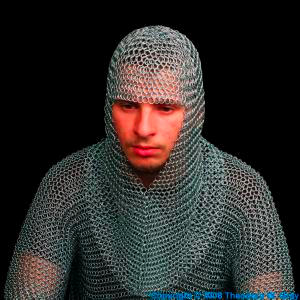
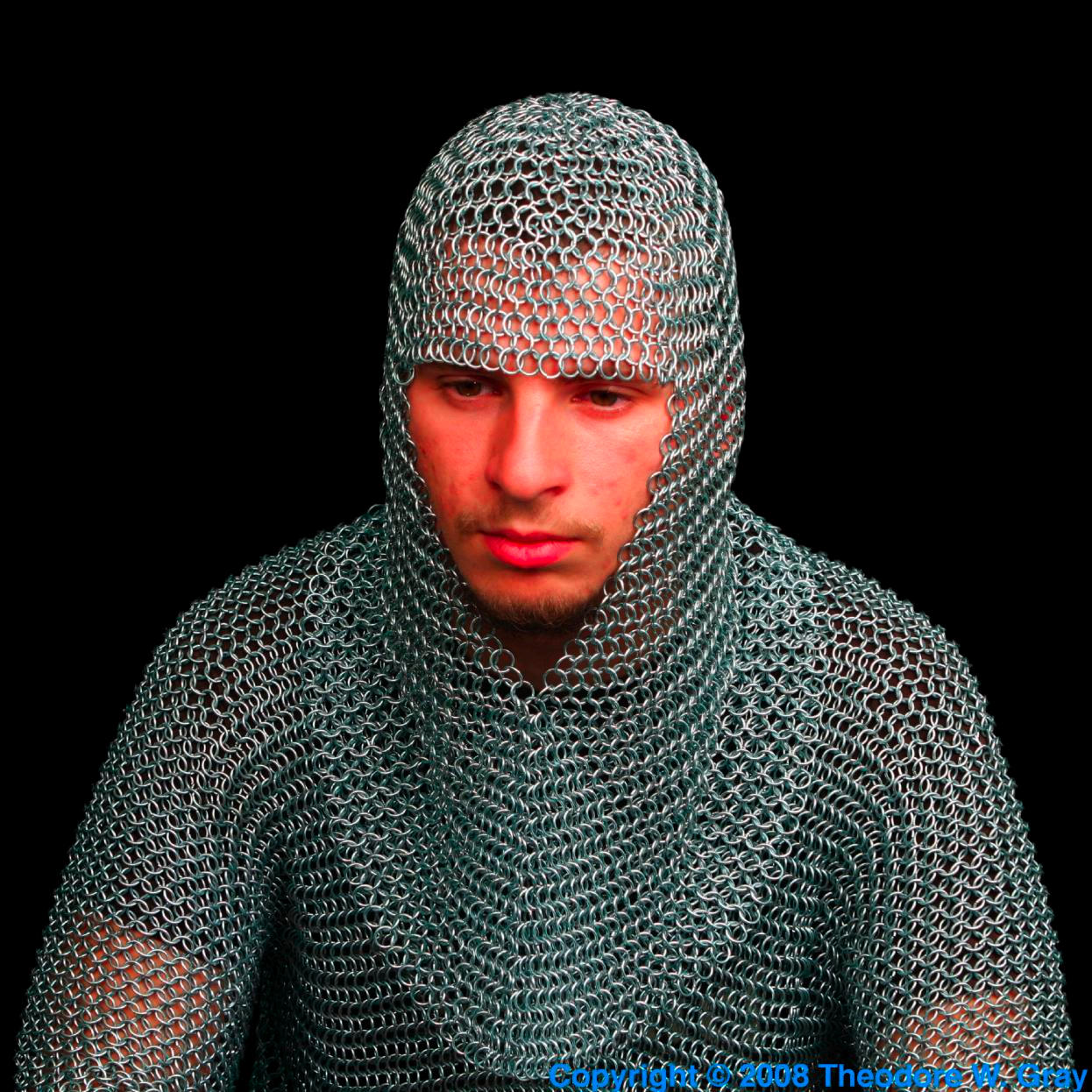
This is my assistant Nick dressed up in modern steel chain mail (made for people who like to engage in historical reenactment and/or general mayhem). He's sitting on the turntable that we use for photographing samples around a complete circle: It takes twelve minutes to make one complete revolution and he did a good job of staying motionless the whole time. Watch the Spin video and wait for the loop to see how well he did.
This shirt is incredibly heavy: My kids put it on and then pretty much can't get up off the floor. It's hard to imagine how heavy a full set of armor must be.
Source: Real Armor of God
Contributor: Theodore Gray
Acquired: 26 September, 2008
Text Updated: 29 January, 2009
Price: $120
Size: 24"
Purity: >95%
|
|
|
|
|
|
|
|
|
|
Swiss army hammer.
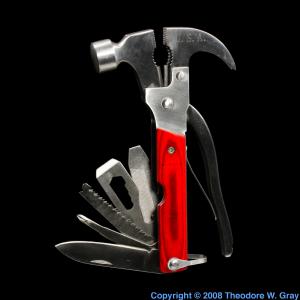
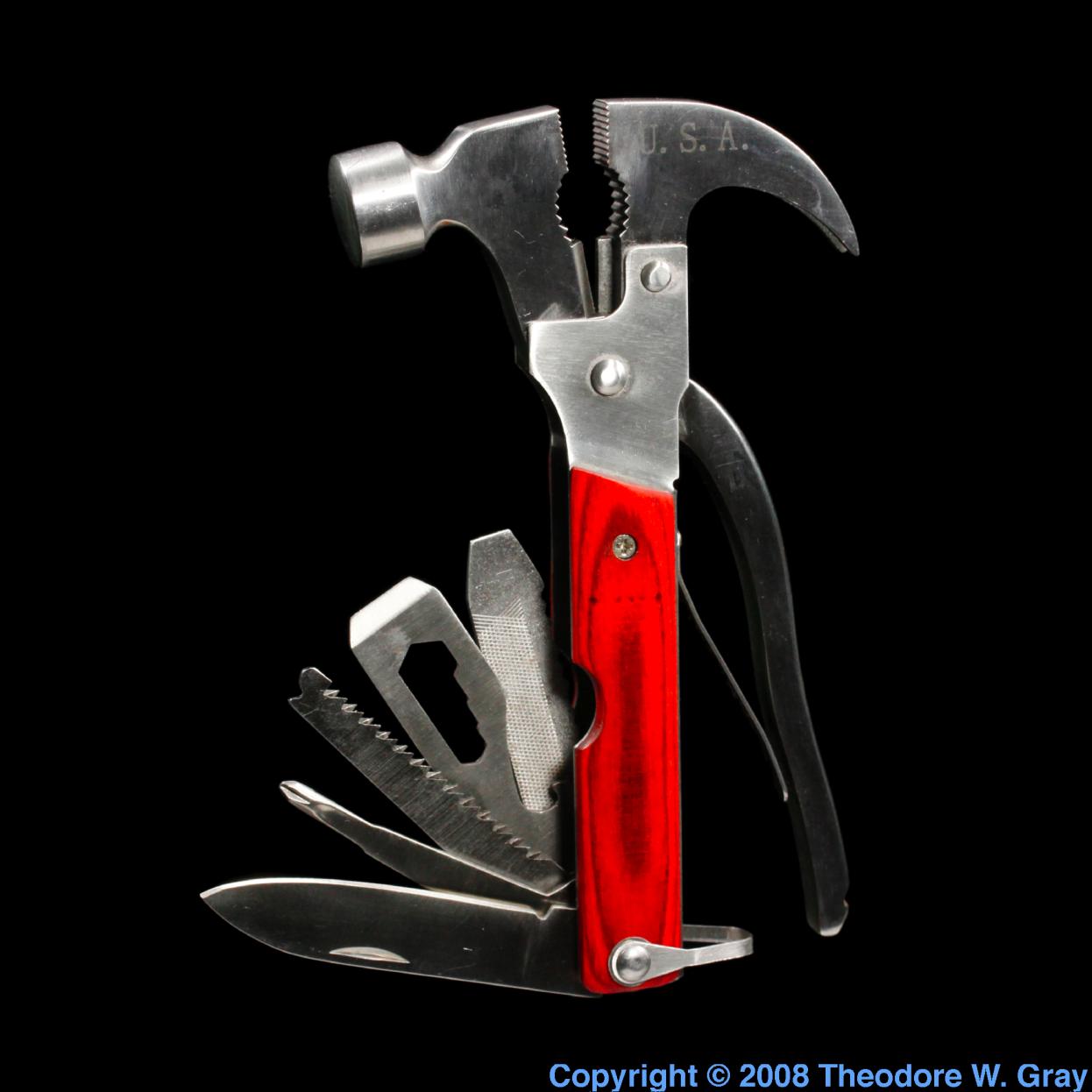
This a neat little hammer/pliers/saw/knife/file/bottleopener/screwdriver that I got on a trip to China. I was giving a series of talks about my software Mathematica and after explaining the English saying "If all you have is a hammer, every problem looks like a nail", I pulled out this device and said, "If all you have one tool, make sure it's a tool like this, and if you only have one program, make sure it's a program like Mathematica". Or words to that effect.
Note the "USA" stamped without irony on the side of the tool. What do you think are the chances that this thing was manufactured in the US and shipped to China for sale in a street market?
Source: China
Contributor: Theodore Gray
Acquired: 28 February, 2009
Text Updated: 1 March, 2009
Price: $5
Size: 7"
Purity: 95%
|
|
|
|
|
|
|
|
|
|
|
|
|
|
|
|
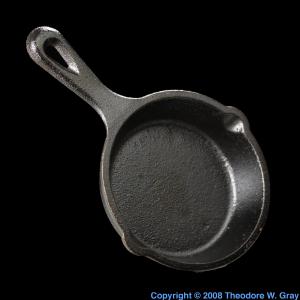
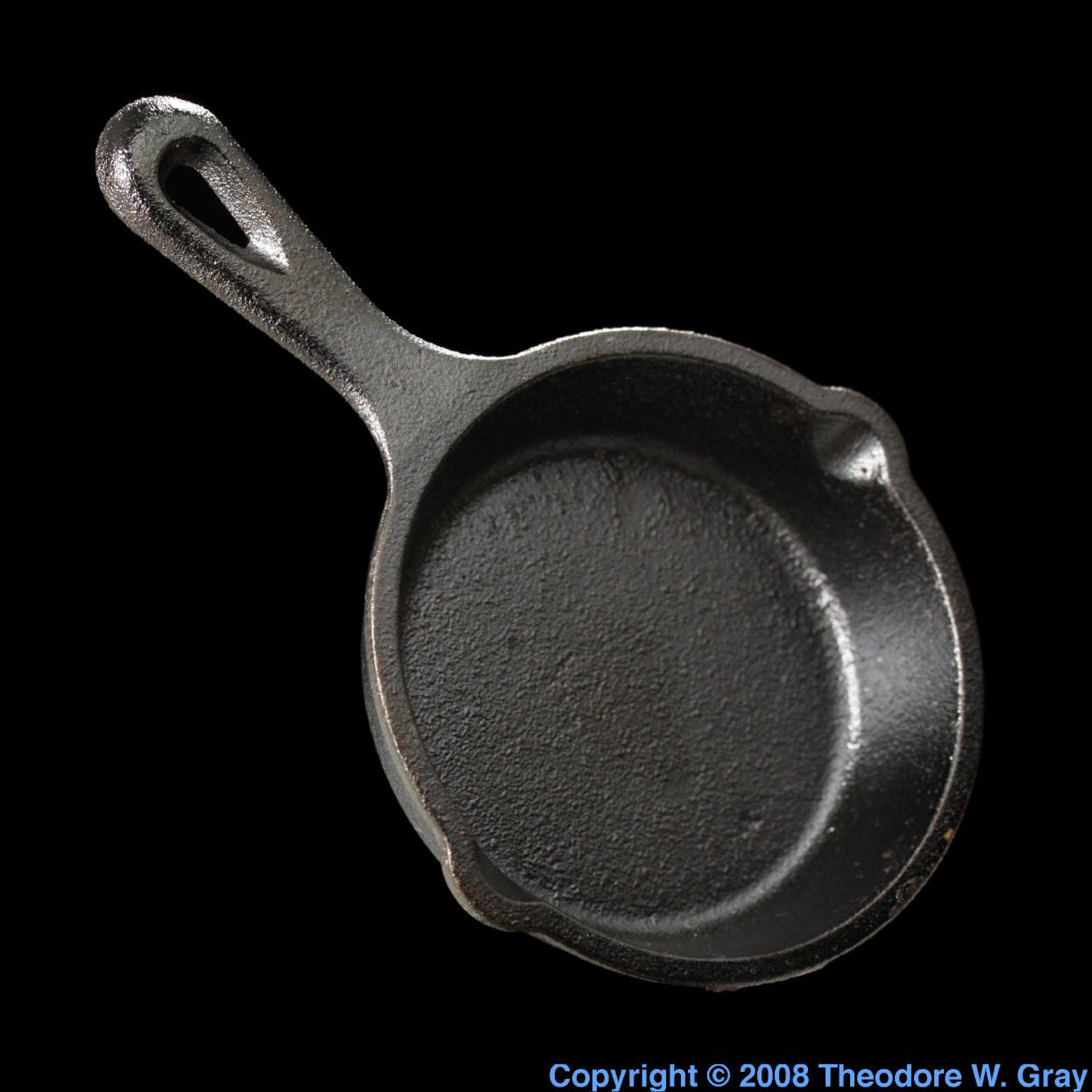
Mini iron skillet.
I have no idea why you'd want a skillet this small, but it's not intended as a toy, I don't think. It was for sale next to all the other sizes in the kitchen section.
Source: Farm & Fleet
Contributor: Theodore Gray
Acquired: 11 March, 2009
Text Updated: 12 March, 2009
Price: $5
Size: 6"
Purity: 95%
|
|
|
|
|
|
|
Nickel-iron meteorite.
From the eBay listing:Campo Del Cielo Iron Meteorite.
Coarse Iron Octahedrite from Argentina.
This meteorite came from a batch that was recovered deep within the ground and has been protected over the years from weathering. As you can see it's in excellent condition.
Source: eBay seller paolo2008_123
Contributor: Theodore Gray
Acquired: 11 March, 2009
Text Updated: 12 March, 2009
Price: $46
Size: 3"
Purity: 90%
|
|
|
|
|
|
|
|
|
|
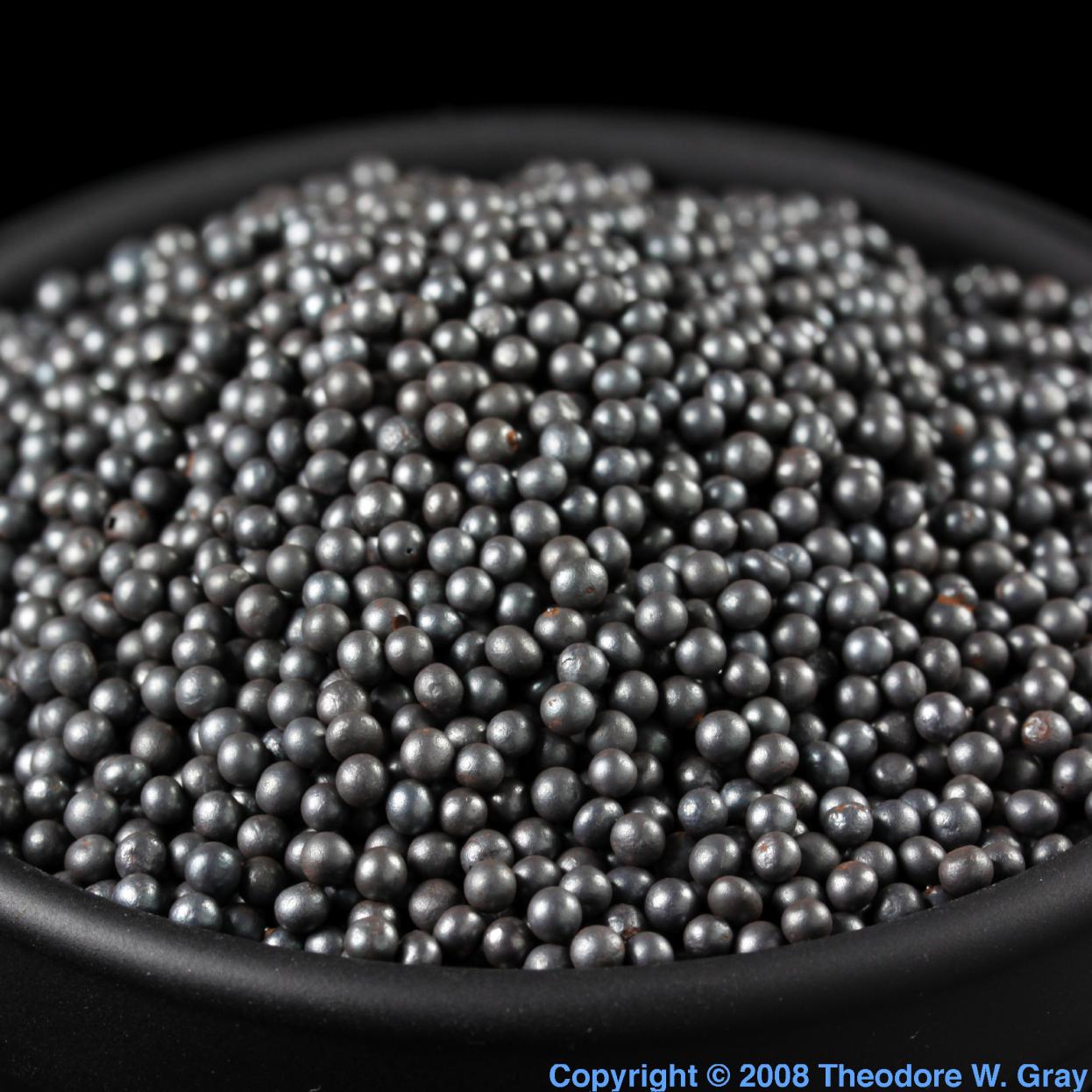
Steel shot for tumbling.
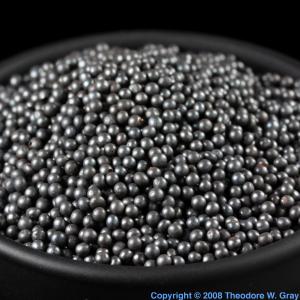
This is from a really heavy quart jug of steel shot sold for use in a machine that cleans metal parts by rolling them around with a bunch of steel shot like this.
Source: Harbor Freight Tool Company
Contributor: Theodore Gray
Acquired: 24 March, 2009
Text Updated: 24 March, 2009
Price: $10
Size: 0.125"
Purity: 98%
|
|
|
|
|
|
|
Modern chain mail glove.
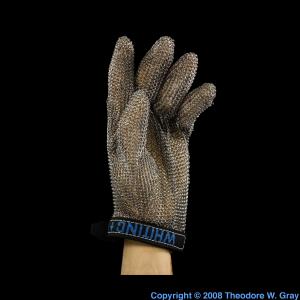
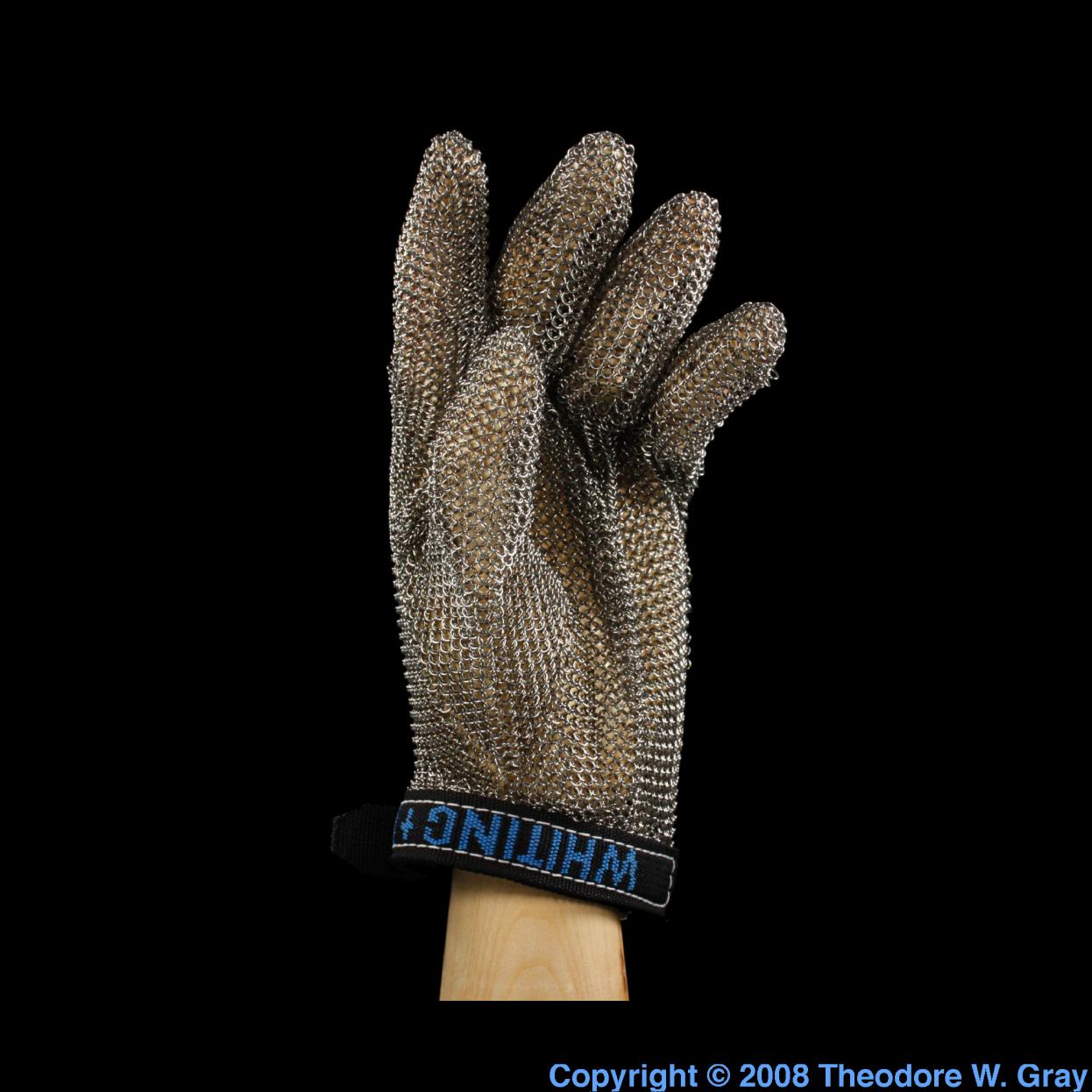
You may think of chain mail as something that went out of style some hundreds of years ago, but you can buy it today, and not for historical or hobby reasons. This is a modern stainless steel chain mail glove made for use by butchers, to avoid chopping their fingers off with big butcher knives.
Source: eBay seller avieleah
Contributor: Theodore Gray
Acquired: 2 April, 2009
Text Updated: 3 April, 2009
Price: $74
Size: 8"
Purity: 70%
|
|
|
|
|
|
|
Bullet mold, maybe.
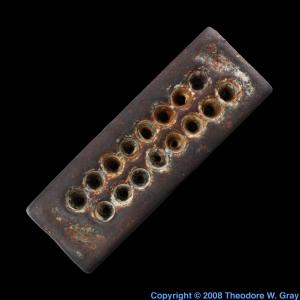
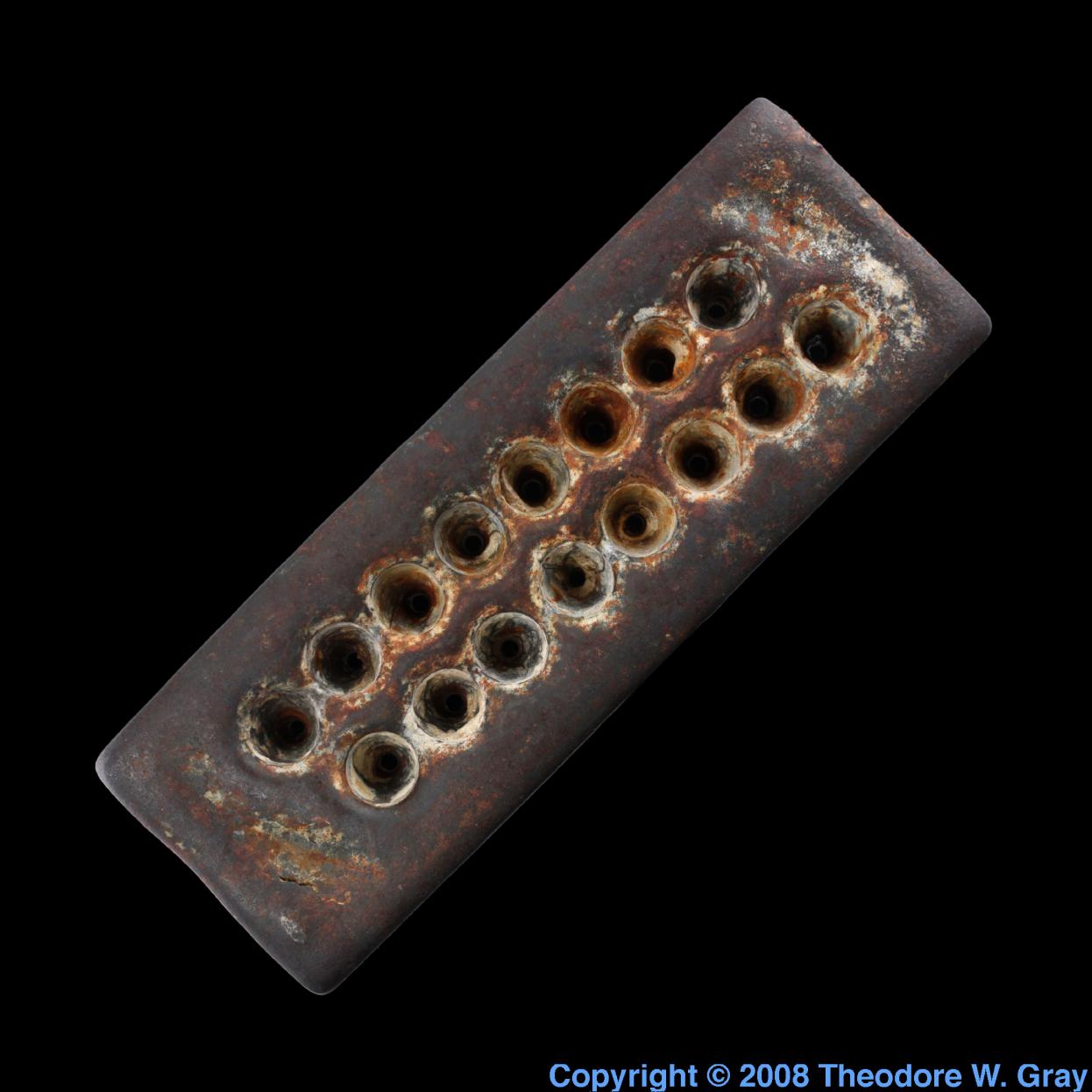
The seller described this as a Confederate iron bullet mold. Maybe, but my immediate thought on seeing it was that it looks more like a wire pulling die than a bullet mold, because each hole is in fact a hole all the way through. On the other hand, in a wire pulling die typically each hole would be a bit smaller than the one before it, while these are all the same.
If you know what this thing is, let me know.
Source: eBay seller fsooff44
Contributor: Theodore Gray
Acquired: 8 April, 2009
Text Updated: 9 April, 2009
Price: $25
Size: 6"
Purity: 95%
|
|
|
|
|
|
|
Iron Dextran-100.
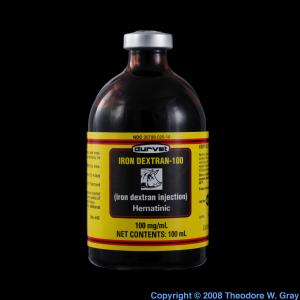
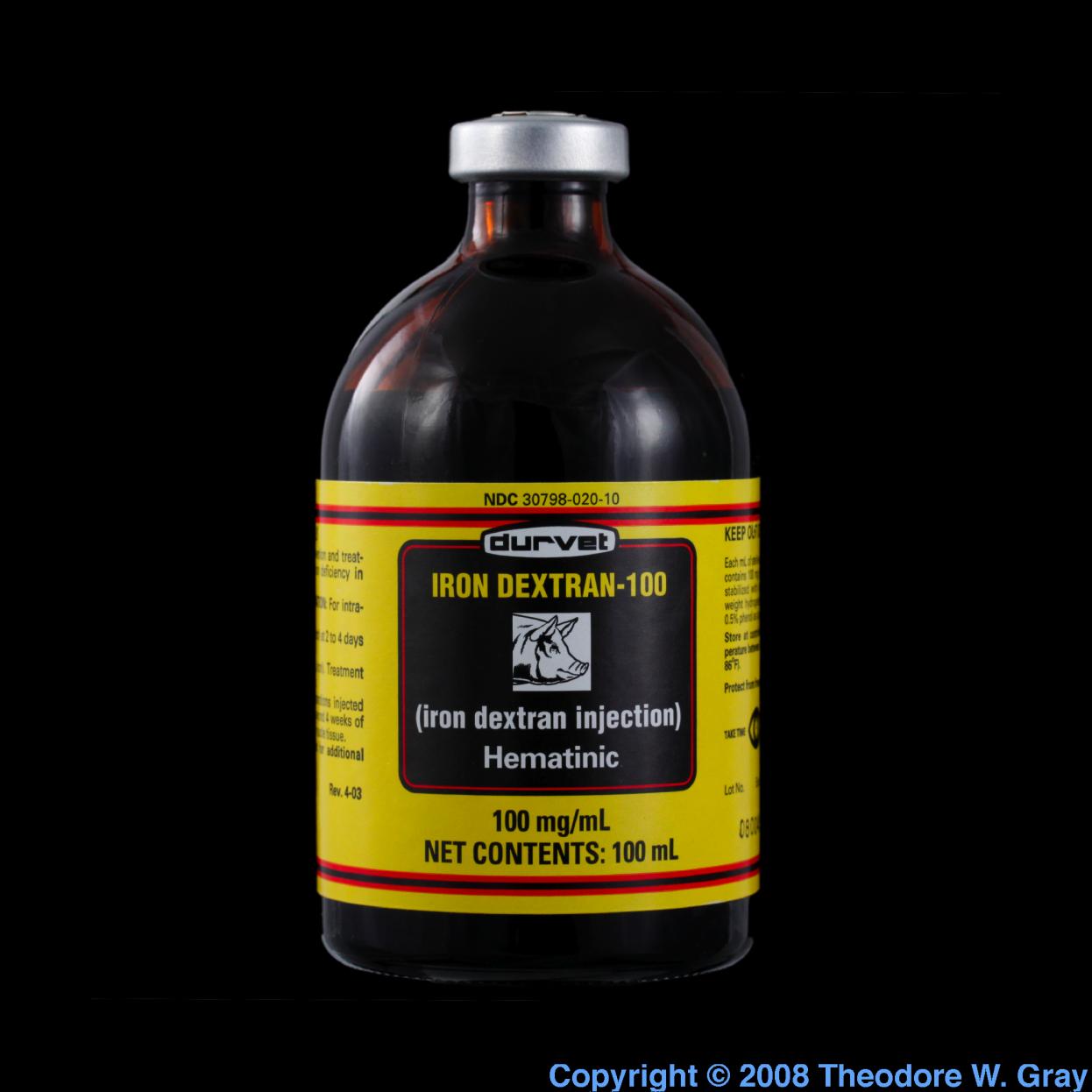
Highlighting the importance of iron to all mammals (and most other animals as well) this is an injectable form of iron supplement designed for use in horses suffering from anemia (iron deficiency).
Source: Farm & Fleet
Contributor: Theodore Gray
Acquired: 8 April, 2009
Text Updated: 9 April, 2009
Price: $10
Size: 3"
Purity: 10%
|
|
|
|
|
|
|
|
|
|
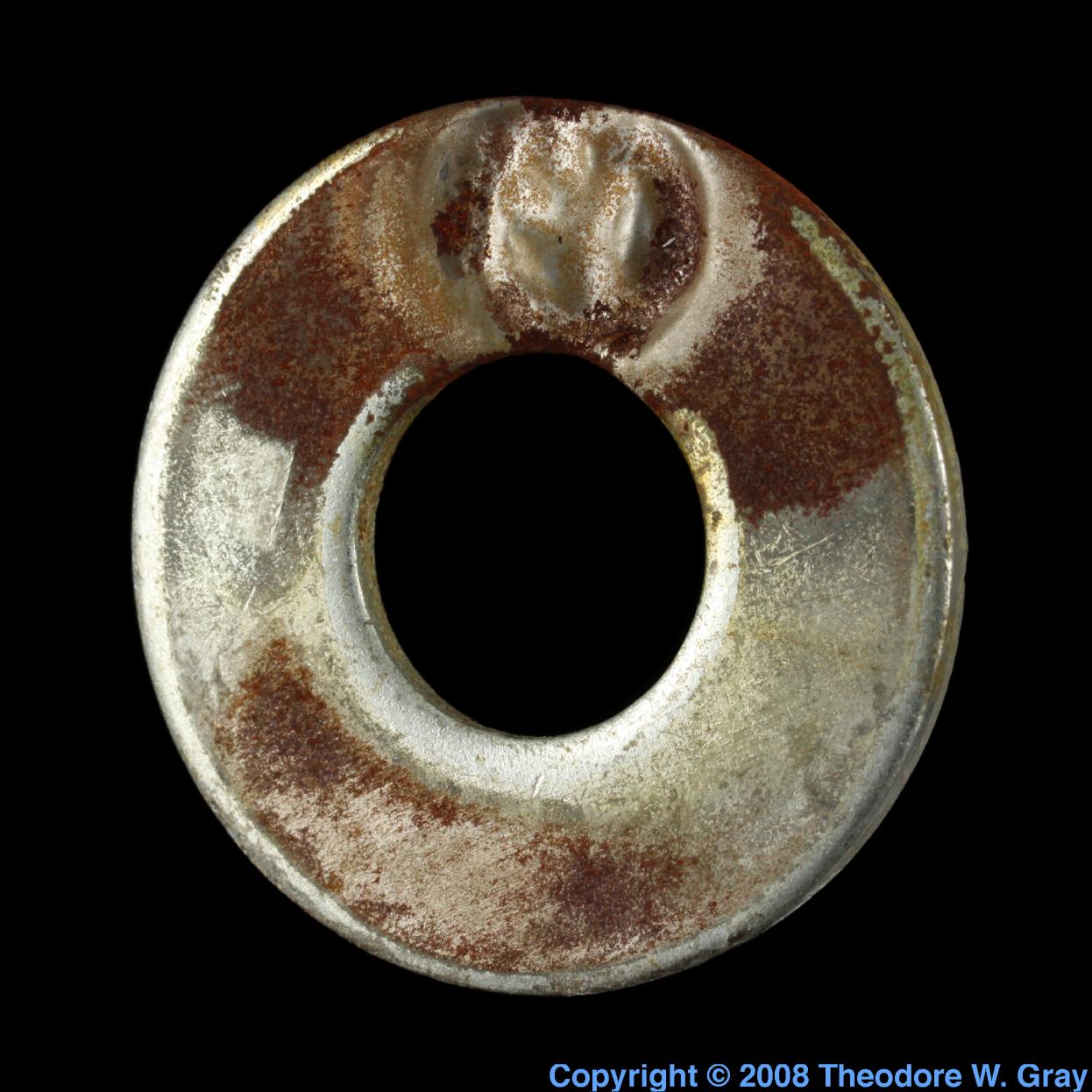
Electrochemically machined washer.
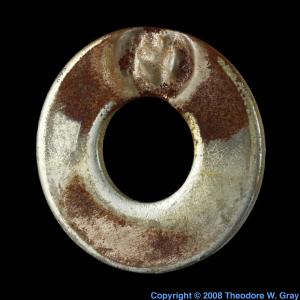
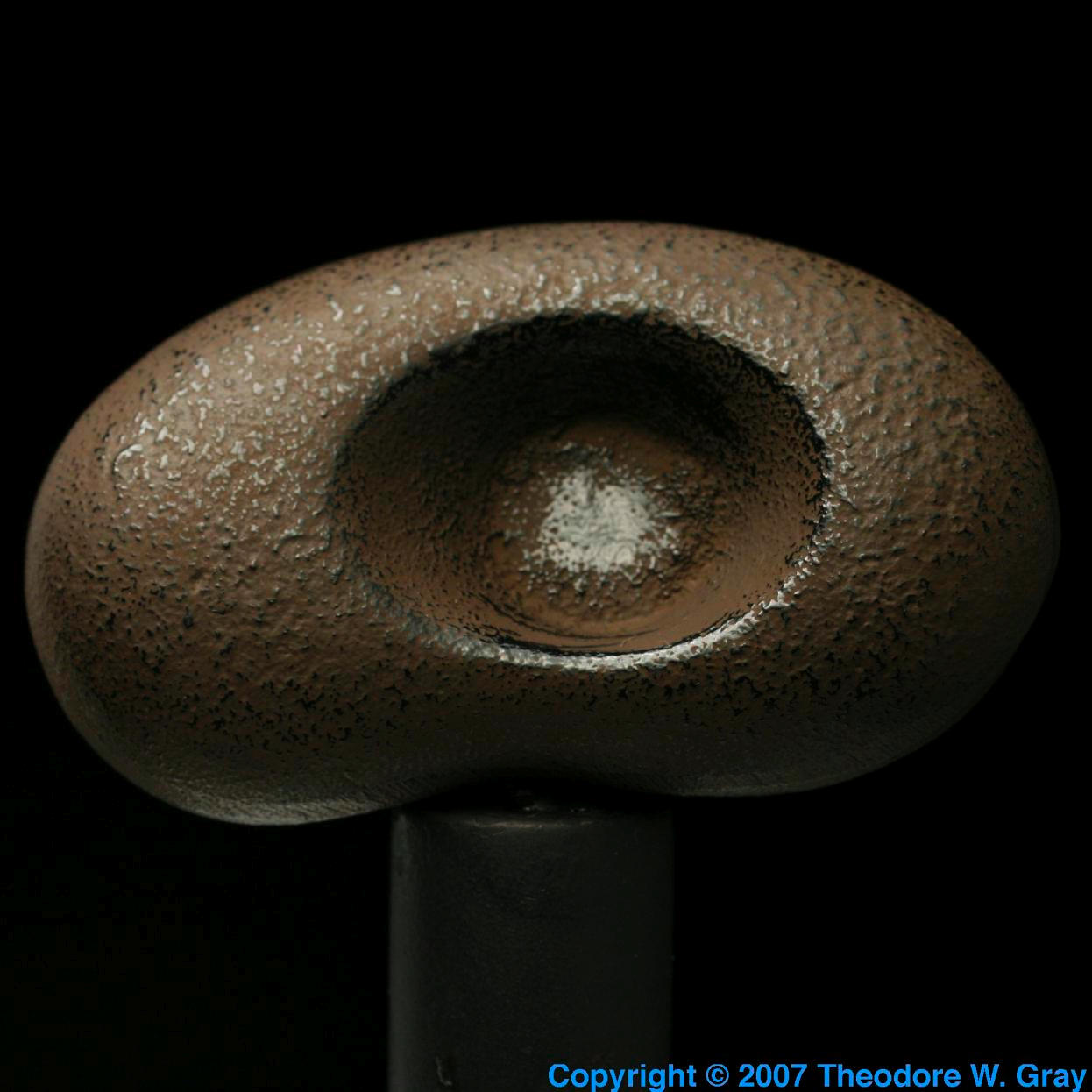
It may not look very impressive, but I'm quite pleased with this steel washer. The depression at the top was supposed to be a sharply-machined peace sign, created by electrochemical machining. Instead it's a blurry mess, but the point is that it's etched several millimeters deep into solid steel, and that was done using a cheap tin earring (shown under tin) as the machining bit.
The method is called electrochemical machining, and it's described in my July, 2009 Popular Science column.
Source: Theodore Gray
Contributor: Theodore Gray
Acquired: 28 June, 2009
Text Updated: 29 October, 2009
Price: Donated
Size: 2.5"
Purity: >95%
|
|
|
|
|
|
|
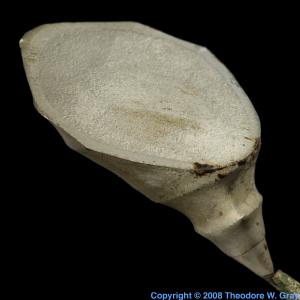
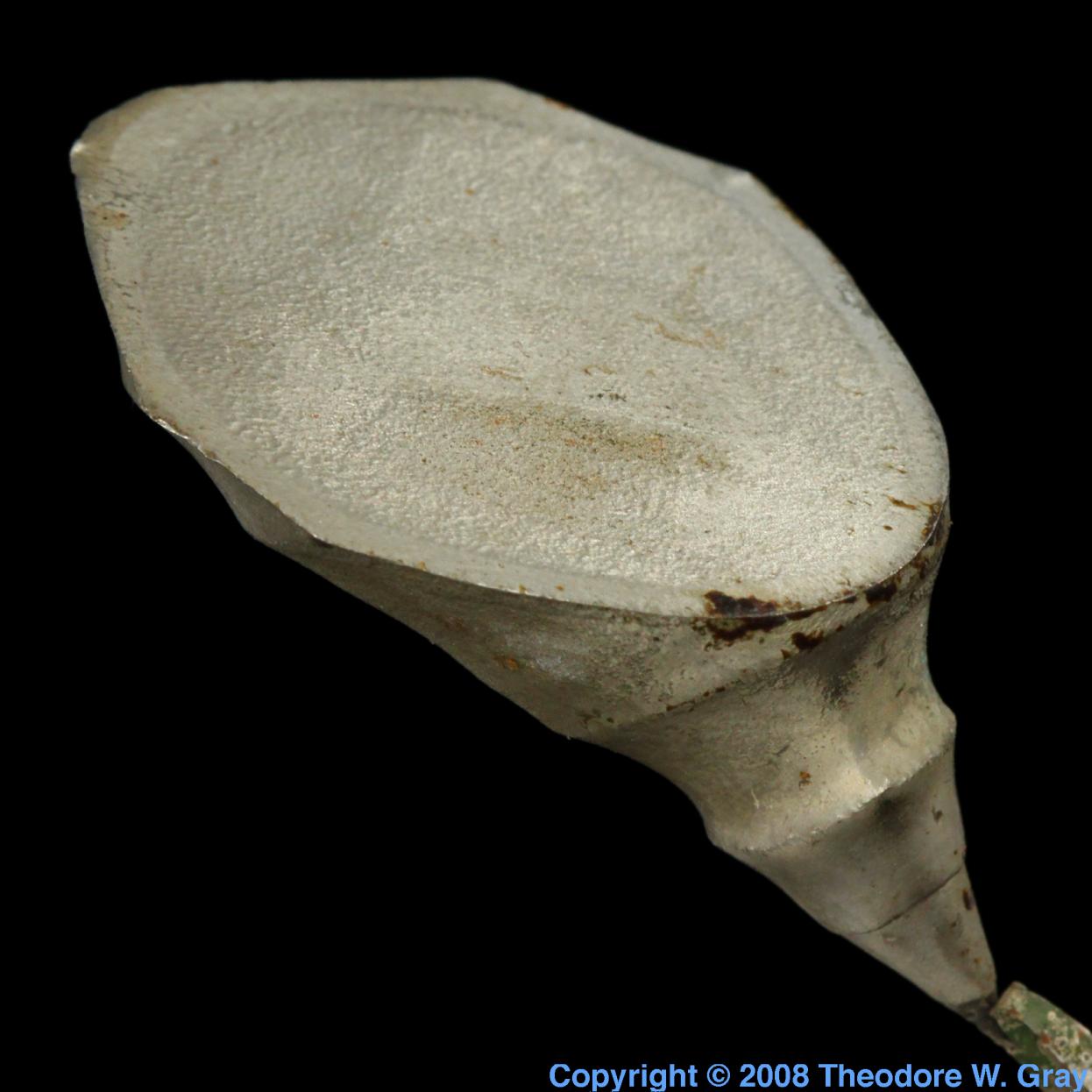
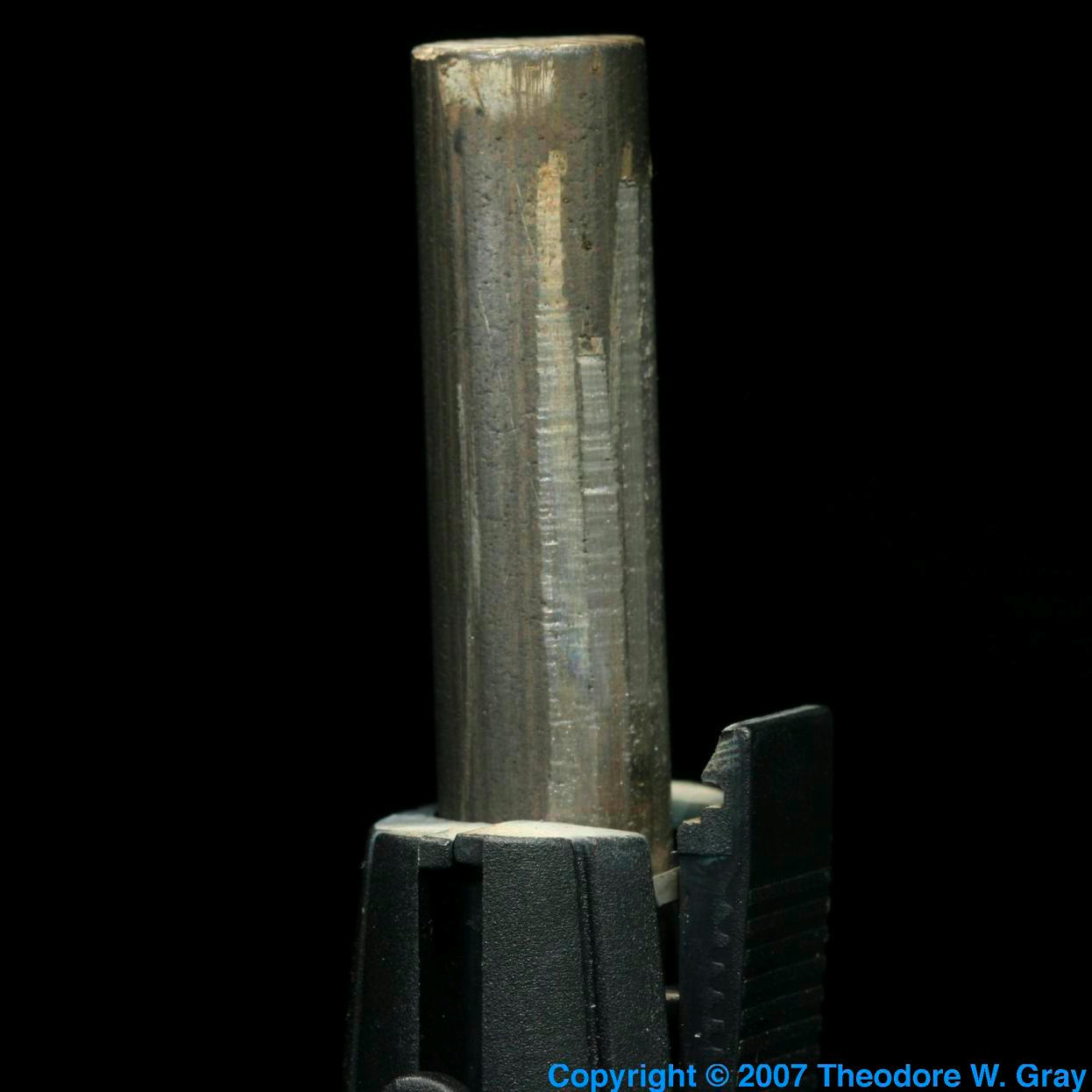
Stainless steel Czochralski-grown monocrystal.
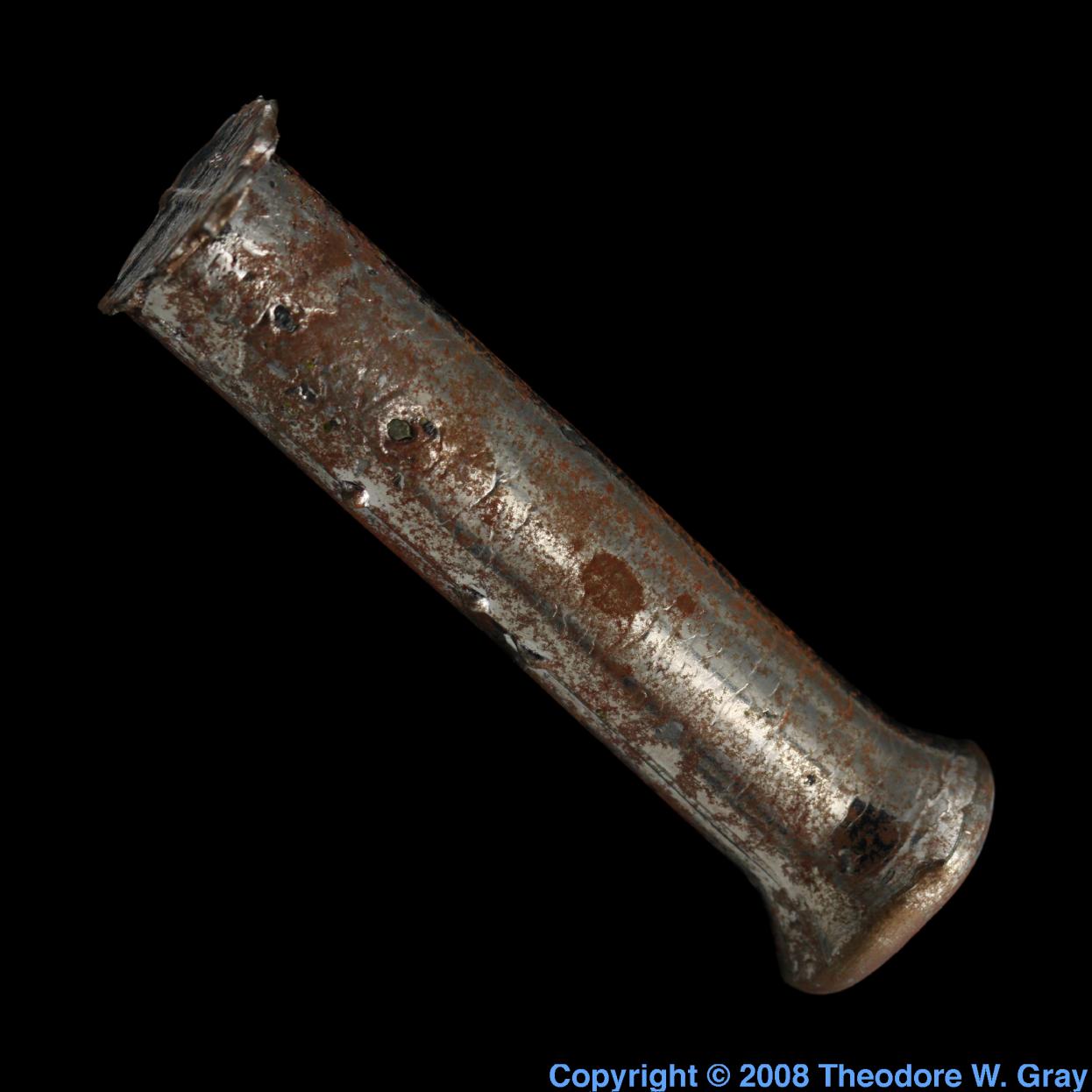
An example of the fact that you can grow single crystals of alloys as well as pure elements. This is a single crystal of stainless steel (iron-chrome alloy) grown by the Czochralski process. The rod suspending it as well as the seed crystal are visible on the bottom.
Source: Ethan Currens
Contributor: Ethan Currens
Acquired: 29 October, 2009
Text Updated: 29 October, 2009
Price: Donated
Size: 1"
Purity: >60%
|
|
|
|
|
|
|
|
|
|
|
|
|
|
|
|
|
|
|
|
|
|
|
|
|
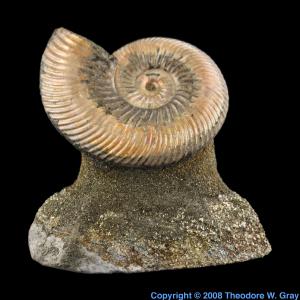
Pyritized Ammonite.
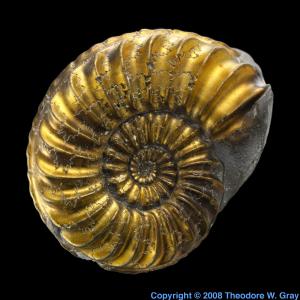
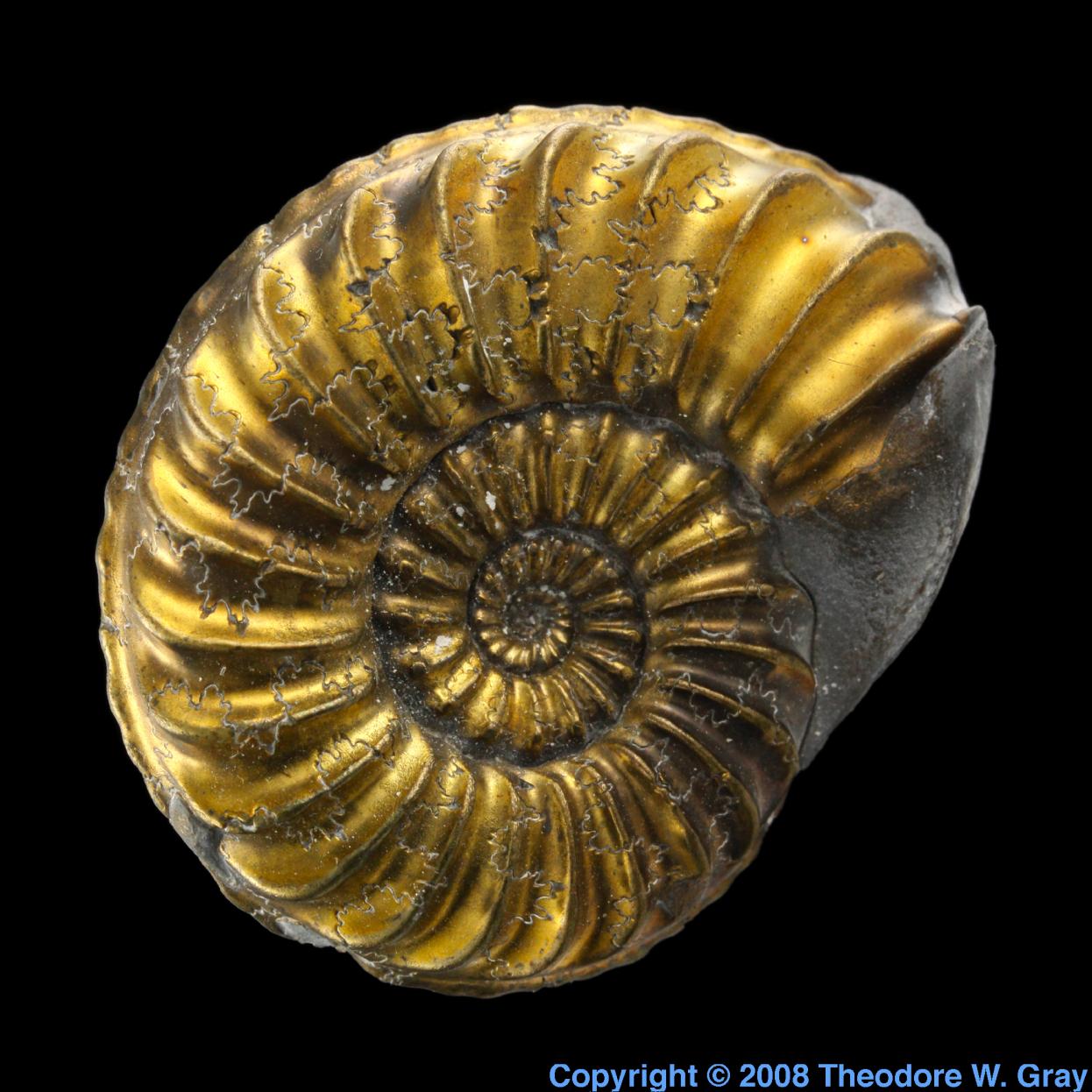
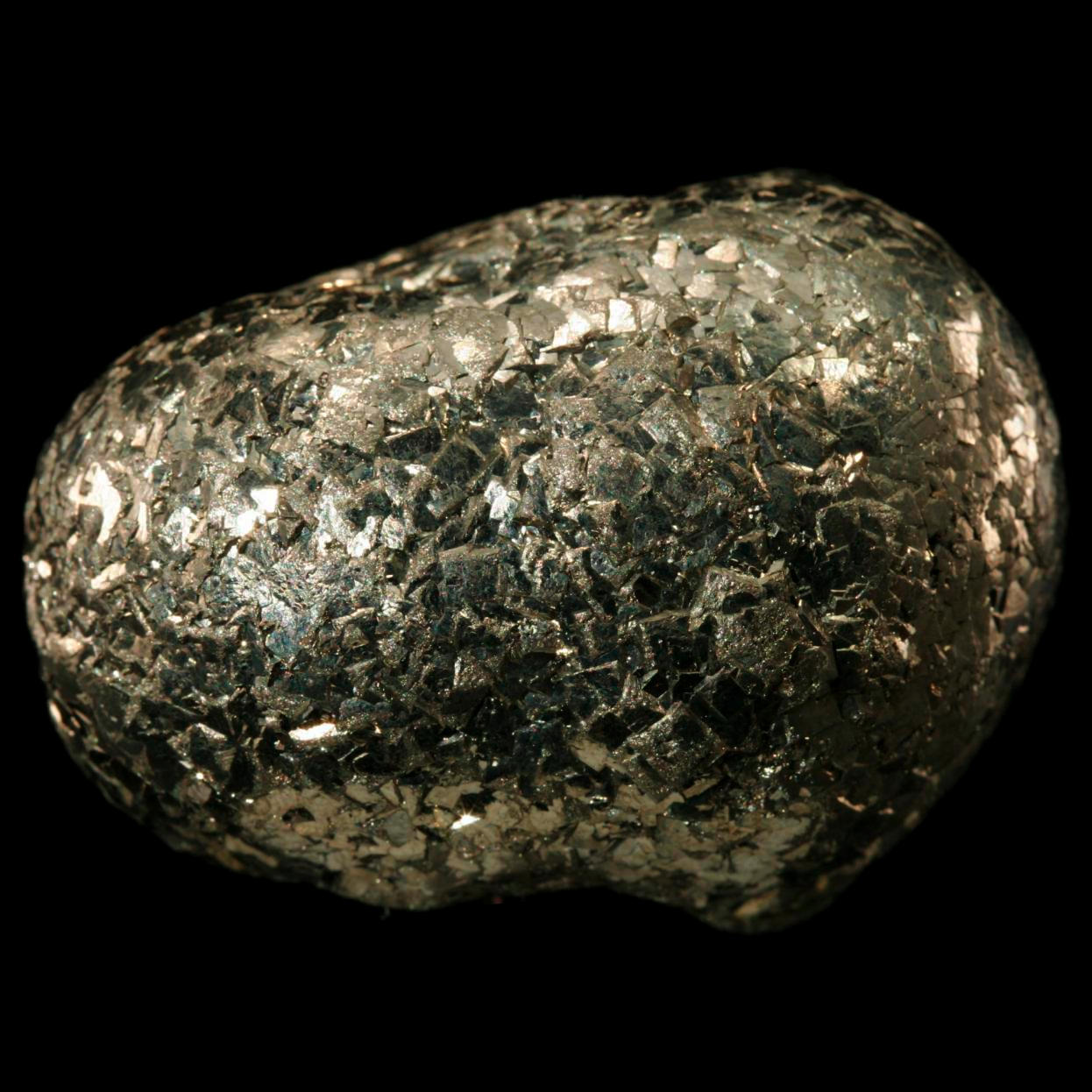
A fossil is the impression left when the body of an ancient animal or plant is encased in some kind of mud or sand, which turns into rock over great expanses of time. After the matrix around the object has become firm enough to hold its shape, the object itself is slowly replaced by some other mineral that works its way in from the surrounding matrix. If all goes well, the rock or mineral formed where the body used to be is different enough from the surrounding rock or mineral that it's possible to separate them and rediscover the original shape of the object. (If it doesn't go well, either there's no fossil formed, or it's one that is so subtle you just don't notice it.)
A fossil can be formed out of all kinds of different minerals, so there are really two entirely separate ways to describe one: What it's a remnant of, and what it's made out of. This sample is a fossil of a type of animal called an Ammonite, but even more interestingly, it happens to be made of pyrite (iron sulfide), also known as "fool's gold" because it looks a lot like gold.
Imagine that: An animal shape recreated in shiny gold crystals, and it's an entirely natural process. Amazing.
Technical details: This is a Pleurocerus Ammonite from the Jurassic age, found in Nuremburg, Germany.
Source: indiana9 Fossils
Contributor: Theodore Gray
Acquired: 29 March, 2003
Price: $15
Size: 1.5"
Composition: FeS2
|
|
|
|
|
|
|
Pyritized Ammonite.
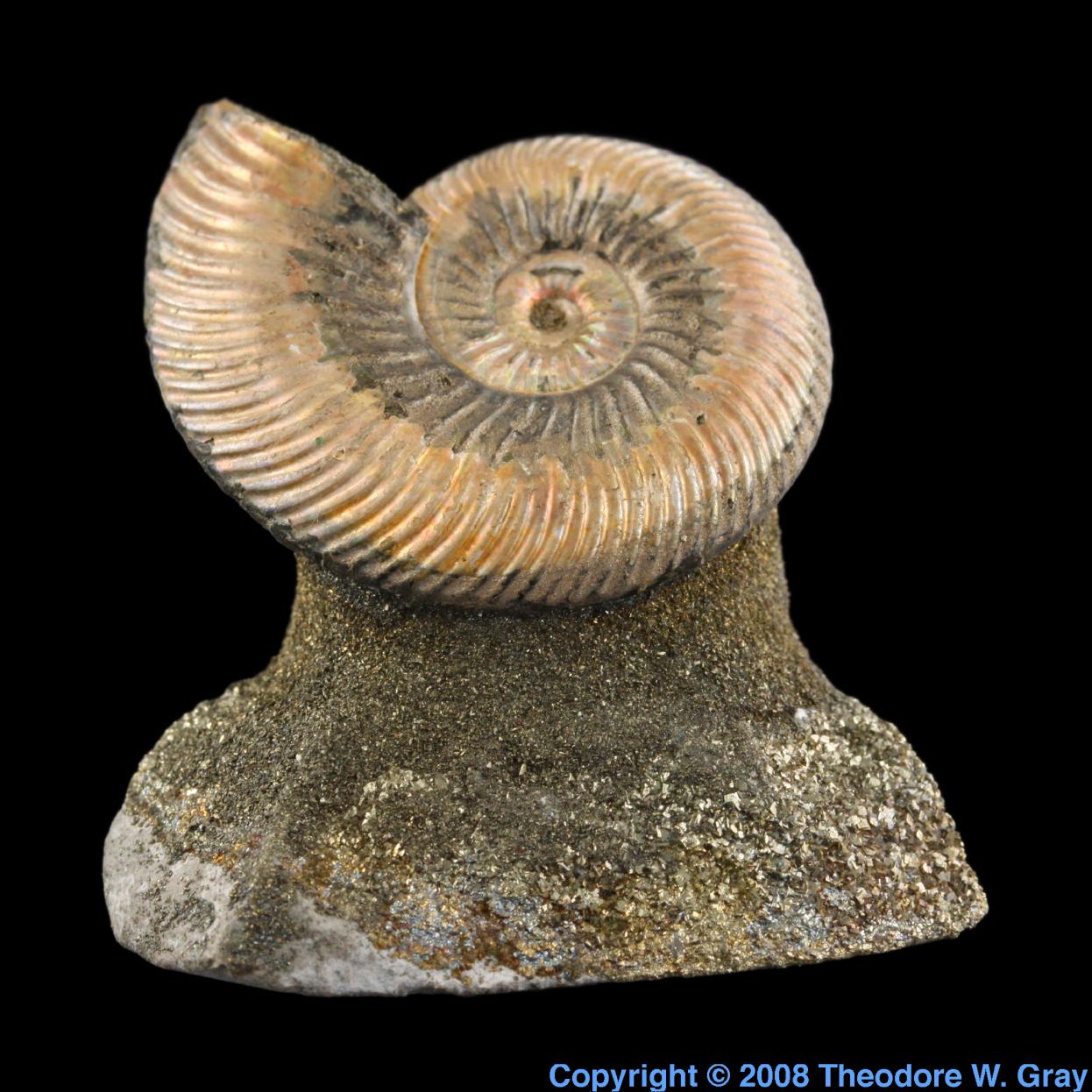
This ammonite was tagged as a Quenstediceras sp. from the Jurassic age (161 million years old), Callovain Stage, Ulyanovsk, Russia. The matrix of rock it's attached to shows very nice pyrite crystals. See the sample information above for more about this type of fossil.
Source: Time Trips
Contributor: Theodore Gray
Acquired: 29 March, 2003
Price: $12.95
Size: 1.5"
Composition: FeS2
|
|
|
|
|
|
|
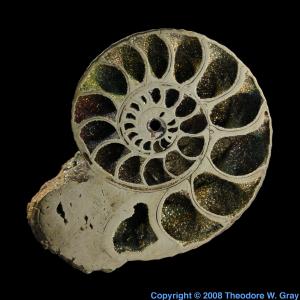
Pyritized Ammonite.
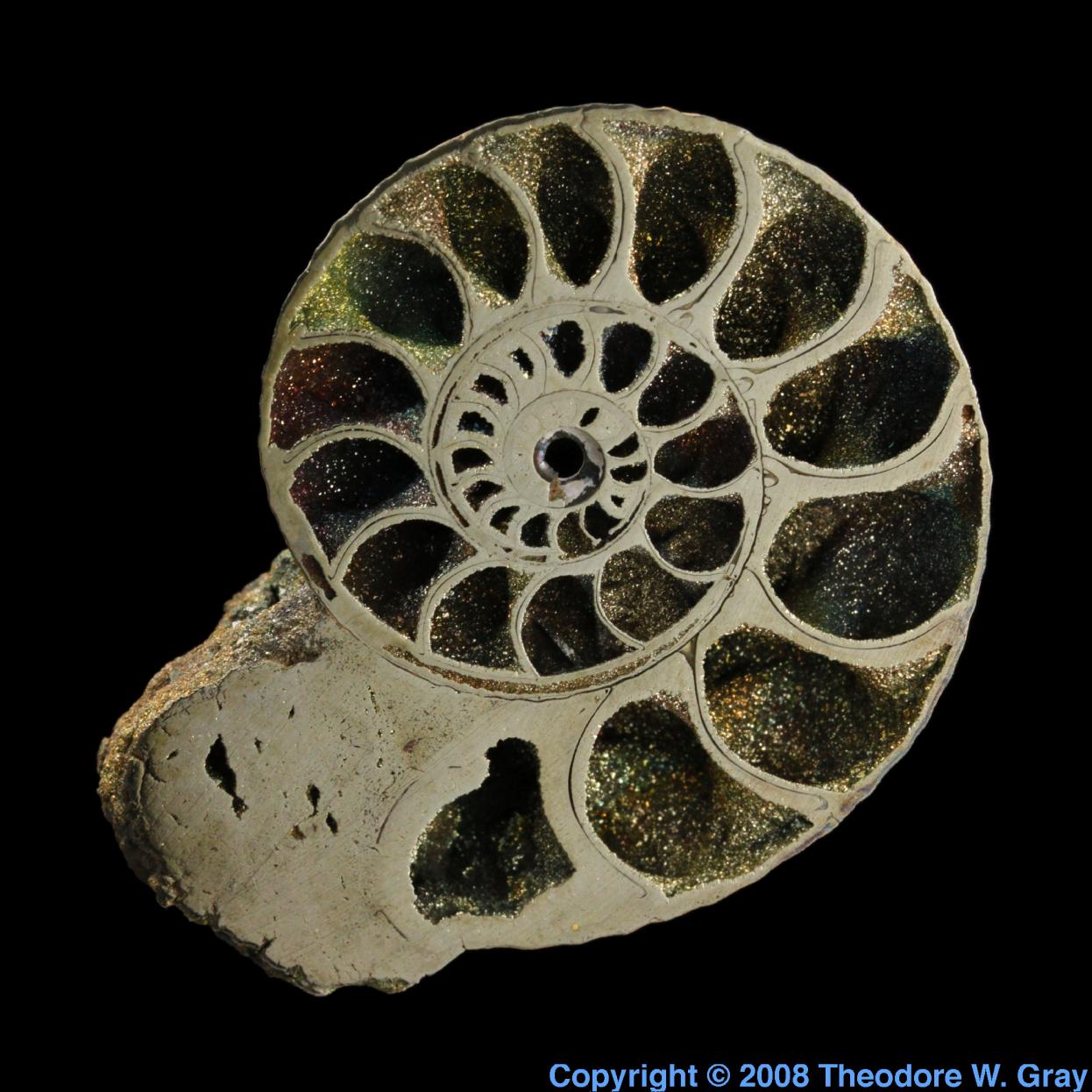
See the previous two samples for more information about this type of fossil. This is not, I repeat not, an artificially enhanced sample! It's not plated or painted or metalized, just cut and polished to bring out the natural shine of the pyrite crystal.
Source: Exclusive Fossils/Nord Fossil
Contributor: Theodore Gray
Acquired: 29 March, 2003
Price: $25
Size: 1.5"
Composition: FeS2
|
|
|
|
|
|
|
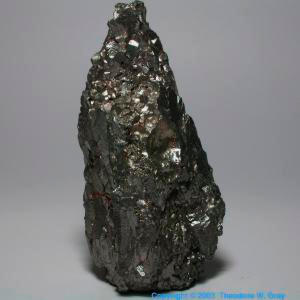
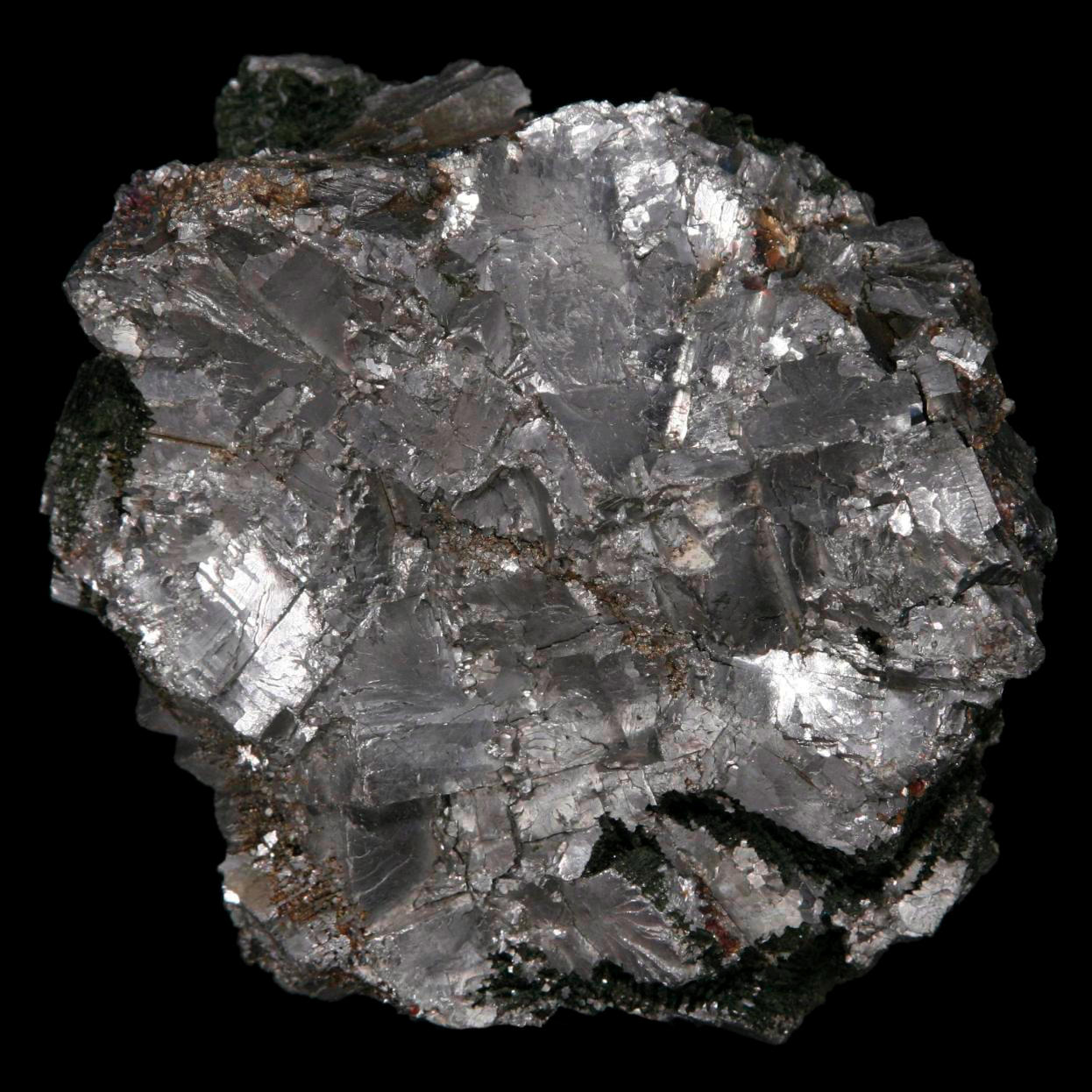
Ferrochrome crystal.
Ferrochrome is an alloy (mixture) of iron and chromium. It is a common intermediate material between chromium ore and finished products involving iron and chromium, such as the common high strength chrome-vanadium steel. I believe that it is simple cheaper and easier to ship ferrochrome to customers rather than try to refine pure chromium, which would just end up getting mixed with iron again anyway: No sense spending a lot of time and money purifying something that isn't going to be used in pure form anyway.
This is a very lovely crystal, heavy and mineral-like, though it is an artificial product.
Source: eBay seller valdor
Contributor: Theodore Gray
Acquired: 3 June, 2003
Price: $10
Size: 2.5"
Composition: FeCr
|
|
|
|
|
|
|
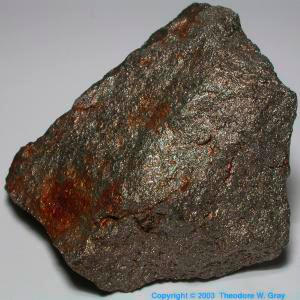
Ferrochrome lump.
Ferrochrome is an alloy (mixture) of iron and chromium. It is a common intermediate material between chromium ore and finished products involving iron and chromium, such as the common high strength chrome-vanadium steel. I believe that it is simple cheaper and easier to ship ferrochrome to customers rather than try to refine pure chromium, which would just end up getting mixed with iron again anyway: No sense spending a lot of time and money purifying something that isn't going to be used in pure form anyway.
This is a lumpy solid, not as nice as the crystal above, but still satisfyingly heavy.
Source: eBay seller valdor
Contributor: Theodore Gray
Acquired: 3 June, 2003
Price: $5
Size: 2"
Composition: FeCr
|
|
|
|
|
|
|
|
|
|
Ferrotitanium lumps.
Like ferrochrome, ferrotitanium is a master alloy used in creating iron/titanium alloys that contain a much smaller percentage of titanium. It's just easier and cheaper to ship the titanium in the form of already mixed alloys, rather than in pure form. For one thing, it's rather hard to melt pure titanium to get it to go into the alloy you're trying to make.
Source: John Wechselberger
Contributor: Theodore Gray
Acquired: 21 August, 2003
Price: $5
Size: 1.25"
Composition: FeTi
|
|
|
|
|
|
|
Marcasite.
The tag that came with sample reads as follows:Marcasite
A dimorph of iron pyrite from Montezuma Co., Colorado
This specimen was found in the tailings of the THUNDER mine north of Mancos, Colorado. Iron Pyrite is FeS2 and so is Marcasite. However it is a separate mineral and often found in gold deposits. I traded this sample for a few of my strange copper nodules.
Source: Calvin Webb
Contributor: Calvin Webb
Acquired: 1 September, 2003
Price: Donated
Size: 1"
Composition: FeS2
|
|
|
|
|
|
|
Native Arsenic with Loellingite.
This heavy (and toxic!) lump of naturally occurring arsenic contains a small, light colored inclusion of loellingite, which is FeAs2.
Source: Frank Liebscher
Contributor: Frank Liebscher
Acquired: 28 January, 2004
Price: Donated
Size: 1.25"
Composition: As+FeAs2
|
|
|
|
|
|
|
|
|
|
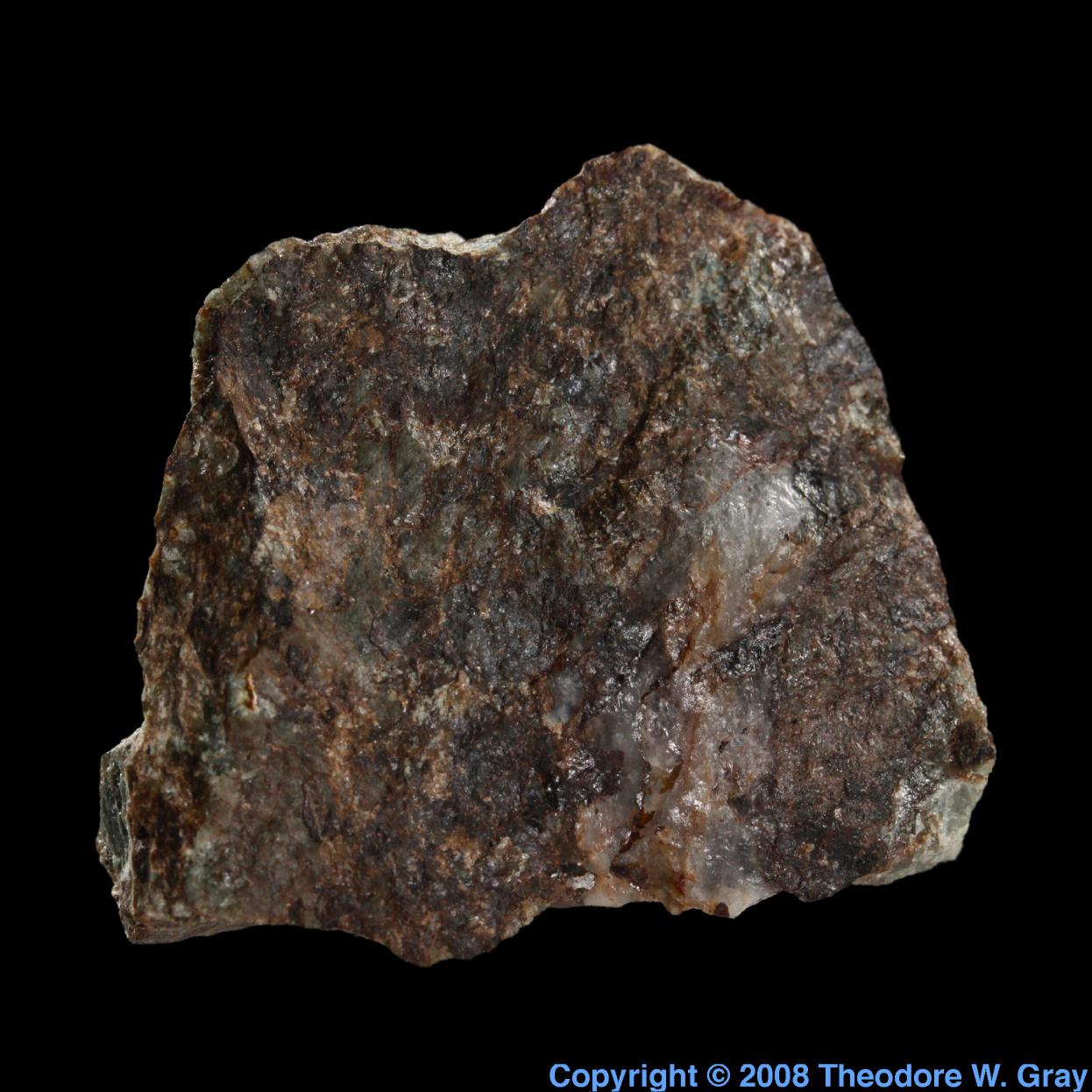
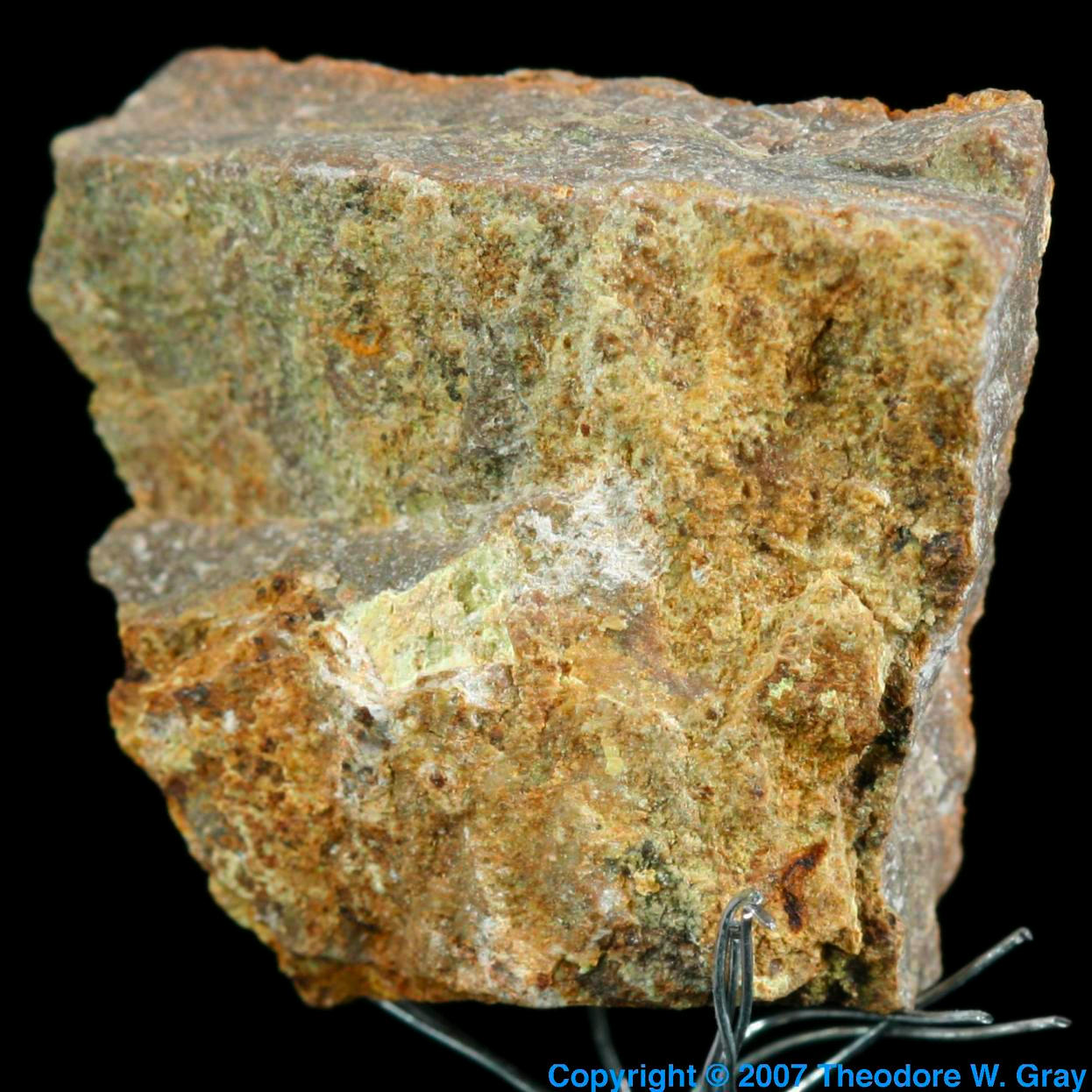
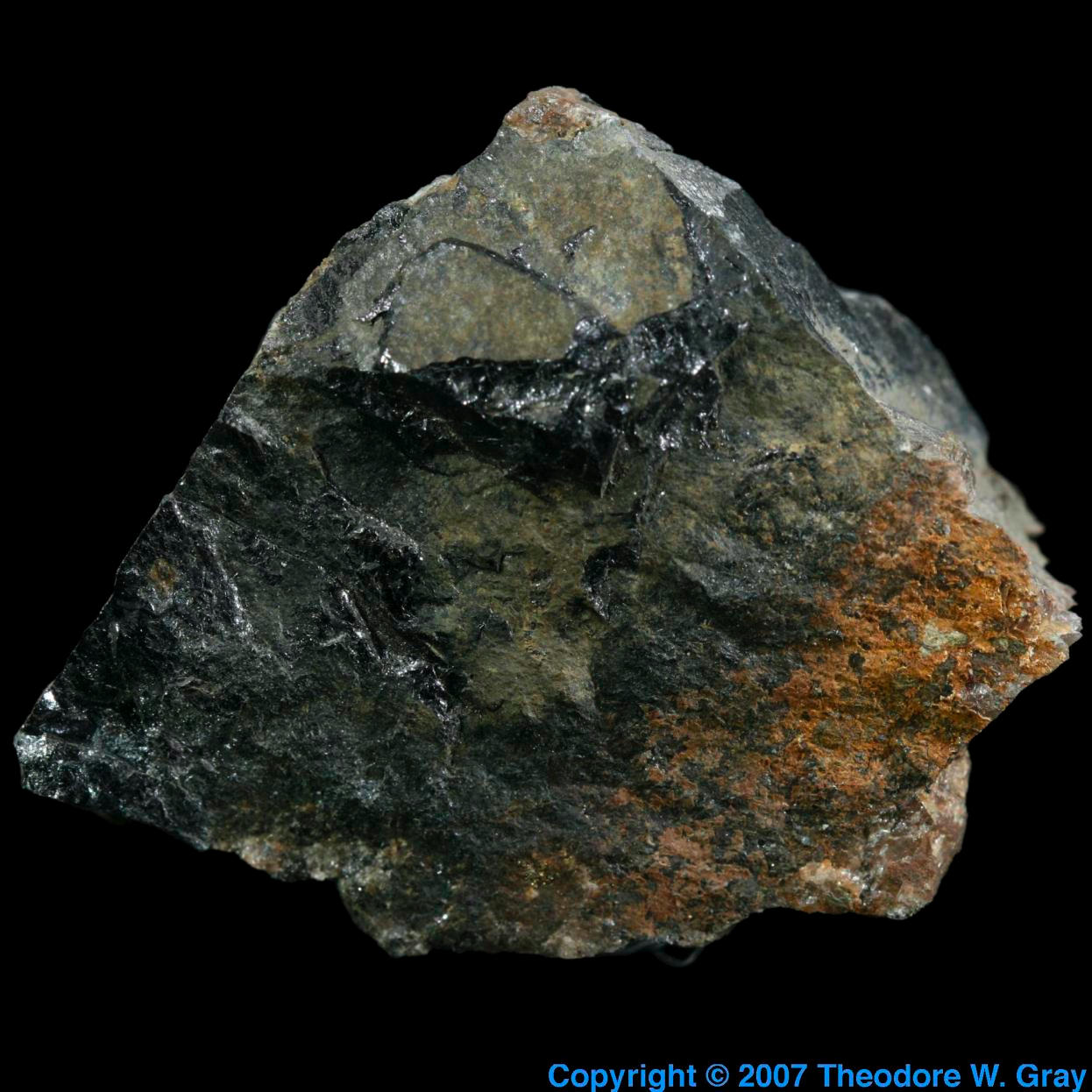
Aeschynite.
The card that came with this shale-like blackish mineral says the following about the name: "From Gk. aeschyne, shame, alluding to the inability of chemists at the time of its discovery to separate some of its constituents". Hm, I wonder if it was the chemists who came up with this name, or the geologists who gave it to them to analyze.
This specimen is from Molland in Iveland, Norway. I bought it for its thorium content: Not that many minerals contain thorium and I'm trying to collect them all.
Reader Magnus Alvestad sent this interesting information about Iveland:Hi. I noticed that your Aeschynite sample is from Iveland in Norway. The small community of Iveland is actually famous for their mines and minerals. Here's a folder with some information about a local exhibition. They also have at least 5 mines that are open to the public for a small price, where you can dig for minerals yourself.
Source: SoCal (Nevada), Inc
Contributor: Theodore Gray
Acquired: 20 September, 2005
Text Updated: 1 December, 2008
Price: $29
Size: 1.5"
Composition: (Y, Ca, Fe, Th)(Ti, Nb)2(O, OH)6
|
|
|
|
|
|
|
|
|
|
|
|
|
Actinolite asbestos.
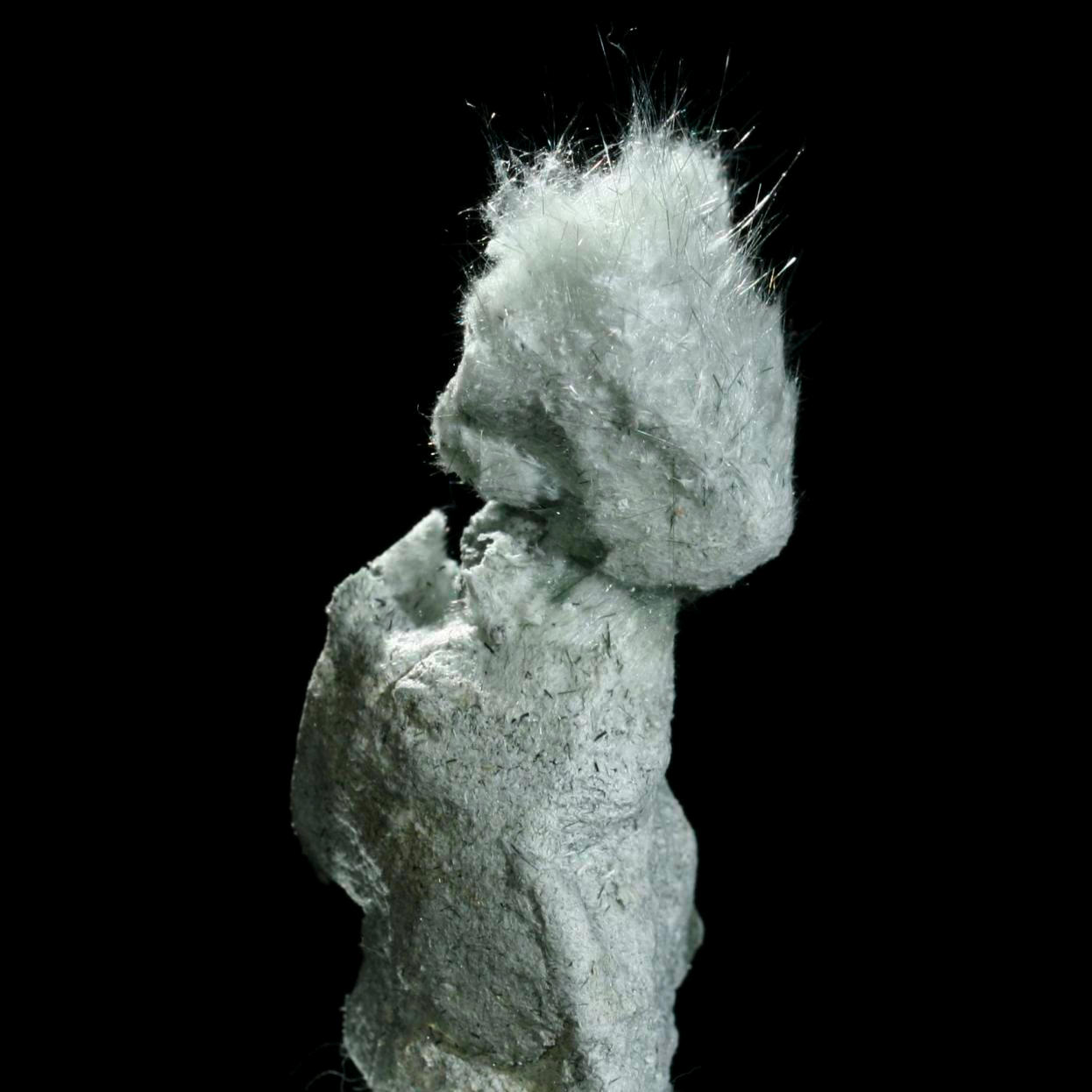
The name "asbestos" used to mean a wonder-material, an insulator without equal and a strengthening fiber so cheap and strong it was used in building materials worldwide. Today the name means nothing but death and ruin.
Asbestos had been used so widely and for so long that it must have seemed beyond credibility when evidence first started appearing that it might be harmful. It is, after all, just a natural mineral, a rock dug from the ground. It contains no toxic elements or compounds. As a silicate mineral, asbestos is a member the group of minerals that make up as much as 90% of the earth's crust. How could such a common rock possibly be dangerous?
The answer lies in its shape. As you can see from this and the other asbestos samples below, the difference between asbestos and other silicate minerals is that asbestos appears in the form of very fine hair-like fibers. This fibrous nature is what makes it so useful as an insulator and building material: It can be woven, braided, pressed into mats, or mixed with plaster or concrete to make a strong, fiber-reinforced material. (It's also fireproof and impervious to most chemicals: What more could you ask for? To this day there are no really satisfactory substitutes for some applications from which asbestos has been banned.)
The fibers are not just fine, they are ultra-fine: The ends of the natural fibers taper down to molecular sharpness, with a tip that is literally no more than a few atoms across. Lodged in the body, most commonly in the lungs when stray fibers are inhaled, these tips can worm their way into individual living cells and tickle the DNA in a way that no blunt artificial fibers can.
The ability to touch, and damage, DNA makes asbestos fibers potent carcinogens: Remarkably, unlike virtually all other carcinogens, they cause cancer purely mechanically, not chemically or by radiation. They literally poke the strands of DNA in a living cell without killing the cell. Topping off their deadly potential, asbestos fibers, unlike for example modern fiberglass fibers, last pretty much forever in the environment of the lungs. Fiberglass is said to dissolve after a few months in the lungs, and in any case isn't sharp enough to cause molecular-level damage (at least, that's what people think now, we'll see how the evidence stacks up in another 50 years). But asbestos fibers will sit there for decades on end, firmly lodged in the deepest recesses of the lungs, just waiting for some unlucky DNA to happen by.
In principle asbestos could cause cancer anywhere in the body, but it's the lungs that are most vulnerable. As with many hazards, its layer of dead cells protects the skin from asbestos, as does the lining of the gut. But in the lungs the living cells are right on the surface, vulnerable to anything that finds its way past the nose and sinuses.
The most serious disease caused by asbestos is mesothelioma, a form of cancer. If you look up mesothelioma in google, you will find lawyers, lawyers, and more lawyers. Everywhere you look, it's lawyers as far as the eye can see. Even websites that seem to be purely informational or medical in nature will, on closer examination, turn out to be sponsored by a law firm. The reason of course is that there is big money in mesothelioma, specifically in suing any and every company that ever had its doorstep darkened by a product containing asbestos in any form.
There is probably some guilt in the asbestos industry. The real truth will most likely never be known, since to admit it would mean instant financial ruin for anyone who spoke, but my guess is that some people, including some senior people at large companies, knew pretty well that asbestos was harmful, and instead of immediately shutting their companies down and putting hundreds of people out of work, they tried to hide the evidence and thus condemned more workers and customers to death. (Business is complicated, much like life.)
But the current orgy of asbestos litigation is clearly targeting people far from any reasonable definition of guilt. Lawyer's websites list literally hundreds of companies and job sites, including small plumbing distributors, hospitals, schools, and even court houses. All places where asbestos was manufactured, sold, handled, or used. All places liable to being sued for millions of dollars by someone who wishes to hold them accountable for the disease that is slowly but surely killing them.
Saying that a small plumbing company that sold or installed asbestos insulation is liable for the illness of its workers or customers throws common notions of liability on their head. These small business people had no more reason to believe asbestos was dangerous than did their employees and customers: No one imagined it. No one considered it. No one would have believed it. And if some large companies had internal documents suggesting there was cause for concern, they certainly didn't share those with the local plumbing contractor!
A lot of good people have been ruined by asbestos litigation. But a lot of people have died because of asbestos, and juries tend to want to find a way to help sick people, even if it means extracting money from someone who did nothing wrong, someone whose only guilt is being in the wrong place at the wrong time. Which is to say, being the owner of a business that sold a legal product that they and everyone they knew thought was safe.
What would be a fair solution? Society benefitted from asbestos, society (which is to say the government) should pay to take care of those harmed by it. In most countries, that's just what happens (and not just for asbestos-related disease). But in America, we instead have a system in which we pick random companies and extort them for sometimes more money than they have, to enrich a few sick people beyond any reasonable need, while diverting a large percentage of the money to lawyers who, much as some people might wish it, don't even have mesothelioma. Those not lucky enough to find a target with deep pockets, or too honest to blame a blameless party for their misfortune, languish in poverty and pain until death takes them.
It makes about as much sense as throwing darts at a board to decide who pays for which disease: OK, Amtrack, you pay for lupus, General Motors gets colon cancer, Microsoft can take gastroenteritis, Chiquita gets mesothelioma, and for hives we will pick, oh, say, McDonald's. (Yes, Chiquita Bananas is on the list of companies targeted for asbestos litigation. The other company-disease associations I made up and have no basis in fact. So far as I know.)
One thing that is often missed in discussion of asbestos is that the minerals it comes from are beautiful! I bought a set of six absolutely stunning mineral samples representing the range of natural sources for this amazing product.
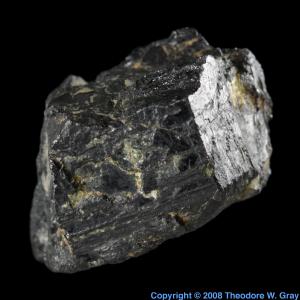
The photo associated with this text is of Actinolite, one of the most potently carcinogenic forms of asbestos. Its sharp, needle-like fibers make it especially dangerous. The samples below represent all the major natural sources of asbestos fibers.
Mineral details: Actinolite (variety "Byssolite"), amphibole group, double-chain silicate. From the Greek aktinos ("ray"). French Creek, Chester County, Pennsylvania, USA.
Source: eBay seller star-stuff
Contributor: Theodore Gray
Acquired: 10 April, 2006
Text Updated: 1 June, 2006
Price: $30
Size: 2"
Composition: Ca2(MgFe)5Si8O22(OH)2
|
|
|
|
|
|
|
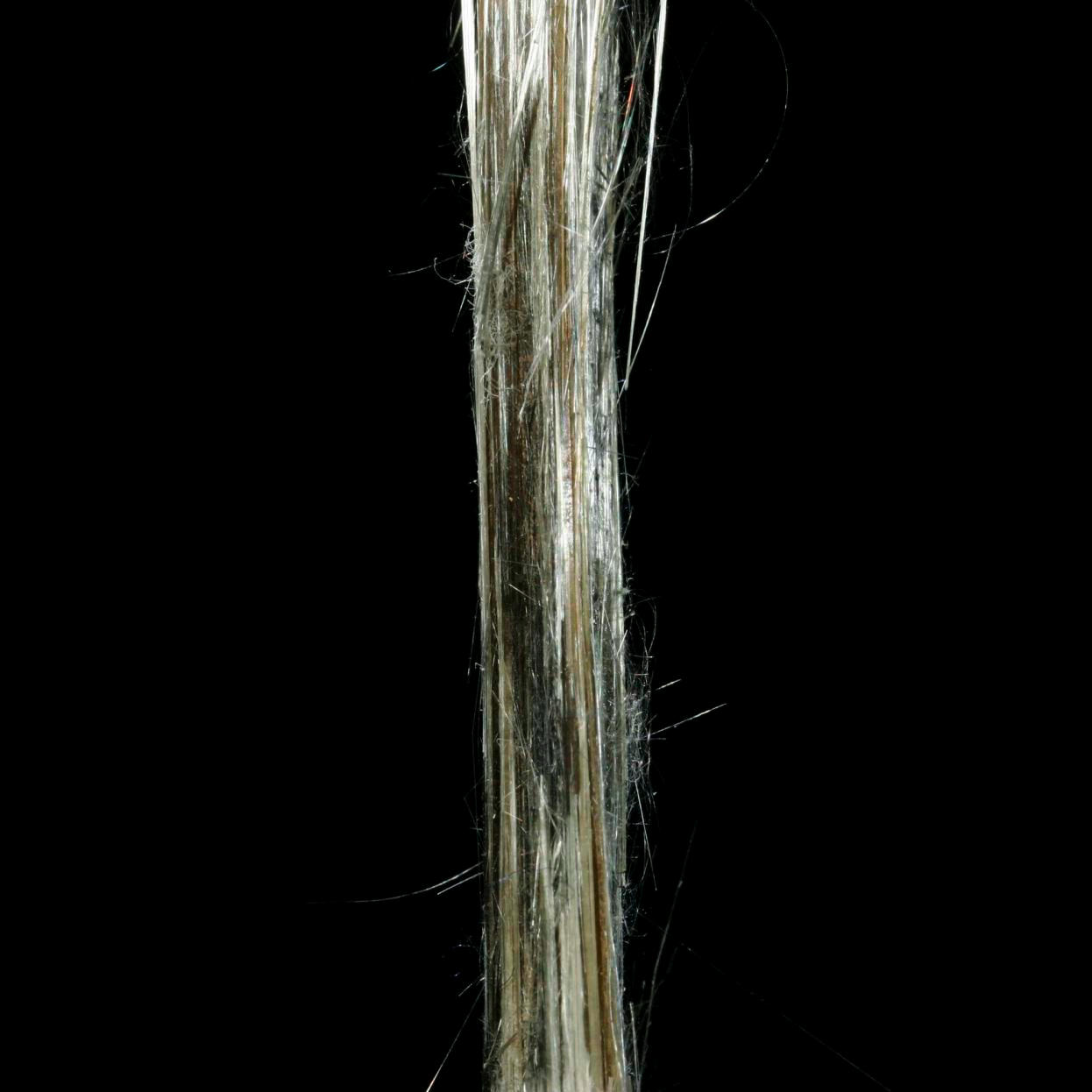
Grunerite asbestos.
See above Actinolite sample for an extended discussion of asbestos, mesothelioma, lawyers, and litigation.
Mineral details: Grunerite (variety "Amosite"), amphibole group, double-chain silicate. Name is derived from an acronym of an original mining locality (AMOSA Mine, Asbestos Mines Of South Africa). Sample from Limpopo Province, South Africa.
Source: eBay seller star-stuff
Contributor: Theodore Gray
Acquired: 10 April, 2006
Text Updated: 30 May, 2006
Price: $30
Size: 2"
Composition: (FeMg)7Si8O22(OH)2
|
|
|
|
|
|
|
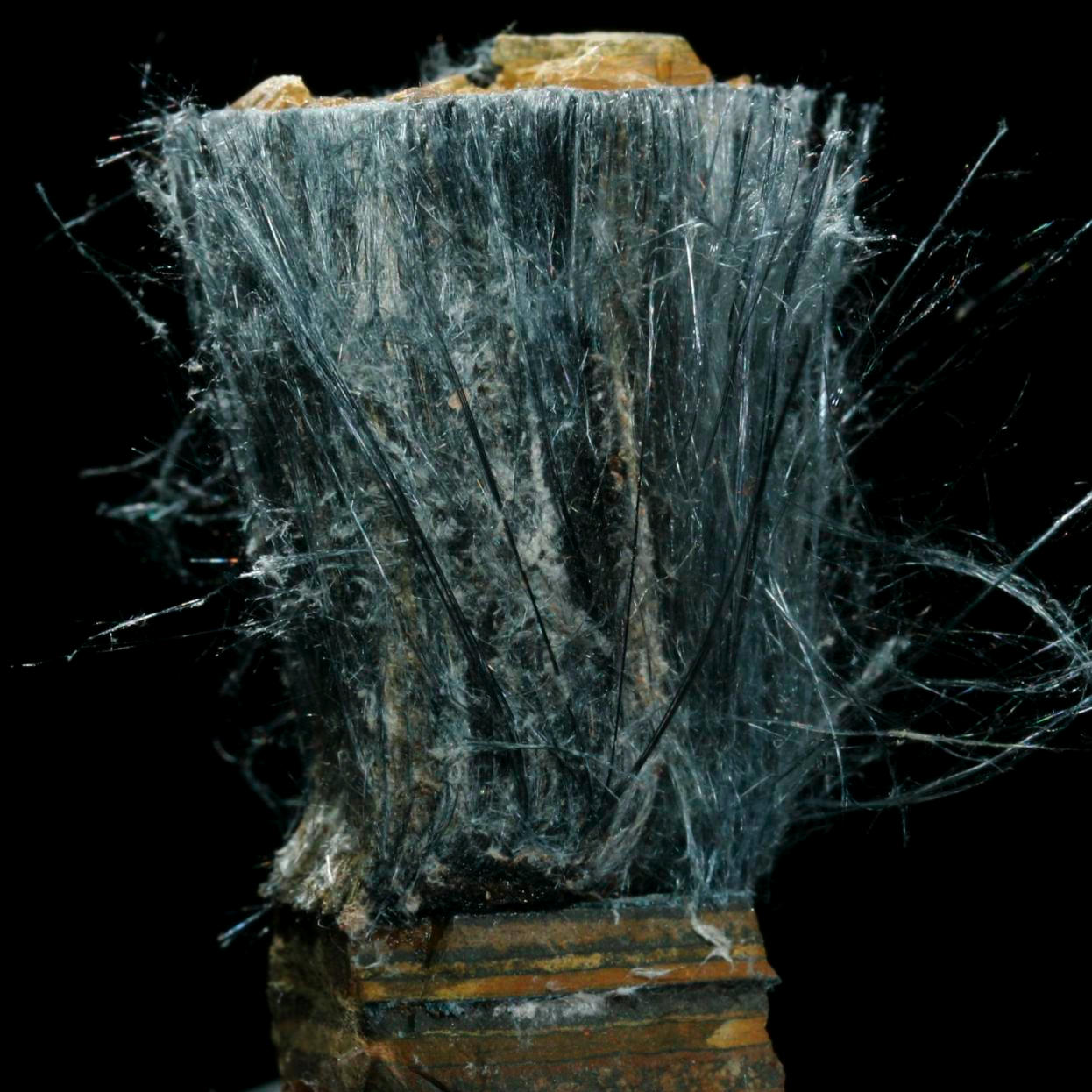
Riebeckite asbestos.
See above Actinolite sample for an extended discussion of asbestos, mesothelioma, lawyers, and litigation.
Mineral details: Riebeckite (variety Crocidolite), amphibole group, double-chain silicate. From the Greek krokid ("nap on woolen cloth"). Kuruman, Northern Cape Province, South Africa.
Source: eBay seller star-stuff
Contributor: Theodore Gray
Acquired: 10 April, 2006
Text Updated: 30 May, 2006
Price: $30
Size: 2"
Composition: Na2Fe2(FeMg)3Si8O22(OH)2
|
|
|
|
|
|
|
Ferro-cerium fire starter.
This is a great little gadget, a BlastMatch fire starter from www.survivalinc.com. It consists of a hefty (ca. 1/2" diameter) stick of iron-mischmetall alloy (mischmetall is a mixture of various rare earth elements typically containing a majority of cerium, so this alloy is also known as ferro-cerium). Ferro-cerium is what lighter flints are made of, so this is basically a giant lighter flint, which creates sparks when struck or scraped with something hard. This gadget includes a hard steel blade and a spring mechanism that lets you scrap the blade hard against the ferro-cerium stick just by jabbing the stick down on a hard surface. The net effect is that if you hold it firmly and push it hard down onto a surface, you get a shower of sparks flying off it, enough to light any sort of dry tinder, paper, etc. It's meant to be used as a camp fire starter or survival tool, but if you enjoy showers of sparks, this is way too much fun to leave to wet mornings in the woods.
Source: Survival, Inc
Contributor: Theodore Gray
Acquired: 24 February, 2007
Text Updated: 24 February, 2007
Price: $25
Size: 2"
Composition: FeCe
|
|
|
|
|
|
|
Confiscated Davidite.
This mildly radioactive Davidite ore was confiscated from a student who brought it to school, not realizing that schools tend to freak out about radioactive things, whether they are truly dangerous or not. The original source is United Nuclear and it's perfectly legal.
Source: Anonymous
Contributor: Anonymous
Acquired: 8 May, 2007
Text Updated: 9 May, 2007
Price: Donated
Size: 1"
Composition: (La,Ce,Ca)(Y,U)(Ti,Fe)20O38
|
|
|
|
|
|
|
More confiscated Davidite.
This mildly radioactive Davidite ore was confiscated from a student who brought it to school, not realizing that schools tend to freak out about radioactive things, whether they are truly dangerous or not. The original source is United Nuclear and it's perfectly legal.
Source: Anonymous
Contributor: Anonymous
Acquired: 8 May, 2007
Text Updated: 9 May, 2007
Price: Donated
Size: 1"
Composition: (La,Ce,Ca)(Y,U)(Ti,Fe)20O38
|
|
|
|
|
|
|
Encrusted ferrochrome crystal.
This ferrochrome lump came along with some much larger ones (see listings), and it's interesting because on the back side (click one of the rotation links to see it from all sides) it's heavily encrusted with some kind of green material. My guess is that it's chromium oxide, which is green, how it got there I don't know.
Source: mrx
Contributor: mrx
Acquired: 15 July, 2005
Text Updated: 20 June, 2007
Price: Trade
Size: 4"
Composition: FeCr
|
|
|
|
|
|
|
Invar block.
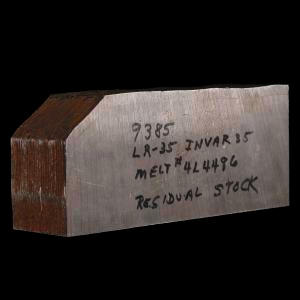
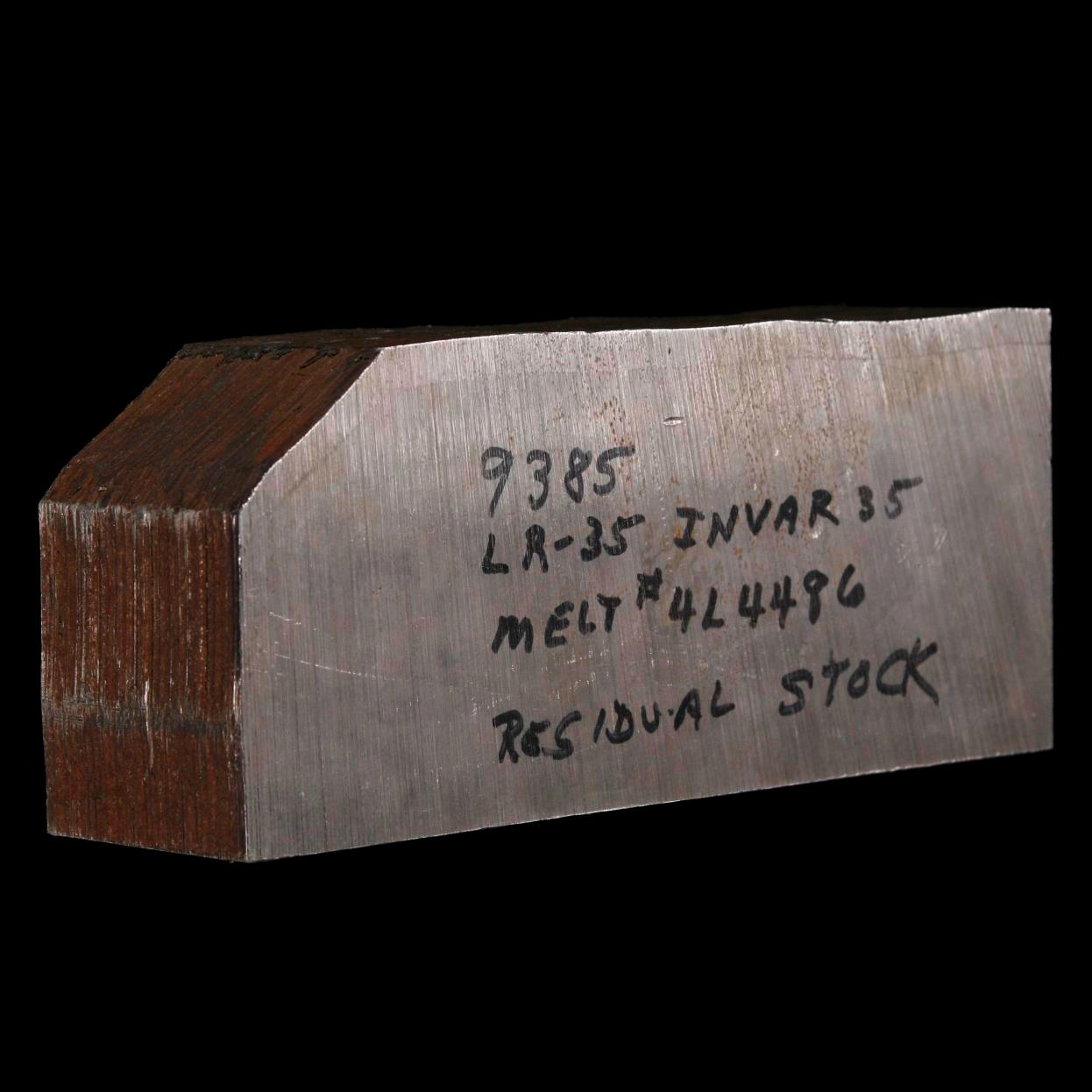
Invar is an alloy of primarily iron (64%) and nickel (36%), known for is unusually low coefficient of thermal expansion. This makes it useful for precision instruments and measuring devices that should as much as possible remain the same size and shape at all times. This block would be excellent for smashing such a precision instrument into a tangle mess of broken gears and dials. It weighs about 13 pounds and appears to have been roughly cut with a large band saw.
Source: eBay seller boss1
Contributor: Theodore Gray
Acquired: 19 June, 2007
Text Updated: 20 June, 2007
Price: $60
Size: 10"
Composition: FeNiCCr
|
|
|
|
|
|
|
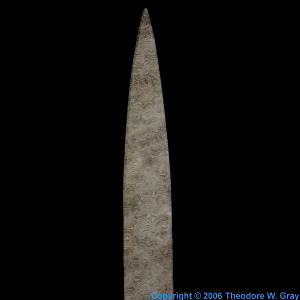
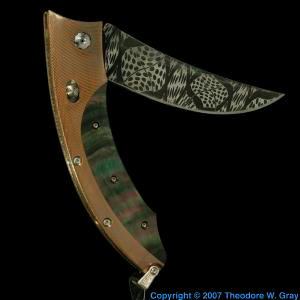
Insanely expensive knife.
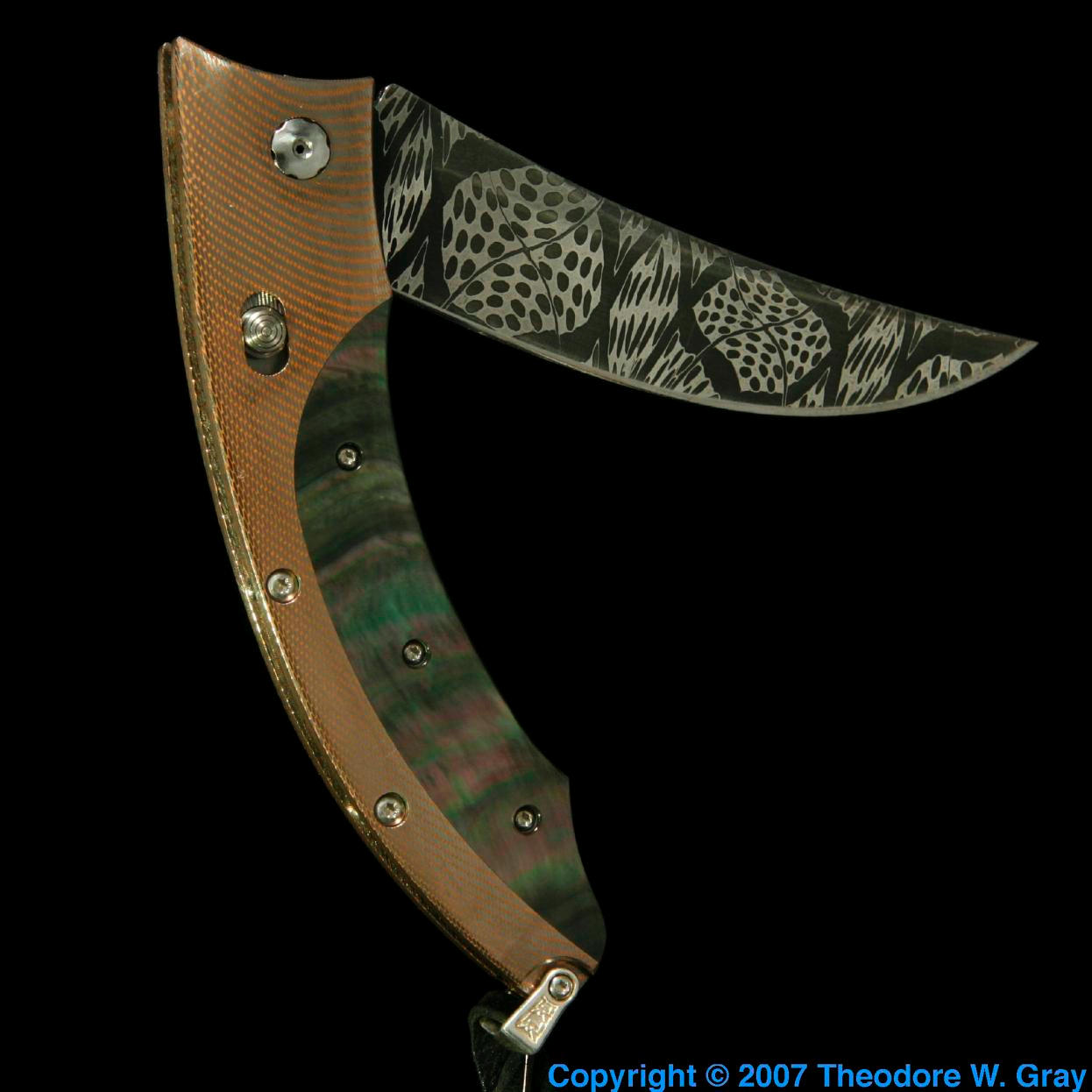
This is a really, really nice knife, but honestly, I don't know what I was thinking. I plead temporary insanity. Not that I regret it or anything, this is just too good an, um, element sample to pass up. A bargain at half the price.
Anyway, the blade is the most remarkable thing about it, with the handle running a close second. The blade is patterned Damascus steel: What looks like an etched design on the surface actually goes all the way through the thickness of the blade. You can see other examples of Damascus steel on my site, but notice how they all have random wavy patterns.
Damascus steel is made by taking a sheet of steel, folding it over, heating it in a forge, then hammering it until it's as thin as it was before being folded. Then it's folded again, heated up, hammered out, etc, until it's been folded many times. Because the surface is being oxidized and carbonized from the heat at each stage, you end up with dozens or hundreds of alternating layers of bright steel and hard, dark, carbonized steel. For hundreds of years this was the finest, sharpest, and hardest steel available.
But look at the blade: The pattern is anything but random. In fact, it looks a lot like a 3D plot from Mathematica, which is what first attracted me to the knife. This is Damascus steel where the sequence of folds has been carefully designed to result in a particular pattern, not just a random waves. It's still folded and hammered by hand, but according to a very particular sequence designed, I am told, by computer (thought not with Mathematica, so far as I know).
For the blade it's the pattern that makes it special, but for the handle it's the materials. The handle is also made with a Damascus-style folding technique, but instead of folding steel onto itself, it's made by folding together alternating layers of niobium and copper. Oooo, a niobium-handled knife, now that really gets me going. Looking closely, you can see the reddish copper inclusions clearly within the silver colored niobium metal. (There's also an inlay of black pearl, but this is of no interest to an element collector.)
Adding a further level of interest, among all my dangerous and/or radioactive samples, this is the only one that it might actually be illegal for me to own. It is, you see, a fully spring-loaded switchblade. Push a button and the blade snaps out under its own power. According to my reading of the federal switchblade law there's only one way that I could legally own this knife, and that's by cutting off my arm. Yes really, let me quote from United States Code, Title 15, chapter 29, section 1244 Exceptions:(4) the possession, and transportation upon his person, of any switchblade knife with a blade three inches or less in length by any individual who has only one arm. Since the blade is less than 3" long, the solution is simple.
Or maybe not so simple, because though with one arm I would be allowed to possess and carry it according to Federal law, according to Illinois state law I would still be in hot water. In California, where I got the knife, it is legal to possess such a knife even if you have two arms, but not to carry it on your person, regardless of your arm count. So if anyone asks, I keep the knife in California, but so far have resisted the temptation to use it to cut off my arm.
Source: California Knife Store
Contributor: Theodore Gray
Acquired: 4 September, 2007
Text Updated: 6 September, 2007
Price: $3000
Size: 3.5"
Composition: FeNbCu
|
|
|
|
|
|
|
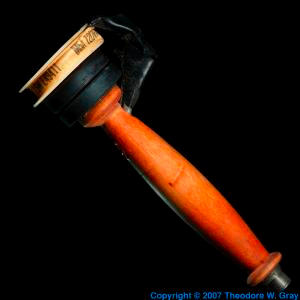
Electromagnetic Sensor.
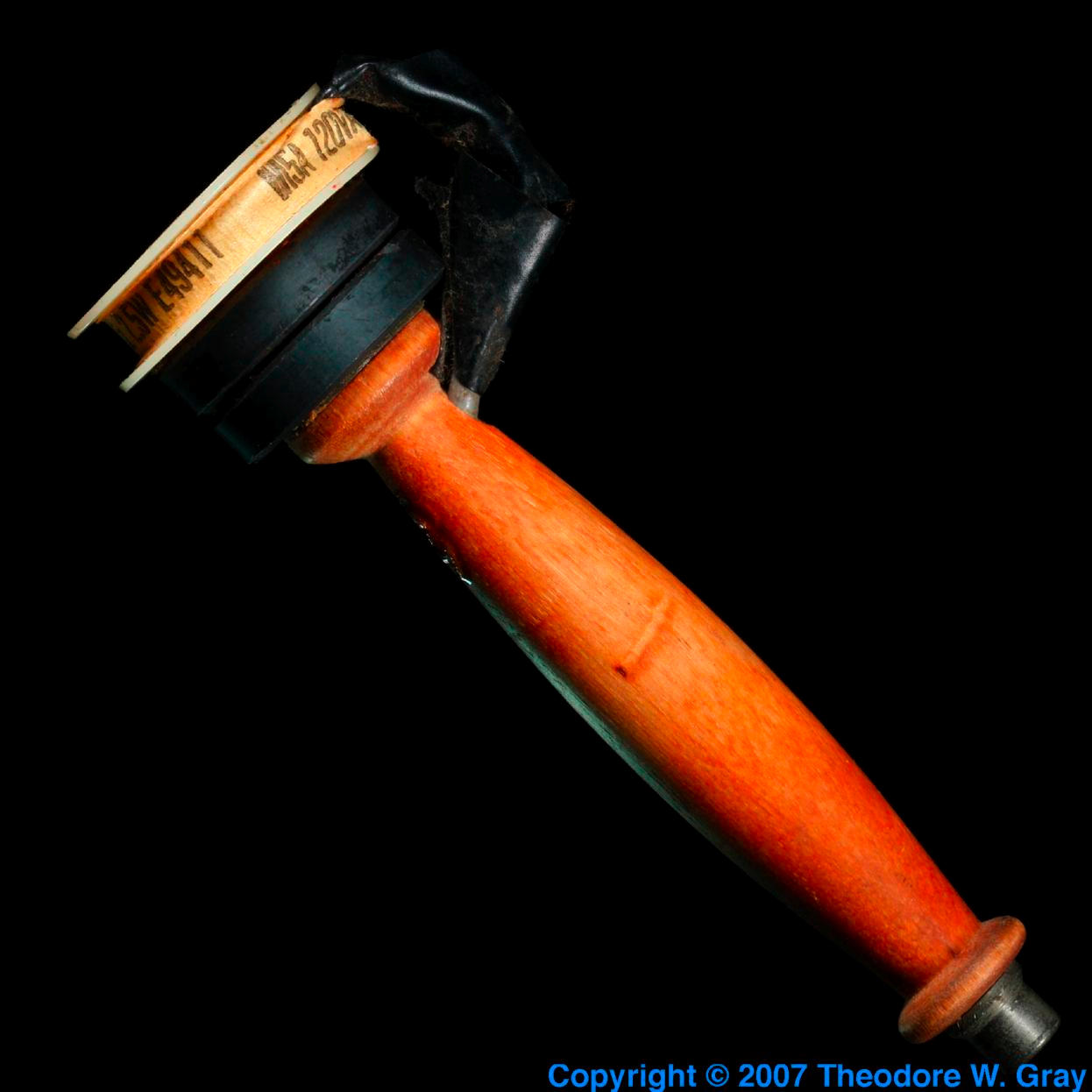
Ah, this brings back memories. I made this thing some time in high school: It's supposed to be a general purpose "microphone" for electric or magnetic fields or vibrating metal parts. I turned the handle on a little toy wood lathe, and got a coil of fine wire from a small electric motor. Behind the coil are a couple of permanent magnets from Radio Shack. If you connect it (using the RCA jack at the base of the handle) to an audio amplifier you can actually hear things when you hold it near something that's producing oscillating fields (e.g. a speaker, electric appliance, etc). The idea behind the permanent magnets is to make it work with any vibrating metal, not just electrically-active objects, but that part never really worked as well as I'd hoped.
Source: Theodore Gray
Contributor: Theodore Gray
Acquired: 23 December, 2007
Text Updated: 23 December, 2007
Price: Priceless
Size: 5"
Composition: CuFe+C(H2O)
|
|
|
|
|
|
|
Arc-melted magnetic alloy.
Description supplied by the source:
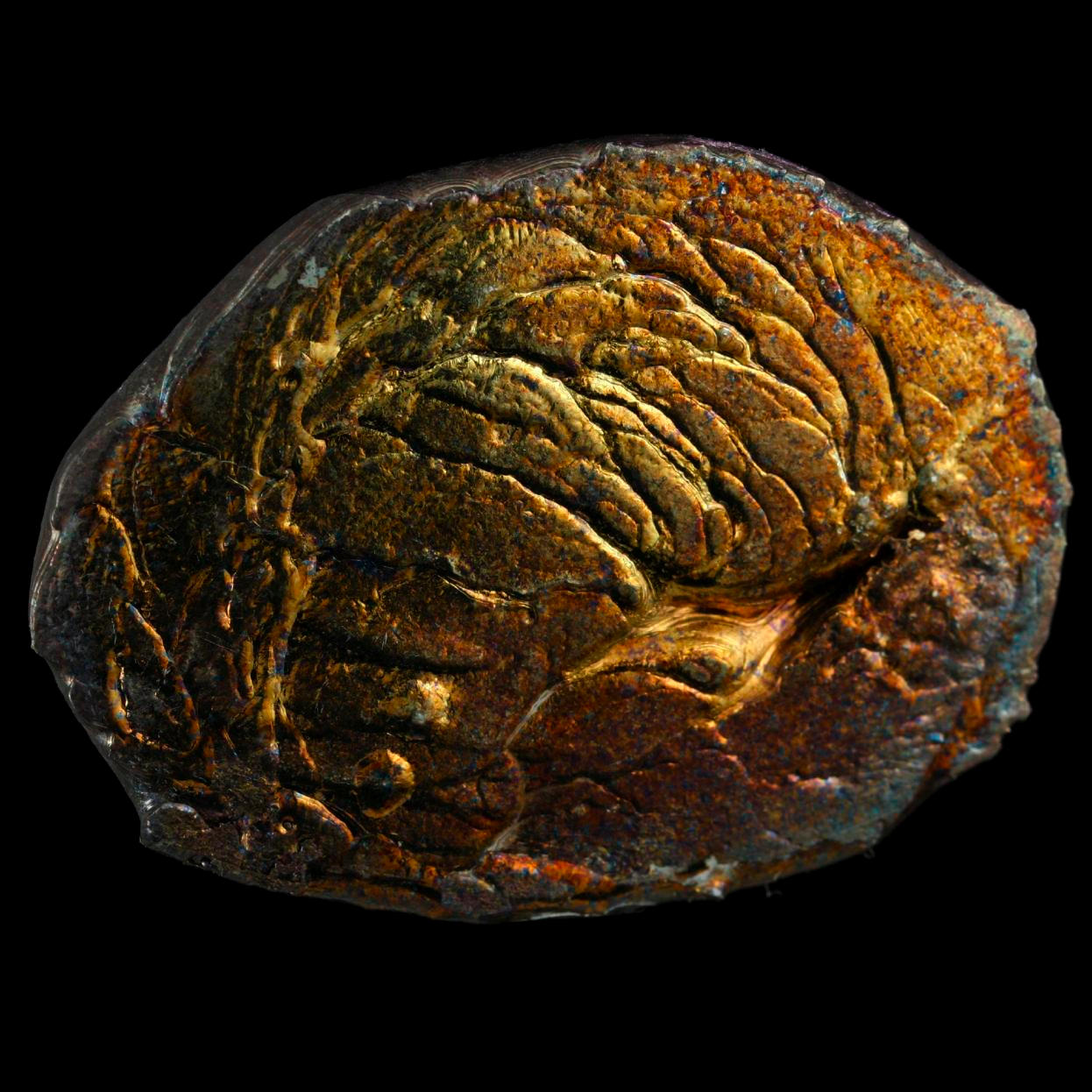
This is another arc-melted button of a particular alloy of iron-cobalt slated to be used for magnetism research. I chose to send you this particular sample because of the beautiful surface and crystal grains visible.
Source: Ethan Currens
Contributor: Ethan Currens
Acquired: 21 March, 2008
Text Updated: 30 April, 2008
Price: Anonymous
Size: 1.5"
Composition: FeCo
|
|
|
|
|
|
|
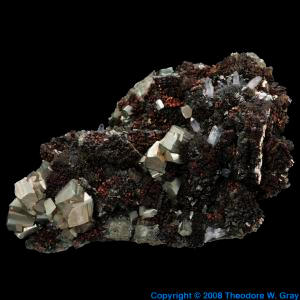
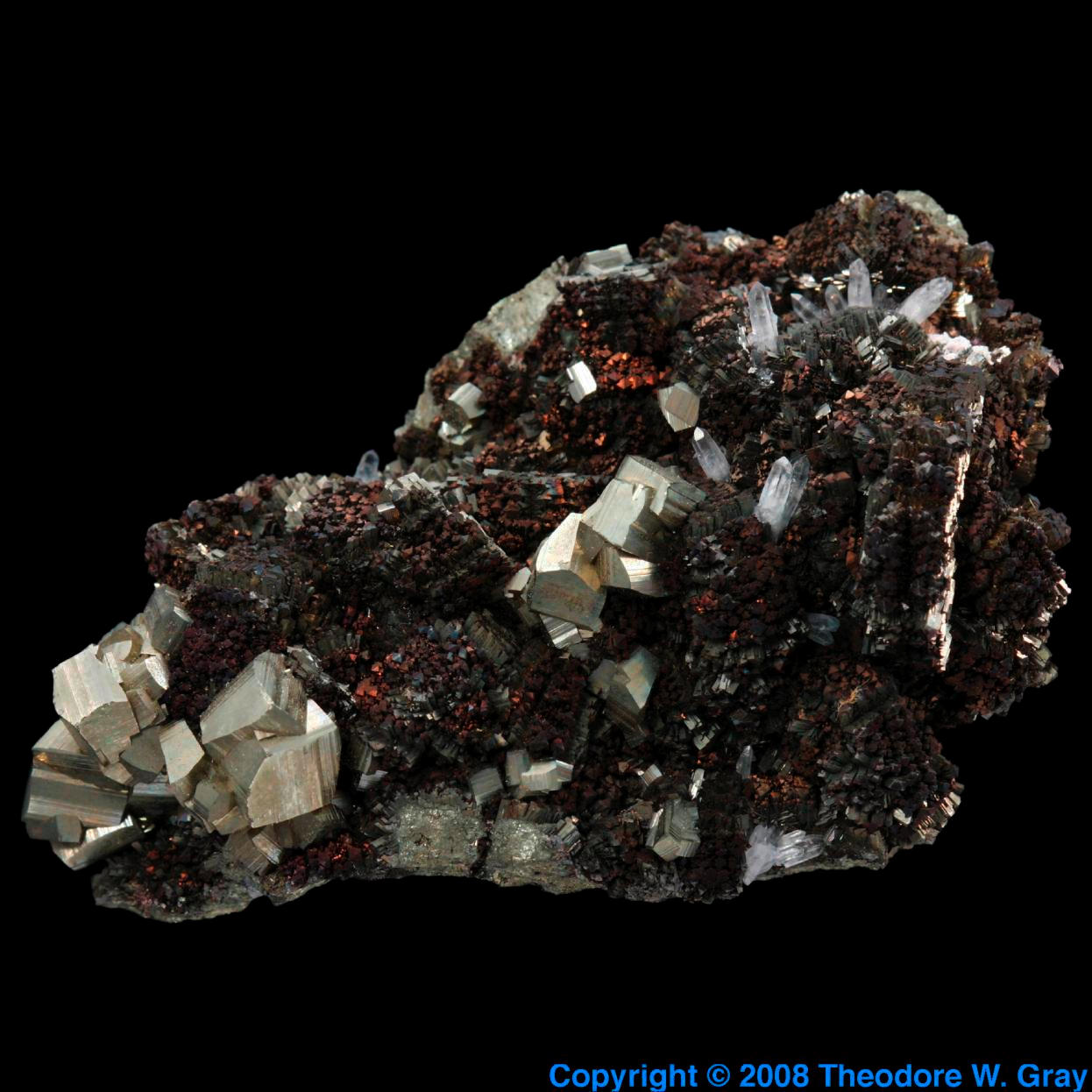
Arsenopyrite.
Description from the source:
Arsenopyrite ( FeAsS mon.), Huanzala, Peru. Aggregates of Arsenopyrite crystas replacing exagonal Pyrrothite, with Pyrite and Quartz, very interesting for the collectors. 6x3,5x2 cm; 56 g.
Source: Simone Citon
Contributor: John Gray
Acquired: 26 September, 2008
Text Updated: 28 September, 2008
Price: Trade
Size: 2.4"
Composition: FeAsS
|
|
|
|
|
|
|
Pyrrhotite.
Description from the source:
Pyrrhotite (Fe0.83-1 S hex.), Santa Eulalia, Chihuahua, Mexico. Representative old specimen. 2,2x1,8x1,6 cm; 10 g.
Source: Simone Citon
Contributor: John Gray
Acquired: 26 September, 2008
Text Updated: 28 September, 2008
Price: Trade
Size: 0.85"
Composition: FeS
|
|
|
|
|
|
|
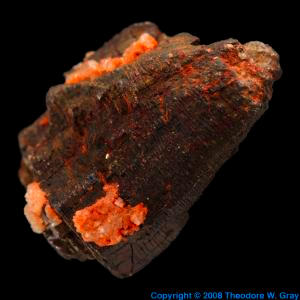
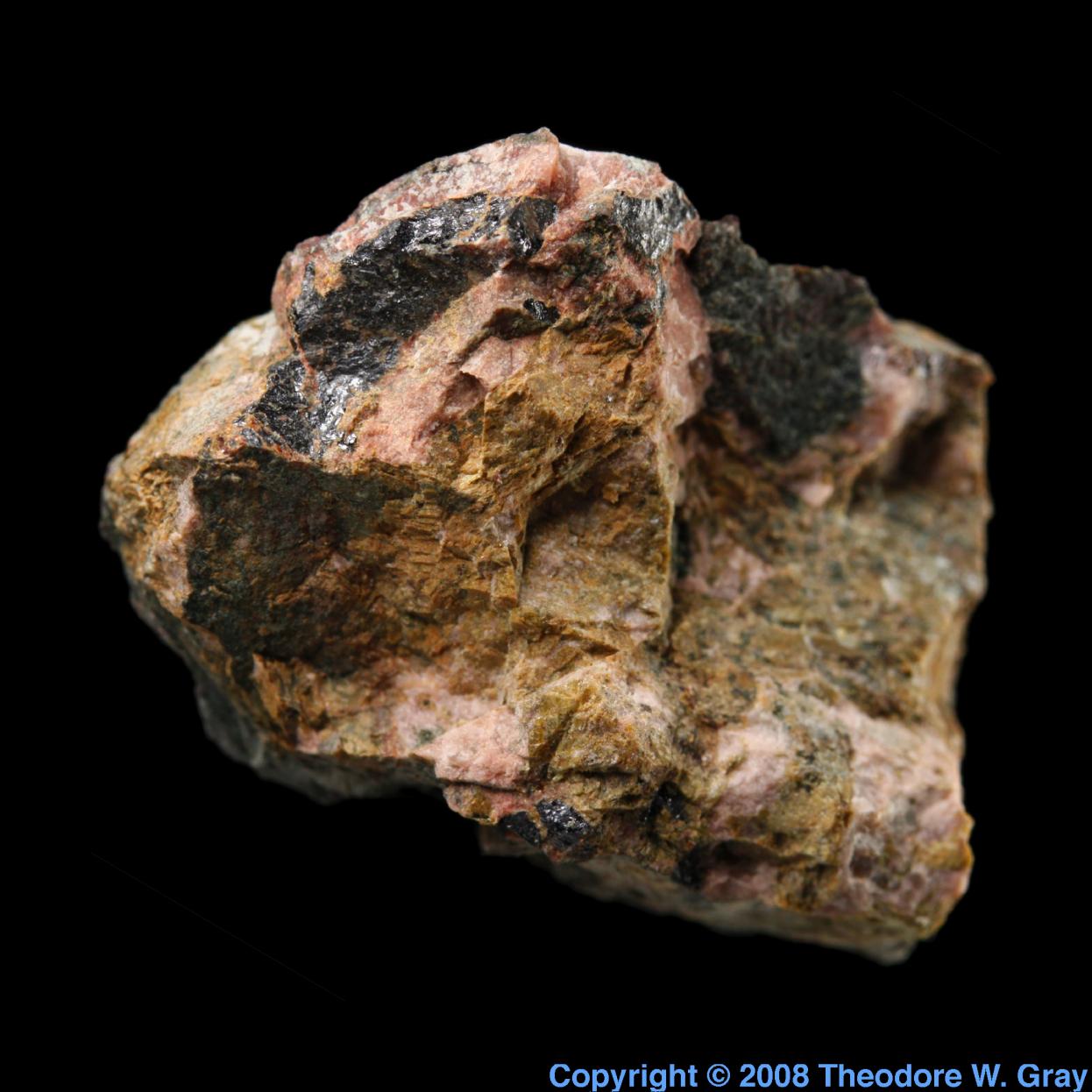
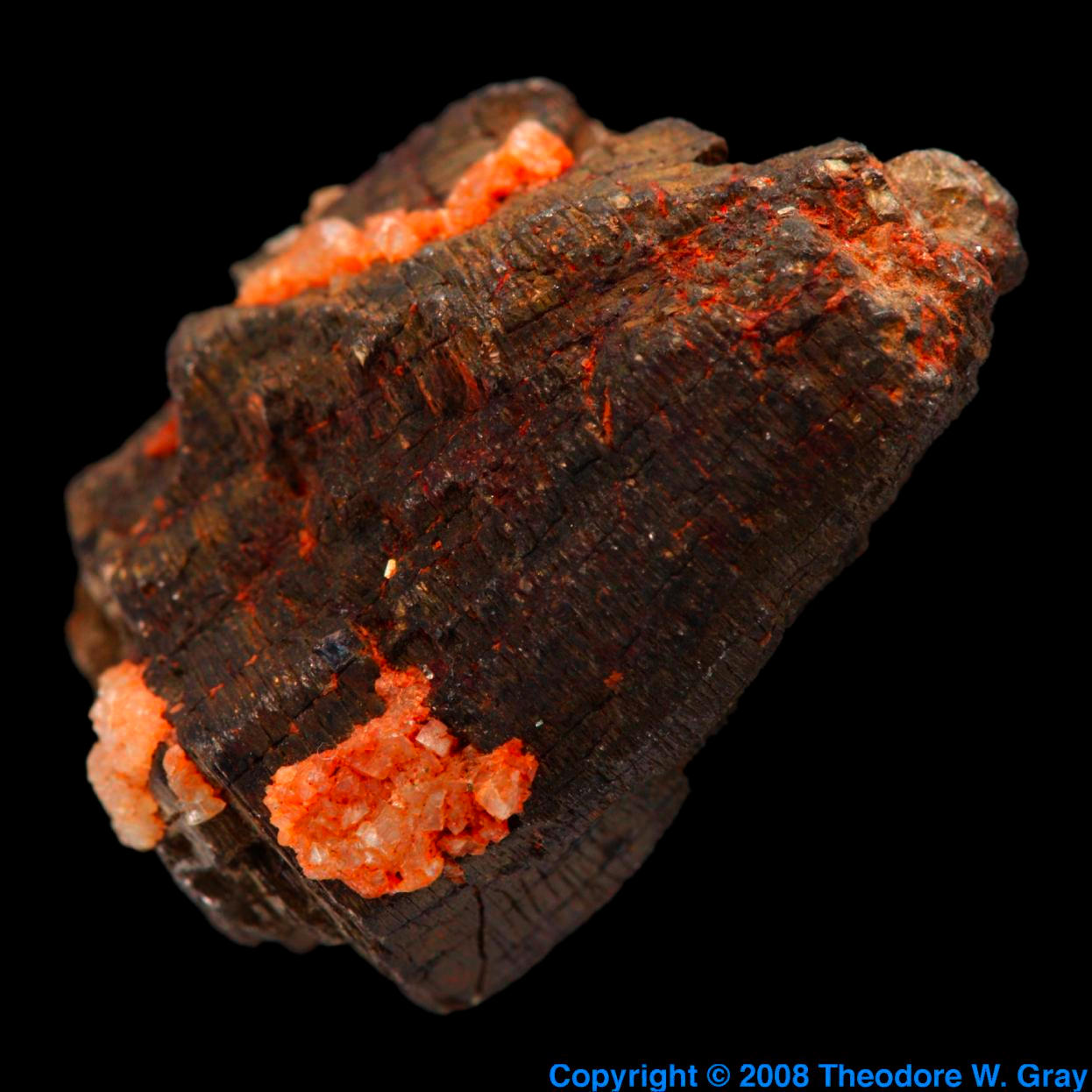
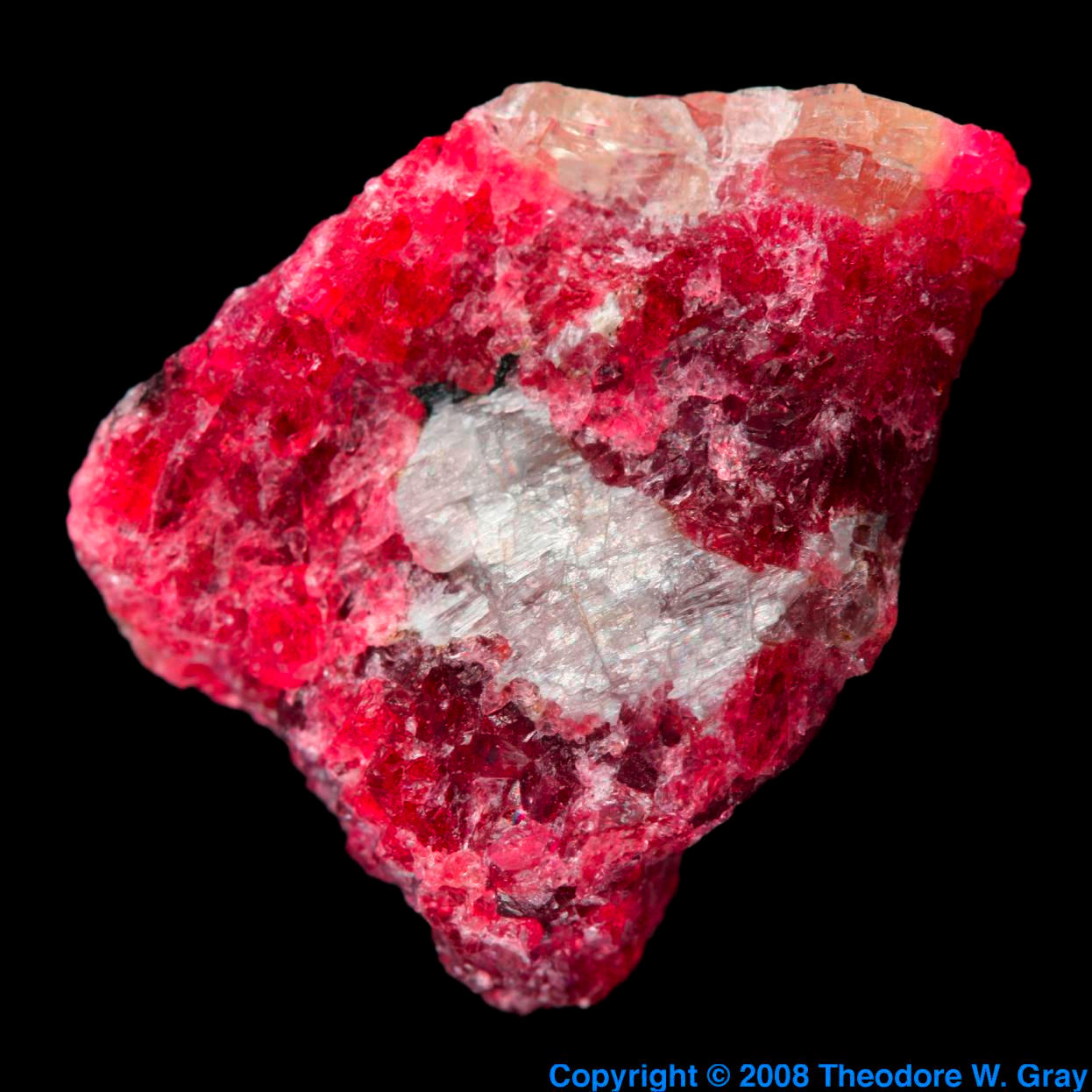
Eudyalite.
Description from the source:
Eudyalite (Na4(CaCe)2(Fe+2Mn+2Y+ZrSi8O22(OHCl)2 trig.), Kipawa Alcalyne Complex, Villedieu Tow., Quebec, Canada. Red, granular, with white fibrous Agrellite and beige Vlasovite. A rich thumbnail. 2,2x1,7x1 cm; 5 g.
Source: Simone Citon
Contributor: John Gray
Acquired: 26 September, 2008
Text Updated: 28 September, 2008
Price: Trade
Size: 0.85"
Composition: Na4(CaCe)2(Fe,2Mn,2Y).ZrSi8O22(OHCl)2
|
|
|
|
|
|
|
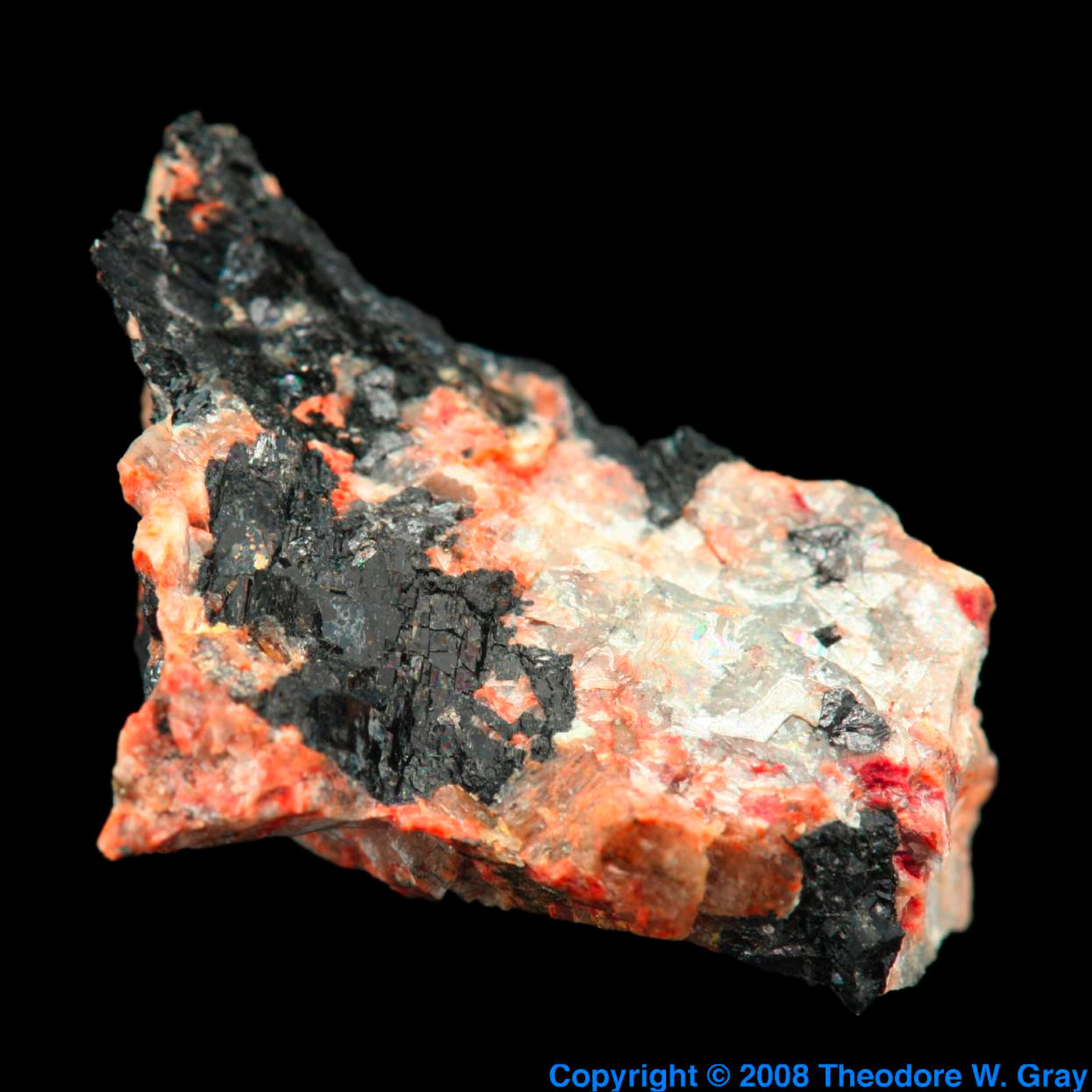
Zirconolite.
Description from the source:
Zirconolite var. Polymignite ((Ca Fe Y Th) (Nb Ti Ta Zr) O4 orth.), Stavern (Fredriksva"rn), Larvik, Vestfold, Norway. Black, fractured on matrix. 2,5x1,4x1,2 cm; 3 g.
Source: Simone Citon
Contributor: John Gray
Acquired: 30 September, 2008
Text Updated: 1 October, 2008
Price: Trade
Size: 1"
Composition: (CaFeYTh)(NbTiTaZr)O4
|
|
|
|
|
|
|
|
|
|
Stannite.
Description from the source:
Stannite (Cu2 Fe Sn S4 tet.), San Jose` Mine, Oruro, Bolivia. Yellowish masses or pseudocrystals with prismatic dark gray Zinkenite. 1,6x1,4x1,2 cm; 5 g.
Source: Simone Citon
Contributor: John Gray
Acquired: 30 September, 2008
Text Updated: 1 October, 2008
Price: Trade
Size: 0.6"
Composition: Cu2FeSnS4
|
|
|
|
|
|
|
|
|
|
|
|
|
|
|
|
|
|
|
|
|
|
|
|
|
|
|
|
|
|
|
|
|
|
Allanite-Y.
Description from the source:
Allanite-Y, Arendal, Nordge. Black, lustrous, massive. 3x1,5x1 cm; 10 g.
Source: Simone Citon
Contributor: John Gray
Acquired: 10 January, 2009
Text Updated: 10 January, 2009
Price: Trade
Size: 1.2"
Composition: (CaY)(Al2Fe)(O,OH,SiO4,Si2O7)
|
|
|
|
|
|
|
Ankerite.
Description from the source:
Ankerite (Ca (Fe+2 Mg Mn) (CO3)2 trig.), Laubuseschbach, Taunus, Germany. Brown crystal cluster on the same matrix. 3x2x1,8 cm; 15 g.
Source: Simone Citon
Contributor: John Gray
Acquired: 10 January, 2009
Text Updated: 10 January, 2009
Price: Trade
Size: 1.2"
Composition: Ca(FeMgMn)(CO3)2
|
|
|
|
|
|
|
Hematite.
Description from the source:
Hematite ps. Magnetite (Fe2 O3 trig.), Payun Matri, Volcano, Mendosa, Argentina. Micro laminar crystals after Magnetite. 3x2,5x2,5 cm; 15 g.
Source: Simone Citon
Contributor: John Gray
Acquired: 10 January, 2009
Text Updated: 10 January, 2009
Price: Trade
Size: 1.2"
Composition: Fe2O3
|
|
|
|
|
|
|
Bixbyite.
Description from the source:
Bixbyite ((Mn+3 Fe+3)2 O3 cub.), Thomas Range, Utah, USA. Perfect crystal. 0,9x0,8x0,8 cm; 9 g with box.
Source: Simone Citon
Contributor: John Gray
Acquired: 10 January, 2009
Text Updated: 10 January, 2009
Price: Trade
Size: 0.35"
Composition: (Mn,Fe)2O3
|
|
|
|
|
|
|
|
|
|
Renierite.
Description from the source:
Renierite ((Cu,Zn)11(Ge,As)2Fe4S16 tetr.), Kipushi, Shaba, Dem. Rep. of Congo. Perfect example, with brown-orange-reddish cristalline masses. 1,5x1,2x1 cm; 3 g.
Source: Simone Citon
Contributor: John Gray
Acquired: 28 January, 2009
Text Updated: 29 January, 2009
Price: Trade
Size: 0.6"
Composition: (Cu,Zn)11(Ge,As)2Fe4S16
|
|
|
|
|
|
|
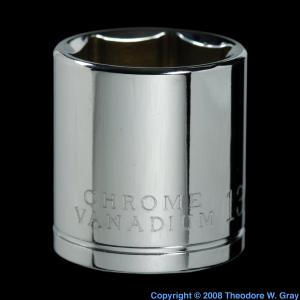
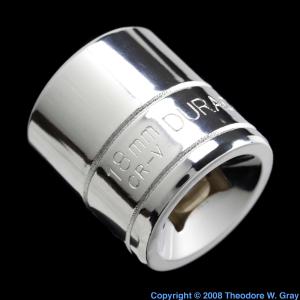
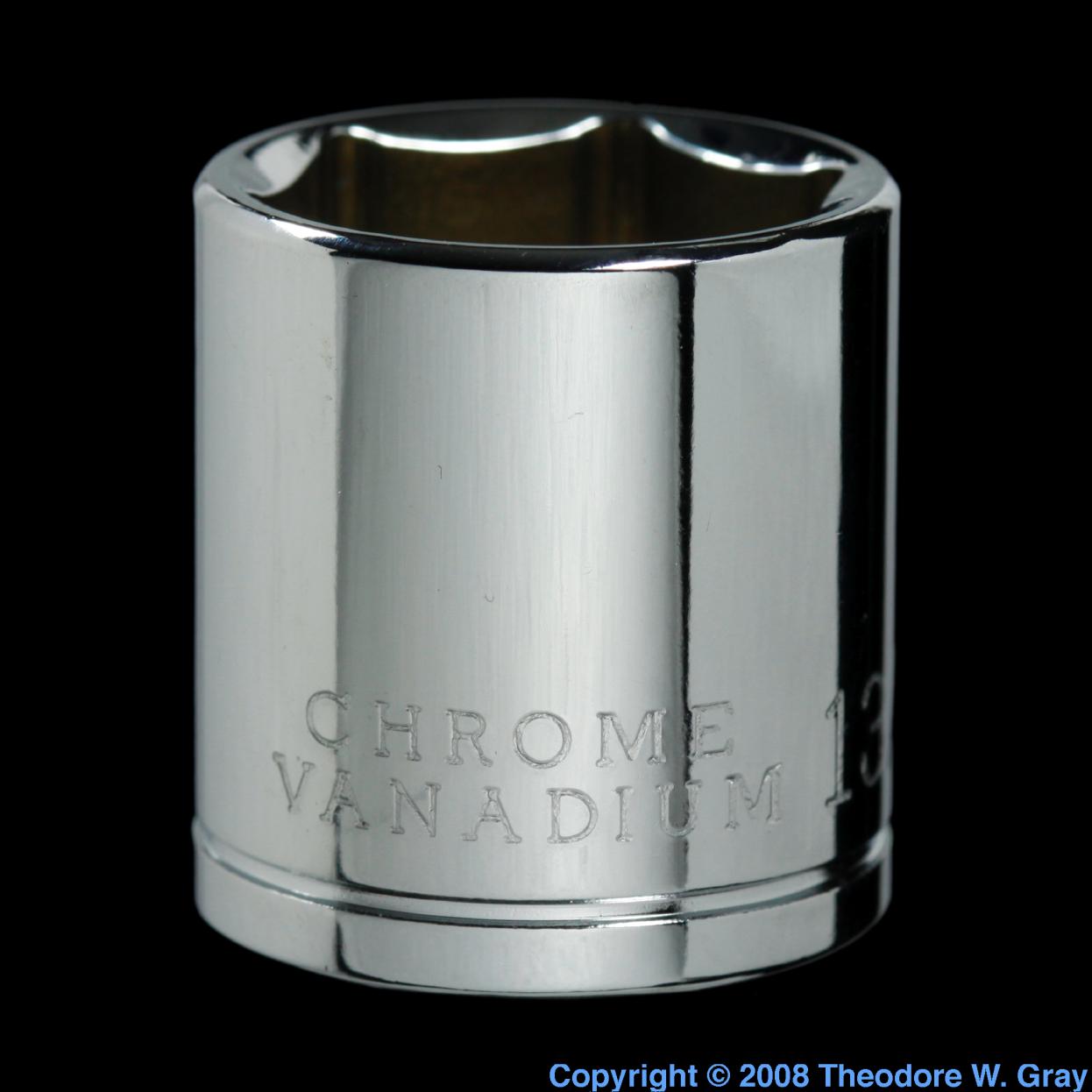
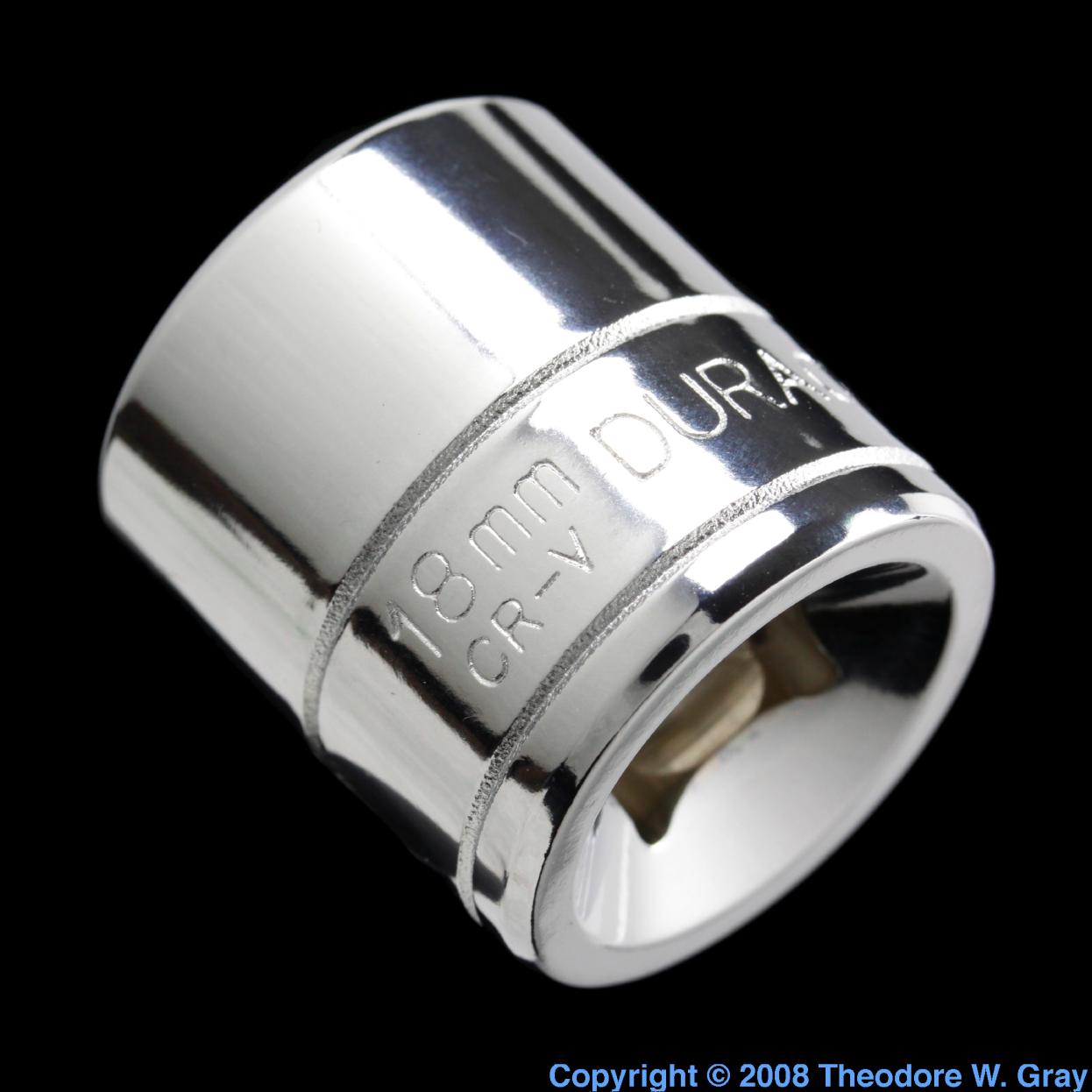
Chrome-vanadium steel socket.
This hex socket (used with a handle to tighten or loosen hex nuts) is made of steel with a small percentage of chromium and vanadium to strengthen the alloy. For some reason nut- and bolt-related tools (socked sets, crescent wrenches, adjustable wrenches, spanners, etc) seem to have "chrome vanadium" and "Cr-V" stamped on them at a much higher rate than other tools, even though similar alloys are no doubt used for many other tools. It's probably a historical thing.
Source: Farm & Fleet
Contributor: Theodore Gray
Acquired: 8 February, 2009
Text Updated: 8 February, 2009
Price: $1
Size: 1"
Composition: FeCrV
|
|
|
|
|
|
|
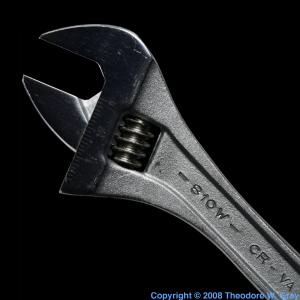
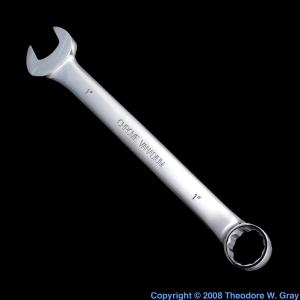
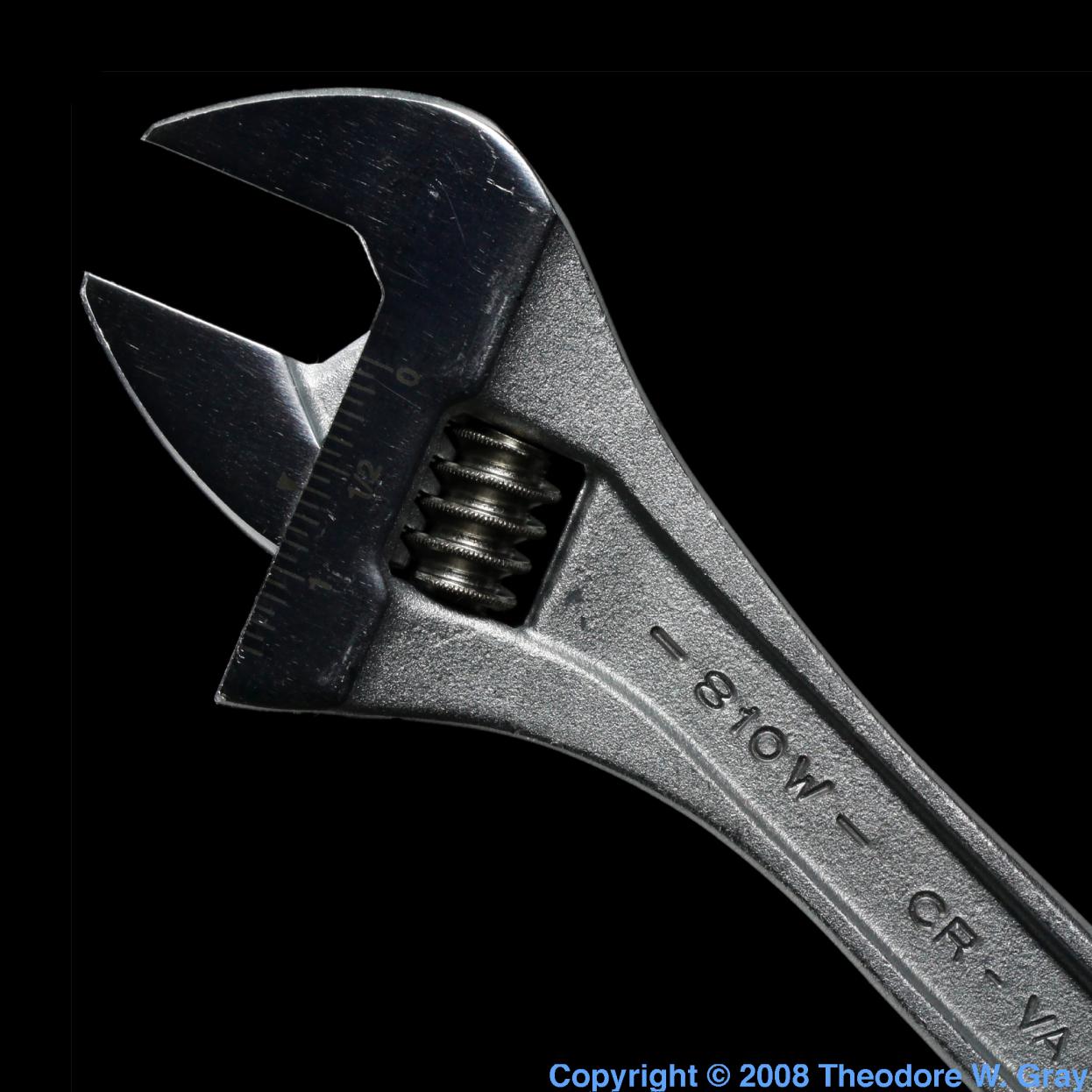
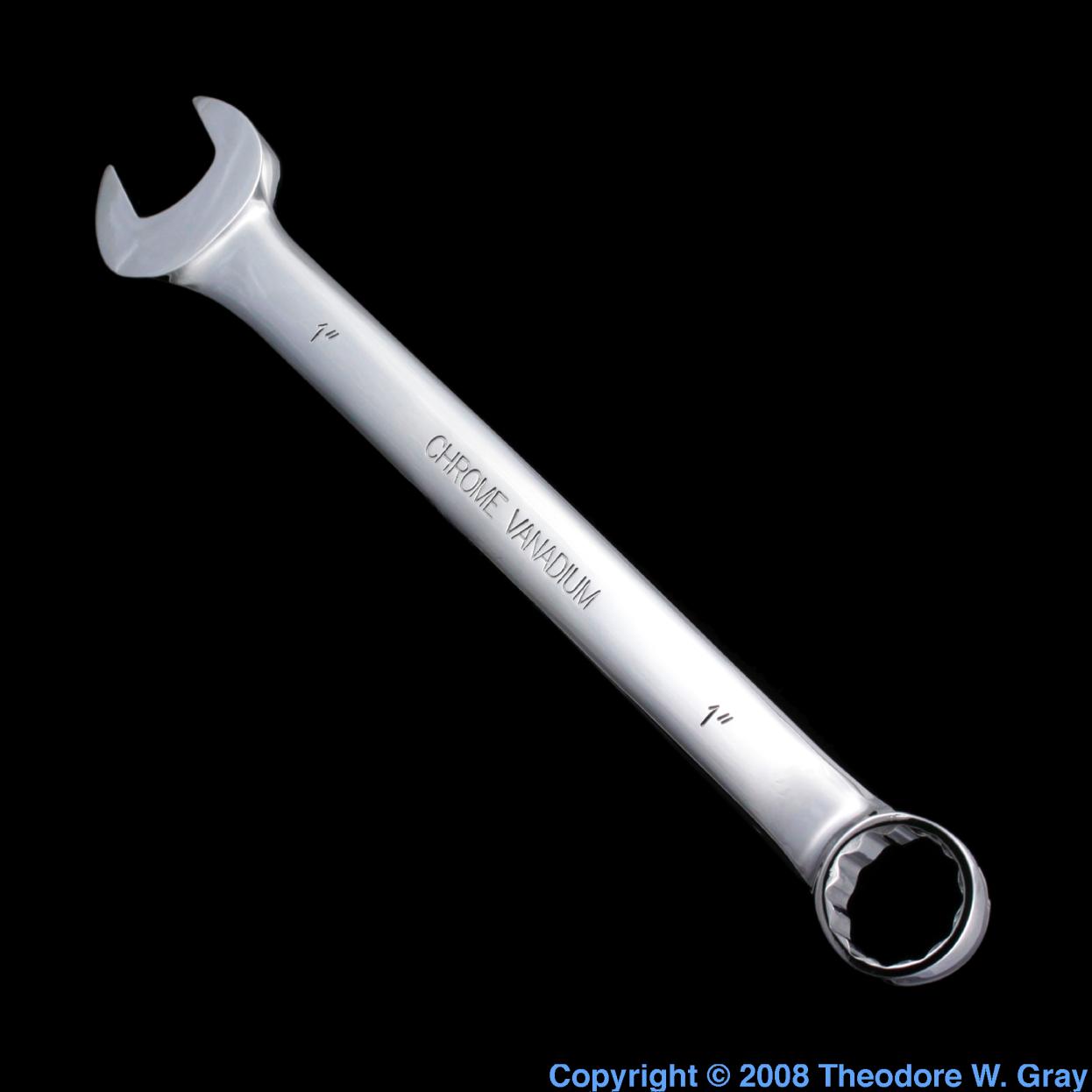
Chrome Vanadium Wrench.
Many tools are made of chrome-vanadium steel, an alloy that is tough, hard and not too expensive. Typical alloys contain about 1% chromium and a few tenths of a percent of vanadium.
Source: Hardware Store
Contributor: Theodore Gray
Acquired: 28 February, 2009
Text Updated: 1 March, 2009
Price: $8
Size: 8"
Composition: FeCCrV
|
|
|
|
|
|
|
Compact flash card hard drive.
This is just crazy. When I first heard about these things my jaw literally dropped (not literally). They are obsolete now, having been hopelessly beaten by solid state flash memory, but in their day they were the highest capacity compact memory cards available, up to 8GB by 2008 (by which time 64GB flash memory cards were available).
And they are mechanical hard disk drives. Let me remind you of the dimensions of a compact flash card (type II): 1.4" x 1.7" x 0.2" (36.4mm x 42.8mm x 5mm). The platter in this drive is about 1" (2.5cm) in diameter. It's just crazy small. There's an electric motor spinning the platter, an electro-magnet that moves the read-write heads back and forth, the whole works, plus of course all the control and interface electronics, packing into no space.
I stand in awe of this device.
The platters are aluminum, the electronics are silicon, the wiring is copper, the magnets are neodymium iron boron, and the magnetic coating is iron and cobalt based.
Source: Electronics Store
Contributor: Theodore Gray
Acquired: 28 February, 2009
Text Updated: 1 March, 2009
Price: $100
Size: 1.75"
Composition: AlSiCuCoFeNdB
|
|
|
|
|
|
|
M42 molybdenum cobalt steel bit.
A typical fairly large milling machine bit called an end mill. It is made of M42 molybdenum-cobalt steel allow, often called cobalt steel because even though it has more molybdenum than cobalt in it, it is an alloy distinguished by its cobalt content being higher than that in most others steels.
Source: eBay seller aztool-jerry
Contributor: Theodore Gray
Acquired: 11 March, 2009
Text Updated: 12 March, 2009
Price: $15
Size: 4"
Composition: FeMoCo
|
|
|
|
|
|
|
|
|
|
Density Set.
A cute little set of six cubes made from different metals, used to show students how different their densities can be. For cost reasons these sets rarely contain any really dense elements, such as tungsten, which is a pitty since students thus come away with the idea that lead is the densest metal, which is far from the truth. Osmium is twice as dense, and tungsten a good 75% more dense.
Source: Educational Innovations
Contributor: Theodore Gray
Acquired: 11 March, 2009
Text Updated: 12 March, 2009
Price: $20
Size: 1"
Composition: PbCuFeZnAlZn
|
|
|
|
|
|
|
Siderite.
Description from the source:
Siderite (Fe+2 CO3 trig.), Bad Ems, Germany. Cleavaged masses, typic. 3,6x2x2 cm the bigger; 36 g.
Source: Simone Citon
Contributor: John Gray
Acquired: 11 March, 2009
Text Updated: 12 March, 2009
Price: Trade
Size: 1.4"
Composition: FeCO3
|
|
|
|
|
|
|
Chrome Vanadium Wrench.
Many tools are made of chrome-vanadium steel, an alloy that is tough, hard and not too expensive. Typical alloys contain about 1% chromium and a few tenths of a percent of vanadium.
Source: Hardware Store
Contributor: Theodore Gray
Acquired: 28 February, 2009
Text Updated: 1 March, 2009
Price: $8
Size: 8"
Composition: FeCCrV
|
|
|
|
|
|
|
|
|
|
Chrome-vanadium steel socket.
This hex socket (used with a handle to tighten or loosen hex nuts) is made of steel with a small percentage of chromium and vanadium to strengthen the alloy. For some reason nut- and bolt-related tools (socked sets, crescent wrenches, adjustable wrenches, spanners, etc) seem to have "chrome vanadium" and "Cr-V" stamped on them at a much higher rate than other tools, even though similar alloys are no doubt used for many other tools. It's probably a historical thing.
Source: Farm & Fleet
Contributor: Theodore Gray
Acquired: 8 February, 2009
Text Updated: 8 February, 2009
Price: $1
Size: 1"
Composition: FeCrV
|
|
|
|
|
|
|
|
|
|
|
|
|
|
|
|
|
|
|
|
|
|
|
|
|
|
|
|
|
|
|
|
|
|
|
|
|
Coltan ore.
You may have heard about an effort some years ago to organize a boycott against cell phones. This is the motivation behind the boycott: Coltan. The name is a contraction of columbite and tantalite, which are the major minerals present in the ore. The name columbite comes from the old name of niobium, columbium. Tantalite is of course named for its major component, tantalum. Coltan is a major ore for tantalum, used in capacitors found in nearly all digital electronics, including cell phones (and computers and talking dolls and defibrillators and pretty much everything else invented since 1980).
The problem with coltan is that some of it comes from a region in the Congo that is one of last habitats for gorillas. It's also an area home to the other kind of gorilla, guerrillas, who are fighting various nasty wars with each other, and using revenues from coltan mining to pay for those wars. Gorillas are being killed to fund guerrilla wars, and digital electronics are the beneficiaries.
The boycott didn't last long, and it's kind of hard to imagine how the sponsors planned to organize it without the use of cell phones. It's also worth noting that less than one percent of the world's supply of tantalum comes from the Congo.
Source: Jensan Scientifics
Contributor: Theodore Gray
Acquired: 16 October, 2009
Text Updated: 18 October, 2009
Price: Anonymous
Size: 1"
Composition: FeNb2O6+FeTa2O6
|
|
|
|
|
|
|
|
|
|
|
|
|
Emmonsite.
Description from the source:
Emmonsite (Fe2+3 Te3+4 O9 x 2 H2 O tric.), Moctezuma, Sonora, Mexico. Green crust on matrix, rare. 1,1x1x0,7 cm; 4 g with box.
Source: Simone Citon
Contributor: John Gray
Acquired: 13 January, 2010
Text Updated: 13 January, 2010
Price: Trade
Size: 0.5"
Composition: Fe3Te4O9.2(H2O)
|
|
|
|
|
|
|
|
|
|
|
|
|
|
|